 Anacortes
 Composite Decking Built for Oak Harbor's Marine Climate
Oak Harbor sits on Whidbey Island, just across the water from our home base in Anacortes, and it takes the same weather the rest of the North Puget Sound gets — salt-laden wind off the water, long stretches of driving rain from fall through spring, and a moss and algae season that can run most of the year in shaded yards. A deck out here isn't just outdoor furniture. It's a structure that has to shed water, resist rot, and stay safe underfoot through winters that rarely dry out. Composite decking, installed correctly for this specific climate, is one of the more reliable ways to get a deck that still looks and performs well a decade in.
This page is about composite decking specifically for homes in and around Oak Harbor — what the local conditions demand, what a properly built deck actually involves below the boards, and why the framing and drainage details matter as much as the decking brand you choose.
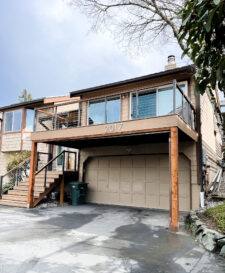
What Oak Harbor's Climate Actually Does to a Deck
Salt air corrodes hardware faster than people expect, even a mile or two inland — it rides the wind and settles on every exposed surface. Combine that with near-constant moisture for months at a time, and you get the two failure modes we see most on older decks in this area:
- Fastener and bracket corrosion — standard hardware pits and rusts, staining boards and eventually weakening connections at the ledger, posts, and joist hangers.
- Trapped moisture in the framing — joists and beams that don't get airflow underneath stay damp for weeks, which is exactly the condition wood rot and mold need.
Composite boards themselves handle rain and humidity far better than untreated wood decking — they don't splinter, cup, or absorb water the way lumber does. But composite decking is only as good as what it's fastened to and sits on. A composite deck built on undersized, poorly ventilated wood framing with the wrong hardware will still fail early, just underneath a surface that looks fine from the top for a while.
Moss and Algae
Shaded yards and north-facing decks around Oak Harbor grow moss and green algae film quickly, especially on lower-traffic sections and near the house where sun doesn't reach. This is a slip hazard as much as a cosmetic one. Board texture, gap spacing, and drainage design all affect how fast a deck grows a slick film — and how easy it is to clean off when it does.
What a Correct Composite Deck Installation Involves
The decking boards are the visible 20% of the job. The other 80% — framing, fasteners, flashing, and drainage — is what determines whether the deck is still solid in fifteen years. On every composite deck we build, that means:
Framing and Structure
Joists and beams sized to the actual span and load, not the minimum the composite manufacturer's warranty will technically allow. In a wet climate we typically run joist spacing tighter than the bare minimum, especially for boards installed at an angle or on longer runs, since composite has more thermal movement than wood and needs firm support to stay flat.
Ledger and Flashing
Where the deck attaches to the house, correct flashing keeps water from getting behind the siding and into the wall assembly — this is one of the most common failure points on older decks we're asked to replace, and it's invisible until there's rot damage behind the band board.
Ground Clearance and Ventilation
Framing needs enough clearance above grade for air to actually move underneath. Low-clearance decks in shaded, wet yards are where we most often find soft joists and rusted hardware when we tear off an old deck.
Fasteners and Hardware
Stainless steel or coated fasteners rated for coastal/marine exposure, hidden fastener clip systems sized correctly for the board profile, and corrosion-resistant joist hangers and post hardware throughout. This is a place where cutting cost shows up as rust stains and loose boards within a few years.
Drainage Beneath the Deck
Grading and, where needed, a drainage system underneath so water doesn't pool against posts and footings. On sites with poor natural drainage — common in low-lying parts of Whidbey Island — this step prevents standing water from undermining the structure over time.
Choosing a Composite Board for This Climate
Not all composite decking performs the same in salt air and constant moisture. The main differences that matter for an Oak Harbor install:
| Factor | What to Look For | Why It Matters Here |
|---|---|---|
| Capping | Fully capped composite (cap on all four sides) vs. capped-top-only or uncapped | Fully capped boards resist moisture absorption at the cut ends and edges, which matters where boards face constant rain |
| Surface texture | Textured or embossed finish rather than smooth | Better grip when the deck is damp or has a film of moss/algae |
| Color | Mid-tone colors over very dark colors in full-sun spots | Dark composite absorbs more heat; less of an issue on shaded, view-facing decks but worth factoring on south-facing exposures |
| Fastening system | Manufacturer-matched hidden fastener clips | Mismatched clips are a common cause of board movement and squeaking in freeze-thaw and wet-dry cycles |
| Warranty structure | Check what's covered — fading, staining, structural — and for how long | Coastal exposure is exactly the condition some warranties exclude or limit; read the fine print before choosing a board |
We'll walk through actual board options and pricing tiers during your estimate rather than push one brand — the right choice depends on your deck's sun exposure, how much of the year it's shaded and damp, and your budget.
Composite vs. Other Decking Materials: Cost and Trade-offs
| Material | Upfront Cost | Maintenance | Moisture Behavior |
|---|---|---|---|
| Pressure-treated wood | Lowest | Annual cleaning, periodic staining/sealing | Absorbs water, prone to splintering and rot if maintenance lapses |
| Cedar | Moderate | Regular sealing to hold color and resist moisture | Naturally rot-resistant but still needs upkeep in constant damp |
| Composite (capped) | Higher upfront | Occasional washing, no staining or sealing | Resists water absorption; performance depends heavily on framing/drainage below |
| PVC | Highest | Lowest — washing only | Fully synthetic, no wood content to absorb moisture, but can feel less natural underfoot |
For most Oak Harbor homeowners, capped composite lands in the middle — a real reduction in ongoing maintenance compared to wood, without the highest price tag of full PVC systems. The honest trade-off is upfront cost: composite and PVC both cost more to install than wood, and that cost is the maintenance you're not going to have to do every year in a climate that doesn't give decks much of a dry season.
How Our Process Works
- On-site assessment — we look at your existing deck or build site, sun exposure, drainage, and how the structure ties into the house.
- Design and material walkthrough — board options, layout, railing style, and a straightforward written estimate with no pressure to decide on the spot.
- Permitting — Oak Harbor and surrounding jurisdictions require permits for most deck construction, especially anything attached to the house or above a certain height; we handle that paperwork as part of the job.
- Demolition (if replacing an old deck) — including an honest look at the framing underneath before we cover it back up with new boards.
- Framing and structural work — built to the standards above, not just the minimum code allows.
- Decking, fastening, and railing installation.
- Final walkthrough — we go over care and cleaning specific to the board you chose before we consider the job done.
Why Local Experience Matters for This Job
A crew that only occasionally works this stretch of the Salish Sea coastline doesn't always account for how differently salt air and moss season behave here compared to a drier inland job. Local experience means we already know:
- Which fastener grades actually hold up to the salt exposure typical of Whidbey Island and Fidalgo Island properties, versus what's rated for it on paper.
- How much ground clearance and airflow a given lot needs based on how shaded and slow-draining the yard is.
- Which composite lines have held their color and surface here after several wet seasons, not just what the manufacturer claims.
- What the local permitting process actually requires, so the job doesn't stall waiting on paperwork we didn't anticipate.
That's the difference between a deck that's still tight and quiet in year eight and one that starts needing repairs by year three.
Permits, Railings, and Code Basics
Washington building code generally requires guardrails on decks above a certain height, with specific baluster spacing to prevent falls, and proper footing depth for frost and load. Requirements can vary by jurisdiction and by the specifics of your property, so we confirm the exact rules for your site rather than assuming — and we pull the necessary permits and coordinate inspections as part of the build, so you're not left managing that process yourself.
Maintaining a Composite Deck in a Wet, Salty Climate
Composite decking cuts down maintenance significantly compared to wood, but "low-maintenance" isn't "no-maintenance," especially here. A simple seasonal routine keeps a composite deck performing the way it should:
- Sweep debris regularly — trapped leaves and needles hold moisture against the board surface and encourage moss growth in shaded areas.
- Wash the deck surface a few times a year with a soft-bristle brush and mild soap and water; pressure washing on a low setting is fine for most capped composite, but check your specific product's guidance first.
- Rinse salt residue off periodically if the deck faces open water or gets direct wind off the Sound.
- Keep gutters and downspouts near the deck clear so runoff isn't dumping extra water onto or under the structure.
- Check railing posts, stair connections, and any visible hardware once a year for corrosion or looseness.
- Address any standing water or slow drainage under the deck promptly rather than letting it become a long-term damp spot.
Signs an Existing Deck Needs Attention
If you already have a deck in the Oak Harbor area, a few warning signs are worth acting on before they become bigger repairs: soft or springy spots underfoot, visible rust streaks around fasteners, persistent green film that comes back within days of cleaning, gaps opening up between boards, or railings that feel loose when pushed. Any of these can usually be traced back to the framing, drainage, or hardware underneath — worth a look before deciding whether repair or replacement makes more sense.
Get a Straightforward Estimate
If you're planning a new composite deck or replacing an aging one in Oak Harbor, we're happy to come take a look, walk you through material options honestly, and give you a clear, no-pressure estimate. Use the form below to get started.