 Anacortes
 Building Decks That Actually Hold Up Near Oak Harbor
Oak Harbor sits close enough to the water that every outdoor structure on a property deals with the same combination of problems: salt-laden air, long stretches of driving rain, and a moss season that can run from October through May. A deck built with techniques that work fine in a dry inland climate will show its weaknesses here within a few seasons — soft spots at the ledger board, corroded fasteners, slick moss buildup on the walking surface, and rail posts that loosen because the wood around them stayed wet too long. Building a deck correctly in this part of Skagit County isn't about using fancier materials for the sake of it. It's about understanding exactly where water goes when it lands on a structure and making sure it never has a reason to sit still.
We build and repair decks throughout the Anacortes and Oak Harbor area, and the lessons we've learned here are specific to this coastline. A deck design that's popular in a builder's magazine printed for the Midwest doesn't automatically translate to a property a few blocks from Puget Sound. This page covers what we actually look at when we design and build a deck for a home in this area, and why the details matter more than the marketing.
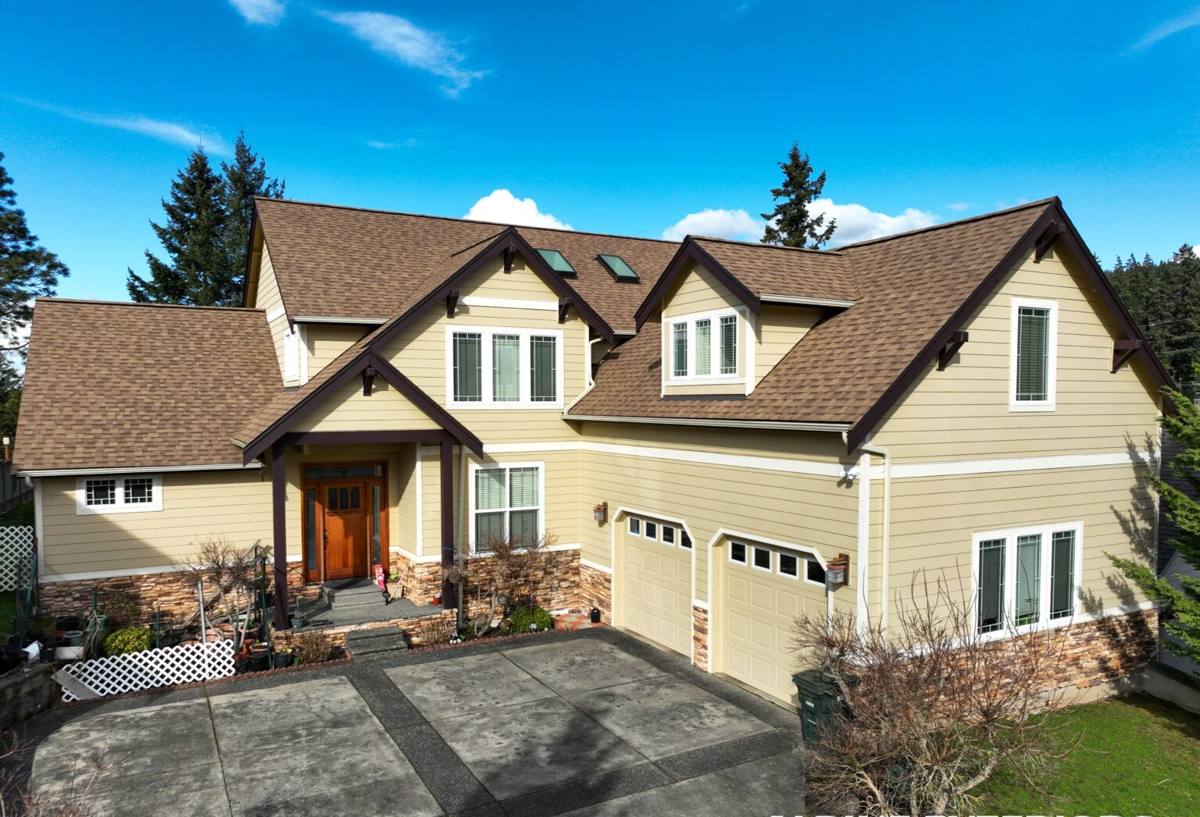
What Salt Air and Driving Rain Do to a Deck Over Time
It helps to understand the specific failure patterns we see so you know what you're paying to avoid.
Salt Air and Metal Fasteners
Salt in the air accelerates corrosion on any fastener, bracket, or hanger that isn't rated for it. Standard galvanized hardware can start showing rust streaks and pitting well before a deck reaches the middle of its expected lifespan. Once a fastener corrodes, it loses holding strength gradually and invisibly — you don't usually see the problem until a board is loose or a railing has developed some play in it.
Driving Rain and Water Intrusion
Rain that comes in sideways off the water finds every gap in flashing, every unsealed screw hole, and every spot where a ledger board meets the house without a proper water-resistant barrier behind it. Once moisture gets behind a ledger connection or under a post base, it stays there, because that kind of hidden moisture doesn't get sun or airflow to dry it out between storms.
Moss, Algae, and Slip Risk
A long moss season means any deck surface that holds moisture — low spots, shaded sections under trees, north-facing areas — will grow a slick film if it isn't built with drainage and airflow in mind. Beyond looking neglected, a mossy deck surface is a genuine slip hazard, especially on stairs.
What a Correctly Built Deck Requires in This Climate
None of this is exotic. It's a matter of using the right materials in the right places and not skipping steps that don't show up in a quick visual inspection.
- Stainless steel or coated fasteners rated for coastal/marine exposure, not standard galvanized hardware
- Proper flashing at the ledger board connection, with a water-resistant membrane between the ledger and the house wall
- Post bases that hold the post up off the deck surface or footing, so end grain never sits in standing water
- Joist spacing and decking gaps sized to allow real airflow and drainage underneath, not just what looks tight and clean
- Decking material chosen for how it performs wet, not just how it looks in a showroom
- Railing posts through-bolted into properly blocked framing, not toe-screwed into a rim joist
- Stair stringers and treads detailed to shed water instead of pooling it at each step
Decking Material Options for Oak Harbor Properties
There's no single "best" decking material — there's a best material for your budget, your maintenance tolerance, and how exposed your specific site is to wind and salt spray. We'll walk through the honest trade-offs rather than push whatever has the best margin.
| Material | Moisture/Salt Performance | Maintenance | Honest Trade-Off |
|---|---|---|---|
| Pressure-treated lumber | Good if properly sealed and re-sealed | Annual cleaning and re-sealing recommended | Lowest upfront cost, but the maintenance schedule is real and easy to fall behind on |
| Cedar | Naturally moisture and insect resistant | Periodic staining/sealing to hold color and protect surface | Looks excellent locally, but softer surface can show wear near stairs and high-traffic zones |
| Composite decking | Excellent — doesn't absorb water or rot | Occasional washing, no sealing or staining | Higher upfront cost; some early-generation composites had moisture and mold complaints, so we only install product lines with a solid track record and clear warranty terms |
| PVC/capped composite | Best moisture and salt resistance | Lowest maintenance of the group | Highest upfront cost; still needs correct substructure ventilation to perform as advertised |
We don't push one material as universally "right." A homeowner planning to sell in a few years has different priorities than one settling in long term. We'll give you a straight answer on what fits your situation, including what it actually costs to maintain each option over ten years, not just what it costs to install.
Substructure: Where Most Deck Failures Actually Start
Almost every serious deck problem we get called out to fix traces back to the substructure, not the visible decking boards. Footings that weren't set below frost depth or weren't sized for the local soil, joists that were undersized for the span, or a ledger connection that was never properly flashed — these are the failures that turn into safety issues, not just cosmetic ones. In a climate where the ground stays wet for months at a stretch, footing depth and drainage around the footing matter more than they would in a drier region. We size footings and framing to current code requirements for this jurisdiction, and we don't shortcut the ledger flashing detail even though it's the single step that's easiest to skip and hardest to fix after the siding is closed back up.
Post Bases and End-Grain Protection
Wood posts that sit directly on or in concrete without a proper elevated base will wick moisture up through the end grain no matter how well the rest of the post is sealed. We use post bases that hold the post above the concrete and shed water away from the base, which is a small hardware cost that prevents one of the most common rot points on older decks in this area.
Our Process for a New Deck Build
- On-site assessment — we look at sun/shade exposure, prevailing wind and rain direction, drainage slope, and how exposed the site is to salt air off the water
- Design and material conversation — honest walkthrough of decking and railing options against your budget and maintenance preference
- Permitting — we handle the permit application and inspection scheduling required for the jurisdiction
- Footings and framing — footings set to proper depth, framing sized and spaced for the span and local snow/wind load
- Ledger flashing and waterproofing — the step we never shortcut, done before any decking goes down
- Decking and railing installation — fastened with corrosion-rated hardware throughout
- Final walkthrough — we go over care and maintenance specific to whatever material you chose
Repairs and Restoration for Existing Decks
Not every job on an older Oak Harbor home is new construction. A lot of what we do is diagnosing why an existing deck has developed soft boards, a wobbly rail, or persistent moss buildup, and fixing the actual cause rather than just replacing the board that looks worst. If the substructure is sound, sometimes a deck just needs new decking boards, corrected fastener hardware, and a drainage fix. If the ledger connection or framing has water damage, that needs to be addressed properly before anything gets rebuilt on top of it — covering up a rotted ledger with new boards just delays a much bigger repair.
Signs Your Deck Needs a Professional Look
- Soft or spongy spots when you walk across the surface
- Rust staining around fastener heads
- A railing that flexes or has developed play at the post connections
- Persistent moss or algae that comes back within weeks of cleaning
- Gaps or separation where the deck meets the house siding
- Stair stringers that show splitting or soft wood at the base
Why Local Experience with Oak Harbor Conditions Matters
A crew that builds decks all over the state, including places with a completely different climate, doesn't necessarily default to marine-grade fasteners or proper ledger flashing unless it's specifically asked for. We work this coastline regularly, so those details aren't upgrades we suggest to pad an invoice — they're what we build with by default because we've seen what happens when they're skipped. Skagit County's mix of salt exposure, sustained rain, and shaded moss-prone lots is a specific combination, and a deck built for it needs to be built for it from the footings up, not patched later once problems show up.
Get a Straight Answer on Your Deck Project
Whether you're planning a new deck, replacing an aging one, or trying to figure out why an existing deck has developed problems, we're happy to take a look and give you an honest assessment. Reach out for a free, no-pressure estimate using the form below — we'll walk the site, talk through material options that make sense for your home, and give you a straightforward price with no surprises.