 Anacortes
 Roof Repair Built for Sedro-Woolley's Climate
Sedro-Woolley sits inland from the coast, but that doesn't mean local roofs get a break. The Skagit Valley combines heavy fall and winter rain, long stretches of overcast humidity, and dense tree cover along the river and foothills — a combination that keeps roofs wet longer than homeowners realize. Add in the salt-laden air that drifts up from the Sound on a west wind, and you've got a climate that's genuinely hard on shingles, flashing, and fasteners year-round. We're an Anacortes-based crew that works this stretch of Skagit County regularly, and we've built our repair process around what actually fails on roofs here — not a generic checklist written for a drier part of the state.
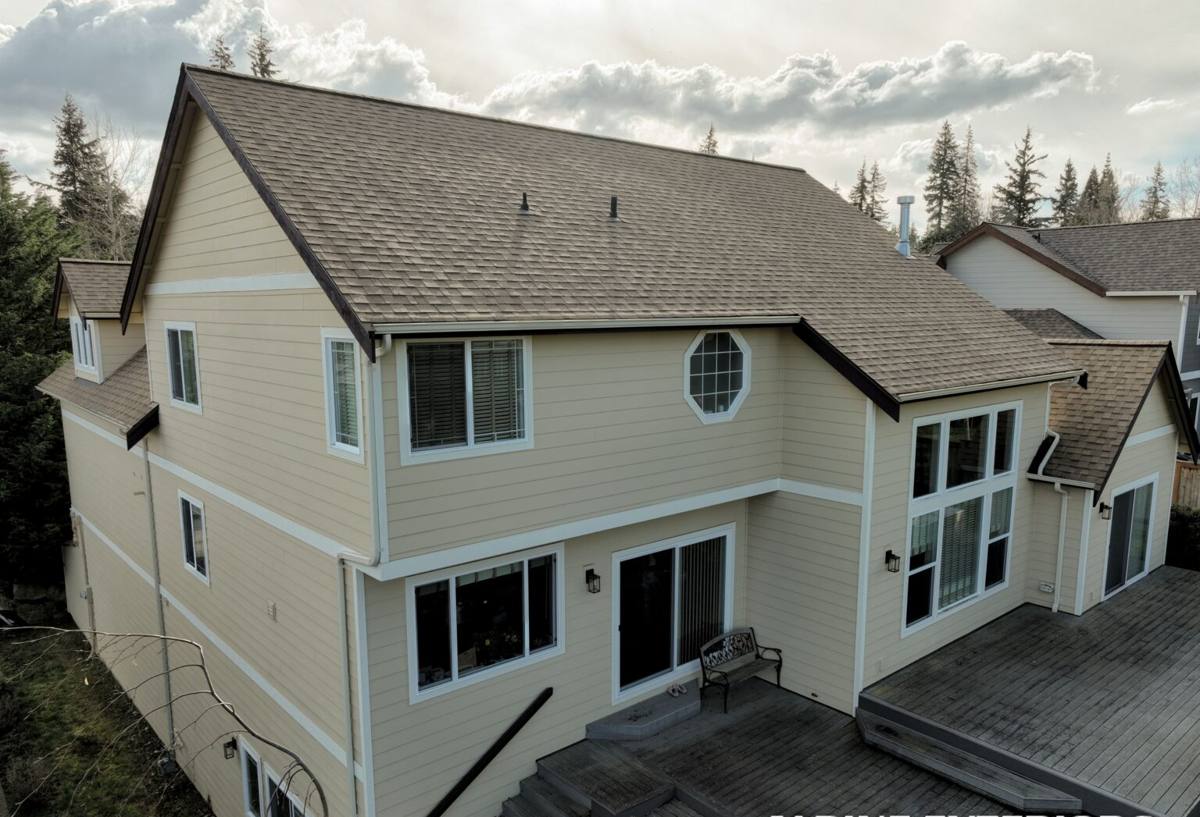
Why Roofs Wear Differently Here Than in Other Parts of Washington
Three things drive most of the repair calls we get in this area:
- Moss season runs long. Shade from mature trees, valley humidity, and mild winters mean moss and algae can establish on a north-facing slope and never fully dry out between rain events.
- Driving rain finds weak points. Wind-driven rain off the Sound doesn't just fall straight down — it pushes up under shingle tabs, around vents, and into any flashing that's lost its seal.
- Salt air accelerates corrosion. Metal flashing, nail heads, and vent boots age faster here than they would inland, even a modest distance from the water.
None of these show up as a dramatic failure overnight. They show up as a slow leak, a soft spot in the decking, or a stain on a ceiling six months after the damage actually started — which is why so many "repairs" we're called out for are really the tail end of a problem that's been developing quietly.
The Repair Issues We See Most Often
Not every roof problem needs the same fix, and part of doing this job right is correctly diagnosing what's actually wrong before touching anything. The most common issues we address on Sedro-Woolley roofs include:
- Cracked, curling, or wind-lifted shingles, especially on slopes exposed to prevailing weather
- Flashing failures around chimneys, skylights, and roof-to-wall transitions where moisture works in slowly
- Moss and algae growth that has lifted shingle edges or trapped moisture against the roof deck
- Clogged or damaged gutters contributing to water backing up under the roof edge
- Vent boot cracking from age and UV exposure, a common source of small but persistent leaks
- Soft or spongy decking discovered after a leak has been present longer than expected
- Nail pops and fastener corrosion in older roofs closer to the water
What an Honest Roof Repair Actually Involves
Diagnosis before demolition
The first step is finding the real source of the problem, not just the spot where water is showing up inside the house. Water travels — a stain on a bedroom ceiling can trace back to a flashing failure several feet away. We inspect the full roof plane, not just the reported trouble spot, because a single visible leak is often a sign that surrounding materials are aging out too.
Matching the fix to the damage
A legitimate repair addresses the failed component — a section of shingles, a flashing detail, a vent boot — without disturbing sound roofing around it. We don't pad a repair into a bigger job than it needs to be, and we'll tell you plainly if what you're describing is actually a sign the roof is nearing the end of its useful life rather than a simple fix.
Checking the deck, not just the surface
If a leak has been active for any length of time, the plywood or OSB decking underneath may have absorbed moisture and softened. Repairing shingles over compromised decking doesn't hold — any honest repair includes a check of the decking in the affected area and replacement of any section that's no longer structurally sound.
Sealing correctly, not just covering
Flashing, underlayment, and sealant details matter more than the shingles themselves in most leaks we find. We install new flashing and underlayment to match the surrounding roof system, using fasteners and materials suited to the corrosion these coastal-influenced conditions cause over time.
Repair or Replace? What Actually Drives That Decision
Homeowners often call about a "small leak" and want to know whether it's worth fixing or a sign to start planning a full replacement. The honest answer depends on a few factors, not just the size of the visible damage.
| Factor | Favors Repair | Favors Replacement |
|---|---|---|
| Age of roof | Roof is under roughly 12-15 years old | Roof is near or past its expected service life |
| Extent of damage | Isolated to one section or component | Multiple areas failing, or granule loss is widespread |
| Decking condition | Solid, dry decking under the affected area | Soft or water-damaged decking in several spots |
| Moss/algae history | Light growth, roof otherwise sound | Heavy, longstanding growth that's degraded shingles broadly |
| Cost over time | Repair cost is modest relative to remaining roof life | Repeated repairs are adding up close to replacement cost |
Repair costs for a targeted issue like flashing or a section of shingles typically run a few hundred to low thousands of dollars depending on scope and access. A full replacement is a much larger investment, so we only recommend it when the roof's condition genuinely supports that conclusion — not as a default answer to a repair call.
Our Process, Start to Finish
- Initial call and scheduling. We ask what you're seeing — where the leak shows up inside, when it started, and any history of roof work — so we arrive prepared.
- On-site inspection. We walk the roof (weather permitting) and inspect from the interior where relevant, tracing the water path rather than assuming the obvious spot is the source.
- Written estimate. You get a clear explanation of what's failing, what we recommend, and what it costs — before any work starts.
- The repair itself. We match materials to your existing roof system where possible, replace compromised decking, and correctly reflash and seal the affected area.
- Final walkthrough. We show you what was done and flag anything else worth keeping an eye on, even if it doesn't need attention yet.
Materials We Use and Why
For shingle repairs, we match the existing roofing where it's still available, or use a comparable architectural shingle rated for wind and moisture exposure typical of this region. For flashing, we favor corrosion-resistant metal over lighter-gauge material, given how much faster standard hardware ages in salt-influenced air. We're selective about vent boots and sealants too — rubber components that degrade quickly under UV exposure cause more callbacks than almost anything else on a roof, so we use products built to hold up over years, not just survive the first inspection.
Moss, Trees, and Keeping a Repair From Becoming a Recurring One
A repair that ignores the cause of the damage tends to need repeating. If moss or algae contributed to the failure, we'll talk through what's realistic for your property — tree trimming to improve sun exposure, gutter maintenance to keep water moving off the roof, and, where appropriate, zinc or copper strips that help slow regrowth on shaded slopes. None of this is upsell; it's the difference between a repair that lasts and one you're calling us back about in two years.
Simple habits that protect the work once it's done:
- Clear gutters and downspouts at least twice a year, more often under heavy tree cover
- Trim back branches that keep a roof section shaded and damp
- Have moss removed gently, without pressure-washing that can strip granules
- Schedule a roof check after any major windstorm, not just when a leak appears
- Address small issues — a lifted shingle, a cracked boot — before the next wet season
Why It Matters That We Already Work in Sedro-Woolley
A crew that's worked roofs across Skagit County knows how this area's weather actually behaves on a roof — where moss tends to establish first, which roof details fail earliest under driving rain, and how salt air shows up in flashing and fasteners even a few miles inland. That's not something you get from a general checklist. It means a faster, more accurate diagnosis, and a repair scoped to what your roof actually needs rather than a one-size-fits-all approach brought in from outside the region.
If you're dealing with a leak, a stain on a ceiling, or a roof that's just looking rough after another wet Skagit Valley winter, we're glad to take a look. Reach out for a free, no-pressure estimate using the form below — we'll give you a straight answer on what's going on and what it would take to fix it right.