 Anacortes
 Why West Anacortes Roofs Take a Different Kind of Beating
West Anacortes sits close enough to the water that the air itself works against a roof. Salt-laden marine air corrodes exposed metal faster than it does a few miles inland, driving rain off the Strait pushes moisture sideways under flashing and shingle laps instead of just falling straight down, and the tree cover and persistent dampness that define this part of Skagit County keep roofs shaded and wet longer than roofs in drier parts of the state. None of that means a roof here is doomed to fail early. It means the repair has to account for those conditions, not just patch the visible symptom.
We see the same pattern on home after home in this neighborhood: a roof that's otherwise in decent shape develops trouble first at the edges, valleys, and penetrations — the places where wind-driven rain and standing moss have the most time and opportunity to work their way in. A repair that only addresses the leak stain on the ceiling below, without dealing with why that spot fails first in this climate, tends to come back.
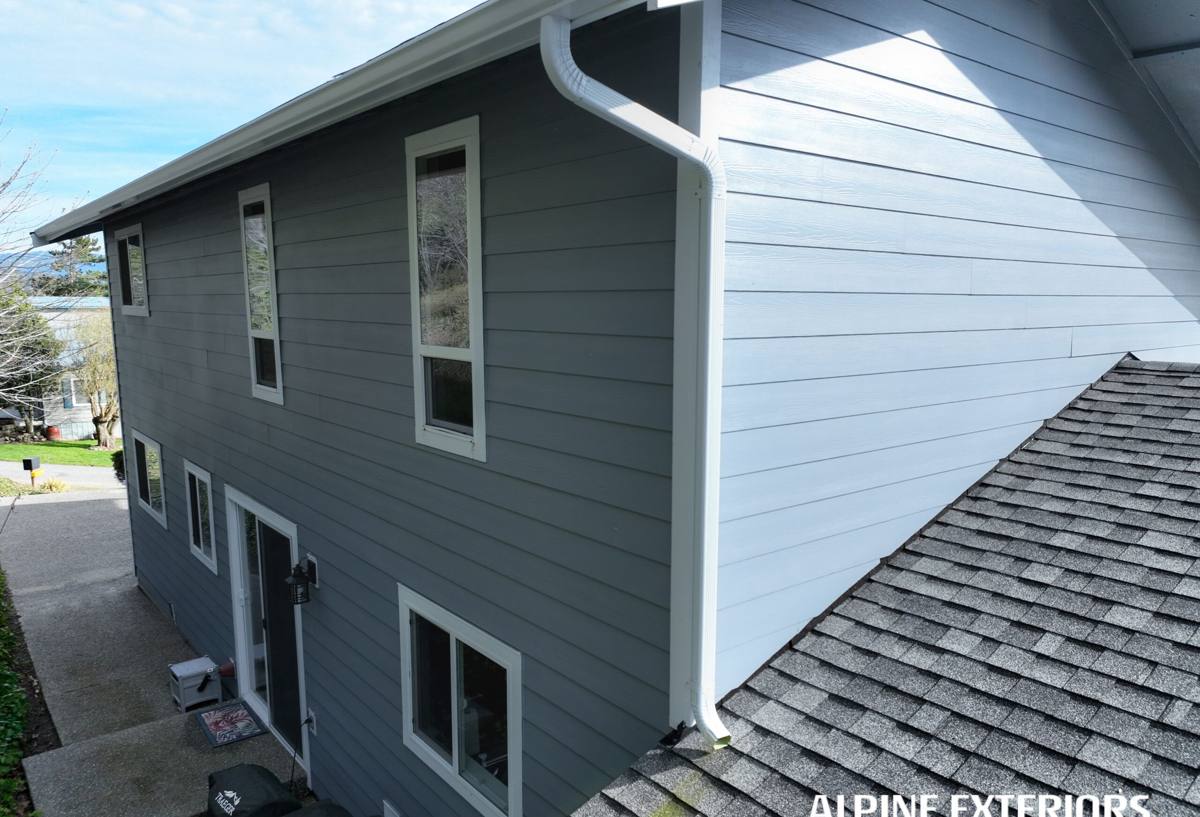
Signs a West Anacortes Roof Needs Repair
Most roof problems here don't announce themselves with a dramatic leak. They show up as small, easy-to-dismiss signs that get worse through one more wet season if left alone.
- Granules collecting in gutters or at downspout outlets — a sign shingles are wearing thin
- Dark green or black streaking, or thick moss mats, especially on north- and west-facing slopes that stay shaded and damp
- Curling, cracked, or lifted shingle edges, particularly on slopes that catch the most wind
- Rust staining or soft spots around metal flashing at chimneys, skylights, and roof-to-wall junctions
- Daylight visible through the attic sheathing, or damp, discolored insulation below the roof deck
- Sagging in the roofline over a porch, dormer, or addition, which often points to a slow leak that's been running longer than it looks
- Water stains on interior ceilings that appear only during heavy rain or wind from a particular direction
Any one of these on its own might be minor. Two or three together, especially on a roof past the middle of its expected service life, usually means it's time for a closer look before the next storm cycle.
What a Correct Repair Actually Involves
It starts with finding the real source
Water rarely enters where the stain shows up. It travels along rafters, sheathing, and underlayment before dropping somewhere convenient for it, not for you. A repair that starts with a real inspection — attic side and roof side, in decent light, not just a quick look from the ladder — finds the actual entry point instead of guessing from the ceiling stain.
Matching materials, not just patching them
A patch that doesn't match the surrounding shingle's age, exposure, and granule wear will shed water differently than the roof around it, and it'll look wrong for years. We match shingle type and, where reasonably possible, color and lot to the existing roof, and we tie new underlayment and flashing into the old material correctly rather than just caulking over the seam.
Flashing and moss get treated as part of the repair, not extras
On a roof with driving-rain exposure, flashing failure is one of the most common real causes behind a shingle-area leak. We rework flashing at valleys, chimneys, skylights, and wall intersections as part of the repair when it's compromised, not just where it's obviously torn. Where moss has been holding moisture against the roof surface, we remove it properly — by hand and low-pressure methods that don't strip granules or lift shingle tabs — rather than power-washing, which does more damage to an aging roof than the moss itself.
Common West Anacortes Roof Repair Issues
| Issue | Typical Cause Here | What the Fix Involves |
|---|---|---|
| Leak at chimney or skylight | Flashing corroded by salt air or sealant that's dried and cracked | Remove and rebuild flashing, re-lace into shingle courses, re-seal properly |
| Moss buildup on north/shaded slopes | Persistent shade, moisture, and long stretches without direct sun | Hand removal, treatment, and improved water shed at that section |
| Granule loss / bald patches | Age combined with wind and rain exposure on west-facing slopes | Shingle section replacement matched to existing material |
| Valley leak | Undersized or worn valley metal not handling volume in heavy rain | Replace valley flashing, confirm proper water channeling width |
| Soft or stained roof deck | Slow leak that's been running under the surface for a season or more | Localized sheathing replacement, not just a surface patch |
Repair or Replace: How to Tell
Not every roof problem calls for a full replacement, and not every problem should be treated with another round of patches. The honest answer usually comes down to how much of the roof's remaining service life is left and how widespread the damage actually is once we're up there.
| Factor | Repair Usually Makes Sense | Replacement Usually Makes Sense |
|---|---|---|
| Age of roof | Under roughly 15 years, or well-maintained | Nearing or past the material's expected lifespan |
| Extent of damage | Isolated to one slope, valley, or penetration | Recurring leaks in multiple, unrelated areas |
| Deck condition | Sheathing is sound under the damaged area | Soft or rotted decking found in more than one spot |
| Moss/algae history | First significant occurrence, roof otherwise solid | Chronic moss return despite repeated cleaning |
| Budget timeline | Buys time before a planned replacement | Repair costs approach a meaningful fraction of replacement cost |
We'll tell you honestly which category your roof falls into. If a repair will hold for several more years, that's what we recommend. If the deck is compromised in multiple spots or the roof is simply at the end of its life, we'll say so rather than sell you a patch that won't last a season.
How We Handle a Repair Job in West Anacortes
- Inspection. We check the roof surface, flashing, valleys, penetrations, and attic interior, and take photos so you can see exactly what we found.
- A clear, written scope. You get a straightforward explanation of what's failing, why, and what fixing it involves — no vague line items.
- The repair itself. Matched materials, proper flashing work, moss and debris cleared, and the surrounding area protected while we work.
- Verification. We check the repaired area and surrounding roof sections before we consider the job done, not just the one spot that leaked.
- Follow-up guidance. If we see conditions likely to cause the next problem — a shaded valley prone to moss, aging flashing elsewhere on the roof — we tell you, so it's not a surprise later.
Materials We Use — and Why
Most West Anacortes roofs we repair are asphalt shingle, with some cedar and metal mixed in on older or architecturally distinct homes. For shingle repairs, we favor architectural (dimensional) shingles when a section needs full replacement rather than matching into 3-tab, because they perform better under wind-driven rain and hold up longer against this climate's freeze-thaw and wet-dry cycling — though where an existing 3-tab roof is otherwise sound, we'll match into it rather than force a mismatched upgrade on one slope.
On flashing, we use metal, not just extended sealant runs. Sealant alone degrades faster in salt air and UV exposure than a properly formed and lapped metal flashing detail, and it's a common point of repeat failure when a prior repair relied on caulk to do a metal joint's job. We'll explain the trade-offs of any material choice in plain terms — cost, expected longevity in this specific exposure, and maintenance it'll need — so the decision is yours to make with full information, not ours to make for you.
Why Hiring Someone Who Already Works This Neighborhood Matters
A roofer who mostly works drier, inland areas can still do competent general roofing work, but West Anacortes rewards familiarity with its specific exposure: which slopes hold moss longest through the wet season, how far driving rain pushes water under a poorly lapped flashing detail, and which older homes in this part of town were built with roofing details that need extra attention when they're opened up for repair. That familiarity shows up in fewer surprises during the job and a repair that's built for the conditions it'll actually face, not generic conditions.
Keeping a Repaired Roof Ahead of the Next Wet Season
A repair holds longer with a little basic upkeep, especially given how long the moss season runs here.
- Clear gutters and downspouts at least twice a year so water isn't backing up under the roof edge
- Trim back overhanging branches that keep a roof section shaded and slow to dry out
- Have moss and algae treated before it forms thick mats, not after
- Walk the attic once a year, especially after a heavy storm, and look for new staining or daylight
- Address small flashing or shingle issues promptly — in this climate, small gaps don't stay small
If you're seeing any of the signs above, or you just want an honest, no-pressure look at what's going on with your roof, we're glad to come take a look. The estimate is free, and you'll get a clear answer about what needs fixing and what can wait — use the form below to get started.