 Anacortes
 Roofing in Bow Takes a Different Kind of Beating
Bow sits in the part of Skagit County where the land meets Samish Bay — close enough to open saltwater that homes take on a steady dose of salt-laden air, and shaded enough by conifers on many lots that roofs stay damp far longer than they would a few miles inland. Add in the driving, sideways rain that comes through with fall and winter storms off the Sound, and you've got a climate that's genuinely harder on a roof than most manufacturers' warranty testing accounts for. A roof replacement done for Bow needs to be built for that specific combination, not just installed to code minimums.
Salt Air and Metal Components
Salt air accelerates corrosion on anything exposed metal — nails, flashing, drip edge, vent caps, and fasteners. On a roof that's only a mile or two from the water, using standard electro-galvanized fasteners instead of hot-dip galvanized or stainless steel can mean rust streaks and failed fastener heads years before the shingles themselves wear out. This is one of the most common corner-cutting mistakes we see on older Bow roofs, and it's an easy one to avoid if it's specified correctly from the start.
Shade, Moss, and Slow Drying
A lot of Bow properties sit on wooded or partially wooded lots, which means roof sections facing north or shaded by mature trees can stay wet for days after a storm passes. That extended moisture window is exactly what moss and moss-adjacent lichen and algae need to take hold. Once moss gets a foothold under shingle tabs, it lifts them, holds water against the roof deck, and shortens the life of the roofing system — often well before the shingles' rated lifespan is up.
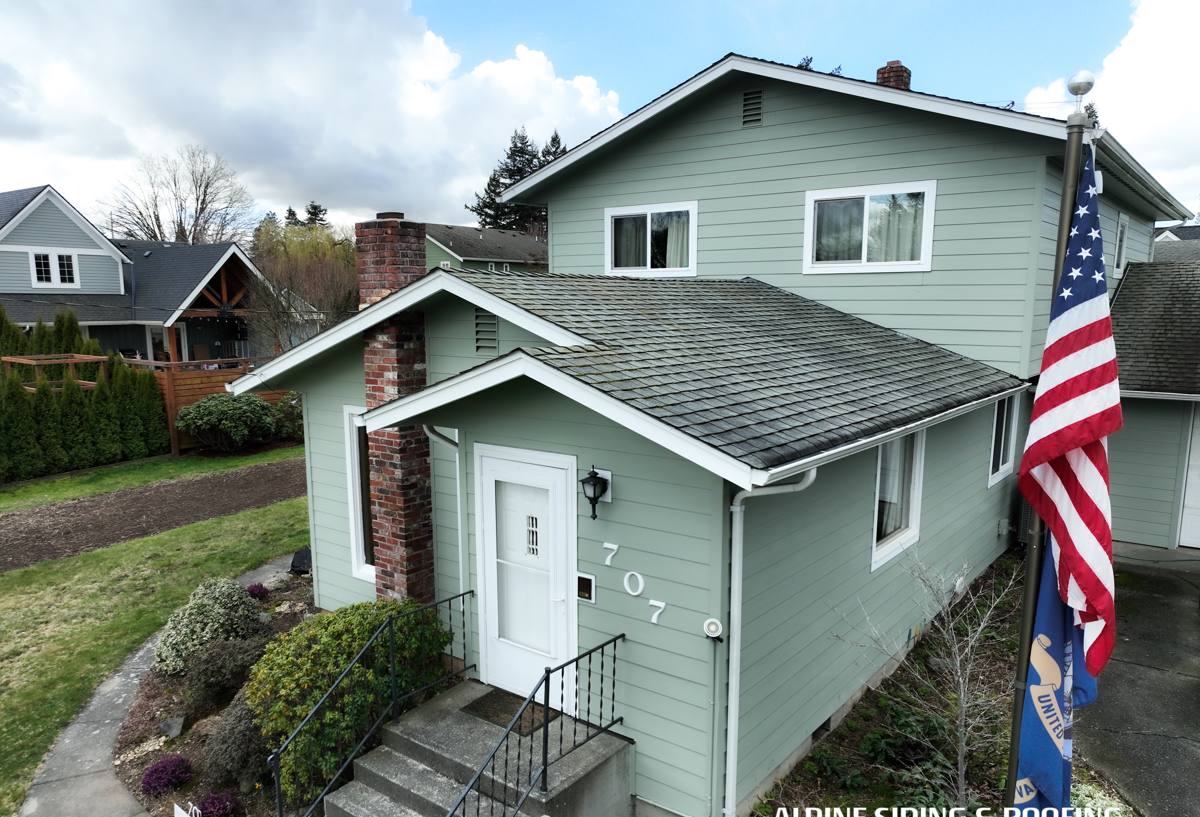
Signs a Bow Roof Needs Replacement, Not Just Repair
Not every roof problem calls for a full tear-off. But there's a point where patching stops making financial sense and a full replacement becomes the more honest recommendation. Here's what we look for during an inspection:
- Granule loss heavy enough that you can see bare asphalt mat on multiple slopes, not just one isolated spot
- Shingles that are cupping, curling at the edges, or cracking when lightly flexed
- Moss growth established under the shingle tabs, not just sitting on the surface
- Soft spots or noticeable sag when walking the roof deck, which usually points to underlying rot
- Daylight visible through the roof deck from inside the attic, or water staining on rafters and sheathing
- Flashing that's rusted through, separated, or was never properly stepped at walls and chimneys
- A roof already past 20-25 years old (asphalt) with multiple layers of prior repairs stacked on it
- Rising energy bills tied to poor attic ventilation combined with visible roof deterioration
If a roof shows two or three of these at once, repair usually just delays an inevitable full replacement while spending money that doesn't carry forward into the new roof.
What a Correct Roof Replacement Actually Involves
A roof replacement is more than swapping old shingles for new ones. The parts nobody sees are what determine whether the roof still performs in year fifteen the way it did in year one — especially in a climate that includes driving rain and a long moss season.
Full Tear-Off and Deck Inspection
We remove existing roofing down to the deck rather than layering over it. That lets us actually see the plywood or OSB sheathing underneath — soft, delaminated, or water-stained sections get replaced before anything new goes down. Roofing over a compromised deck just hides a problem that will surface again, usually as a leak.
Underlayment and Water Barrier
Given the amount of driving rain Skagit County sees, we don't treat underlayment as an afterthought. Synthetic underlayment across the field, with self-adhered ice-and-water membrane at eaves, valleys, and any low-slope transitions, gives the roof a real second line of defense if wind-driven rain gets under a shingle tab — which it eventually will, on any roof, in this climate.
Flashing Done Right
Flashing failures are the single most common cause of roof leaks we find that have nothing to do with the shingles themselves. Step flashing at walls, counter-flashing at chimneys, and properly lapped valley flashing all need to be installed in the correct sequence with the underlayment and shingles — not just caulked over the top, which is a common shortcut that fails within a few years, especially with salt air working on any exposed metal edges.
Ventilation That Actually Balances
Intake at the eaves has to match exhaust at the ridge. Get this wrong and you trap moisture in the attic, which both rots the deck from underneath and creates the exact damp, dark conditions moss and mildew like. On heavily shaded Bow lots, correct ventilation is one of the better tools we have for slowing moss regrowth after a new roof goes on.
Material Options for Bow's Coastal Climate
There's no single "best" roofing material — the right choice depends on the home, the budget, and how much long-term maintenance the owner wants to take on. Here's how the common options stack up against Bow's conditions specifically:
| Material | Salt Air Performance | Moss Resistance | Typical Lifespan |
|---|---|---|---|
| Architectural asphalt shingle | Good with corrosion-resistant fasteners and flashing | Moderate — benefits from zinc/copper strips and regular cleaning | 25-30 years |
| Standing seam metal | Excellent with properly coated or coastal-rated panels | Very good — sheds moisture fast, little surface for moss to grip | 40-50+ years |
| Cedar shake | Fair — needs regular treatment near salt air | Poor without diligent upkeep; holds moisture | 20-30 years with maintenance |
| Synthetic composite shingle | Good — resists corrosion since it's not metal-fastener-dependent at the surface | Good — dense material sheds water quickly | 30-50 years |
For most Bow homes, we recommend either a quality architectural asphalt shingle with the corrosion-resistant details described above, or standing seam metal for owners who want to minimize moss maintenance and don't mind the higher upfront cost. We steer clients away from cedar shake on heavily shaded lots specifically because of the maintenance burden it creates in this climate — not because it's a bad product everywhere, just a poor match for shade and salt air together.
Our Roof Replacement Process
- On-site inspection and estimate — we walk the roof, check the attic if accessible, and give you an honest assessment of whether repair or replacement makes sense.
- Material selection — we go over the trade-offs for your specific lot (shade, exposure, budget) rather than pushing one product.
- Scheduling around weather — we plan tear-off days to avoid leaving a deck exposed during an incoming storm system, which matters more here than in drier climates.
- Tear-off and deck repair — full removal, deck inspection, and replacement of any compromised sheathing.
- Underlayment, flashing, and ventilation install — the parts that determine long-term performance, done to the details above.
- Final shingle or panel installation — installed to manufacturer spec so warranty coverage stays intact.
- Cleanup and walk-through — magnetic sweep for stray fasteners, full site cleanup, and a final review with you before we consider the job done.
What Drives the Cost of a Bow Roof Replacement
Every roof is different, but the same handful of factors move the price up or down on most Bow projects:
| Factor | Why It Matters |
|---|---|
| Roof size and pitch | Steeper roofs take longer to work safely and use more material per square |
| Deck condition | Rotted sheathing found during tear-off adds material and labor to replace |
| Number of layers to remove | Tearing off two layers of old roofing costs more than one |
| Material choice | Metal and premium synthetics cost more upfront than standard asphalt |
| Flashing and penetrations | Chimneys, skylights, and multiple roof planes add detail work |
| Access and site conditions | Tree cover, tight driveways, or difficult staging can add time |
Most straightforward asphalt shingle replacements on a typical Bow home land in the mid-to-high five figures depending on size and roof complexity, with metal running higher. We'll give you a firm number after seeing the actual roof — broad ranges are useful for planning, but every quote should be based on your specific roof, not a phone estimate.
Moss Prevention After the New Roof Goes On
A new roof doesn't mean moss stops being a factor — it means you're starting from zero with the tools to manage it properly. We install zinc or copper control strips near the ridge on shaded roofs, which release trace metal ions with every rain that inhibit moss and algae growth across the field of the roof over time. Beyond that, periodic soft washing (never pressure washing, which strips granules and shortens shingle life) and keeping overhanging branches trimmed back go a long way toward keeping a Bow roof drying out properly between storms instead of staying damp for days.
Why a Crew That Already Works Bow Matters
Roofing crews that mostly work drier, inland areas don't always think about corrosion-resistant fasteners, control strips, or scheduling tear-off days around incoming rain — because those things don't matter as much where they usually work. A crew that's replaced roofs throughout Skagit County's coastal communities builds those details into the plan by default, not as an upsell. It also means we're familiar with the local permitting process and can speak specifically to how a given lot's shade and exposure will affect the roof's long-term performance, rather than giving generic advice that applies anywhere.
If your roof in Bow is showing its age or you just want an honest opinion on whether repair or replacement makes more sense, we're glad to take a look. Reach out for a free, no-pressure estimate using the form below.