 Anacortes
 Why Ship Harbor Windows Wear Out Faster Than Inland Homes
Homes in the Ship Harbor area sit close to open water on Fidalgo Island, which means windows here take a different kind of beating than windows twenty minutes inland in Mount Vernon or Burlington. It's not one big storm that does the damage — it's the daily grind of salt-laden air, wind-driven rain that hits window assemblies sideways instead of straight down, and long stretches of shade and dampness that keep moss and algae established for most of the year. Skagit County's marine climate is mild compared to a lot of the country, but "mild" doesn't mean gentle on building materials. It means constant, low-grade exposure that adds up over fifteen or twenty years.
Salt Air and Metal Components
Salt air corrodes exposed metal — window hardware, screen frames, and especially older aluminum sashes or aluminum storm windows. Even vinyl and fiberglass windows have metal fasteners, balance systems, and lock hardware inside them, and once those start corroding, the window stops operating smoothly long before the glass or frame actually fails. If your windows near Ship Harbor are getting stiff, gritty, or hard to latch, salt exposure is usually part of the story.
Wind-Driven Rain and Water Intrusion
Rain that comes in at an angle off the water finds every weak point in a window's flashing and sealant. On a lot of homes built or re-sided without a proper water-management plan around the window openings, that means water tracks behind the trim and into the wall cavity instead of running down and off the siding. You often don't see this until there's staining on interior sills, soft trim, or a musty smell in a room that faces the water — by which point the damage isn't just the window anymore.
Moss, Shade, and Trapped Moisture
Fidalgo Island's tree cover and marine humidity keep a lot of north- and west-facing walls damp for long stretches of the year. Moss and algae don't just look bad on siding; around windows they hold moisture against the frame and trim, which accelerates wood rot on wood-clad units and breaks down sealant faster than it would on a drier, sunnier wall. Windows in shaded, moss-prone spots typically need attention sooner than the same windows on a south-facing elevation.
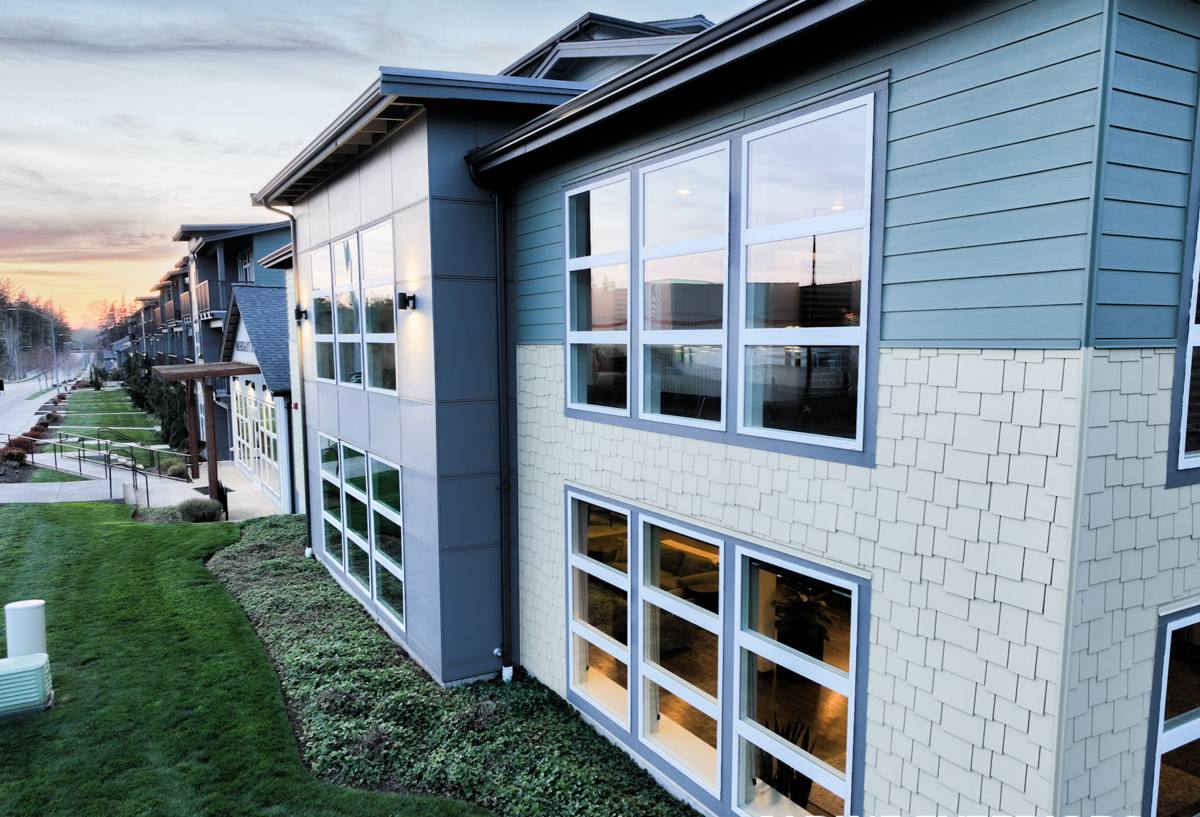
Signs a Ship Harbor Home Needs Window Replacement, Not Just a Repair
Not every window problem calls for full replacement. But there's a point where patching sealant or swapping hardware is just deferring the real fix. Here's what we look for during an on-site evaluation:
- Fogging or a permanent haze between double-pane glass (the seal has failed and can't be repaired)
- Soft or spongy wood at the sill or bottom corners of the frame
- Windows that won't stay open, won't latch fully, or have visibly sagging sashes
- Visible daylight or a draft around the frame even when the window is closed and locked
- Paint or finish that keeps failing within a year or two of repainting, especially on the exterior-facing side
- Noticeable temperature difference near the window compared to the rest of the room
- Condensation forming on the interior glass regularly, even in normal weather
- Corroded or seized hardware that hardware cleaner and lubricant no longer fix
If you're seeing two or more of these on the same window, replacement is almost always the more honest recommendation than another round of caulk and touch-up paint.
What a Correct Window Replacement Job Actually Involves
The window unit itself is maybe half the job. The other half — the part that determines whether the window survives the next twenty Skagit County winters — is what happens at the rough opening before the new window ever goes in.
A correct install includes removing the old unit down to the framing, checking that framing for rot or water damage and repairing it before anything new goes in, installing proper flashing so water sheds outward and down (not into the wall), setting the window level and square with the right shims and fasteners, sealing with the right sealant in the right locations (not everywhere, and not nowhere), and finishing the interior and exterior trim so the whole assembly is weathertight, not just caulked shut. Skipping the flashing step, or reusing old flashing that's already failed once, is one of the most common corners cut on window jobs in wet climates — and it's the step you can't see once the trim goes back on.
Full-Frame Replacement vs. Insert (Pocket) Replacement
There are two basic approaches, and the right one depends on the condition of your existing frame and trim, not just budget.
| Approach | Best For | Trade-offs |
|---|---|---|
| Insert (pocket) replacement | Existing frame is sound, no rot, trim is in good shape | Faster and less disruptive, but any hidden rot or flashing problems stay hidden |
| Full-frame replacement | Frame or sill shows rot, water staining, or the home is getting re-sided anyway | More labor and cost, but lets us inspect and fix the opening, flashing, and sealing completely |
Given how much wind-driven rain this area sees, we lean toward recommending full-frame replacement whenever there's any sign of past water intrusion, even if it costs more up front. An insert installed over a hidden problem just buys a few quiet years before the same issue resurfaces.
Frame Material: What Actually Holds Up Near the Water
Every frame material has trade-offs. None of them are "bad" — the honest answer is that some need more upkeep in a salt-air, high-moisture environment than others, and homeowners deserve to know that before they buy.
| Material | How It Handles Marine Climate | Maintenance |
|---|---|---|
| Vinyl | Doesn't rot or corrode; performs consistently in salt air | Low — occasional cleaning, no painting or sealing needed |
| Fiberglass | Very stable dimensionally, holds paint well if a custom color is wanted | Low to moderate — more durable finish than vinyl but higher upfront cost |
| Wood-clad | Attractive interior wood look, but the exterior cladding and any exposed wood need real attention in damp, shaded spots | Higher — regular inspection and finish maintenance, especially on north/west walls |
| Aluminum | Prone to corrosion and condensation in coastal, humid conditions unless thermally broken | Moderate to high — watch for pitting and hardware corrosion |
For most homes in the Ship Harbor area, we steer customers toward vinyl or fiberglass for the exterior-facing components specifically because they don't give salt air and moisture anything to work on. That's not a knock on wood-clad windows as a product — they're a legitimate choice with real appearance benefits — it's a maintenance-burden conversation we have honestly with every homeowner who's considering them for a heavily shaded or water-facing wall.
Our Process, Start to Finish
- On-site evaluation. We look at every window being considered, check the framing and sill condition where we can, and note which openings are showing signs of water intrusion versus normal wear.
- Straight-talk proposal. You get a written scope that says exactly what's insert replacement and what's full-frame, what material we're recommending and why, and a price range tied to that scope — not a vague estimate.
- Install day prep. We protect flooring and landscaping, remove old units carefully, and inspect every opening before anything new goes in.
- Correct installation. Flashing, shimming, sealing, and trim — done in that order, with each window checked for level, square, and smooth operation before we move to the next.
- Walkthrough and cleanup. We test every window with you, answer questions about care, and haul away the old units and debris.
Why a Crew That Already Works Ship Harbor Matters
Window replacement isn't the same job in every neighborhood. A crew that mostly works drier, more sheltered inland sites doesn't necessarily think about flashing details, sealant selection, or moss-prone shaded walls the same way a crew that works this specific stretch of Skagit County waterfront does every week. We know which elevations on a Ship Harbor-area home usually take the worst of the wind-driven rain, which frame materials hold up without high maintenance in salt air, and what a failed seal or hidden rot typically looks like on homes of this age and construction type around here. That familiarity shows up in fewer surprises during the job and a window system that's actually built for the exposure it's going to face, not a generic install pulled from a catalog spec sheet.
Caring for New Windows Through Moss Season
A correctly installed window still needs basic upkeep, especially given how long moss season runs in this part of Washington. A few habits go a long way:
- Rinse pollen, salt residue, and grime off exterior glass and frames a couple of times a year
- Keep gutters and any nearby roof valleys clear so runoff doesn't sheet directly across window heads
- Trim back vegetation that's keeping a window or wall shaded and damp longer than it needs to be
- Check exterior caulk lines once a year for cracking or separation, and have it touched up before it fails completely
- Operate every window a few times through the seasons so hardware doesn't seize from disuse
What Affects the Cost of a Ship Harbor Window Replacement
Costs vary by home, but the main drivers are consistent: whether you're doing insert or full-frame replacement, the frame material, the number and size of openings, and whether hidden rot turns up once the old window comes out. We won't quote a firm number without seeing the openings, but we'll always explain what's driving the price on your specific home before any work starts, and flag anywhere a full-frame approach is going to cost more than an insert but save you from a repeat problem in a few years.
If your windows near Ship Harbor are showing their age, or you just want an honest read on what condition they're actually in, we're glad to come take a look. There's no pressure and no obligation — use the form below to request a free estimate.