 Anacortes
 Why Similk Beach Windows Wear Differently Than Inland Homes
Homes along Similk Bay and the shoreline neighborhoods around it face a different set of pressures than a house ten miles inland in Skagit County. The air carries salt. The rain comes in sideways more often than it falls straight down. And for a good stretch of the year, everything that doesn't get direct sun stays damp — trim, siding, and window frames included. None of that is dramatic on its own, but it adds up fast when a window wasn't installed to handle it in the first place.
Salt-laden air is hard on exposed metal — hinges, cranks, screws, and cheap flashing tape all corrode faster here than they would in a drier, inland part of the county. Driving rain off the water finds any gap in a window's flashing or sealant and pushes water sideways and upward, not just down, which is exactly the direction most builder-grade installs aren't designed to resist. And the long moss season means anything shaded or north-facing stays wet longer, so a window with a marginal seal doesn't just get damp — it stays damp for weeks, which is when rot and mold actually take hold.
None of this means Similk Beach homes need exotic products. It means the installation has to be done correctly, with the right materials in the right order, every time — because a shortcut that survives in a sheltered inland yard often doesn't survive a winter here.
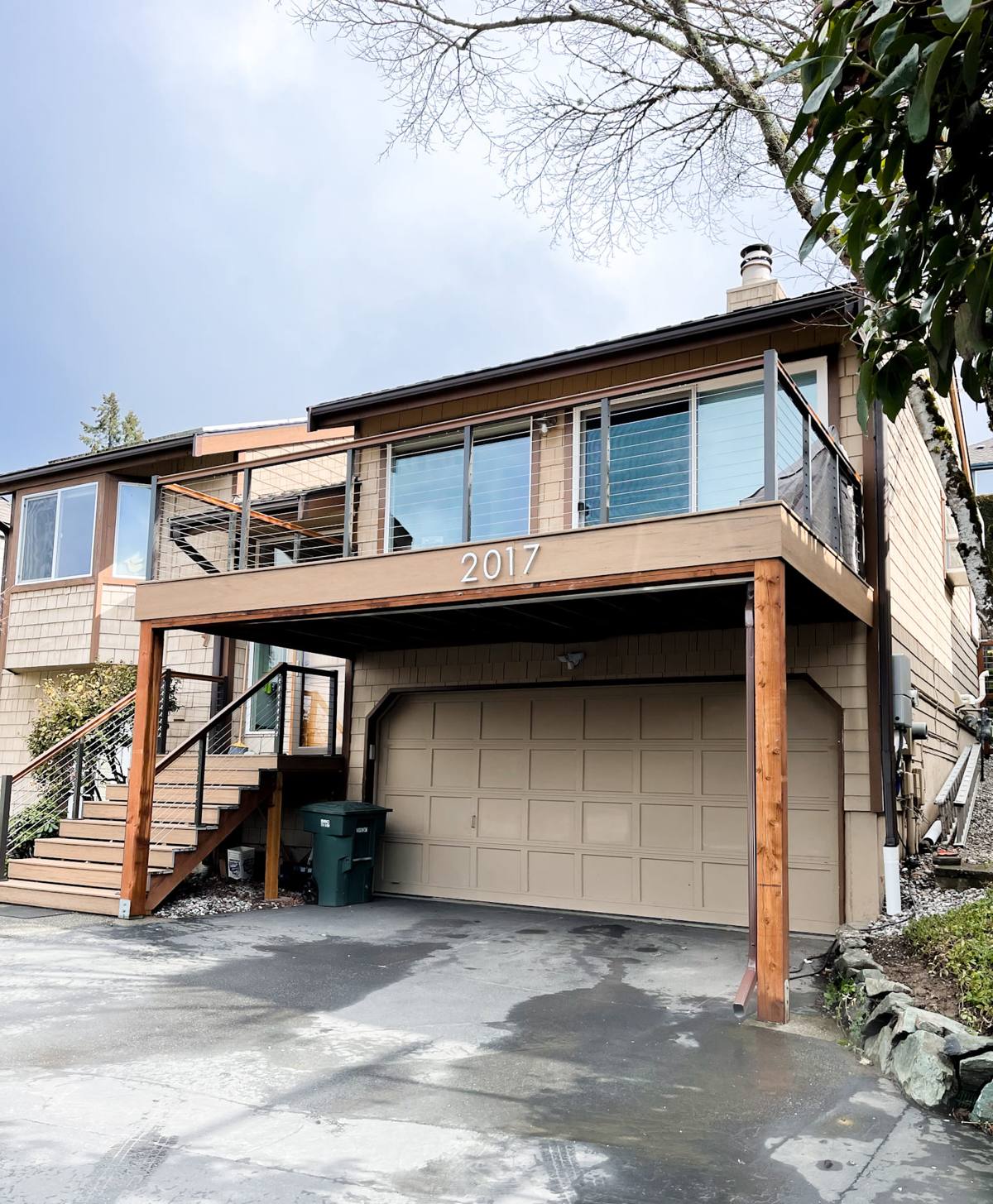
What a Correct Window Installation Actually Involves
A window install is judged on how it looks for the first year and how it performs for the next twenty. In a marine climate, the difference between those two outcomes usually comes down to what's happening behind the trim, not what's visible from the driveway.
Flashing and Water Management
Every window opening needs a flashing sequence that sheds water outward and downward at every layer — sill pan first, then side flashing, then head flashing integrated with the house wrap so water is always directed out over the layer below it, never trapped behind it. On a shoreline home, we pay particular attention to sill pans, since wind-driven rain tends to find its way to the bottom of the frame no matter how good the upper flashing is.
Sealants and Backer Rod
Caulk is not a water management system by itself — it's the last line of defense, and it fails fastest when it's the only line of defense. We use it correctly (with backer rod where gaps call for it, and products rated for our temperature swings) but we never rely on sealant to compensate for missing flashing.
Fasteners and Hardware
In a salt-air environment, fastener choice matters more than most homeowners realize. Corrosion-resistant screws and hardware cost a little more up front and save a callback five years later when a cheap fastener has rusted, stained the siding, or backed out entirely.
Insulation and Air Sealing
Gaps around the frame get filled with low-expansion foam or backer rod and insulation — never packed so tight it bows the frame, never left loose enough to let moist air condense inside the wall cavity.
Signs a Similk Beach Home Needs Window Attention
Because so much of the damage happens behind the trim, homeowners often don't know there's a problem until it's already expensive. These are the signs worth acting on early:
- Soft or spongy trim or sill when pressed with a finger
- Fogging or condensation between double-pane glass (a failed seal)
- Visible moss or dark streaking on the frame or the wall just below the sill
- Drafts you can feel on a windy day even with the window latched
- Paint or finish bubbling or peeling near the corners of the frame
- Difficulty opening, closing, or locking a window that used to operate smoothly
- A musty smell in the room only during wet weather
Any one of these can be minor on its own. Two or more together, especially on a window facing the water or prevailing weather, usually means moisture has been getting behind the frame for a while.
Choosing Windows for a Marine Climate
There's no single "best" window material — there's a best fit for the exposure, the budget, and how much upkeep a homeowner wants to take on. Here's how the common options actually compare for a shoreline property in this part of Skagit County:
| Material | Salt-air performance | Maintenance | Typical fit |
|---|---|---|---|
| Vinyl | Good — won't corrode or rust | Low — occasional cleaning | Most budgets, most exposures |
| Fiberglass | Very good — dimensionally stable in temperature swings | Low | Higher-exposure walls, longer hold periods |
| Aluminum-clad wood | Fair — depends heavily on cladding quality and installation | Moderate to high | Homeowners prioritizing a wood interior look |
| Bare wood | Poor in direct salt exposure without diligent upkeep | High | Sheltered elevations only, on this coastline |
Our default recommendation for exposed elevations facing the water is vinyl or fiberglass, simply because they don't give salt air and moisture a foothold the way an exposed wood or under-clad wood window can. That's a maintenance and moisture judgment, not a knock on wood windows generally — plenty of them perform fine on sheltered, inland walls. It's about matching the product to the exposure it'll actually face.
Glass and Seal Considerations
Double-pane, low-E glass is standard here for a reason — it cuts down on condensation on the interior face during our cool, damp months, which matters more on a home that already deals with high ambient humidity off the water. Argon-filled units and quality spacer systems hold their seal longer under the temperature swings a shoreline home sees between a sunny afternoon and a cold, wet night.
Our Installation Process
The process doesn't change dramatically from house to house, but the details we pay extra attention to on a Similk Beach property do:
- Assessment — we check existing framing, sill condition, and signs of prior water intrusion before quoting anything, since hidden rot changes the scope.
- Old window removal — done carefully to expose the full opening and check the condition of the sheathing and house wrap behind it.
- Sill pan and flashing installation — built to shed water outward, sequenced correctly with the house wrap.
- Window setting and shimming — leveled, plumbed, and squared before a single fastener goes in.
- Fastening with corrosion-resistant hardware — appropriate for the exposure the window faces.
- Insulation and air sealing around the frame, without over-packing.
- Exterior trim and sealant — finished with products rated for our climate, not generic caulk.
- Interior finish work and final operation check — every window opens, closes, and locks the way it should before we call the job done.
Every step matters, but the ones that keep a window performing ten years from now are almost all invisible once the trim goes back on — which is exactly why the crew doing them needs to already understand what this coastline does to a house.
What Drives the Cost of a Window Project Here
Every home is different, so we won't quote a number without seeing the job, but these are the factors that most often move the price up or down:
| Factor | Why it matters |
|---|---|
| Number and size of openings | More material and labor per window, obviously, but also more flashing detail work |
| Existing water damage | Rotted sheathing or framing found during removal adds repair scope before a new window can go in |
| Exposure of the wall | A wall facing directly into prevailing wind and rain gets more flashing attention than a sheltered elevation |
| Window material and glass package | Vinyl, fiberglass, and clad-wood carry different price points and different long-term maintenance costs |
| Access | Second-story or hard-to-reach openings take more time and sometimes equipment |
| Trim and finish work | Matching existing exterior trim profiles adds labor beyond a basic install |
As a general guide, straightforward single-window replacements tend to run in the low thousands per opening once you account for quality materials and proper flashing; full-home replacements scale from there. Anyone quoting a firm number before seeing the wall behind your existing window is guessing.
Why Local Experience with Similk Beach Homes Matters
Window installation isn't a one-size-fits-all trade. A crew that mostly works dry, inland neighborhoods can do a technically fine install and still miss the details that matter on a shoreline property here — because they've never had to. Working this coastline regularly means already knowing which elevations take the worst of the wind-driven rain, how fast moss establishes itself on a north-facing wall in a wet Skagit County winter, and which fastener and flashing choices actually hold up against salt air instead of just looking fine on installation day.
It also means fewer surprises during the job itself. We've opened up enough walls in this area to have a good sense of what we're likely to find behind an older window — and to price and plan for it honestly rather than discovering it mid-project and stalling out.
A Quick Pre-Estimate Checklist
Before you call anyone for a window quote, a quick walk-around helps the estimate go faster and gives you a clearer starting picture:
- Note which windows face the water or prevailing wind — those usually need attention first
- Press on sills and trim from outside to check for soft spots
- Look for double-pane windows with visible fogging between the glass
- Check for moss or dark staining below or beside the frame
- Note any windows that stick, won't latch fully, or let in a draft
Protecting the Investment After Installation
A correctly installed window in this climate doesn't need much — but "not much" isn't "nothing." A yearly check of exterior caulk lines, especially after a hard winter, catches small cracks before they become entry points. Keeping gutters and downspouts clear reduces the amount of water running down the wall past your windows in the first place. And knocking moss off shaded trim before it establishes itself keeps moisture from sitting against the frame for weeks at a time. None of this takes long, and it's far cheaper than dealing with rot behind a sill years down the road.
If you're weighing whether a window on your Similk Beach property needs replacing, repair, or just some attention to the trim and flashing around it, we're happy to take a look and give you a straight answer — no pressure, no upsell. Reach out for a free estimate using the form below and we'll walk through what we see and what it would take to fix it right.