 Anacortes
 Windows on March Point Take More Weather Than Most
March Point sits out on the water side of Anacortes, which means its homes catch weather that inland Skagit County neighborhoods mostly avoid. Wind off the bay carries salt, rain comes in sideways more often than straight down, and the gray months bring enough sustained moisture to keep moss and algae established on anything that doesn't dry out quickly. Windows are one of the first parts of a house to show what that environment is doing — corroded hardware, foggy double-pane glass, soft trim, and gaps that let drafts and moisture work their way into the wall cavity.
A window installed for a dry inland climate isn't automatically wrong for March Point, but it's rarely installed the same way. The flashing details, the sealants used, the frame material, and even the order of operations during installation all matter more here than they would forty miles inland. This page is about what a correct window installation looks like specifically for a March Point home, not a generic overview of window replacement.
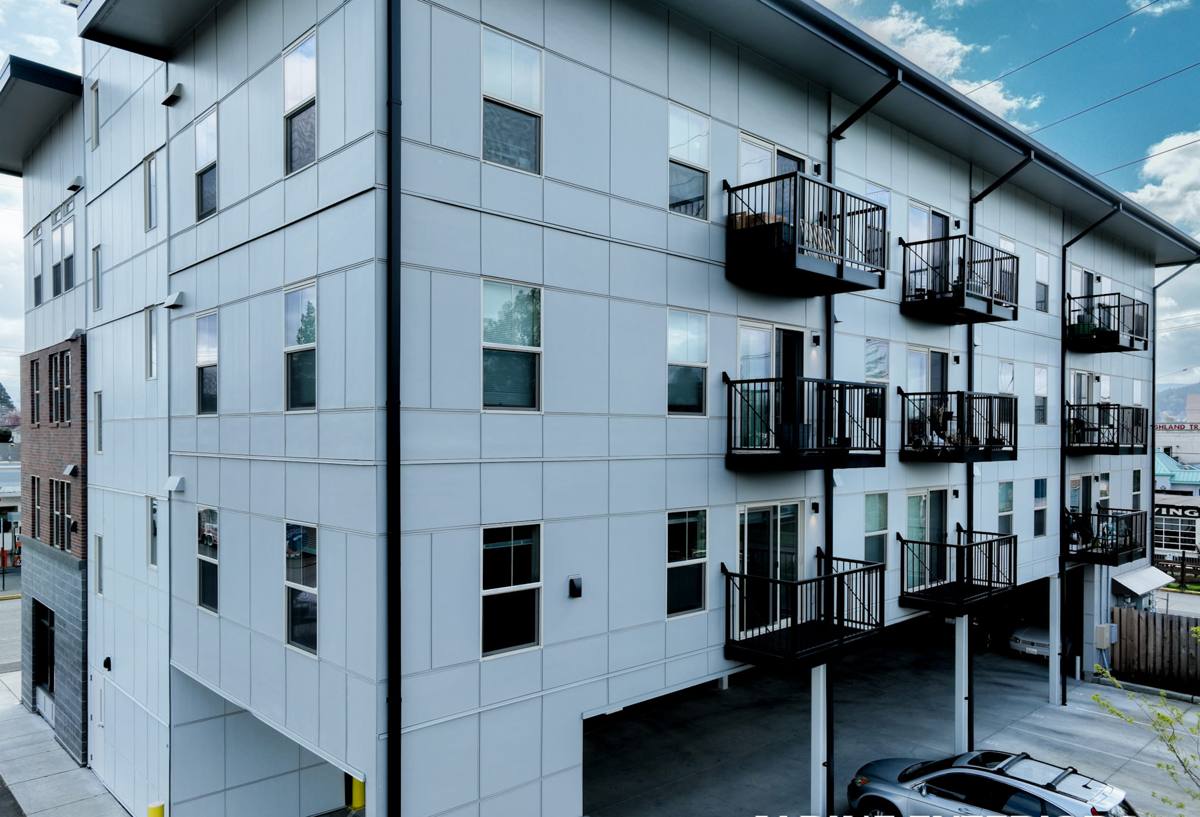
What the Local Climate Actually Does to a Window Opening
Salt Air
Salt-laden air off the water accelerates corrosion on unprotected metal — window balances, screen frames, hinges, and fasteners all age faster here than they would in a dry inland install. It also breaks down certain finishes over time, which is why hardware quality and finish matter more on a March Point project than they might on a job across the mountains.
Driving Rain
Wind-driven rain doesn't behave like a normal downpour. It gets pushed sideways and upward under trim, behind cladding, and into any gap in the flashing that a standard vertical-rain install might tolerate. Most window leaks we find on the peninsula and along the bay aren't glass failures — they're flashing and sealant failures at the sill and the head, where wind-driven water finds a way in that gravity alone wouldn't.
Moss and Prolonged Moisture
Skagit County's moss season runs long, and anywhere a window doesn't get direct sun or airflow — north-facing walls, shaded corners, spots close to trees — moisture sits longer. That constant dampness is what rots wood trim and sheathing around an aging window opening, often well before the glass unit itself has failed.
What a Correct Window Installation Actually Involves
Swapping the sash in an old frame ("pocket" or "insert" replacement) is faster and cheaper, but it only makes sense when the existing frame, sill, and surrounding wall are still sound. On a coastal property, we don't assume that — we check.
- Remove the old window and inspect the opening. This is the step that gets skipped on cheap jobs and it's the one that matters most here. We're looking for soft or discolored sheathing, rot at the sill, and any sign water has been getting behind the old flashing.
- Repair or rebuild the opening if needed. Rotted framing or sheathing gets cut out and replaced before a new window ever goes in. Installing a new window into a compromised opening just hides the problem for a few years.
- Install a proper drainage plane and flashing. Self-adhered flashing tape at the sill, jambs, and head, lapped correctly (bottom-up, like shingles) so any water that does get past the window sheds back out instead of pooling.
- Set the window plumb, level, and square, shimmed correctly so the frame isn't under stress — a racked frame is one of the more common causes of premature seal failure and hardware wear.
- Insulate the gap between frame and rough opening without overpacking it, which can bow the frame inward and cause operational problems.
- Seal and trim. Exterior sealant at the right joints (not everywhere — some joints need to stay open to drain), then trim and, where relevant, integration back into the siding so water sheds over the window, not into it.
Choosing Window Materials for a Marine Environment
There's no single "best" window material — the right choice depends on budget, maintenance appetite, and how exposed the specific wall is to wind and salt spray. Here's how the common options actually hold up on a bayside property like this one:
| Material | How It Handles Salt Air & Moisture | Maintenance | Trade-offs |
|---|---|---|---|
| Vinyl | Good — won't rust or rot; UV can cause slow fading/brittleness over many years | Low | Frame can't be painted a new color later; limited structural strength for very large openings |
| Fiberglass | Very good — dimensionally stable, resists corrosion and moisture well | Low | Higher upfront cost than vinyl |
| Wood-clad | Depends entirely on cladding and installation quality; exposed wood or failed cladding invites rot | Higher — cladding seams need periodic inspection | Best appearance for traditional styles; more installation-sensitive in wind-driven rain |
| Aluminum | Prone to corrosion near salt air unless marine-grade and properly finished | Moderate | Thermally inefficient without a thermal break; not our default recommendation this close to the water |
Our default recommendation for March Point homes is vinyl or fiberglass for most walls, with wood-clad reserved for homeowners who want that look on protected elevations and are comfortable with the added upkeep. We'll walk through the actual trade-offs for your specific walls rather than push one product line.
Flashing Details That Matter Most in Wind-Driven Rain
Most window "leaks" trace back to one of a short list of installation shortcuts, and they're worth knowing about even if you're not doing the work yourself:
- Flashing tape applied out of sequence (head flashing under the housewrap instead of over it, for example) so water gets directed into the wall instead of away from it
- Caulk used as a substitute for proper flashing instead of alongside it — caulk fails; flashing shouldn't depend on it
- No sill pan or sloped sill detail, so any water that gets past the frame sits against wood instead of draining out
- Sealant applied at the bottom of the frame where it should be left open to let incidental moisture escape
- Nailing fin or flange fasteners skipped or under-driven, leaving gaps behind trim that wind can push water through
None of these show up as an obvious problem the day the window is installed. They show up two, five, or ten winters later as soft trim, stained drywall, or a musty smell near the window — right on schedule with what a long, wet Skagit County winter will find if given the chance.
How Our Process Works
We keep it straightforward:
- Free on-site estimate. We look at the actual windows and openings, not just count units from a photo, and note which walls take the most weather.
- Written scope and pricing. You'll know the window brand and model, the flashing approach, and what happens if we find rot once the old window comes out.
- Installation. Openings are inspected and repaired as needed before the new window goes in — see the step-by-step above.
- Final walkthrough. We check operation, sealant lines, and interior/exterior trim with you before we call the job done.
What Window Installation Typically Costs
Every project is different, but the main cost drivers on a March Point job tend to be the same handful of factors:
| Factor | Why It Changes the Price |
|---|---|
| Insert vs. full-frame replacement | Full-frame costs more but is often necessary once framing or flashing is compromised |
| Window material | Vinyl is generally the most affordable; fiberglass and wood-clad cost more |
| Opening condition | Rotted sheathing or framing discovered mid-project adds repair time and material |
| Wall exposure | Walls that take direct wind-driven rain get more flashing detail and labor time |
| Number and size of openings | Larger units and multi-window projects have per-unit efficiencies but higher total cost |
| Trim and siding integration | Matching existing trim or integrating with new siding adds carpentry time |
We don't quote a single number for "windows" over the phone — we price based on what your specific openings need, which is the only honest way to do it.
Signs a March Point Home's Windows Need Attention
- Fogging or a milky haze between the panes (failed seal on the insulated glass unit)
- Soft, spongy, or discolored trim or sill, especially on north-facing or shaded walls
- Windows that are hard to open, close, or lock — often a sign the frame has racked or swollen
- Visible gaps, drafts, or a whistling sound during storms
- Moss or dark streaking on trim or siding directly around the window
- A musty smell near the window that wasn't there before
- Peeling paint or bubbling on interior trim near the window
Any one of these is worth a look. A few of them together usually means the opening itself, not just the window, needs attention.
Why Hiring a Crew That Already Works March Point Matters
A crew that only works dry, inland jobs can install a perfectly good window the "textbook" way and still get it wrong for this location, because the textbook assumes rain falls straight down. Working regularly around Anacortes and the rest of Skagit County means knowing which walls take the worst of the wind, how long the moss season actually runs, and what salt air does to hardware over a five- or ten-year window instead of guessing. It also means we're not learning the local building department's requirements for the first time on your project — permitting and inspection go smoother when the contractor already knows the process.
If your March Point home has windows that are drafty, fogged, hard to operate, or showing rot at the trim, we'll come take a look and give you a straight, no-pressure estimate — free, with no obligation to move forward. Use the form below to get started.