 Anacortes
 Bow sits in the farmland and shoreline country between Anacortes and Burlington, close enough to Samish Bay and the open water of Skagit County that homes there deal with the same weather patterns as anything closer to town — just with more open exposure and fewer trees breaking up the wind in a lot of spots. Asphalt shingle roofs are common out here because they're a practical, well-proven choice for the money, but a roof that's installed without accounting for salt air, driving rain, and a moss season that can run most of the year won't perform the way it should. We work on roofs throughout Skagit County, and Bow is one of the areas where getting the details right up front saves homeowners real money over the life of the roof.
What Bow's Climate Does to an Asphalt Shingle Roof
The weather that makes this part of Washington beautiful is also what wears a roof down. Bow's open farmland and proximity to the water mean less wind protection than a roof would get tucked into a denser neighborhood, so wind-driven rain gets pushed up under shingle tabs and around flashing details more often than it would on a sheltered lot. Salt-laden air off Samish Bay and the Salish Sea corrodes exposed metal — nail heads, flashing, vent stacks — faster than it would inland, which matters because a roof is only as good as its weakest fastener or flashing joint.
Then there's moss. Skagit County's long damp season, mild temperatures, and shaded roof slopes are close to ideal growing conditions for moss and algae, and Bow's mix of open pasture and tree-lined properties means most roofs have at least some shaded or north-facing area where moss gets a foothold. Moss isn't just cosmetic — it holds moisture against the shingle surface, lifts tabs as it grows under the edges, and accelerates granule loss, which is the thing that actually protects the shingle mat from UV and water damage. A roof that looks fine from the ground can already be losing years of service life to moss working under the surface.
The Conditions We Watch For on Bow Roofs
- Moss and algae buildup on north-facing or tree-shaded slopes
- Granule loss and thinning on south- and west-facing exposures from UV and wind
- Corroded or lifted flashing around chimneys, vents, and roof-to-wall transitions
- Nail pops and lifted tabs from wind-driven rain working under shingle edges
- Clogged or undersized gutters that back water up under the shingle field at the eaves
- Ventilation gaps that trap moisture in the attic and shorten shingle life from underneath
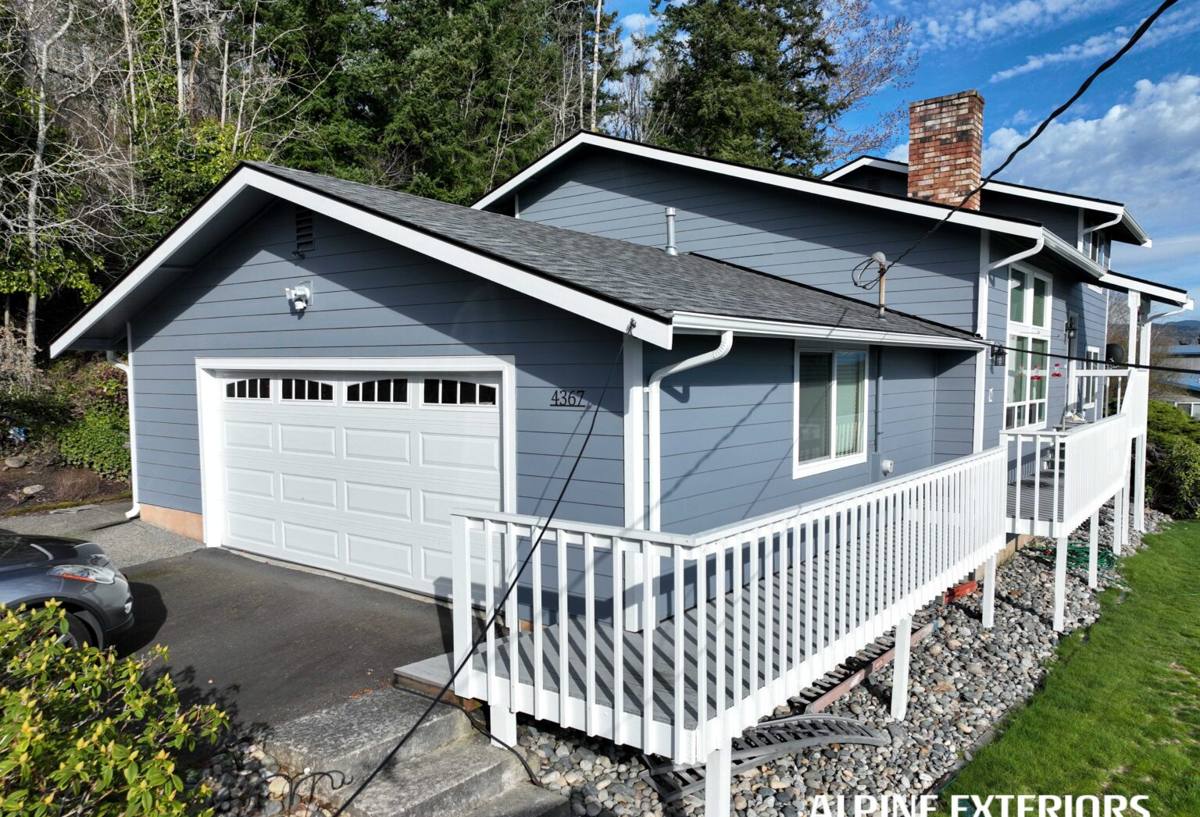
What a Correctly Installed Shingle Roof Actually Involves
An asphalt shingle roof is a system, not just a layer of shingles nailed to plywood. Every layer underneath the visible shingle does a specific job, and skipping or shortcutting any of them is where most premature roof failures start.
Deck Inspection and Repair
Before anything else goes down, the roof deck needs to be sound. Soft spots, delaminated plywood, or water-stained sheathing get replaced, not covered over. Installing a new roof over a compromised deck is one of the most common ways a roof ends up needing rework years earlier than it should.
Ice and Water Barrier at Vulnerable Points
Eaves, valleys, and any area prone to wind-driven rain or ice damming get a self-adhering ice and water membrane underneath the underlayment. In a climate like Skagit County's, where driving rain can push water sideways and uphill under shingle tabs, this layer is what keeps that water out of the deck even when it gets past the shingles themselves.
Synthetic Underlayment
Over the rest of the deck, synthetic underlayment provides a secondary water barrier and a stable surface for the shingles. It's more tear- and UV-resistant than older felt products and holds up better during the install process itself, which matters when weather can turn quickly on a job site this close to the water.
Flashing Details
Flashing around chimneys, skylights, vent pipes, and roof-to-wall transitions is where most leaks actually originate — not in the open field of shingles. Correctly lapped, corrosion-resistant flashing, tied properly into the underlayment, is non-negotiable in a salt-air environment where cheaper or improperly detailed metal fails faster.
Shingle Installation and Fastening
Shingles get nailed according to the manufacturer's wind-rated fastening pattern, not a shortcut pattern that saves time but voids the warranty and leaves tabs vulnerable to lifting in wind-driven rain. Nail placement, exposure, and starter course detail all affect how well the roof performs in exactly the conditions Bow sees regularly.
Ventilation
Proper intake and exhaust ventilation keeps the attic temperature and moisture in balance, which protects the shingles from underneath and helps prevent the kind of trapped moisture that leads to premature aging, mold, and deck rot. A roof can be installed perfectly on top and still fail early if the attic underneath isn't breathing correctly.
Shingle Options and How They Perform Here
Not every asphalt shingle product is built the same, and the differences matter more in a marine climate than they would somewhere drier and more sheltered.
| Shingle Type | Typical Lifespan | How It Handles Bow's Climate |
|---|---|---|
| 3-tab shingles | 15–20 years | Lower wind rating and thinner profile; can underperform in open, wind-exposed lots without extra fastening care |
| Architectural (laminate) shingles | 25–30 years | Heavier, higher wind ratings, better algae-resistant granule options; the standard choice for most Bow homes |
| Impact-resistant (Class 4) shingles | 25–30+ years | More resistant to debris and hail damage; can also qualify for insurance discounts depending on carrier |
| Algae-resistant (copper/zinc granule) shingles | Same as base product, longer-looking | Granules resist the streaking and moss growth that shaded Bow roofs are prone to over time |
For most Bow properties, an architectural shingle with algae-resistant granules is the practical middle ground — it costs more up front than 3-tab, but the added wind resistance and slower moss growth translate directly into fewer callbacks and a longer service life in this specific climate.
Repair, Re-Roof, or Full Replacement
Not every roof problem means starting over. We look at three things before recommending anything: the age and condition of the shingles, the condition of the deck underneath, and how much of the roof is actually affected.
- Repair makes sense when the damage is localized — a section of lifted or missing shingles, a failed flashing detail, or storm damage confined to one slope — and the rest of the roof still has useful life left.
- Full tear-off and replacement is the right call when the shingles are past their service life, granule loss is widespread, or there's evidence of deck damage that a repair can't address. It's also the only way to correct underlying issues like inadequate underlayment or ventilation that were built into an older roof.
- We generally don't recommend roofing over an existing layer of shingles. It traps moisture problems underneath instead of fixing them, adds weight to the structure, and voids most manufacturer warranties — a shortcut that costs more in the long run than it saves upfront.
Our Process on a Bow Roofing Project
Every roof starts with an on-site inspection, not a phone estimate. We walk the roof, check the deck condition where accessible, look at attic ventilation, and assess flashing, gutters, and any active leak points. From there we put together a written scope that lays out exactly what's being replaced or repaired, what materials are going in, and why — no vague line items.
During the install itself, we protect landscaping and driveways, tear off and haul away old roofing rather than leaving debris on site, and inspect the deck as it's exposed rather than assuming it's fine underneath. Flashing gets replaced, not reused, in areas where it's corroded or undersized. When the job is done, we walk the roof again and review the work before calling it finished.
What to Expect From Start to Finish
- On-site inspection and written scope of work, not a drive-by estimate
- Deck evaluation and repair as old roofing is removed
- Ice and water barrier at eaves, valleys, and other vulnerable points
- New flashing at chimneys, vents, skylights, and wall transitions
- Manufacturer-specified fastening pattern for wind resistance
- Ventilation check and correction where needed
- Full cleanup, including magnetic sweep for stray nails
- Final walk-through before the job is considered complete
Why Local Roofing Experience Matters in Bow
A roofing crew that works Skagit County regularly already knows what Bow's open exposure and salt air do to a roof over time, because we see it on inspections and repair calls throughout the area. That means we're not guessing at fastening patterns for wind exposure, or treating flashing and ventilation as an afterthought — those details get built into the plan from the start because we've seen what happens when they're skipped. It also means faster response for warranty work or storm damage, since we're not driving in from out of the area to look at a leak.
A roof that's correctly detailed for this climate costs more to install carefully than one that isn't, but the difference shows up in fewer leaks, less moss-driven granule loss, and a roof that actually reaches its rated lifespan instead of needing repair work a decade in.
If you're dealing with an aging roof, storm damage, or you're just planning ahead for a replacement, we're happy to come out and take a look. The estimate is free and there's no pressure — just a straight assessment of what your roof needs and what it would take to do it right.