 Anacortes
 Why Board & Batten Fits Old Town Anacortes
Old Town Anacortes is one of the older residential pockets in the city, with a mix of early-1900s homes and infill built over the decades since. Board and batten siding — vertical panels with raised battens covering the seams — shows up naturally in this kind of neighborhood because it echoes the simple, upright lines of the area's older cottages and farmhouse-style homes, while still reading as clean and current on newer builds. It's a strong match here for reasons beyond looks, too: the vertical lines shed water more predictably than some horizontal profiles when they're detailed correctly, which matters a lot this close to the water.
We get calls from Old Town homeowners who want that look but are wary of what a badly built vertical siding job turns into after a few Skagit County winters — cupped boards, black streaking at the seams, soft spots at the base. That worry is well-founded if the wrong material or the wrong crew is behind it. It's not well-founded with fiber cement installed to spec.
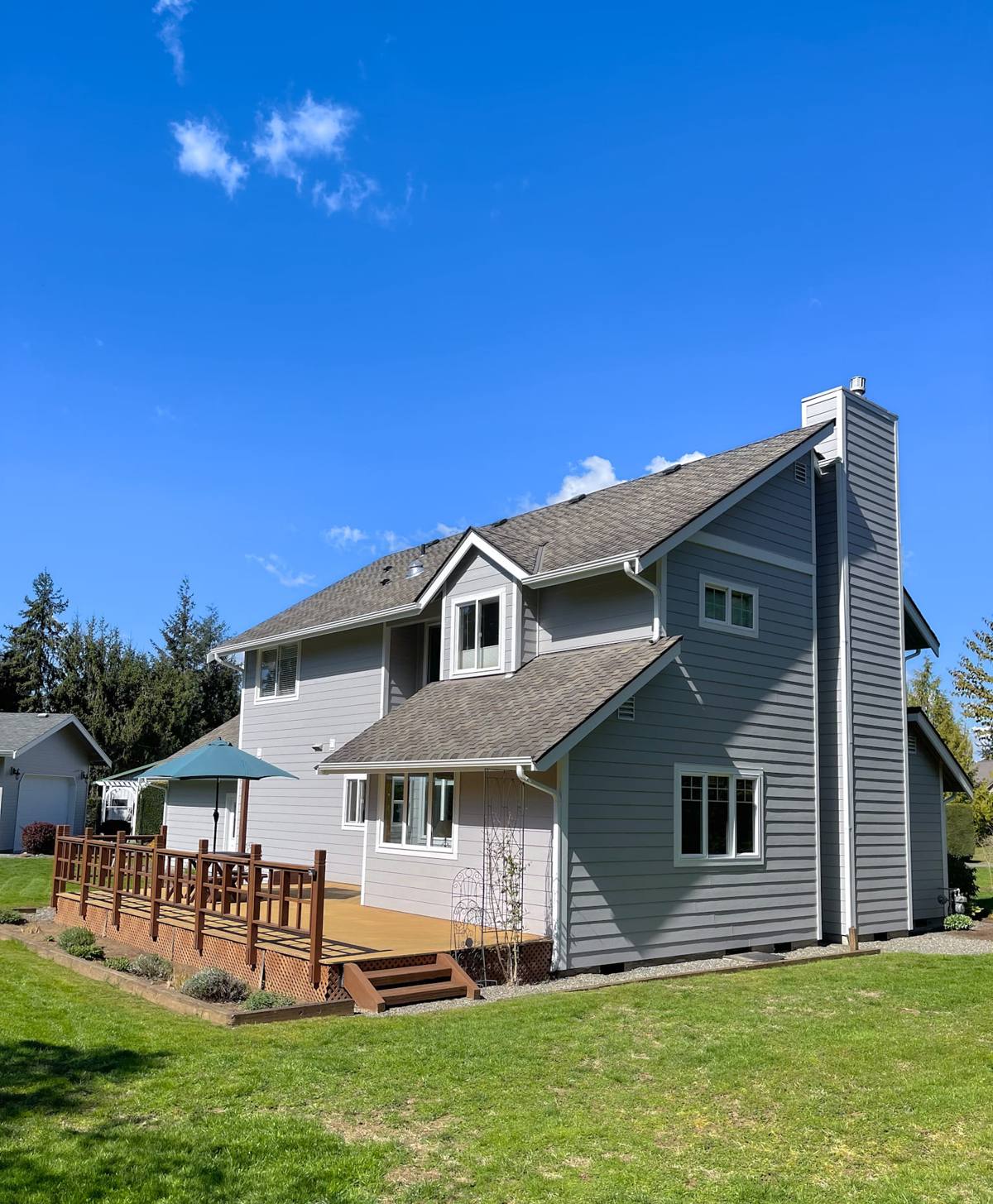
What Anacortes Climate Does to a House
Anacortes sits at the edge of Fidalgo Island, close enough to the water that salt air is a daily fact of life for exterior materials, not an occasional event. Add in driving rain that comes sideways off the Strait during winter storms, and a moss season that can run from fall through spring in the shaded, damp corners of a lot, and you've got three separate stressors working on a home's siding at once — not one.
- Salt air accelerates corrosion on exposed fasteners and metal trim, and it degrades cheap paint finishes faster than inland exposure would.
- Driving rain tests every seam, joint, and flashing detail on a vertical siding system — water finds the weak point, and on board and batten that weak point is almost always the batten fastening or the base of the wall.
- Moss and sustained damp hold moisture against the wall longer than a drier climate would, which is exactly the condition that rots wood-based siding and delaminates the wrong composite products.
None of this makes board and batten a bad choice for Old Town Anacortes. It makes material choice and installation detail the whole ballgame.
Why We Only Install James Hardie Fiber Cement
We don't offer board and batten in vinyl, primed wood, engineered wood (LP SmartSide), or the other fiber cement brands on the market. That's a standard we hold across every job, not just this one, and it's worth explaining rather than just stating.
Wood battens and boards look right on day one, but in this climate they're absorbing moisture from driving rain and holding it under moss cover on shaded elevations. Even well-primed wood needs regular repainting and caulk maintenance to keep water out of the seams, and once water gets behind a batten it doesn't dry out quickly here. Vinyl board and batten sheds water fine but is a thin, flexible material — it can warp in sustained damp-cold cycling, and the vertical battens are typically just cosmetic strips over a flat panel rather than a true built-up assembly, so the look reads noticeably different up close. Engineered wood products carry moisture-related installation requirements that, if missed even slightly, show up as swelling at cut edges and seams within a few years in a wet marine climate.
James Hardie fiber cement is cement, sand, and cellulose fiber — it doesn't rot, it isn't a food source for moss or mildew, and it holds paint and its factory ColorPlus finish far longer than wood or vinyl in salt air. It's also non-combustible, which matters more each year given regional wildfire smoke and ember exposure even outside fire-prone terrain. For board and batten specifically, Hardie's plank-and-batten and panel systems let us build a true vertical assembly with correct furring, drainage, and fastening — not a cosmetic imitation.
What a Correct Board & Batten Job Actually Involves
Board and batten is one of the siding profiles where installation quality shows up fastest, good or bad, because every seam is a vertical water path down the wall. The details that matter:
Drainage plane and furring
Vertical siding over a flat wall needs a way for incidental moisture to drain and the wall to dry — that means a proper water-resistive barrier and, in most assemblies, vertical furring strips creating an airspace behind the panels rather than nailing straight to sheathing. Skipping this is the single most common corner cut we see on vertical siding replacements, and it's the one that causes the most damage before anyone notices.
Batten spacing and fastening
Battens need consistent spacing, correct fastener placement into framing (not just sheathing), and the right length and type of fastener for a fiber cement assembly. Fastening through the wrong layer or at the wrong interval is how battens work loose or crack over time.
Flashing at every transition
Windows, doors, roof-to-wall intersections, and the base of the wall all need proper flashing integrated with the water-resistive barrier before the first board goes up — not caulk applied afterward to cover a gap. Caulk is a maintenance item, not a waterproofing strategy.
Factory-finished edges and field cuts
Hardie's ColorPlus finish is baked on at the factory and holds up far better than field-applied paint. Any field cuts need their edges sealed with the correct touch-up product so raw cement edges aren't left exposed to the weather.
Our Process for Old Town Anacortes Jobs
- Walk the home — we look at existing siding condition, moss and moisture patterns by elevation, trim and window flashing, and any rot at the base of walls before quoting anything.
- Plan for the specific exposures — the elevation catching prevailing weather off the water gets treated with the same rigor as the sheltered side; we don't assume uniform exposure on a wall-by-wall basis.
- Tear-off and inspect sheathing — old siding comes off, sheathing gets checked for hidden rot or soft spots before anything new goes up. Problems found here get flagged and priced honestly, not buried under the new siding.
- Install water-resistive barrier, furring, and flashing — the parts nobody sees are what determine whether the job lasts.
- Install Hardie board and batten to spec — correct fastener schedule, batten spacing, and sealed field cuts.
- Final walkthrough — we go over the finished job with the homeowner and point out anything worth knowing for future maintenance.
Comparing Board & Batten Materials in This Climate
| Material | Moisture Behavior in Marine Climate | Maintenance | Typical Lifespan Here |
|---|---|---|---|
| James Hardie fiber cement | Does not rot or absorb water like wood; factory finish resists salt air fading | Occasional wash; touch-up only at field cuts | Decades, per Hardie's transferable warranty terms |
| Primed wood board and batten | Absorbs moisture; prone to swelling and rot under sustained damp/moss | Regular repainting and caulk upkeep | Shorter, heavily dependent on maintenance |
| Vinyl board and batten | Sheds water but can warp with damp-cold cycling; seams are weak points | Low, but limited repairability | Variable; UV and cold-cycling dependent |
| Engineered wood (LP SmartSide) | Treated to resist moisture but sensitive to installation and cut-edge sealing | Requires diligent edge sealing and caulking | Shorter if installation details are missed |
What to Check Before Hiring Anyone for This Job
Board and batten hides its installation quality behind the finished wall, so the questions you ask before hiring matter more than they would for a simpler siding profile.
- Ask whether they install a drainage plane and furring behind vertical siding, or nail straight to sheathing.
- Ask how they flash windows, doors, and the base of the wall — get specifics, not "we caulk it well."
- Confirm they're a licensed, bonded, and insured Washington contractor and ask to see current coverage.
- Ask what happens if they find rotted sheathing during tear-off, and how that's priced.
- Ask about the manufacturer's warranty terms and whether it's transferable if you sell the home.
- Get the fastener schedule and batten spacing in writing, not just "to code."
Maintenance After Installation
A correctly installed Hardie board and batten system in Old Town Anacortes needs very little upkeep: an occasional rinse to clear off salt residue and moss spores, a visual check after major storms for any debris impact, and prompt attention if a gutter or downspout starts overflowing onto a wall section. That's a much shorter list than what wood or engineered wood siding demands in this climate, and it's a direct result of the material choice, not luck.
Get an Estimate
If you're weighing board and batten for a home in Old Town Anacortes, we're glad to walk the property, look at your specific exposures, and give you a straight answer on what the job involves and what it costs — no pressure, no inflated scope. Use the form below to request a free estimate.