 Anacortes
 Siding Repair Built for Bow's Conditions
Bow sits in a stretch of Skagit County where farmland, tree cover, and open water all meet. Homes here catch salt-laden air rolling in off Samish Bay, take driving rain straight off the water during fall and winter storms, and sit under a moss season that runs longer than it does just a few miles inland. Siding in Bow doesn't fail the same way siding fails in a dry, sheltered subdivision. It fails at the seams, at the trim, at the north-facing wall that never sees direct sun, and at the bottom courses closest to grade where splashback and standing moisture do their slow work.
Repairing siding correctly in this environment means understanding those failure points before you touch a single board. A patch that looks fine in July can trap moisture behind it by November. That's the gap between a repair that holds and one that becomes a callback.
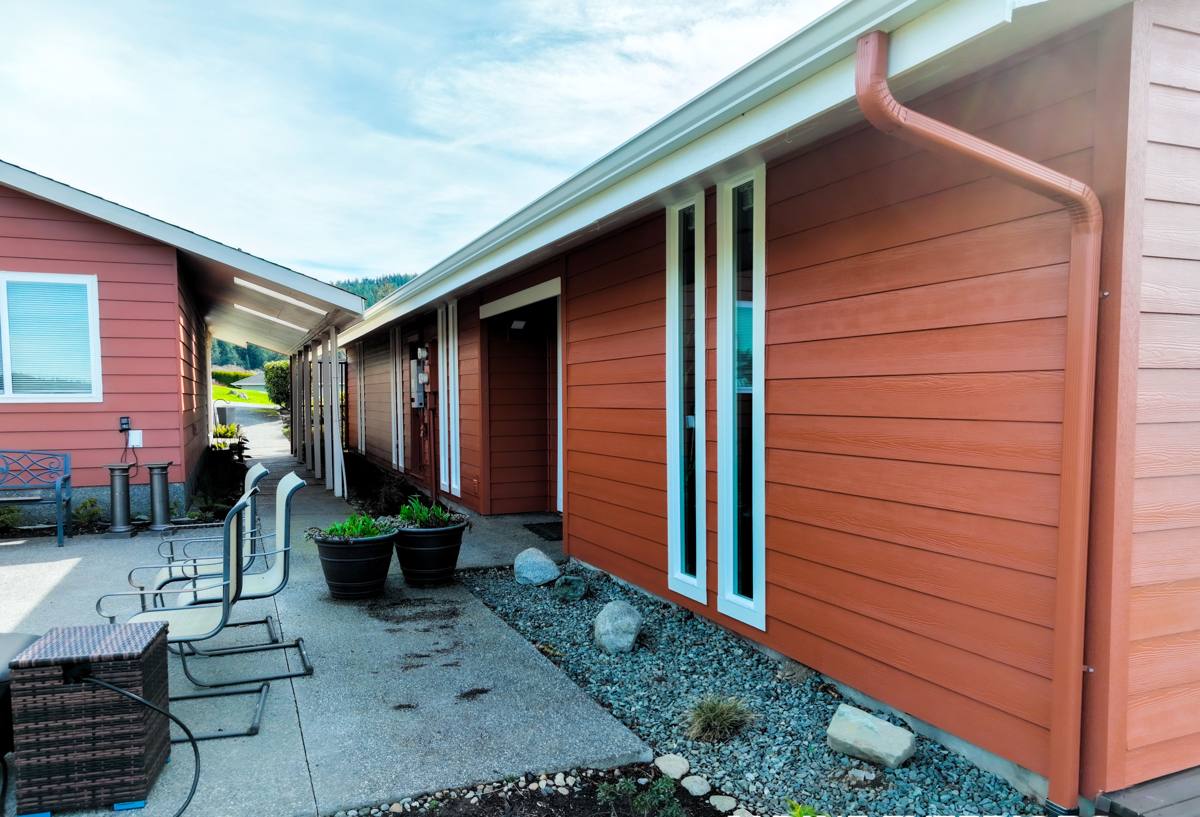
What Salt Air, Driving Rain, and Moss Actually Do
Salt Air
Homes closer to Samish Bay and the surrounding waterways deal with airborne salt settling on exterior surfaces. Over years, that salt accelerates corrosion on exposed fasteners, flashing, and any metal trim components. Once a fastener starts to corrode, it loses grip, and siding panels that were once tight against the wall begin to shift, gap, or work loose at the nail line.
Driving Rain
Storms coming off the water don't fall straight down — they hit siding at an angle, driving water into any gap, lap joint, or unsealed penetration. Siding systems are designed to shed water when installed correctly, but a repair done without attention to lap sequencing, flashing, or caulk placement gives wind-driven rain a direct path behind the cladding.
Moss and Prolonged Moisture
Bow's tree cover and marine humidity extend the window where siding, trim, and the ground immediately around a home stay damp. Moss and algae take hold on north- and east-facing walls, on siding under overhangs that never fully dry, and near foundation plantings that keep soil moist against the bottom courses. Moss itself isn't just cosmetic — it holds moisture against the surface far longer than open air would, which matters for any siding material that isn't fully sealed against water absorption.
Signs Your Siding Needs Repair — Not Just Paint
Homeowners often call about a cosmetic issue and find out the underlying problem is structural or moisture-related. Here's what to actually look for:
- Soft or spongy spots when you press on siding near the bottom courses or below windows
- Visible gaps at seams, corners, or where siding meets trim, window frames, or the foundation
- Persistent moss or dark staining that returns quickly after cleaning
- Paint that's peeling, bubbling, or flaking in a localized area rather than uniformly across the wall
- Warping, bowing, or panels that no longer sit flush against the wall
- Rust streaking below fasteners or trim pieces
- A musty smell or visible staining on interior walls that back up to an exterior wall showing siding damage
Any one of these can be isolated and minor. Several together, especially in the same area of the house, usually means water has been getting behind the siding for a while — and the visible damage is smaller than what's underneath.
What a Correct Repair Actually Involves
A siding repair that holds up in Bow's conditions isn't just swapping a damaged board for a new one. It's a sequence:
- Diagnose the cause, not just the symptom. Before removing anything, we identify why that section failed — a flashing gap, a caulk joint that dried out, grade sloping toward the foundation, a sprinkler head hitting the wall daily. Replacing siding without fixing the cause just buys time before the same spot fails again.
- Remove damaged material back to sound substrate. This often means pulling more than the visibly damaged piece, because water travels behind siding further than it shows on the surface.
- Inspect the water-resistive barrier and sheathing. If the underlying wrap or sheathing has been compromised, that gets addressed before new siding goes back on — patching over a wet or damaged substrate is how a five-year repair becomes a two-year repair.
- Correct flashing and lap sequencing. Every horizontal joint, window head, and penetration needs to shed water downward and outward, not funnel it inward.
- Install matched replacement material with proper fastening, clearances, and joint treatment specific to the product.
- Finish and blend. Caulk where appropriate, touch-up or repaint to match, and confirm the repair reads as a repair only up close, not from the curb.
Repair or Replace? How We Help You Decide
Not every damaged section needs a full re-side, and not every "repair" is worth doing if the underlying siding is near the end of its service life. We walk Bow homeowners through this honestly rather than defaulting to whichever job is bigger.
| Factor | Favors Repair | Favors Replacement |
|---|---|---|
| Extent of damage | Isolated to one or two areas | Recurring issues across multiple walls |
| Age of existing siding | Under 15–20 years, sound material | Near or past expected service life |
| Cause of failure | One-time event (impact, isolated flashing failure) | Systemic issue (original install defects, chronic moisture) |
| Material match | Matching material/color still available | Discontinued profile or faded beyond match |
| Moisture history | No signs of trapped moisture behind cladding | Evidence of sheathing or framing damage |
When damage is isolated and the rest of the siding is sound, a targeted repair is the honest recommendation — there's no reason to re-side a whole house over one bad section. When the damage points to a systemic problem, we say so, and explain why a repair there would just be a temporary fix.
Why Matching Material Matters More Than It Looks Like It Should
We install James Hardie fiber cement exclusively, and that shapes how we approach repairs even on homes with existing Hardie siding. Hardie's ColorPlus factory finish is baked on in a controlled process — it doesn't match a field-painted patch as closely as homeowners expect, and mismatched caulk or trim material can create a seam that ages differently than the surrounding wall. Getting the profile, exposure, and finish right on a repair is what keeps it from standing out five years later.
If your home currently has vinyl, LP SmartSide, cedar, or another fiber cement brand, we'll tell you plainly what your realistic options are. Sometimes a same-material patch from a matching source is the practical fix for a small area. But we don't install those products ourselves, and when a section needs more than a patch, we'll walk you through why we'd recommend transitioning that section — or eventually the whole elevation — to Hardie rather than continuing to maintain a product with a shorter service life in this climate. That's not a sales pitch; it's the same reasoning that led us to standardize on Hardie for new installs in the first place: non-combustible material, engineered moisture resistance, and a finish that holds up to salt air and driving rain without the recurring maintenance cycle that cedar and some engineered wood products require here.
Our Process on a Bow Repair Job
Bow properties are often rural — longer driveways, more tree cover, septic systems and wells to work around, and sometimes limited staging area near the house. We plan for that before the crew shows up rather than figuring it out on-site.
- On-site assessment. We inspect the damaged area and the surrounding siding, check for moisture intrusion, and identify the root cause before quoting anything.
- Written scope and estimate. You get a clear description of what's being repaired, what material is being used, and what it costs — no vague "we'll see once we open it up" pricing unless we genuinely can't know until we're inside the wall, in which case we say that upfront.
- Scheduling around weather. Driving rain off the water means we watch the forecast closely for repair work — cutting into a wall during a wet stretch invites the exact problem we're fixing.
- Repair execution following the sequence above — diagnose, remove, inspect substrate, correct flashing, install, finish.
- Walkthrough. We show you what we found, what we fixed, and what to watch for going forward.
Why a Crew That Already Works in Bow Matters
Siding repair quality depends on understanding how a specific area's conditions behave, not just general siding knowledge. A crew that already works Bow knows which orientations collect moss fastest, how grade and drainage tend to run on rural lots near the bay, and what driving rain off Samish Bay does to a north wall compared to a sheltered inland home. That local pattern recognition shortens the diagnosis and reduces the chance of missing a secondary cause of damage.
It also means practical logistics are already worked out — access on longer rural driveways, working around septic and well locations, and scheduling that accounts for how weather moves through this part of Skagit County. None of that shows up on an invoice, but it's the difference between a repair crew that adapts smoothly and one that's improvising for the first time.
Homeowner Checklist: Inspecting Your Own Siding
Between professional inspections, a few minutes of your own checking twice a year — spring and fall — catches problems early:
- Walk the full perimeter and look at siding from an angle, not just straight-on, to spot warping
- Press gently on siding near the bottom courses and below windows to check for soft spots
- Check caulk joints at trim, corners, and window/door surrounds for cracking or separation
- Look for moss or algae concentration on shaded, north-facing, or tree-covered walls
- Check that grade and mulch beds slope away from the foundation, not toward it
- Look for rust streaking below fasteners or metal trim
- Note any musty smell near exterior walls inside the house
What Repairs Typically Cost
Every repair is different depending on cause, extent, and access, but the general cost drivers are consistent:
| Cost Factor | Why It Matters |
|---|---|
| Extent of hidden damage | Sheathing or framing repair adds cost beyond surface siding |
| Material availability | Matching an older profile or discontinued color can require broader replacement |
| Access and height | Second-story or hard-to-reach walls require more setup time |
| Root cause correction | Fixing flashing, grading, or drainage issues adds scope but prevents recurrence |
| Paint or finish matching | Blending a repair into surrounding siding takes more labor than a straight patch |
We'd rather quote a slightly larger scope that actually solves the problem than a cheaper patch that reopens the same issue in a year or two.
Get an Honest Look at Your Siding
If you're seeing soft spots, gaps, recurring moss, or paint failure on a Bow home, it's worth having someone look before it gets worse — small repairs now are almost always cheaper than the alternative later. We offer a free, no-pressure estimate: we'll inspect the damage, tell you honestly whether it's a repair or something bigger, and give you a clear scope and price either way. Use the form below to get started.