 Anacortes
 A Window Style That Shares a Name With the Neighborhood
It's a coincidence that trips people up: a "bow window" is a window style, and Bow is also a community just north of Anacortes along Samish Bay. When a homeowner in Bow asks about bow windows, we make sure we're talking about the same thing before anyone picks glass. This page is about the window style — installed correctly for homes in and around the Bow area, where the weather off the water asks more of a window than most manufacturers' standard install instructions account for.
A bow window is a curved run of window units, usually four to six sashes set at shallow angles to form a gentle arc that projects out from the wall. It's a cousin of the bay window, but with more panels and a softer curve rather than three flat angled sections. Homeowners like them because they open up a room, add usable interior space (sometimes a window seat), and bring in light from multiple directions instead of just one wall.
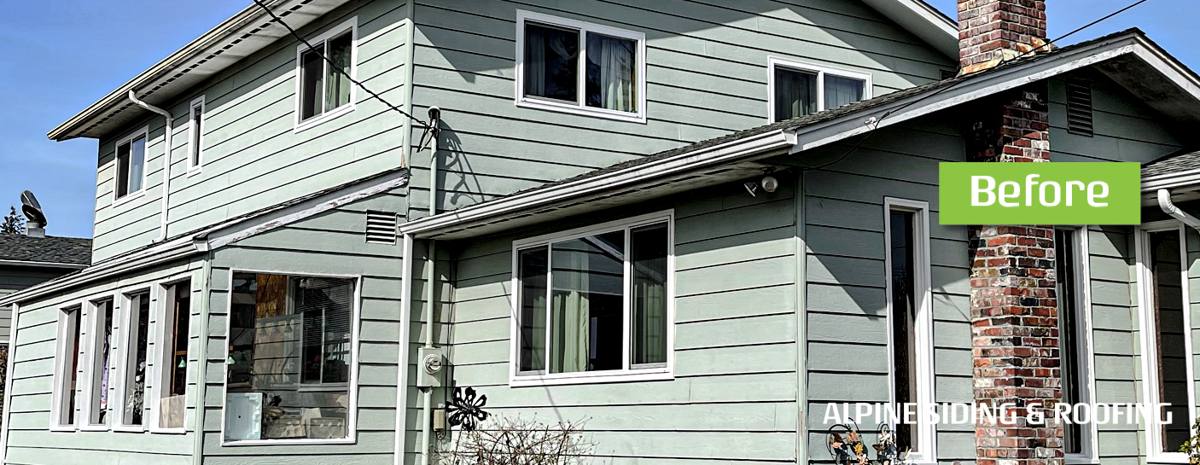
What This Stretch of Skagit County Does to a Projecting Window
Bow's proximity to Samish Bay and the broader Salish Sea means homes here deal with salt-laden air, wind-driven rain, and long stretches of damp, low-light winter that keep moss and algae established on anything that holds shade or moisture. None of that is unique to Bow, but a bow window is more exposed to it than a flat, in-plane window because it projects outward and presents angled glass and trim to the weather from several directions at once instead of just one.
Salt Air
Airborne salt accelerates corrosion on fasteners, hinge hardware, and unprotected metal flashing. A bow window has more hardware and more seams than a standard single window, so using components rated for a marine environment isn't optional here — it's the difference between hardware that lasts and hardware that seizes or stains within a few seasons.
Driving Rain
Wind off the water doesn't just fall on a window, it drives into it, and a projecting bow window has more surface area angled to catch that wind-driven rain than a flat window does. Every seam where one sash meets the next, and where the whole unit meets the wall, is a place water will test if the flashing and sealant details aren't right.
Moss Season
Bow windows are sometimes built with a small sloped roof cap above them, especially on units with a window seat below. That little roof is shaded, low-slope, and exactly the kind of surface that grows moss fastest through the wet months. If it's not detailed and flashed like a real roof — because it is one — it becomes a slow leak source instead of a design feature.
Why a Bow Window Is a Structural Job, Not a Frame Swap
Replacing a standard window is mostly a matter of removing the old unit and setting a new one in the same rough opening. A bow window is different because it's heavier, wider, and unsupported at its outer edge except by the wall and header above it. Before we install one, we look at:
- Whether the existing header can carry the added weight of four to six sashes, or needs to be upsized
- Whether the wall framing at the opening needs reinforcement to support the projection
- Whether the unit includes a seat or roof cap, which adds its own load and its own flashing requirements
- How the new unit's weight and dimensions compare to whatever is currently in the opening — a like-for-like swap is rare with bow windows
Skipping this step is the single most common reason a bow window sags, binds, or develops a gap at the header within a few years. It's also the step a lot of quick-quote installers skip, because it takes time on site before any glass gets ordered.
Material Options for a Bow Window in This Climate
Every material has a reasonable case for it. The right choice depends on how much upkeep you want to take on and how the window is oriented relative to prevailing wind and rain.
| Material | Moisture & Salt Air Behavior | Upkeep | Where It Fits Best |
|---|---|---|---|
| Vinyl | Won't corrode or rot; seams and welds matter more than the material itself | Low — occasional cleaning | Most Bow-area homes; good value, wide color range |
| Fiberglass | Very stable in temperature swings and salt exposure; dimensionally rigid | Low | Larger bow assemblies where frame flex is a concern |
| Wood, clad exterior | Interior wood warmth with a protective exterior shell; the clad seams need attention | Moderate — watch clad-to-wood transitions | Homes prioritizing interior wood trim over exterior maintenance-free finish |
| Wood, unclad exterior | Most exposed to driving rain and salt air; needs consistent refinishing | High | We generally steer buyers away from this on exposed, water-facing walls in Bow |
We're not against wood — plenty of homes have it and love it — but on a bow window facing open water and prevailing weather, an unclad wood exterior puts a lot of maintenance burden on a surface that's already working harder than a flat window. That's a trade-off we'll walk through honestly rather than sell around.
How We Install a Bow Window
- On-site assessment — we check the existing header, wall framing, and current window condition before anything is measured for order.
- Structural verification — if the header or framing needs reinforcement, we plan for it up front, not as a change order mid-project.
- Product selection — material, glass package, and hardware chosen for the wall's actual sun, wind, and rain exposure.
- Careful removal — the old unit comes out without widening or damaging the opening more than necessary.
- Flashing and weatherproofing — a proper flashing pan at the sill, sequenced house wrap integration, and sealant compatible with the cladding and window material.
- Setting, shimming, and fastening — the unit is leveled and shimmed to carry its own weight correctly, then fastened with corrosion-resistant hardware.
- Insulation and interior/exterior finish — gaps are insulated (not just caulked shut), and trim is finished to match the home.
- Final check — operation, seal, and flashing are checked before we call it done.
What a Correct Installation Includes — A Checklist
If you're getting quotes from more than one contractor for a bow window in Bow, this is what separates a durable install from one that looks fine for a year or two:
- A sloped flashing pan under the sill, not just a bead of caulk
- Corrosion-resistant fasteners and hardware throughout, not standard-grade
- Header sized (or verified) for the actual load of the new unit
- Roof cap or seat, if present, flashed and shingled like an actual roof detail
- Weep paths kept clear so any water that does get in has somewhere to drain
- Sealant chosen for compatibility with both the window material and the siding
- Insulation in the gap between frame and rough opening, not left empty or over-packed
- A walk-through of operation and locking hardware before the crew leaves
Living With a Bow Window Here: Ongoing Upkeep
A well-installed bow window doesn't need much, but a little seasonal attention goes a long way in this climate. Rinse salt residue off exterior frames and glass periodically, especially after storms. Check any roof cap or seat area for moss buildup before it gets a foothold, since moss holds moisture against the surface below it. And take a look at exterior sealant lines once a year — sealant is the cheapest thing to renew and the most expensive thing to ignore once it fails.
Why It's Worth Hiring a Crew That Already Works in Bow
A bow window installed in Bow, Anacortes, or elsewhere in Skagit County is dealing with the same wind patterns, the same salt exposure, and the same wet-season moss growth as every other home nearby — a crew that already works these streets has already made the material and detailing decisions that hold up here, instead of learning it on your house. That familiarity shows up in small ways: knowing which wall orientations really take the brunt of driving rain, which flashing sequence has proven out over multiple winters, and which hardware grade is worth the extra cost versus which isn't. It also means a straightforward path back to us if anything needs attention after the install, without waiting on an out-of-area company to schedule a return trip.
If you're weighing a bow window for a home in Bow or nearby, we're glad to come take a look, check the structural realities of your specific opening, and put together a straightforward, no-pressure estimate — just fill out the form below.