 Anacortes
 Skagit County Weather Doesn't Go Easy on Siding
Homes in Burlington sit inland from Anacortes but still get the same weather system working against them: a marine layer that pushes moisture off the water and holds it in the Skagit Valley for days at a time, driving rain that comes in sideways during fall and winter storms, and a moss season that can run eight months or longer in shaded, north-facing spots. Salt-laden air moving in off the Salish Sea doesn't stop at the Anacortes city line — it carries inland on wind, settling into siding seams, fastener heads, and trim joints wherever a home sits exposed. Over years, that combination of salt, standing moisture, and organic growth is what turns a small siding problem into a expensive one.
We run repair crews out of Anacortes into Burlington on a regular basis, and the damage patterns we see are consistent enough to plan around: rot at the bottom courses where splashback and moss hold water against the wall, failed caulk joints that let wind-driven rain behind the cladding, and paint or finish breakdown on the sides of homes that face prevailing weather. None of this is unique to one house — it's what this climate does to siding that isn't detailed and maintained correctly.
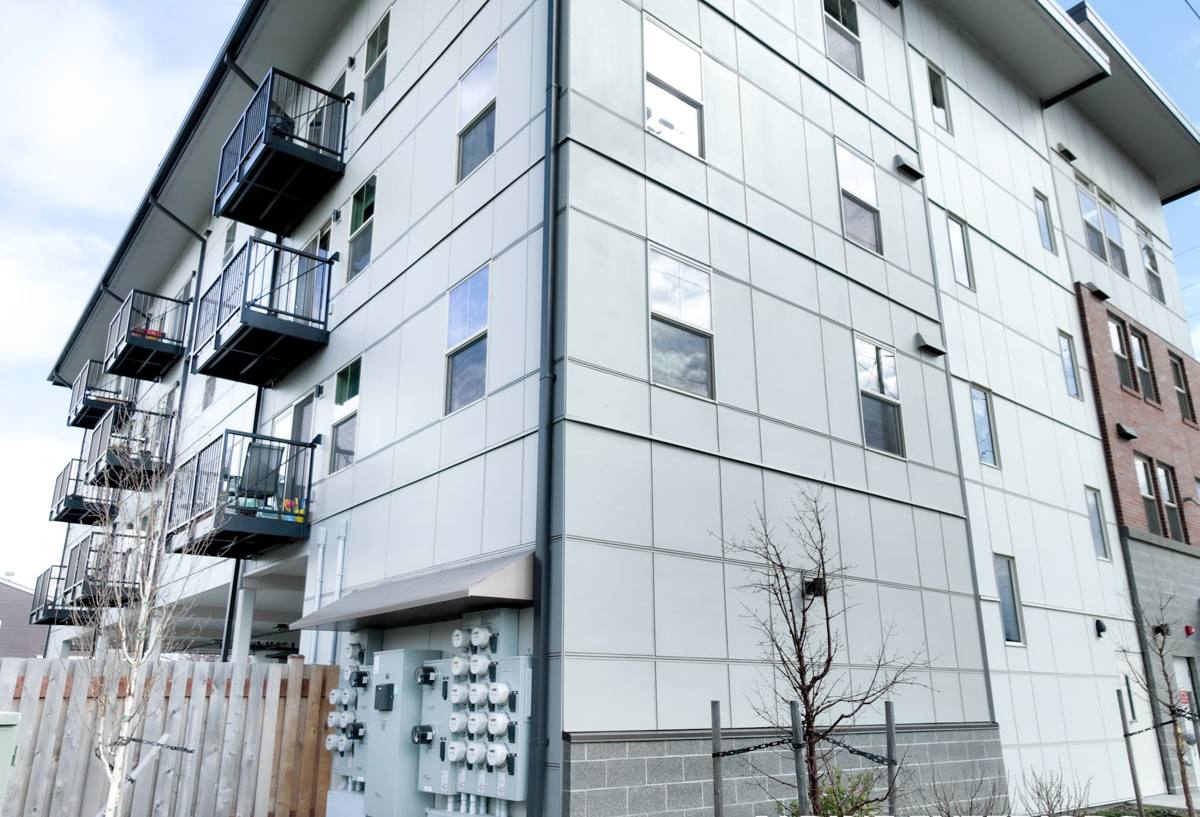
Signs Your Siding Needs Repair
Most siding repair calls in this area start with a homeowner noticing one visible symptom, when the actual damage extends further than what's showing on the surface. Catching it early keeps the job small.
- Soft, spongy, or bouncy spots when you press on the wall near the bottom of the siding or below windows
- Paint that's peeling, bubbling, or flaking in patches rather than evenly across the whole wall
- Dark green or black streaking, especially on shaded or north-facing walls — a sign moss and algae have had time to take hold
- Visible gaps, cracks, or separation at seams, corners, and butt joints
- Boards that look warped, cupped, or slightly bowed away from the wall
- Staining or discoloration directly below window sills or under roof valleys, which usually points to water being funneled onto the siding rather than away from it
- A musty smell near an exterior wall, or interior drywall that feels damp or shows staining on the other side of a suspect section
Any one of these on its own might be minor. Several together, or any sign paired with softness you can feel by hand, usually means water has already reached the sheathing behind the siding — and that changes the scope of the repair.
What a Correct Repair Actually Involves
Diagnosis Before Demo
A repair that just replaces the boards you can see and ignores what's underneath tends to fail again within a season or two. Before we cut anything, we probe the damaged area and the surrounding boards to find where sound material actually starts — damage from trapped moisture almost always extends past the visible stain or soft spot.
Cutting Back to Sound Wood, Not Just the Obvious Spot
Once we know how far the damage runs, we remove siding back to solid material with clean, flashed edges — not just the discolored board. Stopping short of that just relocates the problem a few inches over.
Rebuilding the Water Management Layer
The siding itself is only half the system. Behind it there should be an intact weather-resistant barrier, correctly lapped flashing at windows, doors, and any penetration, and — where a wall has taken on real moisture over time — kick-out flashing that directs roof runoff away from the wall instead of down it. A repair that skips this step and just re-covers the same failed flashing is a repair that will need to be done again.
Matching Profile, Reveal, and Finish
On an existing wall, a patch that doesn't match the board width, reveal, or finish sheen stands out and can also create a new water path if it doesn't shed rain the same way the original siding did. Matching this correctly is a big part of what separates a clean repair from a patch job.
Repair or Replace? What Actually Decides It
Not every damaged section needs a full re-side, but there's a point where patch repairs stop making financial sense. The table below covers the factors we actually weigh on a Burlington repair call.
| Factor | Points Toward Repair | Points Toward Replacement |
|---|---|---|
| Extent of damage | Isolated to one or two wall sections | Spread across multiple elevations |
| Age of existing siding | Still well within its service life | Near or past the end of its expected lifespan |
| Sheathing condition | Dry, structurally sound behind the siding | Soft, rotted, or delaminating sheathing found during inspection |
| Material availability | A close match can be sourced or blended in | Discontinued profile, color, or product line |
| Underlying cause | One-time event (impact damage, a single failed joint) | Systemic moisture problem affecting the whole wall assembly |
| Cost pattern | Lower, one-time cost for the repaired section | Higher upfront cost, but resets the clock on the whole wall |
We'll always tell you honestly which side of that table your house falls on. A homeowner who only needed a repair doesn't need to hear a replacement pitch, and we'd rather earn the bigger job later on a house that actually needs it than push it prematurely.
The Moss and Moisture Problem, Specifically
Shade and Slow-Drying Walls
Walls that sit under tree cover or face away from direct sun dry out slowly after every rain. In a valley climate that already holds humidity for long stretches, that slow drying is exactly what lets moss and algae establish themselves on siding, trim, and even roof edges above the wall line.
Gutters, Overflow, and Wall Damage
A gutter that's undersized, clogged, or pitched wrong doesn't just cause a mess at the roofline — it dumps concentrated water onto a narrow band of siding every time it rains hard, which is exactly the kind of repeated, localized soaking that leads to rot. When we're repairing siding damage tied to water coming from above, we look at the gutter and flashing above that section, not just the siding itself, because re-siding without fixing the source just buys you a few more years before the same repair comes back.
Why We Repair and Rebuild With James Hardie, Not a Mixed Bag of Materials
We install James Hardie fiber cement siding exclusively — we don't install vinyl, LP SmartSide, cedar, primed spruce, or other fiber cement brands, and that standard carries over into how we handle repairs. When a repair calls for new material, we use factory-finished Hardie boards, color-matched where possible, rather than reaching for whatever's easiest to source that week.
The reason is consistency. Vinyl siding repairs are limited by discontinued colors and by the way vinyl becomes brittle and prone to cracking in cold weather, which makes clean patch work harder years after the original install. LP SmartSide and similar engineered-wood products use an OSB-based substrate that, once it's taken on moisture damage once, is more prone to swelling and re-damage at the same location even after a patch. Cedar and primed wood siding need ongoing repainting and sealing to hold up in a wet climate, and a repair on an already-aging wood wall is often just delaying the same rot showing up somewhere else on the same board.
Fiber cement, installed and flashed correctly, doesn't share those weak points — it doesn't rot, it resists moss and algae far better than wood, and it holds its factory finish for decades without repainting. Standardizing on one product also means our crews aren't guessing at how a different manufacturer's boards behave in this climate — we know exactly how Hardie performs in Skagit County weather because it's the only thing we install.
Our Process for Burlington Repair Calls
1. On-Site Inspection
We walk the affected area, probe suspect boards, and check behind the siding wherever we can access it — not just the spot you called about.
2. A Written, Itemized Scope
You get a clear description of what's damaged, what's being repaired or replaced, and why — no vague line items.
3. The Repair Itself
Removal back to sound material, flashing and water barrier work where needed, then new siding matched as closely as possible in profile and finish.
4. Cleanup and Walkthrough
We clear debris, walk the repair with you, and point out anything else worth keeping an eye on — like a gutter or trim detail that's contributing to wear nearby.
Why a Local Anacortes Crew Matters for a Burlington Job
A crew that works this specific stretch of Skagit County regularly has already seen how the local weather pattern affects siding on dozens of homes — which elevations tend to take the worst of the driving rain, how long moss actually takes to establish on a shaded wall here, and what a properly flashed repair needs to hold up through another wet season. That's different from a crew driving in from outside the region for a single job. Being local also means it's straightforward to come back for a follow-up look, and we're not disappearing after the invoice is paid.
If you're dealing with a soft spot, staining, moss buildup, or a section of siding that just doesn't look right anymore, we're glad to take a look. A free, no-pressure estimate through the form below gets you an honest read on whether you're looking at a repair or something bigger — and either way, you'll know exactly what's going on with your walls.