 Anacortes
 Deck Repair Built for Cap Sante's Waterfront Exposure
Cap Sante sits up on the bluff overlooking the marina and Guemes Channel, which is exactly what makes it one of the more punishing spots in Anacortes for an exposed wood or composite deck. Homes here get a steady mix of salt-laden air off the water, wind that doesn't let up the way it does in more sheltered parts of town, and driving rain that comes in sideways during the fall and winter months. Add Skagit County's long gray season, where a deck can stay damp for days at a time, and you have conditions that age a deck faster than almost anywhere else in the area.
We've repaired a lot of decks in this part of Anacortes, and the failure patterns are consistent enough that we can usually tell what's going on before we even get a moisture meter out. This page covers what actually goes wrong with Cap Sante decks, what a proper repair involves, and how to tell a real fix from a cosmetic patch.
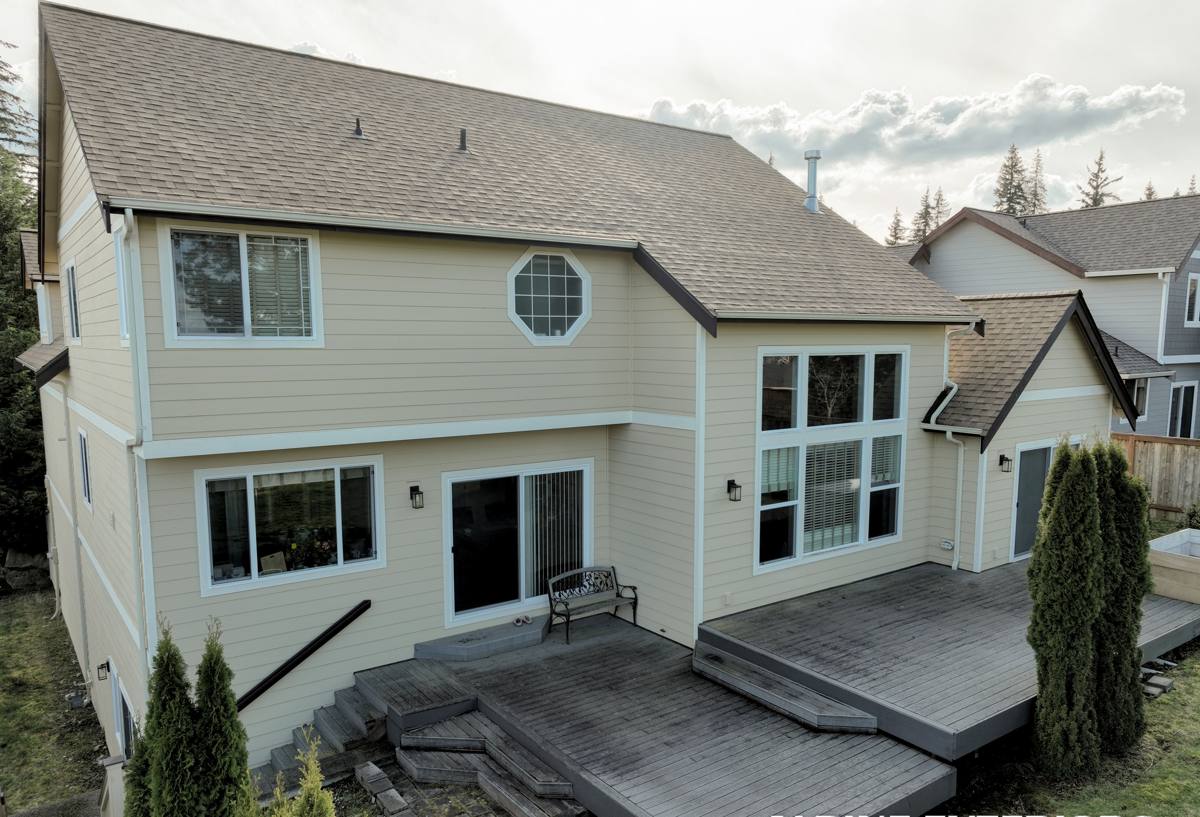
Why Decks Fail Faster on the Bluff
Salt Air and Metal Fasteners
Salt-laden air corrodes exposed metal — nails, screws, joist hangers, and structural brackets — well before it does any visible damage to the wood itself. By the time you notice rust staining bleeding out around a fastener head, the metal underneath has usually lost real holding strength. On a bluff-top property like Cap Sante, this happens faster than it would a mile or two inland, and it's one of the most common reasons a deck that "looks fine" turns out to have a soft, compromised connection point.
Wind-Driven Rain
Because Cap Sante is more exposed to wind off the water, rain gets pushed sideways into ledger boards, stair stringers, and the undersides of railings — areas that a more sheltered deck might never see much water on at all. That drives moisture into joints and end grain that weren't designed to handle constant wetting, which is where rot typically starts.
Moss and Trapped Moisture
Anacortes has a long moss season, and a bluff-top deck that stays shaded or doesn't dry out between rain events grows it readily. Moss holds water against the deck surface long after the rain has stopped, and on horizontal boards that's a slow, steady path to decay — especially where boards are laid tight together with no gap for drainage or airflow.
What We Actually Check on a Cap Sante Deck
- Ledger board attachment to the house — the single most safety-critical connection on any deck
- Joist hangers and structural fasteners for rust, pitting, or loss of holding strength
- Support posts and footings for movement, rot at grade, or undersized bearing
- Board-to-board spacing and drainage — tight, moss-holding gaps versus proper airflow
- Railing post connections, which take direct wind load on an exposed lot
- Stair stringers and treads, especially where they meet grade or a landing
- Flashing where the deck ledger meets the house siding or wall assembly
- Soft spots, spongy decking, or discoloration that signal moisture intrusion below the surface
Most of these aren't visible from a casual walk-around. A homeowner will usually notice a bouncy board or a wobbly railing post long before they'd notice a rusted hanger three feet under the deck surface — but the hidden problems are the ones that actually matter for safety.
Common Repairs We Do in This Area
Ledger and Framing Repair
When the connection between the deck and the house has been compromised by moisture or corroded fasteners, we don't just add new screws over the old ones. We open up the area, assess how far the damage has spread into the framing, and replace what's actually compromised — sistering joists where needed, upgrading to corrosion-resistant fasteners and hangers rated for coastal exposure, and correcting flashing details that were letting water in behind the ledger in the first place.
Board Replacement vs. Full Resurfacing
Not every deck needs a full tear-off. If the framing underneath is sound and only a portion of the decking has failed — usually the boards nearest the house wall or in a low spot that holds water — we can replace just those boards and blend them in. If moisture has gotten into a wider area, or if the original board spacing was too tight to drain properly, resurfacing the whole deck is the more honest recommendation, since patching around a systemic drainage problem just buys a year or two.
Railing and Guard Repair
Loose or wobbly railings on an exposed, wind-heavy lot like Cap Sante are a real safety issue, not a cosmetic one. We check post-to-frame connections against current code requirements for guard height and load resistance, not just whether the railing "feels solid" today.
Fastener and Hardware Upgrades
A large share of our repair work in this area is driven by corroded fasteners and hangers rather than rotted wood. Where that's the case, we upgrade to hardware rated for coastal and marine-adjacent exposure so the same failure doesn't show up again in a few years.
Repair vs. Replacement: How We Make the Call
| Factor | Repair usually makes sense | Replacement usually makes sense |
|---|---|---|
| Framing condition | Solid, isolated damage | Widespread rot or rusted-out hangers |
| Age of deck | Under 10-12 years | Original construction 15+ years old |
| Board spacing/drainage | Adequate, just localized wear | Boards too tight, chronic moss and standing water |
| Ledger connection | Sound, properly flashed | Corroded, poorly flashed, or undersized for current code |
| Scope of damage found | Contained to a few boards or posts | Damage keeps appearing as we open things up |
We'll tell you honestly which side of this table your deck falls on. A repair that's done right can extend a deck's life by many years; a repair on a deck that's already systemically compromised is usually money that would have gone further toward a rebuild.
Our Process
- On-site assessment. We walk the deck, check framing from underneath where accessible, probe suspect boards and posts, and look at the ledger and flashing details.
- Honest scope and estimate. You get a clear breakdown of what's failing, what's still sound, and what it will take to fix it correctly — not just the visible symptom.
- Repair or rebuild. We do the structural work first — framing, hardware, ledger — before anything cosmetic goes back on.
- Materials suited to the exposure. Given the salt air and wind on this bluff, we default to corrosion-resistant fasteners and hangers and discuss decking material trade-offs (wood, composite) based on your maintenance preferences and budget, not a one-size-fits-all recommendation.
- Final check. Railings, stairs, and structural connections get a final inspection before we consider the job finished.
Why It Matters to Hire a Crew That Already Works Cap Sante
A deck contractor who mostly works inland jobs can still do competent framing work, but they may not default to coastal-grade hardware, or think to check flashing details that matter more on a wind-exposed bluff than they would on a sheltered lot a few blocks away. Working regularly in Anacortes and around Skagit County's waterfront neighborhoods means we're not guessing at what salt air and driving rain do to a deck over time — we've seen the failure patterns often enough to know what to check first and what shortcuts don't hold up out here.
We also know this isn't a climate where "good enough inland" materials perform the same way. A fastener or hanger that would last two decades in a sheltered yard can show real corrosion in half that time on an exposed bluff-top lot, and that difference shows up in how we spec every repair.
Maintenance That Extends the Life of a Cap Sante Deck
- Sweep debris and standing water off the deck surface regularly through fall and winter
- Keep an eye on moss buildup and remove it before it holds moisture against the boards long-term
- Check railing posts periodically for movement, especially after wind events
- Have fasteners and hardware inspected every few years given the corrosive salt-air exposure
- Don't ignore a soft or bouncy spot — it's almost always easier and cheaper to fix early
If you've got a deck in Cap Sante that's showing wear, feels less solid than it used to, or just hasn't been looked at in a few years, we're happy to come take a look. Use the form below to request a free, no-pressure estimate — we'll tell you plainly what we find and what it would take to fix it right.