 Anacortes
 Why Cap Sante Roofs Face a Tougher Job Than Most
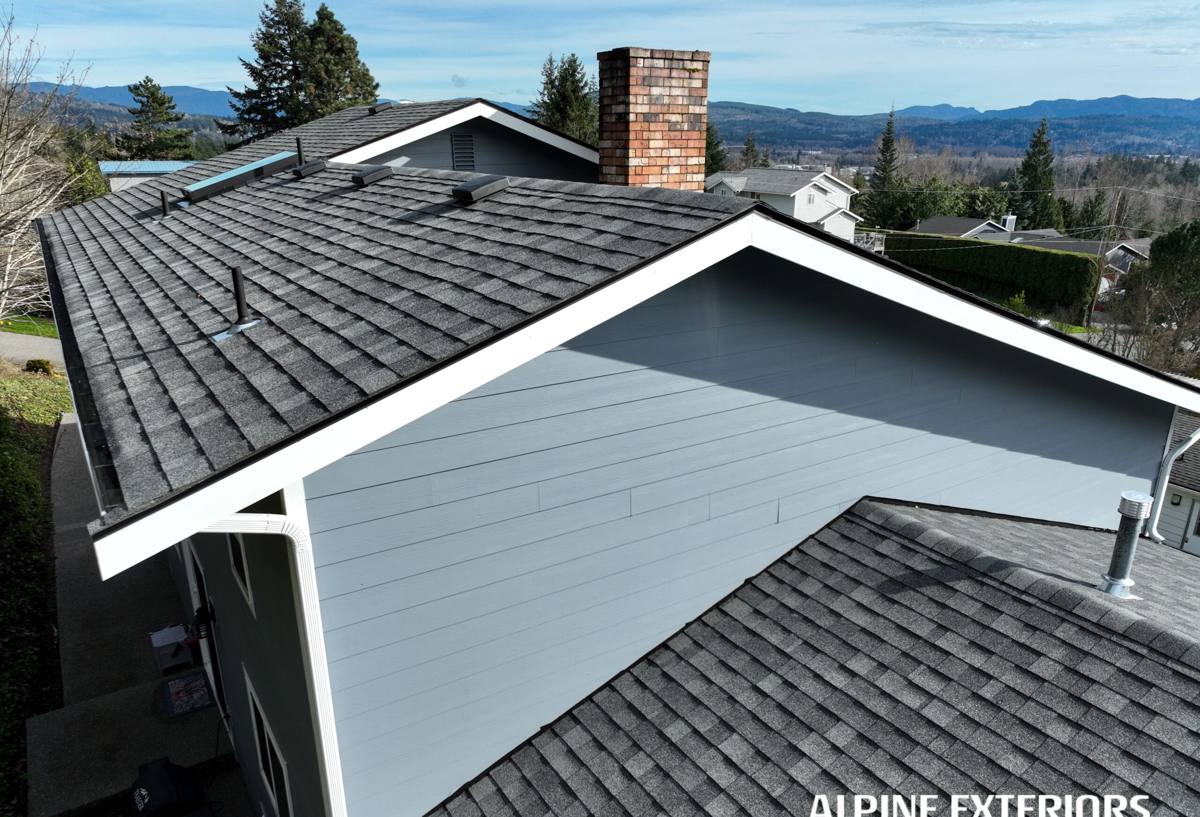
Homes on and around Cap Sante sit close to open water, which means the roof over your head is doing more work than a roof ten miles inland. Salt-laden air moves off the bay and settles on every exposed surface, wind gusts pick up speed with nothing to slow them down, and the shade from evergreens combined with a wet climate keeps moss and algae active nearly year-round. A roofing material that holds up fine in a dry inland town can fail early here simply because it wasn't built for constant marine exposure.
That's the lens we use on every Cap Sante roofing job: not "what's a good roof" in general, but "what actually survives this specific stretch of Skagit County shoreline." Metal roofing, installed correctly with the right coatings and fasteners, is one of the few systems that holds up to all three stressors at once — salt air, driving rain, and moss — without a lot of ongoing intervention.
What Salt Air, Driving Rain, and Moss Actually Do to a Roof
Salt Air Corrosion
Airborne salt is corrosive to bare or poorly coated metal fasteners, flashing, and roofing panels. Over years, unprotected steel components can rust from the outside in, starting at cut edges, fastener heads, and anywhere the protective coating has been scratched or worn thin during installation. This is why fastener and coating selection matters more here than it would fifty miles inland.
Driving Rain
Wind off the water doesn't just bring rain straight down — it drives it sideways and up under laps, flashing, and fastener penetrations. A roof detailed for calm-weather rain can still leak in a Cap Sante storm if the underlayment, flashing laps, and seam design weren't built with wind-driven moisture in mind.
Moss and Algae Growth
Shaded, north-facing, and low-slope sections of roof stay damp longer in our climate, giving moss and algae a long growing season. On composition shingles, moss roots into the mat and lifts the granule surface, shortening the roof's life. Metal doesn't give moss the same foothold, but it still needs clean water flow and periodic cleaning to keep growth from building up in valleys and against trim.
Why Metal Roofing Fits This Environment
Metal roofing isn't the right choice for every home or every budget, but for a property exposed to marine air and heavy weather, it solves problems that shingle roofs struggle with long-term.
Corrosion Resistance — When Specified Correctly
Not all metal roofing is equal in a salt-air environment. Galvalume and properly coated steel panels are designed to resist corrosion far better than uncoated or poorly finished metal, and they hold up well near coastal exposure when installed with compatible, corrosion-resistant fasteners and flashing. This is a detail we specify deliberately on every coastal job — mismatched metals or the wrong fastener coating can undo the benefit of a good panel.
Shedding Water and Wind Performance
Standing seam and properly lapped metal panels shed wind-driven rain more reliably than a shingle system because there are fewer exposed laps for wind to catch. Metal roofing is also rated for higher wind uplift resistance than most shingle products, which matters on an exposed site near open water.
Longevity and Low Moss Attachment
A hard, smooth metal surface gives moss and algae far less to grab onto than a shingle mat, and a correctly installed metal roof commonly outlasts asphalt shingles by decades. That longevity only holds if the installation details — fasteners, flashing, ventilation — are done right from day one.
Comparing Metal Roofing Options for a Cap Sante Home
| System | How It's Fastened | Best Suited For | Trade-Offs |
|---|---|---|---|
| Standing Seam | Concealed clips, no exposed fasteners on the field | Full coastal exposure, long-term low maintenance | Higher upfront cost, needs an experienced installer |
| Exposed-Fastener Metal Panel | Screws through the panel face into the deck/purlins | Budget-conscious projects, outbuildings, some homes | Fastener gaskets wear over time and need periodic inspection |
| Metal Shingle / Shake Profile | Interlocking panels, concealed or semi-concealed fasteners | Homeowners who want a traditional look with metal performance | More seams than standing seam; detailing at valleys matters |
For homes with direct or near-direct water exposure around Cap Sante, we lean toward standing seam because it has the fewest penetrations for wind-driven rain to exploit and no exposed fasteners for salt air to work on over time. Exposed-fastener panels can still be a sound choice on a budget or on a secondary structure, as long as the gaskets and fasteners get checked periodically.
What a Correct Metal Roof Installation Actually Involves
The panel itself is only part of the system. Most metal roof problems we get called out to fix trace back to what's underneath or around the panels, not the metal itself.
Underlayment
A high-temperature, self-adhered or synthetic underlayment beneath the panels is what protects the deck if wind-driven rain ever gets past the seams — and on an exposed site, it will occasionally get tested. This isn't an optional upgrade here; it's baseline for coastal work.
Fasteners and Flashing
Fasteners, flashing, and trim need to be corrosion-resistant and compatible with the panel metal — mixing incompatible metals can accelerate corrosion at the contact point (galvanic corrosion). Every penetration, valley, and edge gets flashed to shed water outward, not just laid on top and caulked.
Ventilation
Metal roofs still need a ventilated assembly underneath to manage condensation and moisture in the attic space. Skipping proper venting can trap moisture against the deck even if the roof surface itself is watertight — a mistake that shows up as rot years later, not immediately.
Panel Layout and Seam Direction
On a home exposed to prevailing wind and rain off the water, seam orientation and overlap direction are planned around the wind pattern for that specific roof, not just laid out for convenience.
Signs Your Current Roof Needs Attention
- Moss buildup in valleys or along shaded roof edges that keeps returning after cleaning
- Rust streaking below fasteners, flashing, or panel edges
- Granule loss or bald patches on an existing shingle roof
- Water stains on interior ceilings after wind-driven storms specifically
- Loose, lifted, or missing fasteners after a windstorm
- Visible daylight or gaps at flashing around chimneys, vents, or skylights
- A roof original to the home and approaching or past its expected service life
Our Process for Cap Sante Metal Roofing Projects
We start with an on-site inspection of the existing roof, deck condition, and exposure — a roof on a hillside catching wind off the bay gets specified differently than one tucked behind trees a few blocks inland. From there we walk you through panel profile, coating, and fastener options with real trade-offs, not a single default recommendation. During installation we pay particular attention to underlayment coverage, flashing laps, and fastener torque, since those details are what separate a metal roof that lasts thirty-plus years from one that develops leaks in five. We finish with a walkthrough so you know what to watch for and how to keep the roof performing over time.
Cost Factors to Expect
Metal roofing costs more upfront than asphalt shingles, and the final number depends on a handful of factors specific to your roof, not a flat per-square rate:
| Factor | Why It Affects Cost |
|---|---|
| Panel system chosen | Standing seam runs higher than exposed-fastener panel due to labor and material |
| Roof complexity | Valleys, dormers, and multiple pitches add flashing and labor time |
| Existing roof condition | Deck repair or full tear-off adds cost versus a straightforward re-cover |
| Coating and gauge | Heavier gauge and higher-grade coastal coatings cost more but last longer |
| Access and pitch | Steep or hard-to-access roofs require more safety equipment and time |
We give you a specific number after seeing the roof — broad national averages don't account for your pitch, layout, or the coastal-grade materials we'd specify for a Cap Sante exposure.
Maintenance in a Salt Air Climate
A well-installed metal roof needs far less maintenance than shingles, but "far less" isn't "none." In this environment we recommend a periodic rinse to clear salt residue and debris, a visual check of fasteners and flashing after major windstorms, and keeping gutters and valleys clear so water isn't sitting against the metal or trim longer than it needs to. None of this is heavy work — it's the difference between a roof that reaches its full lifespan and one that develops preventable problems a decade in.
If you're weighing options for a metal roof on a Cap Sante property, we're happy to take a look and walk you through what your specific roof needs — no pressure, no obligation. Use the form below to request a free estimate.