 Anacortes
 Decking Built for Bow's Weather, Not Just for June
A deck in Bow gets judged on a sunny July afternoon, but it earns its keep the other ten months of the year. Between salt-laden air drifting in off the water, long stretches of driving rain, and a moss season that seems to start earlier every winter, this is one of the harder climates in the state to keep an outdoor structure looking and performing well. Composite decking has become the go-to choice for homeowners here for a simple reason: it holds up to conditions that wear down painted wood decks year after year.
This page is about one thing — composite decking installation for homes in and around Bow, Washington, in Skagit County. Not a general decking overview, not a national buying guide. What actually matters when you build a deck in this specific stretch of the Skagit County coastline.
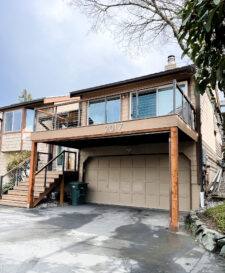
What Skagit County Weather Does to a Deck
Before talking about materials or installation methods, it's worth being honest about what a deck in Bow is actually up against. Three conditions do most of the damage.
Salt Air and Corrosion
Homes near Samish Bay and the surrounding Skagit County shoreline deal with salt-carrying air more than most people realize, even a few miles inland. Salt air accelerates corrosion in fasteners, flashing, and any exposed metal hardware. On a wood deck, that shows up as rust streaks bleeding out of nail and screw heads within a year or two. It's one of the reasons material selection for fasteners and structural hardware matters as much as the decking boards themselves.
Moss, Algae, and Standing Moisture
Skagit County's moss season isn't a minor inconvenience — it's a multi-month condition that coats north-facing surfaces, shaded corners, and anywhere moisture lingers without direct sun or airflow. On a wood deck, moss and algae aren't just cosmetic. They hold moisture against the board surface, which accelerates rot and makes the deck genuinely slick and unsafe underfoot. A deck design that ignores drainage and airflow is fighting moss season from day one.
Driving Rain and Wind-Driven Water
Rain here doesn't fall straight down as often as people assume. Wind off the water pushes rain sideways into ledger boards, stair stringers, and the gap between decking and house siding. That wind-driven moisture finds its way into any joint that isn't properly flashed or sealed, which is where most deck rot actually starts — not on the open deck surface, but at the house connection.
Why Composite Decking Fits Bow Homes
Composite decking is a blend of wood fiber and recycled plastic, usually with a protective polymer cap on modern boards. It doesn't solve every weather challenge on its own — installation still has to be done right — but it removes several of the failure points that wood decking struggles with in this climate:
- No annual staining or sealing to keep water out of the board surface
- Capped boards resist moisture absorption, so they don't swell, cup, or splinter the way wood does after repeated wet-dry cycles
- Consistent density and no natural grain means fewer spots where moss and algae can take hold and root in
- No risk of rot in the boards themselves, even after weeks of standing damp weather
- Color and surface texture stay far more stable under UV exposure and salt air than painted or stained wood
None of that means composite decking is maintenance-free — it isn't — but it shifts the maintenance burden from constant upkeep to periodic cleaning, which is a much better trade for a climate like this one.
What a Correctly Built Composite Deck Involves
Composite boards are only as good as what's underneath them. Most of the composite deck problems we get called to look at trace back to the substructure or the installation details, not the decking material itself. A correctly built deck for this area includes:
Substructure and Joist Spacing
Composite boards typically require tighter joist spacing than solid wood decking — the manufacturer's span tables exist for a reason, and cutting corners here leads to bounce, sag, and premature fastener stress over time.
Ledger Flashing at the House Connection
This is the single most important detail on any deck attached to a home in a wet climate. Proper flashing at the ledger board keeps wind-driven rain from working its way behind the siding and into the rim joist. It's invisible once the deck is finished, but it's the difference between a deck that lasts decades and one that causes hidden rot damage to the house itself.
Hidden Fasteners and Corrosion-Resistant Hardware
Given the salt air exposure in this part of Skagit County, we use fastening systems and structural hardware rated for coastal or salt-air environments, not standard-grade hardware that will streak and corrode within a few seasons.
Drainage and Airflow Underneath
Ground-level and low-clearance decks need enough airflow underneath to let moisture escape rather than pool. This is one of the biggest factors in how quickly moss and mildew take hold on the underside of a deck and around support posts.
Board Gapping and Expansion
Composite boards expand and contract with temperature, and correct gapping accounts for that movement so boards don't buckle or create pinch points at butt joints.
Composite vs. Other Decking Materials
Homeowners in Bow generally weigh composite decking against pressure-treated wood, cedar, and PVC. Here's how they compare under the conditions this area actually sees:
| Material | Moisture & Moss Resistance | Maintenance | Typical Lifespan Here |
|---|---|---|---|
| Pressure-treated wood | Absorbs moisture; needs sealing to resist moss and rot | Annual cleaning, staining/sealing | 10-15 years before major repair or replacement |
| Cedar | Naturally rot-resistant but still absorbs moisture without upkeep | Regular staining and cleaning | 15-20 years with consistent maintenance |
| Capped composite | Strong resistance to moisture absorption and moss adhesion | Periodic washing, no staining/sealing | 25-30+ years, manufacturer-backed |
| PVC | Fully moisture resistant, does not absorb water at all | Occasional washing | Comparable to or longer than composite, at a higher material cost |
We install capped composite decking for most Bow projects because it offers the best balance of moisture performance, appearance, and cost for this climate. PVC is a reasonable option for homeowners who want maximum moisture resistance and are comfortable with the added material cost. We steer away from uncapped or budget composite products in this specific climate — without a protective cap, the wood fiber content in older-generation composite boards can absorb moisture at the surface and become a host for the same moss and mildew growth we're trying to avoid, without offering the maintenance advantage that makes composite worth choosing in the first place.
Our Process for a Bow Composite Decking Project
The process is straightforward, but the details matter more here than they would in a drier climate:
- On-site assessment — we look at sun exposure, drainage patterns, the existing ledger connection if there is one, and any moss or moisture issues already present on the site.
- Design and material selection — board layout, color, and fastening system are chosen based on the deck's orientation and exposure to wind-driven rain.
- Permitting — Skagit County has specific requirements for deck structures depending on size, height, and attachment to the home; we handle that paperwork rather than leaving it to the homeowner.
- Tear-out and substructure work — old decking is removed, and the framing is inspected and corrected before anything new goes down. This is where hidden rot from a previous deck usually gets discovered.
- Flashing and structural install — ledger flashing, joist spacing, and hardware go in first, since this is the work that determines how the deck holds up long-term.
- Decking installation — boards are installed with proper gapping and hidden fastening for a clean surface finish.
- Final walkthrough — we go over basic care and what to expect from the material through the wet season.
Why a Crew That Already Works in Bow Matters
Deck-building fundamentals don't change from town to town, but the details that determine whether a deck actually lasts do. A crew that regularly works in Bow and the surrounding Skagit County area already knows:
- Which fastener and hardware grades hold up against the local salt air exposure
- How to time tear-out and construction around the wettest stretches of the year
- What Skagit County's permitting process actually requires for residential deck structures
- Which orientations and site conditions around Bow are most prone to moss buildup, and how to design drainage and airflow around that from the start
That local familiarity isn't a marketing point — it's the difference between a deck built to a generic spec sheet and one built for the specific conditions it has to survive.
Keeping a Composite Deck Looking Right Through Moss Season
Composite decking cuts maintenance dramatically compared to wood, but "low maintenance" isn't "no maintenance," especially with a moss season as long as this one. A simple seasonal routine keeps a composite deck performing the way it's supposed to:
- Sweep debris and organic buildup off the deck surface regularly through fall, before it has a chance to sit wet against the boards
- Rinse the deck surface periodically through the wet months, focusing on shaded or north-facing areas where moss takes hold first
- Keep gutters and downspouts clear so runoff isn't draining directly onto the deck surface
- Trim back overhanging vegetation to let sunlight and airflow reach shaded sections of the deck
- Check the underside and support posts once a year for any buildup of moss, debris, or standing moisture
- Use a soft-bristle brush and a composite-safe cleaner for stubborn moss or algae spots — avoid pressure washing at close range, which can damage the board's protective cap
What Drives the Cost of a Composite Deck
Every Bow project is different, but the same handful of factors move the price up or down on most jobs:
| Cost Factor | Why It Matters |
|---|---|
| Deck size and shape | Square footage and the number of angles, steps, or level changes affect both material and labor |
| Board tier and brand | Entry-level capped composite costs less than premium composite or PVC boards |
| Substructure condition | Existing framing that needs repair or replacement adds cost beyond the decking itself |
| Height and railing requirements | Elevated decks need code-compliant railings and stairs, which add materials and labor |
| Site access | Difficult access for equipment or material delivery can affect labor time |
| Ledger and flashing work | Correcting an existing poor ledger connection adds work but is not optional for a durable result |
We're direct about these factors during the estimate rather than quoting a single flat number up front — a small, simple deck and a large multi-level deck with stairs and railings are genuinely different scopes of work.
Talk to Us About Your Bow Deck Project
If you're planning a new composite deck or replacing one that hasn't held up to Skagit County weather, we're happy to take a look and walk you through what your specific site needs. Use the form below to request a free, no-pressure estimate.