 Anacortes
 Why Decks in Similk Beach Wear Differently Than Decks Inland
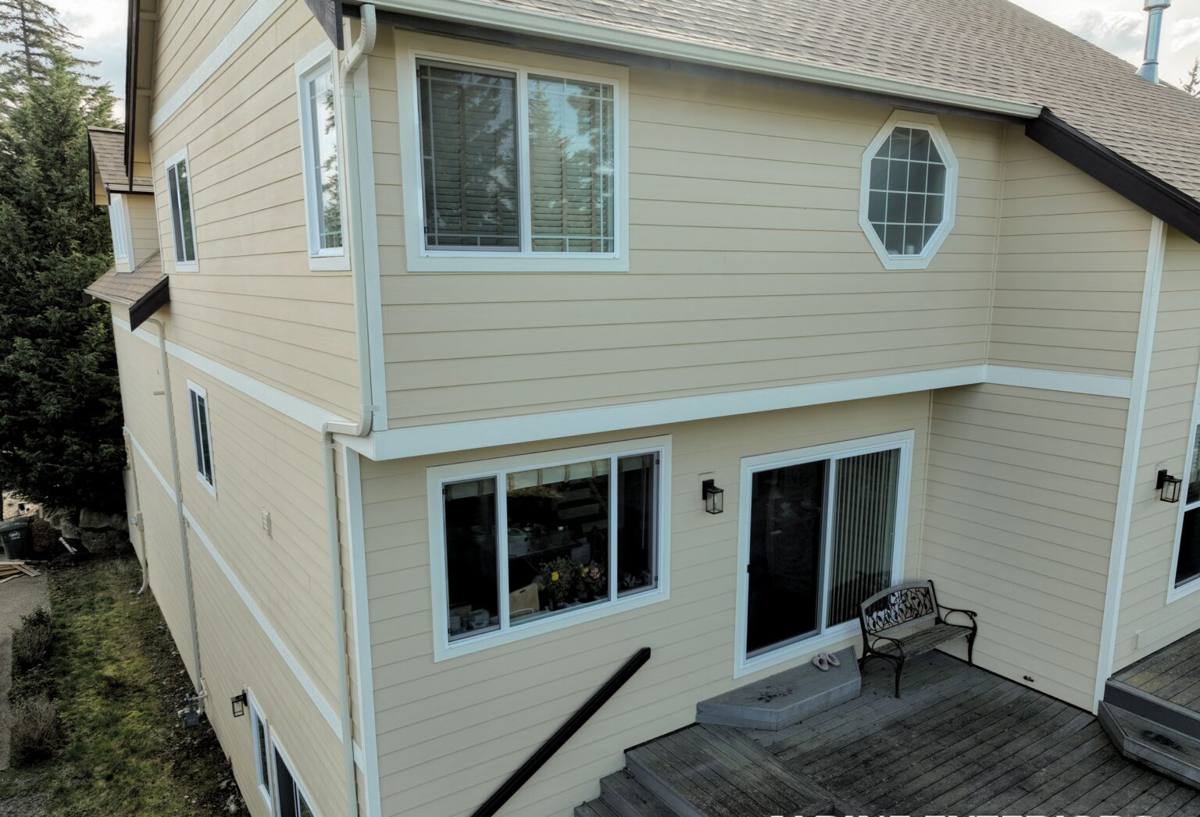
Similk Beach sits close enough to the water that homes here deal with a different set of conditions than a deck ten miles inland in Anacortes proper. Salt-laden air moves through fasteners, railings, and any exposed metal on a regular basis. Add in the driving rain that comes through Skagit County off the water during fall and winter storms, and you have a deck surface that stays damp far longer than homeowners expect. Then there's moss season — the long stretch of gray, wet months where anything shaded or low to the ground starts growing a green film if it isn't built and maintained correctly.
None of this means a deck can't hold up here. It means the material choice and the build details matter more in Similk Beach than they would in a drier part of the state. Composite decking, done correctly, is one of the more sensible answers to that combination of salt, rain, and moss — but "composite" isn't a single product, and not every install accounts for what this specific location throws at a deck.
What Composite Decking Actually Solves Here
Wood decking isn't a bad product, but it asks for a maintenance schedule that a lot of homeowners can't keep up with once the board starts absorbing water on one of Similk Beach's damp shoulder seasons. Untreated or under-maintained wood swells, checks, and opens up seams where moss and mildew take hold. Composite decking — a blend of wood fiber and plastic, usually with a protective cap on modern boards — doesn't absorb water the way solid wood does, so it isn't feeding the same cycle of swelling and cracking.
That doesn't make composite maintenance-free. It changes what maintenance means. Instead of sanding, staining, and sealing every year or two, you're mostly dealing with surface cleaning — knocking algae and moss film off the top of the board before it gets a foothold. For a property exposed to salt air and standing damp as often as this one, that's a meaningfully smaller job.
Where Composite Still Has Limits
Composite boards can still get slick when moss or algae builds up on the surface, especially in shaded corners of a deck that don't get much sun or airflow. The cap resists moisture intrusion into the board itself, but it doesn't stop organic growth from forming on top of it. That's a cleaning issue, not a material failure — but it's worth knowing going in so nobody is surprised.
Comparing Deck Surface Options for a Similk Beach Property
Homeowners usually land on composite after weighing it against the alternatives. Here's how the common options stack up against the specific conditions of salt air, driving rain, and a long moss season.
| Material | Moisture Behavior | Maintenance Load | Typical Lifespan Here |
|---|---|---|---|
| Pressure-treated wood | Absorbs water, swells and shrinks seasonally | Annual cleaning, periodic staining/sealing | 10–15 years before major repair |
| Cedar | Naturally rot-resistant but still absorbs moisture | Regular sealing to hold color and resist checking | 15–20 years with upkeep |
| Capped composite | Resists moisture absorption into the board core | Periodic surface cleaning, no staining/sealing | 25+ years, manufacturer-backed |
| Uncapped composite (older style) | Some moisture absorption at cut edges and surface | More frequent cleaning to prevent staining/mold | 15–20 years |
Cost follows a similar pattern to performance — pressure-treated is the cheapest up front, capped composite costs more per square foot, and the gap narrows once you factor in the labor and materials for repeated wood maintenance over 15-20 years.
What a Correct Composite Deck Build Involves
A composite deck is only as good as what's underneath it and how it's fastened together. This is where a lot of the long-term problems on any deck actually start, regardless of material.
Substructure and Framing
The joists, beams, and posts underneath the decking need to be sized and spaced correctly for composite specifically — composite boards can have different span ratings than wood, and using wood-spacing assumptions on composite decking leads to bounce and, eventually, sag. Pressure-treated framing lumber is standard here, and in a damp climate like this one, joist tape or another moisture barrier over the top of the framing is worth the extra step to keep water off the wood long-term.
Ledger Attachment and Flashing
Where the deck attaches to the house, proper flashing keeps water from working its way behind the siding or into the rim joist. This detail matters everywhere, but it matters more where driving rain comes in at an angle off the water, pushing moisture into gaps that would stay dry in a calmer climate.
Fasteners and Hardware
Salt air corrodes standard hardware faster than most homeowners expect. Stainless steel or coated, corrosion-rated fasteners and structural hardware belong on any deck this close to the water — using standard-grade screws or brackets here is a shortcut that shows up as rust streaks and weakened connections within a few years.
Airflow Underneath the Deck
Composite decking needs air movement underneath it to dry out after rain. A deck built low to the ground or boxed in without ventilation traps moisture underneath, which is exactly the environment that grows moss and mildew fastest. Proper clearance and, where the design allows, gaps or vents in any skirting keep air moving.
Our Process for a Similk Beach Deck Project
- Site assessment — we look at sun exposure, drainage, wind exposure, and how close the deck sits to salt spray or standing moisture, since those factors shape material and hardware choices.
- Substructure evaluation — on a replacement or rebuild, we check existing framing for rot, undersized members, or corroded hardware before anything new goes on top of it.
- Material selection — we walk through board options and colors with you based on your budget and how much surface maintenance you're willing to take on.
- Framing and flashing — correct joist spacing for the board you've chosen, moisture barrier tape, and proper flashing at the house connection.
- Decking, fascia, and railing installation — hidden fastener systems where the product supports it, corrosion-rated hardware throughout, and attention to expansion gaps so the deck performs through temperature swings.
- Final walkthrough — we cover basic care so you know what to expect in year one and beyond.
Keeping a Composite Deck Clean Through Moss Season
The biggest ongoing task on a composite deck in this area is staying ahead of surface growth before it sets in. Once moss or algae gets established in the grain texture of a board, it takes more effort to remove than a simple rinse.
- Sweep debris and standing leaves off the deck regularly through fall — wet leaves left in place are one of the fastest ways to start a moss patch
- Rinse the deck surface periodically through the wet months, especially in shaded areas that don't get direct sun
- Use a soft-bristle brush and a composite-safe cleaner for any established moss or algae — avoid pressure washing at close range, which can damage the cap on some boards
- Keep gutters and downspouts near the deck clear so runoff isn't draining directly onto the decking surface
- Check railing posts and fastener points once a year for any early signs of corrosion, especially on hardware closest to open water exposure
- Trim back overhanging vegetation that keeps sections of the deck shaded and damp longer than the rest
Why Local Experience Matters for This Job
A composite deck built to a generic spec sheet can still underperform in Similk Beach if the crew installing it hasn't dealt with what salt air and driving rain actually do to fasteners, flashing, and framing over time. A crew that regularly works this stretch of Skagit County knows which hardware grades hold up, where drainage tends to collect on lots near the water, and how much ventilation a substructure actually needs to dry out between storms.
That local pattern recognition is the difference between a deck that still looks and performs well after a decade of Anacortes winters and one that starts showing rust streaks, soft framing, or persistent moss problems within a few years. It also means fewer surprises during permitting and inspection, since local requirements and typical lot conditions aren't new information to us.
Getting Started
If you're planning a new deck or replacing one that's not holding up to the conditions out here, we're happy to take a look and talk through what makes sense for your property. We offer free, no-pressure estimates — fill out the form below and we'll get in touch to schedule a time to walk the site with you.