 Anacortes
 Why Conway Roofs Wear Out Faster Than the Brochure Says
Conway sits low in the Skagit River delta, close enough to Skagit Bay that salt-laden air is a daily fact of life, not an occasional weather event. Add in the long, wet Pacific Northwest winters and the open, damp farmland that surrounds the area, and you get a roofing environment that's genuinely tougher than what a shingle warehouse warranty was written for. Homes here don't just get rained on — they sit under a near-constant film of moisture for months at a time, with wind off the water pushing that rain sideways under poorly sealed edges and flashing.
That combination — salt air, driving rain, and a moss season that can run from October through May — is why a roof that would last two decades in a drier inland town can start showing real problems in Conway well before that. It's not bad luck. It's the climate doing exactly what it does here, and a roof either accounts for that or it doesn't.
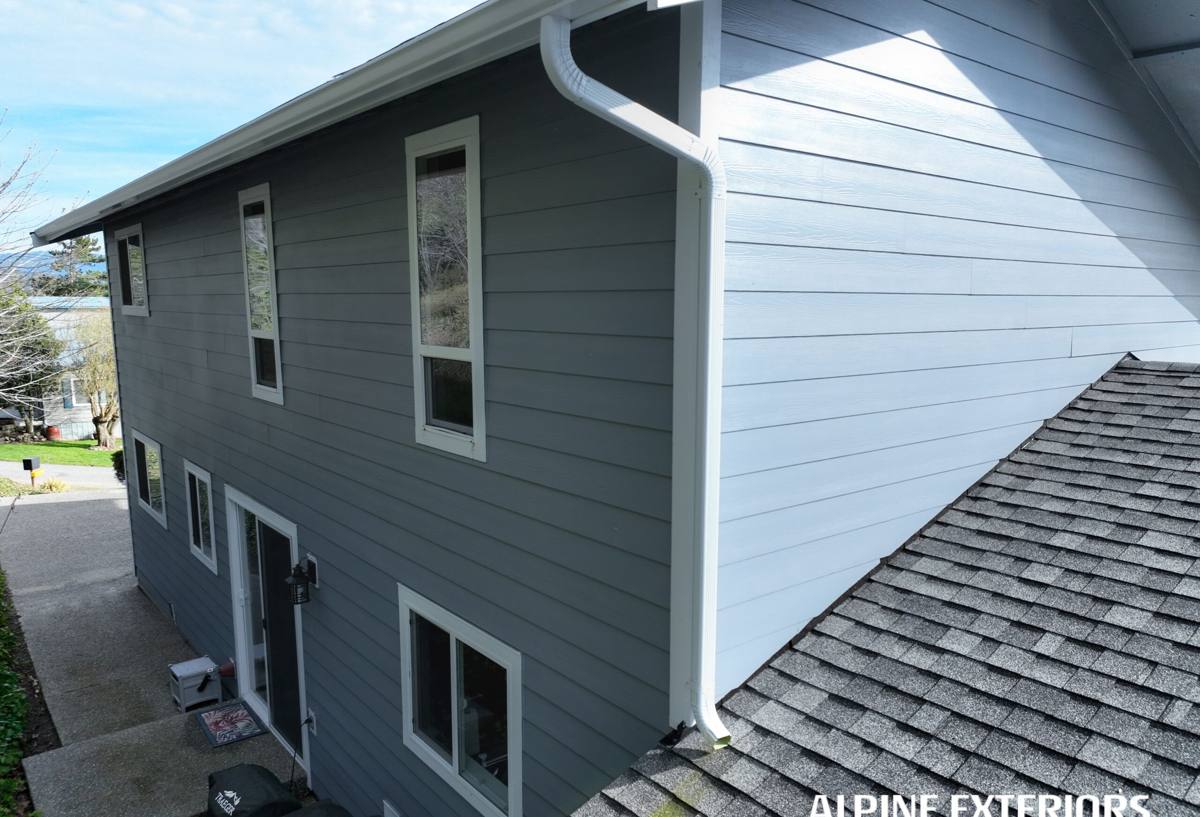
What Conway's Climate Actually Does to a Roof
Salt Air and Metal Fatigue
Salt-carrying air corrodes exposed fasteners, flashing, and metal roofing components faster than it does further inland. Cheap or improperly coated fasteners can start rusting within a few years, and once a fastener corrodes, the seal around it fails long before the roofing material itself wears out.
Driving Rain and Wind-Driven Water
Rain that comes in sideways off the bay doesn't behave like rain falling straight down. It gets pushed up under shingle tabs, around chimney flashing, and into any gap at a roof-wall transition. A roof designed only for vertical rainfall — without the right underlayment and flashing details — will leak in Conway even when it wouldn't leak somewhere drier.
Moss, Algae, and Trapped Moisture
The long, cool, damp stretch of the year is prime growing season for moss and algae. Moss doesn't just look bad — it holds water against the roofing surface, works its way under shingle edges, and lifts material as it grows, creating entry points for water that wouldn't otherwise exist. Left unaddressed over several seasons, moss growth alone can shorten a roof's usable life significantly.
Signs a Conway Home Needs a New Roof, Not Another Repair
Repairs make sense when a roof is otherwise sound and the damage is isolated. A full replacement makes sense when the roof's underlying systems — decking, underlayment, ventilation — are compromised. In Conway's climate, we typically recommend replacement rather than another round of patching when we see:
- Moss or algae established across large sections rather than isolated patches, especially on north-facing slopes
- Granule loss heavy enough that shingles look patchy or bald in spots
- Soft, spongy decking felt underfoot in the attic or from the roof itself
- Repeated leaks around the same penetration or valley despite prior patch repairs
- Visible daylight through the roof deck from inside the attic
- A roof already past, or close to, its material's realistic lifespan for this climate
- Curling, cracking, or cupping shingles, particularly on sections exposed to prevailing wind and rain
If you're only seeing one or two of these, a repair might still be the right call. We'll tell you honestly which category your roof falls into — we don't have a reason to push a full replacement on a roof that has a few more good years in it.
Roofing Materials That Actually Hold Up Here
There's no single "best" roofing material for every home — budget, roof pitch, and the style of the house all factor in. But in a marine, moss-prone climate like Conway's, some materials require far less fighting against the environment than others.
| Material | Moss & Moisture Resistance | Salt Air Durability | Typical Lifespan Here | Maintenance Needs |
|---|---|---|---|---|
| Architectural asphalt shingle | Good, with proper ventilation and zinc/copper strips | Good with corrosion-resistant fasteners | 20–25 years | Periodic moss treatment recommended |
| Standing seam metal | Excellent — sheds moisture, little surface for moss to grip | Very good with marine-grade coatings and fasteners | 40+ years | Low; occasional fastener/coating inspection |
| Synthetic/composite shingle | Very good — resists moisture absorption better than organic mats | Good | 30–40 years | Low to moderate |
| Cedar shake | Requires diligent upkeep — organic material feeds moss growth | Fair, weathers quickly near salt air | Highly maintenance-dependent | High |
We're straightforward with Conway homeowners about cedar shake: it can look great, but as an organic material sitting in a wet, moss-heavy climate, it demands a maintenance schedule most homeowners don't want to commit to. We'll install it if that's what you want, but we'll tell you upfront what keeping it healthy actually requires.
What a Correct New Roof Installation Involves
The roofing material you see is maybe a third of what actually keeps a Conway roof watertight. The rest is in details most homeowners never see and most low-bid crews skip.
Ventilation
Proper intake and exhaust ventilation keeps the attic space dry and temperature-balanced, which reduces condensation on the underside of the deck and slows moss growth from the inside out. Undervented roofs trap moisture, and trapped moisture is exactly what accelerates decking rot in a climate this wet.
Underlayment
Synthetic or ice-and-water-shield underlayment in vulnerable areas — eaves, valleys, and low-slope sections — gives the roof a real second line of defense against wind-driven rain, not just a token layer under the shingles.
Flashing and Transitions
Chimneys, skylights, sidewalls, and valleys are where the vast majority of roof leaks actually start. Correctly formed and sealed flashing at these transitions matters more to a roof's watertightness than the shingle brand on the box.
Moss Prevention Built In
Zinc or copper strips near the ridge, proper attic ventilation, and material choice all reduce how aggressively moss can take hold, cutting down on the maintenance a Conway roof needs going forward.
Our Installation Process for Conway Homes
- On-site inspection and honest assessment — we look at the existing roof, decking condition, ventilation, and any moisture damage before recommending replacement over repair.
- Material and system selection — we walk through material options suited to your home's exposure to wind, rain, and salt air, along with realistic cost and lifespan expectations.
- Tear-off and deck inspection — old roofing is removed and the decking is inspected underneath, since problems hidden by the old roof often aren't visible until it's off.
- Deck repair as needed — any soft, rotted, or delaminated decking is replaced before new material goes down; installing over compromised decking just hides the problem.
- Underlayment, flashing, and ventilation installed — the systems that actually keep water out, done correctly at every valley, penetration, and edge.
- Roofing material installation — installed to manufacturer specification, which is what keeps material warranties valid.
- Final walkthrough — we review the finished roof with you and answer questions before we consider the job done.
Timeline, Permits, and What to Expect
Most single-family roof replacements in the Conway area take one to three days on-site depending on roof size, pitch, and material, with weather in the mix as the biggest variable — we won't install certain materials in active rain, and we'll be upfront if a weather window pushes a start date. Skagit County typically requires a building permit for full roof replacement; we handle that process as part of the job so you're not chasing paperwork.
Expect noise, some yard disturbance near the house, and a thorough cleanup at the end — magnetic sweeps for stray fasteners and haul-away of old material are part of a finished job, not an upsell.
Living With a New Roof Through Moss Season
A correctly installed roof in Conway still lives in Conway's climate — it just handles that climate the way it's supposed to. Simple upkeep extends the life of the investment:
- Keep gutters clear so water isn't backing up under the roof edge during heavy rain
- Trim overhanging branches to cut down shade and debris that feed moss growth
- Have moss buildup treated before it spreads, rather than after it's established
- Schedule a roof check after major windstorms, which are common off the water
- Watch for granule buildup in gutters, an early sign of shingle wear
Why It Matters That We Already Work in Conway
A roofer who mostly works dry inland neighborhoods and occasionally takes a job near the water is learning Conway's climate on your roof. A crew that already works this part of Skagit County has already seen how salt air chews through the wrong fasteners, where wind-driven rain finds the gaps, and how fast moss actually spreads on a north-facing slope this close to the bay. That's not a sales pitch — it's the difference between a roof that's installed correctly the first time and one that needs to be relearned the hard way over a few wet winters.
If your Conway roof is showing its age, or you just want a straight answer about repair versus replacement, we're happy to take a look. Fill out the form below for a free, no-pressure estimate — we'll tell you what we actually see, not just what's easiest to sell.