 Anacortes
 Decks Built for the Skagit Valley, Not a Catalog Photo
Burlington sits in the heart of Skagit County, close enough to the water that salt air, driving rain, and a long moss season all show up on the job even though the town itself isn't right on the coast. A deck that would hold up fine in eastern Washington can start showing problems here within a couple of winters if it wasn't built with this climate in mind. We build and repair custom decks for homeowners throughout the Burlington area, and almost every callback we get on someone else's work traces back to the same root cause: the deck was designed for dry weather, not for the Pacific Northwest.
This page covers what actually matters when you're putting in a custom deck here — the materials that hold up, the framing details that keep water from doing damage you can't see, and how we run the job from the first conversation to the final walkthrough.
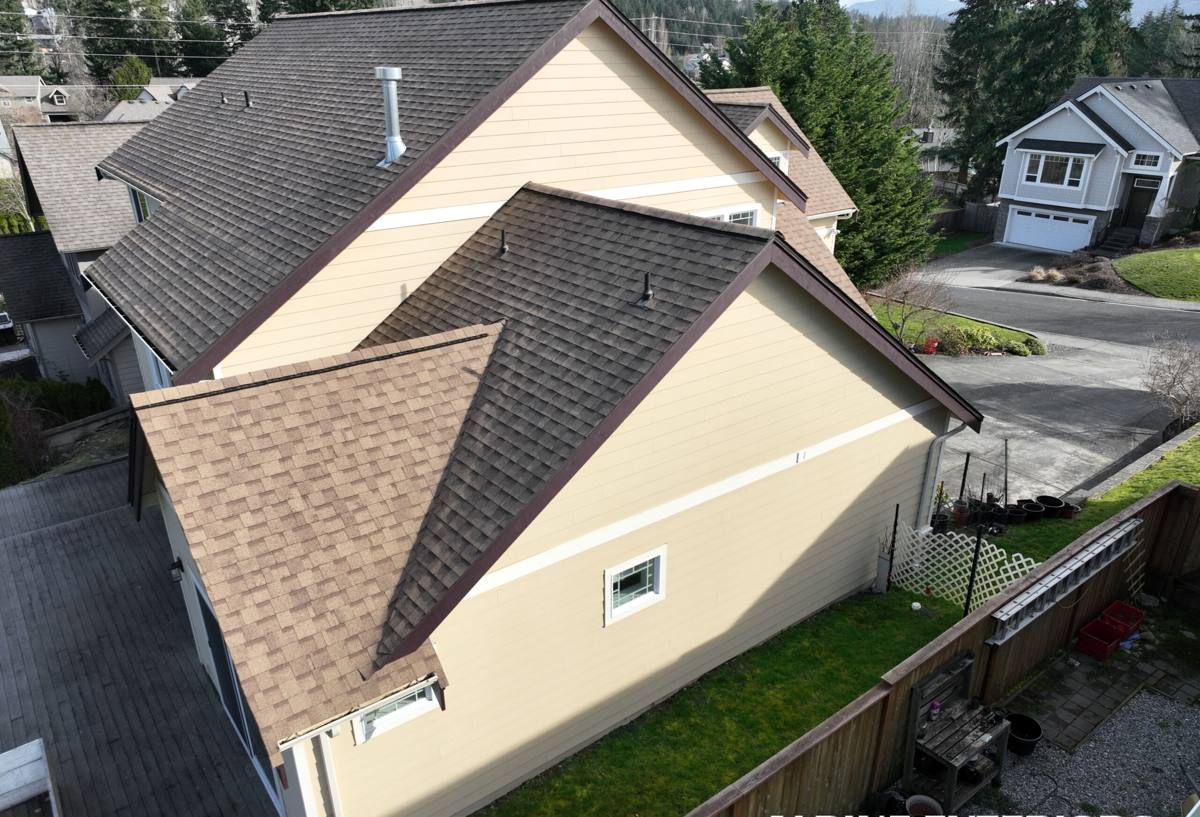
What the Local Climate Actually Does to a Deck
Rain and Standing Water
Skagit County gets a lot of rain spread across most of the year, not short, heavy downpours you can plan around. That means a deck's fasteners, flashing, and framing are wet far more often than they're dry. Any spot where water can collect — a low corner, a gap in flashing, a board laid flat instead of pitched — turns into a slow rot problem long before it becomes visible from the surface.
Moss, Algae, and Shade
Between the rain and the tree cover common on Burlington lots, moss and algae get a long season to establish themselves on deck boards, railings, and stair treads. Beyond looking bad, a mossy deck surface is a slip hazard, and moss holds moisture against the wood or composite surface far longer than open air would, which accelerates whatever wear is already happening underneath.
Salt Air and Metal Fasteners
Even away from the immediate waterfront, this part of Skagit County sits close enough to Puget Sound and the Salish Sea that airborne salt is part of the environment. Salt air speeds up corrosion on the wrong grade of screws, nails, and joist hardware. A deck can look structurally sound while its fasteners are quietly weakening underneath — which is exactly the kind of failure that shows up as a wobble or a soft spot years later, not a warning sign you'd notice ahead of time.
Choosing Decking Material for a Burlington Property
There's no single "best" decking material — there's a best material for your budget, your maintenance appetite, and how much sun and shade your specific yard gets. Here's how the common options stack up for our climate specifically:
| Material | Moisture Resistance | Moss/Algae Resistance | Maintenance | Typical Lifespan Here |
|---|---|---|---|---|
| Pressure-treated lumber | Good if sealed regularly | Low — needs regular cleaning | Annual cleaning and resealing | 10-15 years |
| Cedar | Naturally moderate | Moderate | Periodic staining/sealing | 15-20 years |
| Composite decking | Excellent | Moderate — surface can still grow moss in deep shade | Occasional cleaning, no sealing | 25-30+ years |
| PVC decking | Excellent | Good | Minimal — occasional wash | 25-30+ years |
We install all of the above, and we'll tell you honestly which one fits your situation instead of steering you toward whatever's easiest for us to install. A shaded, tree-covered Burlington lot is a different conversation than an open, sunny one — the same material can perform very differently depending on how much airflow and direct sun the deck actually gets. Our standard on wood decking is that it needs a maintenance commitment from the homeowner to look and perform its best in this climate; if that's not something you want to keep up with, composite or PVC is usually the more practical call.
What's Underneath Matters More Than What's on Top
A good-looking deck surface on a poorly built frame is a problem waiting to happen, and it's the framing details that separate a deck that lasts twenty-five years from one that needs major repair in eight.
The details we treat as non-negotiable on every job:
- Ledger board flashing — where the deck attaches to the house is the single most common source of hidden rot in this climate; proper flashing (not just caulk) keeps water from tracking behind the siding.
- Footing depth and placement — footings need to go below frost depth and bear on solid, undisturbed soil, which matters on the flatter, wetter lots common around the valley floor.
- Correct joist spacing and hardware — spacing and connector hardware are sized to the decking material and span, not just "however it's always done."
- Corrosion-resistant fasteners — given the salt air in this region, we use fastener and hardware grades rated for coastal-adjacent exposure, not the minimum interior-grade hardware.
- Slope for drainage — the deck surface is built with a slight pitch away from the house so water sheds instead of pooling.
Designing for Burlington's Lots and Terrain
Burlington properties tend to run flatter than the hillside lots you'll find closer to Anacortes, since much of the town sits on the valley floor. That has real implications for deck design: flatter, low-lying ground drains more slowly, so grading around footings and keeping the area under the deck ventilated matters more here than it would on a well-drained slope. Standing water or persistent dampness under a low deck is one of the more common issues we get called out to fix on homes that weren't built with that in mind.
Mature trees are also common on residential lots throughout the area, which is great for privacy but means many decks sit in partial shade for a good part of the day. Shade slows drying time after rain and is exactly the condition moss needs to take hold, so we factor sun exposure into both the material recommendation and the framing height — a deck built a little higher off the ground, or with better underside airflow, dries out faster and stays cleaner longer.
Our Deck-Building Process from Estimate to Walkthrough
We run every custom deck project the same way, whether it's a simple rebuild or a multi-level design:
- On-site consultation. We look at your lot, sun and shade patterns, drainage, and how you actually plan to use the space, and talk through material options honestly.
- Design and quote. You get a clear design and a written quote before any work starts — no surprise change orders for things we should have caught up front.
- Permitting. Most custom decks in Burlington require a permit through the local building department; we handle that paperwork so it's not on you to figure out.
- Site prep and footings. Footings are dug to proper depth and inspected before anything gets built on top of them.
- Framing. Ledger flashing, joists, and hardware go in to the standards described above — this is the stage that determines how the deck ages.
- Decking, railing, and stairs. Your chosen material goes down, with attention to fastening pattern and spacing for proper drainage and airflow.
- Final walkthrough. We inspect the finished deck with you, cover basic care and maintenance for whatever material you chose, and make sure you're satisfied before we call the job done.
Keeping a Skagit County Deck Looking Good Year After Year
Even the best-built deck needs some ongoing attention in this climate. A simple seasonal routine goes a long way:
- Sweep leaves and debris off the deck surface regularly, especially in fall — trapped debris holds moisture against boards.
- Clean moss and algae with a mild deck cleaner and a stiff brush rather than a high-pressure washer, which can damage wood fibers and composite surface layers.
- Reseal or re-stain wood decking on a regular schedule — don't wait until it looks dry and gray, by then moisture is already getting in.
- Check railing posts, stair stringers, and the ledger connection once a year for movement, soft spots, or rust staining around fasteners.
- Keep gutters above the deck clear so runoff isn't dumping directly onto the deck surface or ledger area.
- Trim back overhanging branches and nearby vegetation to improve airflow and sun exposure where possible.
What a Custom Deck Typically Costs in Burlington
Every deck is different, but a few factors consistently drive the price up or down. As a general planning guide, most custom decks in this area run roughly in the $35-$75 per square foot range installed, depending on the factors below — a rough starting point, not a quote.
| Factor | Effect on Cost |
|---|---|
| Decking material (pressure-treated vs. cedar vs. composite/PVC) | Largest single factor — composite/PVC costs more up front, less over time |
| Height and number of levels | Multi-level or elevated decks need more framing, footings, and stairs |
| Railing type and style | Cable, glass, or custom railing systems cost more than standard wood or metal balusters |
| Site access and grading | Sloped or hard-to-access lots take more labor to prep and build on |
| Permitting and engineering | Larger or elevated structures may require engineered plans, adding to timeline and cost |
| Attached vs. freestanding | Attached decks need ledger work tied into the house; freestanding decks need their own full support structure |
The only way to get a real number is a site visit — we'll walk your property, talk through what you actually want, and give you a straightforward written quote.
Why Local Experience in Burlington Matters
A deck built by a crew that's never worked in this specific climate is a gamble — they may build to a generic standard that works fine somewhere drier, and you won't find out it was the wrong call until the rot shows up years later. We work throughout the Burlington and greater Anacortes area regularly, which means we already know how the local building department handles deck permits, which materials actually perform under this much rain and moss pressure, and which framing shortcuts cause problems specifically in Skagit County conditions. That local knowledge doesn't show up as a line item on a quote, but it's the difference between a deck that needs real repair in eight years and one that's still solid in twenty-five.
If you're planning a new deck, replacing an aging one, or just want an honest opinion on whether yours needs repair or replacement, we're happy to take a look. Reach out for a free, no-pressure estimate using the form below.