 Anacortes
 Custom Windows Built for Sedro-Woolley Homes
Sedro-Woolley sits inland along the Skagit River, tucked between the valley floor and the foothills of the Cascades. It doesn't take the same direct salt spray that homes right on Fidalgo Island or the Anacortes waterfront deal with, but it's still squarely inside Skagit County's marine-influenced climate — long wet stretches, driving rain that comes in sideways off the valley, heavy humidity, and a moss season that seems to run longer every year. Windows here work hard, and factory-standard sizes and generic installs don't always hold up to it.
"Custom" windows simply means windows built to the actual openings and conditions of your house, rather than forcing your house to fit a stock size. For older Sedro-Woolley homes with settled framing, additions with slightly odd rough openings, or replacement projects where you want a specific look, custom sizing and a careful install matter more than which brand name is on the sticker.
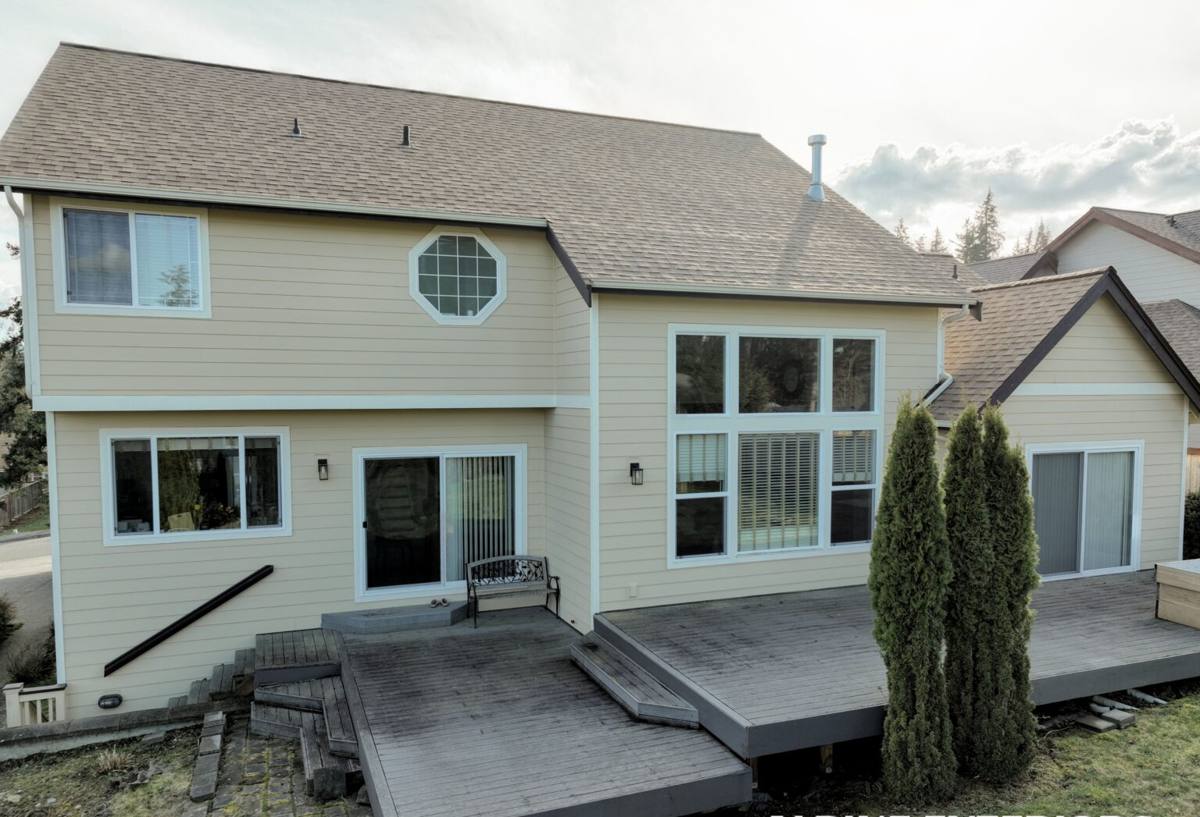
What the Skagit Valley Climate Does to Windows Over Time
A window doesn't fail all at once. It fails in stages, and most of those stages are climate-driven:
Driving Rain and Wind-Driven Moisture
Storms moving up the valley push rain horizontally against west- and southwest-facing walls. If flashing, sill pans, or sealant weren't done correctly the first time, water finds its way behind the trim and into the wall cavity long before you ever see a stain on the interior sill.
Humidity and Condensation
The river valley holds moisture in the air longer than drier inland areas. Older single-pane or early double-pane windows fog up, sweat on cold mornings, and feed the wood rot and mildew that show up around the frame and sill over a few winters.
Moss and Organic Growth
Moss doesn't just grow on roofs. It takes hold in window tracks, on horizontal trim ledges, and in any spot where debris and moisture sit undisturbed. Left alone, it holds water against wood and paint far longer than plain rain does, which speeds up rot underneath.
Temperature Swings
Skagit Valley mornings can start near freezing and climb well past that by afternoon, especially in shoulder seasons. That daily expansion and contraction stresses seals, caulking, and glass units — it's a big part of why insulated glass eventually loses its seal and fogs between the panes.
What a Correct Custom Window Job Actually Involves
A lot of window problems in this area trace back to installation shortcuts, not the window itself. A correct job means:
- Precise measurement of each opening — older homes rarely have perfectly square or identical window openings, even room to room
- Removing old windows and inspecting the framing and sill for hidden rot or moisture damage before anything new goes in
- Installing proper flashing and a sloped sill pan so any water that does get past the exterior finish drains back out, not into the wall
- Sealing and insulating the gap around the new window fully, without gaps or compressed insulation that leave cold spots
- Finishing trim and caulking lines that are actually weathertight, not just cosmetically neat
Skip any one of those steps and you can end up with a brand-new window that still leaks, still fogs, or still lets in drafts — because the problem was never the glass, it was everything around it.
Choosing Frame Materials for This Climate
There's no single "best" window material — each has trade-offs worth understanding before you decide, especially given how wet the region stays for much of the year.
| Frame Material | How It Handles Moisture | Maintenance | Typical Lifespan |
|---|---|---|---|
| Vinyl | Won't rot; seams and welds need to be well-made to stay watertight long-term | Low — occasional cleaning | 20-30+ years |
| Fiberglass | Excellent moisture resistance, dimensionally stable through temperature swings | Low | 30-40+ years |
| Wood | Needs a sound exterior clad or diligent paint upkeep or it absorbs moisture and rots | High — regular paint/finish maintenance | Varies widely with upkeep |
| Wood-Clad | Exterior clad protects the wood from rain and humidity; interior stays warm wood look | Moderate | 25-35+ years with proper install |
| Aluminum | Durable but conducts cold and can condensate more in humid, cool climates | Low | 20-30 years |
For most Sedro-Woolley homes, vinyl and fiberglass tend to hold up the most predictably against the region's moisture without adding maintenance to your plate. Wood and wood-clad windows can look great on older or historic-style homes, but we're upfront that they require an owner willing to keep up with paint and finish — otherwise the same driving rain that wears on siding will eventually wear on an unmaintained wood sill.
Glass and Weatherstripping Matter as Much as the Frame
Frame material gets most of the attention, but the glass package and seals do a lot of the actual work:
- Double or triple-pane insulated glass — reduces heat loss and condensation on cold, humid mornings, which are common here most of the year
- Low-E coatings — help manage heat gain and loss without changing how the glass looks
- Quality weatherstripping — the seal around an operable sash is often the first thing to fail; a good gasket keeps out both drafts and wind-driven rain
- Proper glazing seals — a failed seal shows up as fog or moisture trapped between panes, and it's a sign the unit needs replacing, not just cleaning
Signs Your Sedro-Woolley Home's Windows Need Attention
Not every window issue means a full replacement, but these are worth having looked at:
- Fog or moisture trapped between the panes of a double-pane window
- Soft or discolored wood at the sill or lower corners of the frame
- Visible moss or persistent green growth in the tracks or on horizontal trim
- Drafts you can feel near the frame even with the window fully closed
- Windows that are difficult to open, close, or lock — often a sign the frame has shifted or swollen
- Paint peeling or bubbling specifically around the window opening, which usually points to moisture behind it
- A noticeable jump in heating costs without any other explanation
Our Process for a Custom Window Project
- On-site assessment — we look at each opening, check for hidden moisture or rot, and talk through what you actually want out of the windows (energy performance, look, operable style)
- Accurate measurement and material selection — we measure every opening individually rather than assuming they match, and walk through frame and glass options that fit your home and budget
- Removal and inspection — old windows come out carefully, and we inspect the framing underneath before anything new goes in, so problems get caught rather than sealed over
- Correct flashing and sill work — this is the step that determines whether the window stays dry for the next twenty years, and it's where we don't cut corners
- Installation, insulation, and sealing — the new window goes in level and square, gaps get insulated fully, and exterior sealant lines are done to actually shed water
- Trim and finish work — interior and exterior trim finished to match the rest of the house
- Final walkthrough — we check operation, seals, and finish with you before calling the job done
Why Hiring a Crew That Already Works in Sedro-Woolley Matters
Window installation isn't identical everywhere. A crew that regularly works Skagit County homes already knows what wood-frame construction from different eras in this area tends to look like once you open up an old opening, how the valley's rain and wind patterns tend to attack certain wall orientations, and how to flash a window so it survives a wet Skagit Valley winter rather than just the initial inspection. That's the kind of knowledge you don't get from a crew passing through once. It also means we're a known, findable business if a warranty question or a seal ever needs a second look down the road — not a name that only shows up for one job and disappears.
Maintaining Custom Windows Once They're In
A well-installed window still benefits from basic upkeep, especially in a climate that stays wet as long as this one does:
- Clean tracks and weep holes periodically so moss and debris don't build up and hold moisture against the frame
- Check caulking lines yearly, especially after winter storms, and re-caulk any cracked or separated sections
- Wipe down sills after heavy rain if water tends to pool there
- Keep gutters and downspouts clear so runoff isn't dumping extra water directly onto window heads
- Address any fogged glass or soft wood promptly — both tend to get more expensive to fix the longer they sit
If you're weighing whether your Sedro-Woolley home's windows need repair or full replacement, or you're planning a project and want it done with the flashing, sealing, and framing steps that actually hold up to this valley's weather, we're happy to take a look. Reach out for a free, no-pressure estimate using the form below.