 Anacortes
 Building Decks for Ship Harbor's Marine Climate
Ship Harbor sits close enough to the water that the weather off Rosario Strait shapes every outdoor structure in the area, and a deck is no exception. Salt-laden air, driving rain off the strait, and a moss season that can stretch from fall through spring put more stress on an outdoor deck here than in most inland parts of Skagit County. A deck built without that in mind will look fine for a year or two and then start showing problems: soft spots in the decking, rust bleeding from fastener heads, ledger boards that trap moisture against the house, and railings that loosen as hardware corrodes. Building correctly for Ship Harbor means choosing materials and methods that account for salt exposure and near-constant moisture from day one, not patching around them later.
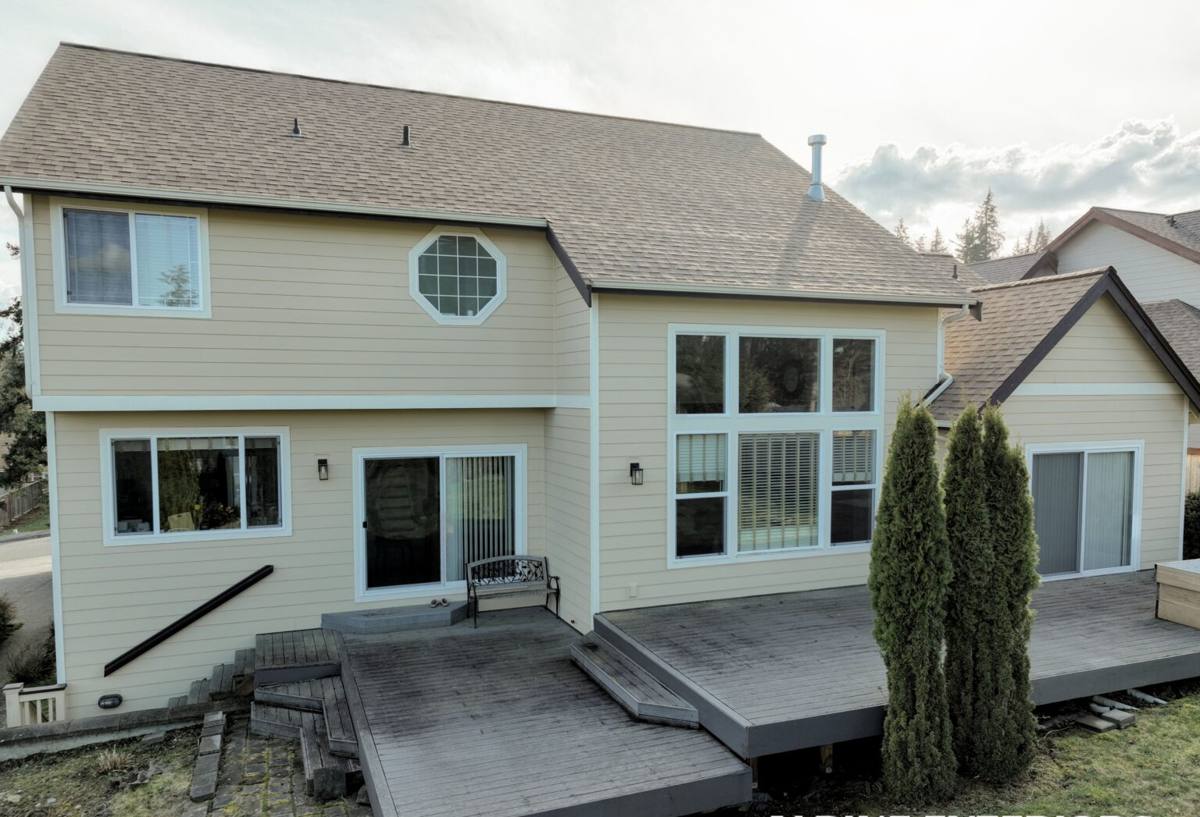
What Ship Harbor Homes Need From a Deck
Properties in and around Ship Harbor tend to sit at elevations and orientations that catch wind and moisture straight off the water. That combination — salt air plus sustained dampness — accelerates two things faster than almost anywhere else on a house: metal corrosion and wood decay. A deck here needs to handle three things well:
- Airborne salt that settles on every exposed surface and works into any unsealed metal or end-grain wood
- Rain that comes in sideways during winter storms, which means water doesn't just fall on a deck — it drives into joints, fastener holes, and ledger connections
- Extended shade and dampness that lets moss and algae take hold on decking, stairs, and any horizontal surface that doesn't dry out quickly
None of these are exotic problems, but they add up. A deck built with standard, inland-spec hardware and generic detailing will age noticeably faster in Ship Harbor than the same deck built forty minutes inland.
Choosing the Right Decking Material
There's no single "best" decking material for every home — it depends on budget, how much upkeep the owner wants to do, and how exposed the deck is to wind and salt spray. What matters is picking a material honestly, understanding its trade-offs, and installing it correctly for this climate.
Wood Decking
Cedar and pressure-treated fir are both used successfully in this area, and both can last for decades — but only with regular maintenance. Wood needs to be sealed or stained on a schedule, and in a marine climate that schedule is tighter than what a manufacturer's general guidance assumes. Skipped maintenance is the single most common reason we see wood decks fail early here, not the wood itself.
Composite Decking
Composite boards trade a higher upfront cost for far less annual upkeep — no staining, no sealing, and better resistance to moss growth on the surface. Composite isn't maintenance-free (it still needs regular cleaning to stay ahead of algae in a shaded, damp yard), but it removes the sealing cycle that wood requires. We recommend boards with a fully capped profile in this climate; uncapped composite can still absorb moisture at cut ends and fastener points.
PVC and Vinyl Decking
Fully synthetic decking sheds water and resists moss better than either wood or composite, at the highest material cost of the three. It's a reasonable choice for a homeowner who wants to minimize maintenance completely and is willing to pay for it, but it isn't a fit for every budget or every home's look.
| Material | Upfront Cost | Maintenance | Performance in Salt Air / Rain |
|---|---|---|---|
| Pressure-treated wood | Lowest | Annual sealing/staining | Good if maintained on schedule; vulnerable if neglected |
| Cedar | Moderate | Regular sealing/staining | Naturally decay-resistant but still needs upkeep near the water |
| Composite (capped) | Moderate to high | Periodic cleaning | Strong; resists moisture absorption and moss buildup |
| PVC / vinyl | Highest | Occasional cleaning | Excellent; fully sheds water, minimal moss adhesion |
Framing and Substructure — Where Decks Actually Fail
Homeowners often focus on the decking surface, but the framing underneath is where most deck failures start, and it's almost entirely hidden until something goes wrong. In a climate like ours, a few details matter more than they would elsewhere.
Ledger Board Attachment
The ledger board — where the deck attaches to the house — is the single most important connection on the structure and the most common source of hidden rot. It needs proper flashing to keep water from tracking behind the siding and into the rim joist. This is a step that's easy to rush and expensive to fix once the damage is behind the wall.
Joist Protection
Joist tops and cut ends absorb water faster than any other part of the frame. Flashing tape over joist tops and sealing cut ends before assembly keeps water from soaking into exposed wood fiber — a detail that costs little during construction and prevents soft, spongy framing years later.
Ventilation Underneath
Low decks built tight to grade, or decks with skirting that blocks airflow, trap moisture underneath where it can't dry out between rain events. Adequate clearance and airflow under the structure matters as much in a wet coastal climate as the decking material chosen on top.
Hardware and Fasteners for Salt Air
This is the detail that separates a deck that ages well near the water from one that doesn't, and it's also the easiest to cut corners on because it's mostly invisible once the deck is built. Standard galvanized fasteners can start showing surface corrosion within a few years in a salt-air environment, and rusting fastener heads don't just look bad — they weaken the connection and can stain decking around them.
For Ship Harbor projects we use stainless steel or high-grade coated fasteners rated for coastal exposure, along with structural hardware (joist hangers, post bases, hurricane ties) built to the same standard. It costs more than standard hardware, but replacing a deck's fastener system after it starts failing costs far more than specifying it correctly the first time.
Railings, Stairs, and Wind Exposure
Elevated decks and those with open exposure toward the water take more direct wind and rain than a sheltered deck tucked against a house. Railing posts need solid blocking and correctly rated hardware, not just cosmetic attachment — a railing that flexes or loosens is both a safety issue and an early sign that fasteners are corroding underneath the surface. Stair stringers, which sit closer to grade and collect more standing moisture, benefit from the same decay-resistant material and hardware standards as the rest of the structure, even though they're often treated as an afterthought.
Our Deck Building Process
Design and Permitting
We start with a site visit to look at grade, drainage, sun and wind exposure, and how the deck will tie into the house. Most deck projects in the City of Anacortes and unincorporated Skagit County require a building permit, and elevated structures typically need engineered footings and railing details reviewed before work starts. We handle that process as part of the job rather than leaving it for the homeowner to sort out.
Construction
Framing goes in first with the flashing, fastener, and hardware standards described above, followed by inspection where required, then decking, railings, and any stairs. We sequence the work to minimize the number of days framing sits exposed to rain before it's covered.
Final Walkthrough
Before we call a project finished, we walk the deck with the homeowner — checking fastener finish, railing rigidity, stair spacing, and drainage underneath — so there are no surprises found later.
Permits and Code Requirements
Deck permitting requirements depend on size, height above grade, and attachment to the home, and they can differ slightly between City of Anacortes jurisdiction and unincorporated Skagit County parcels. Rather than guess at what applies to a specific property, we confirm requirements before finalizing a design so the project isn't delayed or reworked mid-build. Skipping this step is one of the more common — and more expensive — mistakes homeowners run into when hiring a crew unfamiliar with local jurisdiction.
Protecting Your Deck: A Maintenance Checklist
Even a well-built deck needs some ongoing attention in this climate. This is a realistic baseline for keeping a Ship Harbor deck in good shape year to year:
- Rinse salt residue and debris off decking and railings a few times a year, especially after winter storms
- Clear moss and algae from decking, stairs, and shaded corners before it becomes slick or embedded
- Reseal or stain wood decking on the schedule appropriate to the product — don't wait until it looks faded
- Check railing posts and stair connections annually for looseness, which can signal fastener corrosion
- Keep gutters and downspouts clear so runoff isn't discharging directly onto or under the deck
- Inspect underneath the deck occasionally for standing moisture or blocked airflow
Why Hire a Crew That Already Works in Ship Harbor
A deck built to a generic, one-size-fits-all spec can look identical to a correctly built one on the day it's finished. The difference shows up two, five, and ten years later — in fastener rust, soft framing, and railings that loosen. Working on homes throughout Ship Harbor and the rest of Anacortes means we already know which details matter in this specific environment: the flashing at ledger boards, the hardware grade that actually holds up to salt air, and the permitting expectations for this jurisdiction. That's not something a crew based elsewhere, without local experience, tends to get right on the first try.
If you're planning a new deck or need to know whether an existing one is holding up the way it should, we're happy to take a look and give you a straightforward, no-pressure estimate. Fill out the form below and we'll get back to you.