 Anacortes
 Deck Repair Built for Old Town Anacortes Conditions
Old Town Anacortes sits close enough to the water that its decks live a harder life than decks twenty miles inland. Salt-laden air moves through the neighborhood most of the year, driving rain comes in sideways off the water during fall and winter storms, and the tree cover and marine humidity that make this part of Anacortes so pleasant to live in also mean moss and algae get a long head start every year. A deck here doesn't fail because it was built wrong — it fails because Skagit County's coastal climate is genuinely tough on exposed wood and fasteners, and most decks were never detailed to handle it long-term.
We repair decks in Old Town Anacortes on a regular basis, which means we're not guessing at what's driving the damage when we show up. We know which framing details tend to trap water, which fastener types corrode fastest this close to the water, and which repairs are cosmetic band-aids versus the ones that actually stop the clock on further rot. This page walks through what we look for, what a proper repair involves, and how we run the job from first look to final walkthrough.
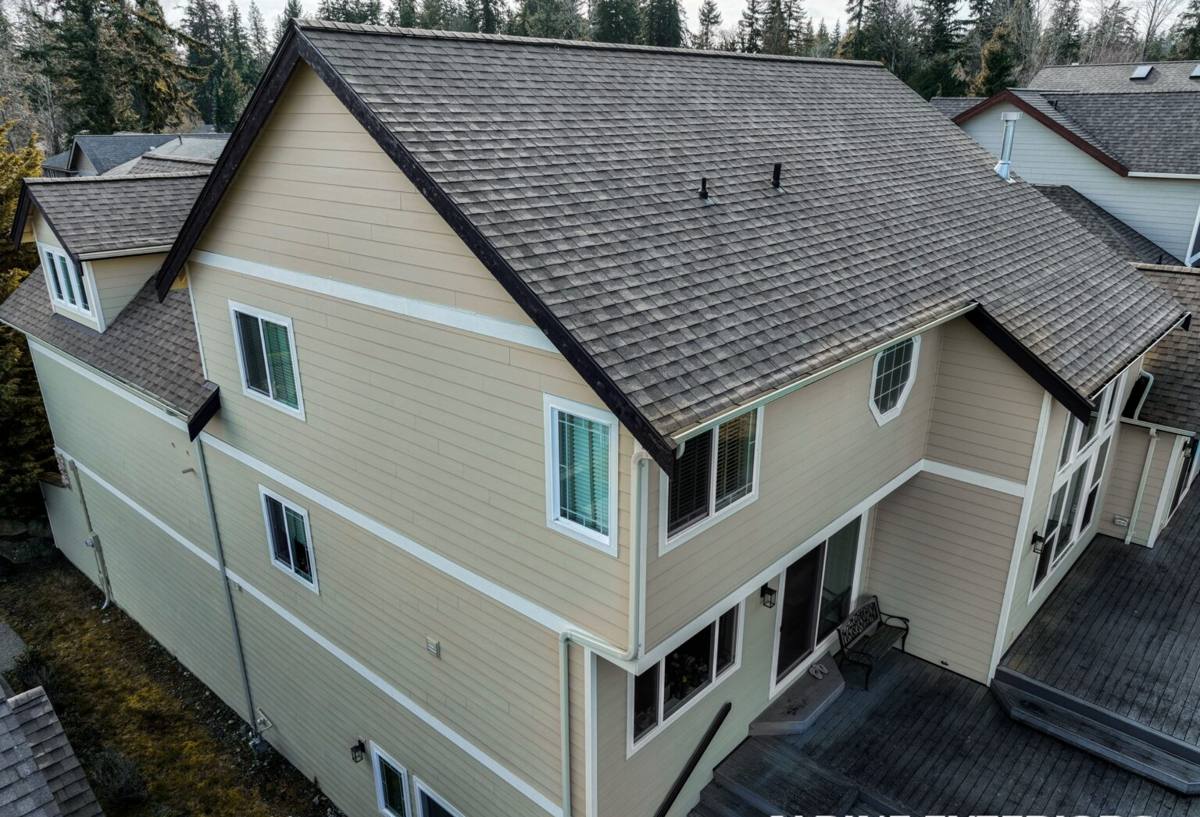
Why Decks in This Part of Anacortes Wear Differently
Three climate factors do most of the damage to Old Town decks, and they compound each other:
- Salt air: Airborne salt accelerates corrosion in fasteners, joist hangers, and any exposed metal hardware. Once a fastener starts rusting, it swells slightly, which enlarges the hole around it and lets moisture track deeper into the wood.
- Driving rain: Wind-driven rain off the water doesn't just fall on a deck's top surface — it gets pushed sideways under railings, into end-grain cuts, and behind ledger boards where the deck attaches to the house. That's where hidden rot usually starts.
- Extended moss and algae season: Shade, humidity, and mild temperatures let moss establish on deck boards and framing far more of the year than most homeowners realize. Moss holds moisture directly against the wood surface, which is a much slower but steadier form of damage than a single rainstorm.
None of these factors are dramatic on their own. The problem is that they run almost year-round in Anacortes, so a deck that would need attention every ten years in a drier climate often needs it every five to seven here — especially if it was built with basic pressure-treated lumber and standard fasteners rather than materials specified for coastal exposure.
Where We Find the Most Damage
On repair calls in Old Town Anacortes, the same handful of locations account for most of the serious problems:
- The ledger board where the deck bolts to the house — often the wettest, least-ventilated part of the whole structure
- Joist ends and beam pockets, where end grain soaks up water faster than the flat face of a board
- Stair stringers, which take direct rain exposure with little overhang protection
- Railing posts at the base, where they meet the deck surface and trap standing water
- Fastener heads and joist hangers showing rust bleed or visible corrosion
Signs a Deck in Old Town Anacortes Needs Repair
Homeowners usually notice one of these first, but there's often more going on beneath the surface than the visible symptom suggests:
| What You Notice | What It Usually Means |
|---|---|
| Soft or spongy boards underfoot | Moisture has broken down the wood fibers; the board has likely lost structural integrity, not just surface finish |
| Dark streaking or green film on boards | Moss or algae growth holding moisture against the surface — early stage, but worth addressing before it spreads to framing |
| Rust stains around screws or nails | Fasteners are corroding, often from salt exposure; the holes may be enlarging and letting water in |
| Railing that wobbles or flexes | Post base rot or a failed connection — a safety issue, not just cosmetic |
| Gaps or separation at the ledger board | Possible flashing failure or fastener pull-out where the deck meets the house — a leading cause of structural deck failures |
| Musty smell near or under the deck | Trapped moisture and early-stage rot in framing, sometimes before it's visible from above |
What a Correct Deck Repair Involves
A repair that actually holds up in this climate goes beyond swapping out the board that looks bad. Here's what we check and do on every job:
1. Full Structural Assessment
Before any repair work starts, we get underneath the deck and check the framing directly — joists, beams, posts, and especially the ledger connection to the house. Surface damage on the decking boards is often the least of the problem; the framing underneath tells the real story.
2. Moisture and Rot Mapping
We probe suspect areas to find the actual boundary of rot damage, not just the visibly discolored section. Wood rot spreads beyond what's discolored, and cutting back to solid material is what keeps a repair from reopening in a year or two.
3. Fastener and Hardware Evaluation
Given how hard salt air is on metal here, we check joist hangers, structural screws, and connector hardware for corrosion — not just the decking screws. Replacing rotted boards with the original corroding hardware just resets the same failure a few years out.
4. Ledger and Flashing Inspection
Since the ledger board is where most hidden rot starts, we check the flashing detail where the deck meets the house siding. If flashing is missing, damaged, or was never properly installed, we address that as part of the repair — otherwise the new work is protecting against rain but not against the leak that caused the original damage.
5. Targeted Removal and Replacement
We remove and replace only what's actually compromised — sound framing and decking stay in place. This keeps repair costs proportional to the actual damage instead of turning every repair into a full rebuild.
6. Material Selection for Coastal Exposure
Where hardware or fasteners are being replaced, we use corrosion-resistant options suited to salt-air exposure rather than standard hardware, since that's usually what failed in the first place.
Repair or Rebuild? How We Help You Decide
Not every deck problem calls for the same level of work, and it's not always obvious from the surface which category a deck falls into. In general:
- Spot repair makes sense when damage is isolated — a few boards, one post base, a section of railing — and the framing underneath tests solid.
- Partial rebuild is the right call when the framing has scattered rot in multiple areas, or when the ledger connection needs to be redone, but the footings and overall layout are sound.
- Full rebuild becomes the more honest recommendation when rot has reached the main structural members in several places, or when the original construction has recurring design issues — like inadequate flashing or undersized framing — that will keep causing the same failures no matter how many boards get swapped.
We'll always tell you plainly which category your deck falls into and why, including when a repair is the right, cost-effective answer rather than upselling a rebuild that isn't needed yet.
Our Process, Start to Finish
- On-site assessment: We inspect the deck from above and below, checking framing, fasteners, and the ledger connection, not just the visible surface.
- Written scope and estimate: You get a clear description of what's damaged, what we recommend, and why — before any work begins.
- Material and hardware selection: We choose boards and hardware appropriate for this climate's salt and moisture exposure, matching your existing deck material where reasonable.
- Repair work: Damaged material is removed back to solid wood or sound framing, hardware is replaced where corroded, and flashing issues are corrected where found.
- Final check and walkthrough: We confirm the deck is structurally sound and walk you through what was done and any maintenance recommendations going forward.
Cost Factors for Deck Repair
Every deck is different, but the same handful of factors drive most of the price variation we see on repair jobs in this area:
| Factor | Why It Matters |
|---|---|
| Extent of rot in the framing | Surface board replacement is far less involved than replacing joists, beams, or posts |
| Ledger and flashing condition | Correcting a flashing failure often means partial siding removal, which adds labor |
| Deck height and accessibility | Second-story or hard-to-access decks take longer to work underneath safely |
| Material match | Matching existing decking (especially older or discontinued products) can cost more than using current standard material |
| Hardware condition | Widespread fastener corrosion adds replacement work beyond the visible board damage |
We won't quote a number without seeing the deck, since two decks that look similar from the street can have very different amounts of hidden damage underneath.
Maintenance That Extends Deck Life Here
A few habits make a real difference in how long a repaired deck lasts in Old Town Anacortes' climate:
- Clean moss and algae off deck boards at least once a year, ideally before the wet season sets in
- Keep gutters and downspouts clear so water isn't dumping directly onto or under the deck
- Check railing posts and stair connections for movement once a year
- Look at the ledger board area periodically for gaps, staining, or soft wood
- Reseal or refinish wood decking on the manufacturer's recommended schedule — coastal exposure shortens the interval compared to inland homes
Why Local Experience Matters for This Repair
Deck repair looks straightforward on paper, but the details that make a repair actually last come from knowing how a specific climate behaves. A crew unfamiliar with Anacortes conditions might replace the obviously rotted boards and call it done, without checking whether corroding hardware or a bad flashing detail is going to cause the same problem again in a few years. Working in this neighborhood regularly means we already know where to look, what materials hold up against salt air, and how the driving rain patterns here tend to find the weak points in a deck's construction.
If you're seeing soft spots, rust staining, wobbly railings, or just want a second opinion on a deck's condition, we're happy to take a look. Reach out for a free, no-pressure estimate using the form below — we'll tell you honestly what we find and what it would take to fix it right.