 Anacortes
 Why West Anacortes Decks Wear Out Faster Than You'd Think
West Anacortes sits close enough to the water that salt-laden air is a daily fact of life, not an occasional weather event. Combine that with Skagit County's long wet season and the moss that comes with it, and you have three separate forces working against an aging deck at the same time: salt corrodes metal fasteners and connectors, driving rain finds every gap in flashing and decking joints, and moss holds moisture against wood and composite surfaces for months at a stretch. A deck that would last two or three decades in a dry inland climate can start showing serious structural problems in half that time here if it wasn't built with this environment in mind.
We see the same failure pattern over and over on West Anacortes decks: the surface boards look rough but survivable, while the real damage is happening underneath — at the ledger board connection, the footings, and the framing where water has been sitting unnoticed. Replacement, done correctly, addresses both the parts you can see and the parts you can't.
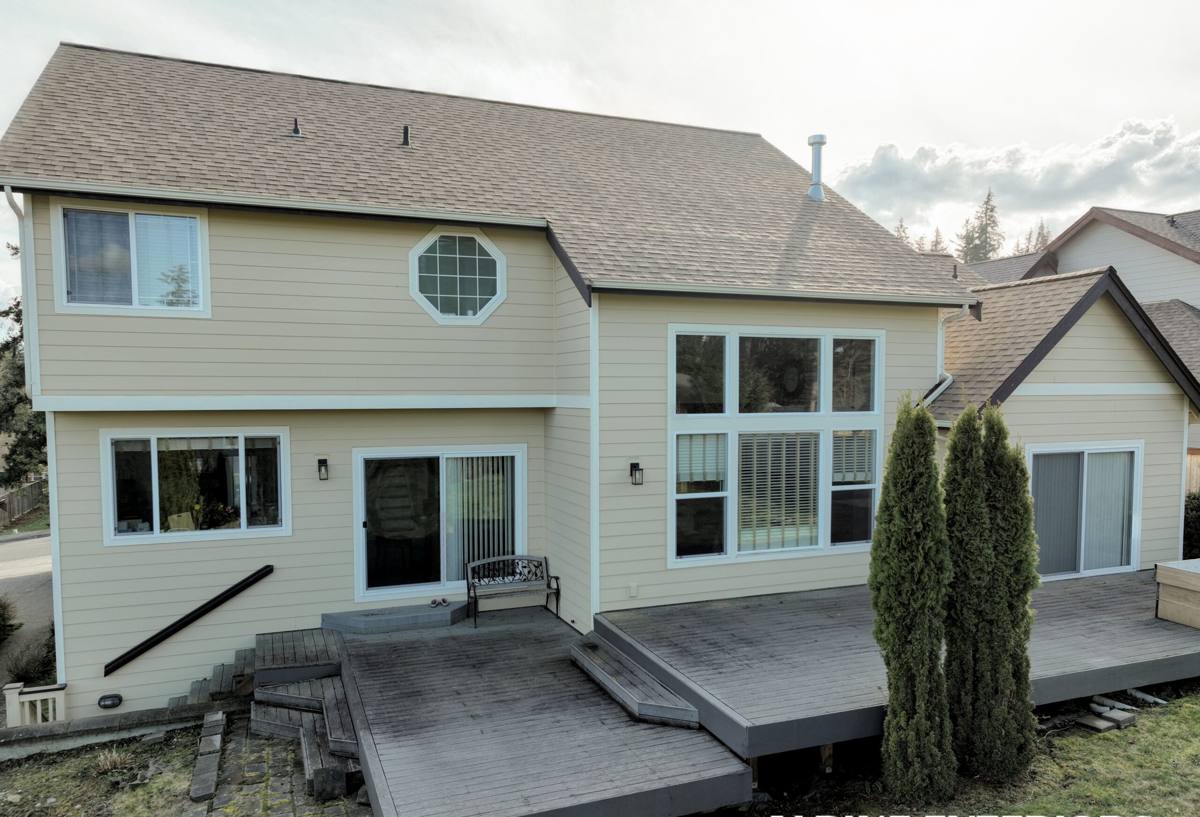
Signs Your Deck Needs Replacement, Not Just Repair
Not every tired-looking deck needs a full teardown. But there's a point where patching boards is throwing money at a problem the structure itself has outgrown. Watch for these signs:
- Soft, spongy, or springy spots underfoot, especially near the house or stair landings
- Visible gaps or rot at the ledger board where the deck attaches to the house
- Rust streaks or crumbling around joist hangers, bolts, and other hardware
- Persistent moss or dark staining that comes back within weeks of cleaning
- Railings that flex or wiggle when leaned on — a safety issue, not a cosmetic one
- Posts or footings that feel unstable, or visible movement when the deck is loaded
If you're only seeing surface graying or minor splintering on otherwise sound framing, a resurfacing or targeted repair may be enough. Our estimate visits are honest about that distinction — we don't sell a full replacement when a repair will genuinely hold up.
Choosing Decking Material for a Marine Climate
Material choice matters more here than in drier parts of Washington, because the deck spends more of the year damp. There's no single "best" material for every budget and priority, but here's how the common options actually perform under West Anacortes conditions:
| Material | Moisture & Moss Behavior | Maintenance | Typical Lifespan Here |
|---|---|---|---|
| Pressure-treated wood | Resists rot chemically but still absorbs water; moss grows on the surface if not cleaned | Annual cleaning and periodic sealing | 10-15 years before major issues |
| Cedar | Naturally rot-resistant, ages to gray; still needs airflow underneath to avoid trapped moisture | Regular sealing to hold color and resist moss | 15-20 years with upkeep |
| Composite decking | Doesn't rot, but lower-quality composites can hold surface moisture and grow moss/mildew film | Occasional washing, no sealing needed | 20-25+ years, brand dependent |
| PVC/cellular decking | Fully moisture-resistant surface, best resistance to moss staining | Lowest maintenance | 25+ years |
We install all of these depending on budget and the look a homeowner wants. Where we draw a firm line is on framing and structural lumber underneath the decking — regardless of what surface material you choose, the substructure has to be built for a wet climate, because that's the part that fails first and is expensive to fix later.
Why Fastener Choice Matters as Much as the Boards
A beautiful composite deck fastened with standard-grade screws and hangers in a salt-air environment will show rust bleed-through and hardware failure well before the decking itself wears out. Every fastener, hanger, and structural connector we use on a West Anacortes deck is rated for coastal/marine exposure — stainless steel or heavy hot-dip galvanized, not the standard hardware that's fine sixty miles inland but undersized for salt air here.
What a Correct Deck Replacement Actually Involves
A deck replacement is more than pulling up old boards and screwing down new ones. Done right, it starts from the ground up:
Ledger and House Connection
The ledger board — where the deck attaches to your house — is the single most common source of hidden rot, because it sits against the siding and sheds water poorly if it wasn't flashed correctly the first time. We remove old ledger flashing, inspect the rim joist and sheathing behind it for damage, and install proper flashing that directs water away from the house rather than behind the board.
Footings and Posts
Footings that have shifted, frost-heaved, or were undersized for the deck's actual load get addressed, not built around. This is also where we confirm post spacing and beam sizing meet current code — older decks were often built to looser standards than what's required today.
Framing and Joists
Joists get properly sized and spaced for the decking material chosen, with joist tape or another moisture barrier on top of the framing before decking goes down. This one detail — a simple protective tape between joist and board — meaningfully extends the life of the frame in a climate where rain sits on every horizontal surface for days at a time.
Drainage and Airflow
Decks built low to the ground or against grade with poor airflow underneath are moss and rot magnets in this climate. Where possible, we address grading, ventilation gaps, or drainage so water and moisture don't just sit trapped under the new deck the way they did under the old one.
Our Process
We keep the process straightforward and communicate at each stage, since a deck replacement disrupts your yard and outdoor living space for a period of time:
- On-site assessment of the existing deck, framing, and any hidden damage
- Honest recommendation — full replacement, partial rebuild, or repair — with reasoning explained
- Written estimate covering material options and structural work, not just surface decking
- Permit handling where required by the City of Anacortes or Skagit County
- Demolition and disposal of the old deck
- Structural rebuild: footings, posts, beams, joists, ledger flashing
- Decking, railing, and stair installation with marine-grade fasteners throughout
- Final walkthrough so you understand what was done and how to maintain it
Railings and Code Requirements
Railing height, baluster spacing, and guard requirements are governed by building code, and a full replacement is the right time to bring an older deck up to current standards if it wasn't already compliant. This matters especially on elevated decks common in West Anacortes' hillier lots, where a railing failure isn't a cosmetic problem — it's a safety one. We build railings to current code as a matter of standard practice, not as an upsell.
Permits in Anacortes and Skagit County
Most deck replacements involving structural work — new footings, changes to size or height, or attachment to the house — require a permit through the City of Anacortes or Skagit County, depending on your property's exact location. Permit requirements and inspection timelines vary by project scope, so we handle the specifics for your address as part of the estimate rather than making general promises that may not apply to your situation. Skipping a required permit can create real problems at resale, so we don't cut that corner even when it would be faster.
Timeline and What to Expect
A straightforward deck replacement typically moves from demolition to a finished, usable deck within one to two weeks of work starting, though weather is a real factor here — a string of driving rain can push a schedule back, and we'd rather delay a pour or a flashing installation than rush it in bad conditions and compromise the work. Permit review time, where required, is separate from on-site work time and varies by jurisdiction and season.
Why Hire a Crew That Already Works West Anacortes
Deck and siding work in this specific area benefits from knowing the local conditions firsthand — how a given lot's exposure to wind and salt air compares to a more sheltered spot a few blocks inland, how moss behaves on north-facing versus south-facing decks here, and which fastener and flashing details actually hold up through a Skagit County winter versus which ones look fine on paper. That's the kind of judgment that comes from doing this work repeatedly in this exact climate, not from a general contracting background applied to a coastal job as an afterthought.
If your deck is showing its age — soft spots, rust stains, stubborn moss, or a railing that doesn't feel as solid as it should — we're happy to take a look and give you a straight answer about what it needs. Reach out for a free, no-pressure estimate using the form below, and we'll walk the deck with you and talk through your options honestly.