 Anacortes
 Siding Repair Built for Edison's Coastal-Rural Climate
Edison sits in a part of Skagit County where farmland, tidal flats, and open water all meet, and the siding on homes out here takes a beating that's a little different from what you'd see further inland. Salt-laden air off the bay, long stretches of driving rain, and a moss season that can run most of the year all work on exterior siding at the same time. Repairing siding correctly in this area means understanding those forces, not just patching whatever's visibly broken.
We do siding repair work throughout the Anacortes area, and Edison is part of our regular route. That matters more than it sounds like — a repair crew that already knows what this stretch of Skagit County does to a wall system approaches the job differently than one seeing it for the first time.
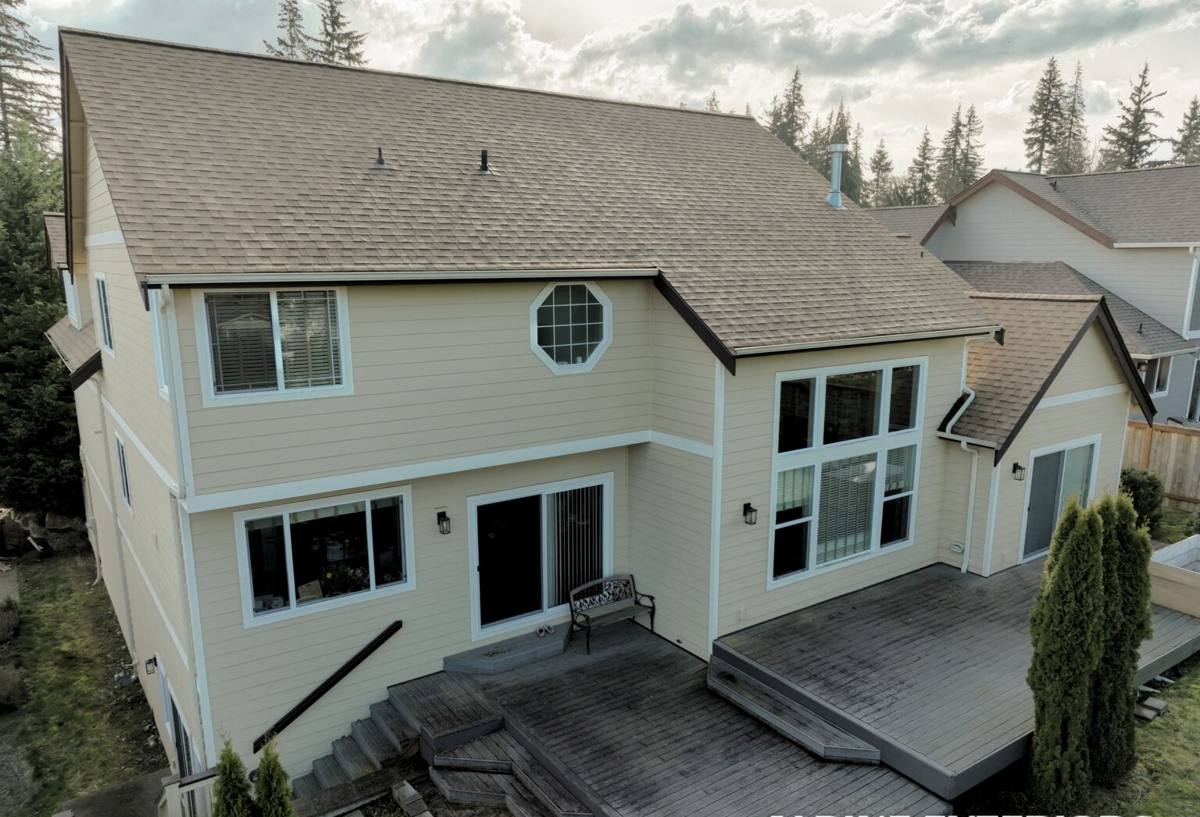
What Skagit County Weather Does to Siding Over Time
Three things drive most of the siding repair calls we get from homes near Edison and the surrounding farmland and shoreline areas:
Salt Air
Even a few miles inland from the bay, airborne salt settles on exterior surfaces and accelerates corrosion on fasteners, flashing, and any metal trim. Over years, this shows up as rust streaking, loosened nailing, and premature failure of caulk and sealants around joints and penetrations.
Driving Rain
Storms coming off the water bring rain sideways, not straight down. That means water gets pushed into laps, seams, and butt joints that would stay dry in a calmer climate. Siding that isn't installed with the right overlap, flashing, and drainage gap is far more likely to let moisture behind the cladding here than in a drier region.
Moss and Sustained Dampness
Shaded walls, north-facing elevations, and areas near trees or hedgerows stay damp for extended stretches. Moss and algae take hold, hold moisture against the siding surface, and — on products that aren't moisture-resistant by design — slowly break down paint film, primer, and eventually the substrate underneath.
None of this means siding fails quickly. It means small deficiencies compound over years into rot, soft spots, and paint failure that could have been caught and fixed much earlier.
Warning Signs Worth a Look
- Soft or spongy spots when you press on siding, especially near the bottom courses or below windows
- Paint that's peeling, bubbling, or chalking in patches rather than evenly across a wall
- Dark staining or persistent moss growth concentrated in one area
- Gaps opening up at butt joints, corners, or where siding meets trim
- Visible warping, cupping, or separation of boards from the wall
- Rust streaks below nail heads or metal flashing
- Cracked or missing caulk at seams and penetrations
- Any musty smell or interior wall staining that suggests moisture is getting behind the siding
Common Repair Scenarios We See
Not every repair is the same, and the right fix depends on both the cause and how far the damage has spread. Here's a rundown of the scenarios that come up most often on homes in and around Edison:
| Scenario | Likely Cause | Typical Fix |
|---|---|---|
| Soft boards near the base of a wall | Splash-back from grade, poor drainage, or long-term moisture wicking | Remove and replace affected boards; correct grading or drainage first |
| Failing paint on one elevation only | Sun/shade exposure imbalance, or wrong product for that side of the house | Strip, prep, and repaint or replace with a factory-finished product suited to the exposure |
| Gaps and cracking at seams | Original installation without proper expansion gaps or flashing | Remove and re-flash the joint, replace sealant with the correct product |
| Rot around window and door trim | Failed or missing flashing allowing water intrusion | Cut back to sound material, install proper flashing, replace trim and siding |
| Moss-heavy shaded wall | Persistent dampness with limited sun exposure | Clean, treat, repair damaged sections, and address ventilation/clearance where possible |
What a Correct Repair Actually Involves
A siding repair that actually holds up isn't just cutting out the bad section and nailing in a new piece. Done right, it involves a few steps that are easy to skip if a crew is trying to move fast:
- Diagnose the cause, not just the symptom. Rot or paint failure is usually a downstream effect of a moisture path — bad flashing, missing kick-out, poor caulk, wrong clearance from grade. Replacing the board without fixing the cause means the same failure comes back.
- Check what's behind the siding. Water-resistive barrier, sheathing, and framing all need to be inspected once siding is opened up. If there's hidden rot in the sheathing or framing, that has to be addressed before new siding goes back on.
- Match materials correctly. Patching one product into another, or mixing incompatible caulks and coatings, creates new failure points. Repairs should use materials engineered to work together.
- Re-flash and re-seal properly. Every penetration, seam, and transition needs correct flashing and sealant detailing — this is where most repeat failures start.
- Finish to match. A repair that's structurally sound but visually obvious wasn't done with care. Color and texture matching matters, especially on street-facing elevations.
Repair vs. Replacement: How We Help You Decide
Not every problem area means the whole wall — or the whole house — needs new siding. But sometimes patch repairs are a short-term fix for a long-term problem. Here's how we think through it:
| Factor | Favors Repair | Favors Replacement |
|---|---|---|
| Extent of damage | Isolated to one or two areas | Spread across multiple elevations |
| Underlying cause | Localized (one bad flashing detail, one damaged board) | Systemic (original installation issues throughout) |
| Material condition | Rest of the siding is sound and holding paint | Widespread paint failure, warping, or brittleness |
| Age of siding | Well within expected service life | Near or past the end of its usable life |
| Product type | Durable, moisture-resistant material | Original product is prone to recurring issues in this climate |
We'll always tell you honestly which side of that table your home falls on. If a repair is the right call, that's what we'll recommend and price — we don't push replacement on homes that don't need it.
Our Repair Process
When we come out to look at a siding repair near Edison, we walk the exterior, check the affected area and adjacent sections, and look for the underlying cause rather than just the visible damage. From there:
- We explain what we found, in plain terms, including what's causing the problem
- We give you a clear scope: what gets replaced, what gets re-flashed or re-sealed, and what stays
- We match materials and finish as closely as possible to your existing siding
- We check drainage, clearance, and flashing details while the wall is open — not just the board that failed
- We clean up thoroughly and walk the finished repair with you before we call it done
Why We Repair — and Replace — With James Hardie Fiber Cement
When a repair calls for new siding material, we use James Hardie fiber cement, and that's the only product line we install, full stop. It's a deliberate standard, not a default. Fiber cement doesn't rot, doesn't feed moss the way wood-based products can, and holds up to the salt air and sustained dampness common near the water without the maintenance cycle that wood, engineered wood, or vinyl products often need in this climate.
Hardie's ColorPlus factory-applied finish also matters for repair work specifically — it gives us a much better chance of color-matching a patched section to existing siding than field-applied paint does, and it holds color longer under UV and salt exposure. Hardie's HZ5 product line is engineered for exactly the kind of moisture and climate exposure Skagit County homes face, which is a large part of why we standardized on it rather than cedar, primed spruce, LP SmartSide, or vinyl.
We understand not every home we repair currently has Hardie siding on it. When we're patching into an existing product, we'll be straightforward with you about how well that repair is likely to hold and what its realistic lifespan looks like — and if it makes more sense to convert that section, or eventually the whole exterior, to fiber cement, we'll tell you why.
Why It Matters That We Already Work in Edison
Edison isn't a place every contractor understands well. It's rural, close to open water, and exposed in ways that differ from a sheltered inland neighborhood. A crew that regularly works this part of Skagit County already knows which elevations tend to take the worst weather, how moss establishes itself on shaded farmhouse walls, and what corrosion looks like on fasteners exposed to salt air over a decade or two. That local knowledge shapes how we diagnose a repair the first time we're on site, instead of guessing.
We're based in the Anacortes area and treat Edison as part of our regular service area — not a special trip. That means responsiveness, familiarity with local permitting where it applies, and a crew that isn't learning the climate on your home.
If you've got a section of siding that's showing damage, failing paint, or a moisture problem you can't quite pin down, we're glad to take a look. We'll give you a straight assessment and a free, no-pressure estimate — no obligation, just an honest read on what your siding needs.