 Anacortes
 Why Ship Harbor Homes Wear Out Windows Faster
Homes near Ship Harbor sit close to the water on Fidalgo Island, which means they take a harder hit from the marine environment than houses just a few miles inland in Anacortes. Salt-laden air off Rosario Strait and Guemes Channel corrodes hardware, breaks down seals, and dulls finishes years ahead of schedule. Add the wind-driven rain that comes through in fall and winter storms, and you've got two forces working against a window at the same time: airborne salt attacking the metal and glass seals from the outside, and moisture pushing to get past the frame from every angle, not just straight on.
Then there's the long moss season. Skagit County's damp, shaded winters keep moisture sitting on north-facing walls, trim, and sills for months at a stretch. Windows that aren't detailed correctly around the flashing and sill pan become the entry point for rot long before the glass itself fails. We see this pattern often enough on Ship Harbor homes that we plan for it up front rather than treating it as a surprise later.
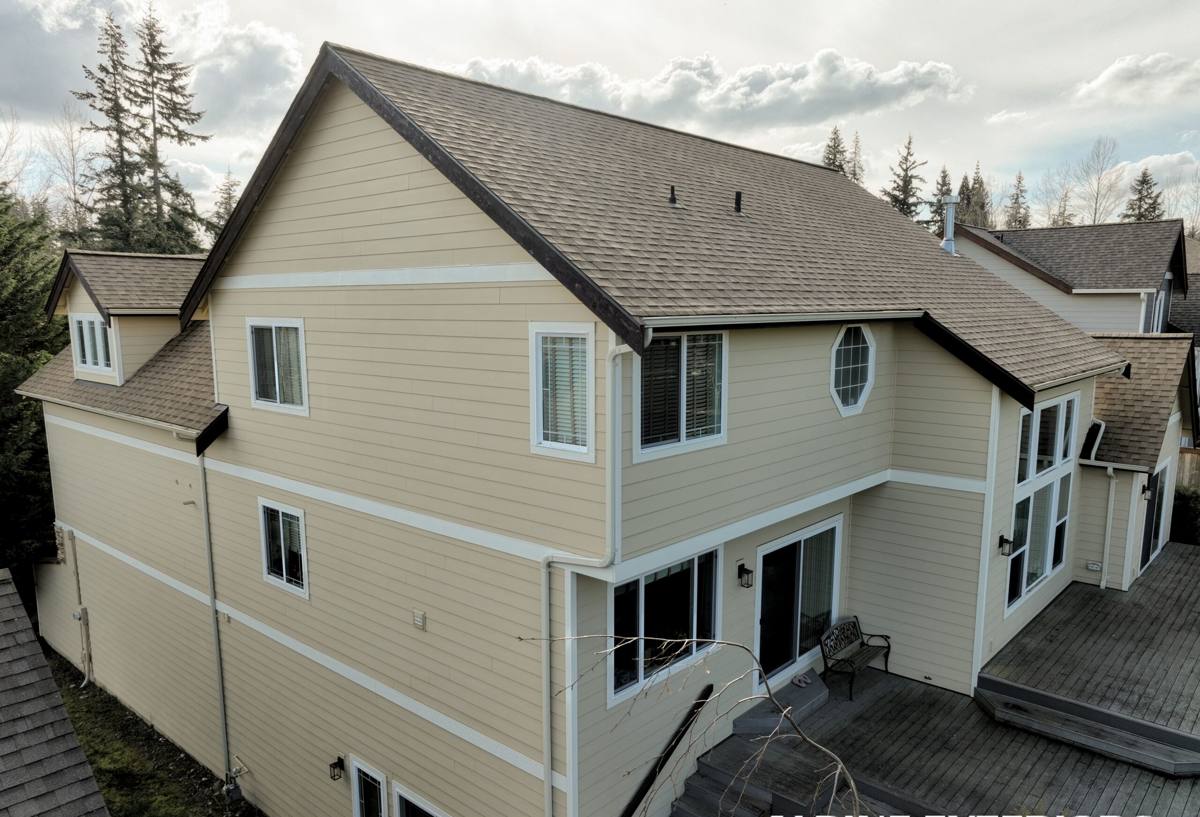
What "Energy-Efficient" Should Mean in This Climate
Energy-efficient windows get marketed with a lot of numbers — U-factor, SHGC, ER rating — but in a marine climate like Anacortes, efficiency and durability are the same conversation. A window that leaks air also tends to be a window whose seals are compromised, and a compromised seal lets in moisture. So when we talk about efficiency for a Ship Harbor home, we're really talking about three things working together:
- Low U-factor — how well the window resists heat transfer; lower is better for our mild but persistently damp winters.
- Appropriate SHGC (Solar Heat Gain Coefficient) — the Pacific Northwest doesn't need aggressive solar blocking like a desert climate does, so we don't oversell glass packages built for a different region.
- Sealed, corrosion-resistant hardware — locks, hinges, and balances that hold up to salt air without seizing or pitting within a few years.
A window can hit good efficiency numbers on paper and still underperform on a Ship Harbor lot if the frame material or hardware wasn't chosen with salt exposure in mind.
U-Factor and SHGC, in Plain Terms
U-factor measures heat loss — the lower the number, the less heat escapes through the window in winter. SHGC measures how much solar heat comes through the glass. For most homes in this area, we recommend prioritizing a low U-factor first, since our biggest energy loss is from heat escaping during long stretches of gray, cool weather, not from overheating in summer sun.
Frame Material: What Actually Holds Up Near the Water
This is where a lot of window jobs go wrong before installation even starts. The frame material has to survive salt air, temperature swings, and constant moisture cycling — not just look good on the day it's installed.
| Frame Material | Performance Near Salt Air | Maintenance | Our Take |
|---|---|---|---|
| Vinyl | Good — won't corrode or rot, handles moisture well | Low — occasional cleaning | Solid value option for most Ship Harbor homes; look for reinforced corners and multi-chamber frames |
| Fiberglass | Excellent — very stable in temperature swings and moisture | Low | Best long-term durability for direct salt exposure; higher upfront cost |
| Aluminum | Poor without thermal breaks — conducts cold and can corrode | Moderate to high | We generally steer clients away from bare aluminum this close to the water; the maintenance burden and condensation issues outweigh the savings |
| Wood-clad | Fair — cladding protects wood, but any breach lets moisture into the wood core | High — needs monitoring at joints and sills | Can look great, but we're honest that it demands more upkeep in this climate than vinyl or fiberglass |
None of these are wrong choices in every case — it depends on the home's exposure, budget, and how much upkeep the owner wants to take on. We'll walk through the actual trade-offs for your specific house rather than pushing one material as a default.
Installation Details That Matter More Here Than Elsewhere
A quality window can still fail early if it's installed without the right moisture management — and in a wind-driven rain climate, that's not optional detail work, it's the difference between a window that lasts decades and one that causes hidden rot behind the wall.
What a Correct Install Includes
- Sill pan flashing that directs any water that gets past the window back outside, not into the wall cavity
- Properly lapped house wrap and flashing tape so water sheds downward and outward at every layer
- Backer rod and quality exterior sealant sized correctly for the gap — not just a bead of caulk smeared over a wide joint
- Shimming and squaring that keeps the window operating smoothly for years, not just on installation day
- Interior air sealing, separate from the exterior weatherproofing, so the two systems don't rely on each other to do both jobs
Skipping any one of these steps is often invisible for the first year or two. It's only after a few wet winters — exactly the kind Skagit County delivers reliably — that shortcuts show up as soft trim, peeling interior paint near the sill, or a musty smell in the wall.
Our Process for a Ship Harbor Window Project
- On-site assessment — we look at each window's exposure (which walls take the worst of the wind and rain), current condition, and any signs of existing moisture damage around the frames.
- Product recommendation — we walk through frame material, glass package, and hardware options based on your home's exposure and budget, not a one-size-fits-all package.
- Removal and inspection — once old windows come out, we check the sheathing and framing underneath for rot or existing moisture intrusion before anything new goes in.
- Correct flashing and installation — sill pans, flashing tape, and sealant applied in the order that actually sheds water, not just what's fastest.
- Interior and exterior finish work — trim, caulking, and touch-up done cleanly so the job looks finished, not patched.
- Walkthrough — we show you how the new windows operate, what maintenance (if any) they need, and what to watch for over the first year.
Moss Season and Long-Term Window Care
Anacortes' moss season isn't just a roof and siding problem — it affects window sills, trim, and the caulking lines around each unit. Shaded, north- and west-facing windows near Ship Harbor stay damp longer into spring than windows on sun-exposed walls, which gives moss and mildew more time to take hold on sills and lower sashes. We use materials and detailing on new installs that resist this — proper drainage so water doesn't sit on the sill, and finishes that don't trap moisture against wood trim.
Simple Maintenance That Extends Window Life Here
- Rinse salt residue off frames and glass a few times a year, especially after storms
- Clear moss and debris from sills and tracks before it holds moisture against the frame
- Check exterior caulk lines annually for cracking or gaps, particularly on walls that face the water or prevailing wind
- Keep weep holes on vinyl and fiberglass frames clear so water drains as designed
Signs Your Current Windows Are Already Struggling
Before recommending replacement, we look for real evidence the windows are underperforming — not just their age. These are the signs worth a closer look:
- Condensation or fogging between the glass panes (a failed seal, not fixable by cleaning)
- Drafts you can feel near the frame on windy days
- Difficulty opening, closing, or locking — often hardware corrosion from salt exposure
- Soft or discolored trim and sills, especially on walls facing the water
- Visible daylight or gaps around the frame from outside
- A noticeable jump in heating costs without another clear cause
What Affects Cost on a Ship Harbor Window Project
| Factor | Why It Matters Here |
|---|---|
| Frame material | Vinyl is typically the most affordable; fiberglass costs more upfront but holds up longest against salt exposure |
| Number and size of windows | Larger or custom-sized openings cost more to source and install correctly |
| Existing damage | Rot found behind old windows during removal adds repair scope before new units go in |
| Exposure level | Windows on the water- or wind-facing side of the home may warrant a higher-spec frame or hardware package |
| Glass package | Upgraded low-e coatings and gas fills add cost but improve comfort and efficiency year-round |
We give straightforward, itemized pricing so you know what you're paying for and why — no vague bundled numbers.
Why Local Experience Near Ship Harbor Matters
A contractor who mostly works inland doesn't always account for how much harder salt air and wind-driven rain are on a window system this close to the water. We work on homes throughout Anacortes and Skagit County, including properties right in the teeth of the marine exposure near Ship Harbor, and we build our material recommendations and installation details around what actually holds up in that environment — not a generic spec sheet written for a drier climate.
If you're weighing whether your windows need attention, or you already know it's time, we're happy to take a look and give you a straightforward assessment. Reach out for a free, no-pressure estimate using the form below.