 Anacortes
 Why La Conner's Waterfront Climate Changes the Siding Equation
La Conner sits right on the Swinomish Channel, in the shadow of Skagit County's tidal flats and surrounding farmland, and that location means the air moving across every home here is doing more work on the siding than it would a few miles inland. Salt-laden air off the channel, driving rain that comes sideways off Puget Sound storms, and a moss season that can run from early fall through late spring all combine to shorten the life of the wrong siding product, and to accelerate failure in siding that was installed even slightly out of spec. We install fiber cement siding in La Conner because it is the one product built to hold up against all three conditions at once, and we have shaped our installation details specifically around what this stretch of Skagit County throws at a house year after year.
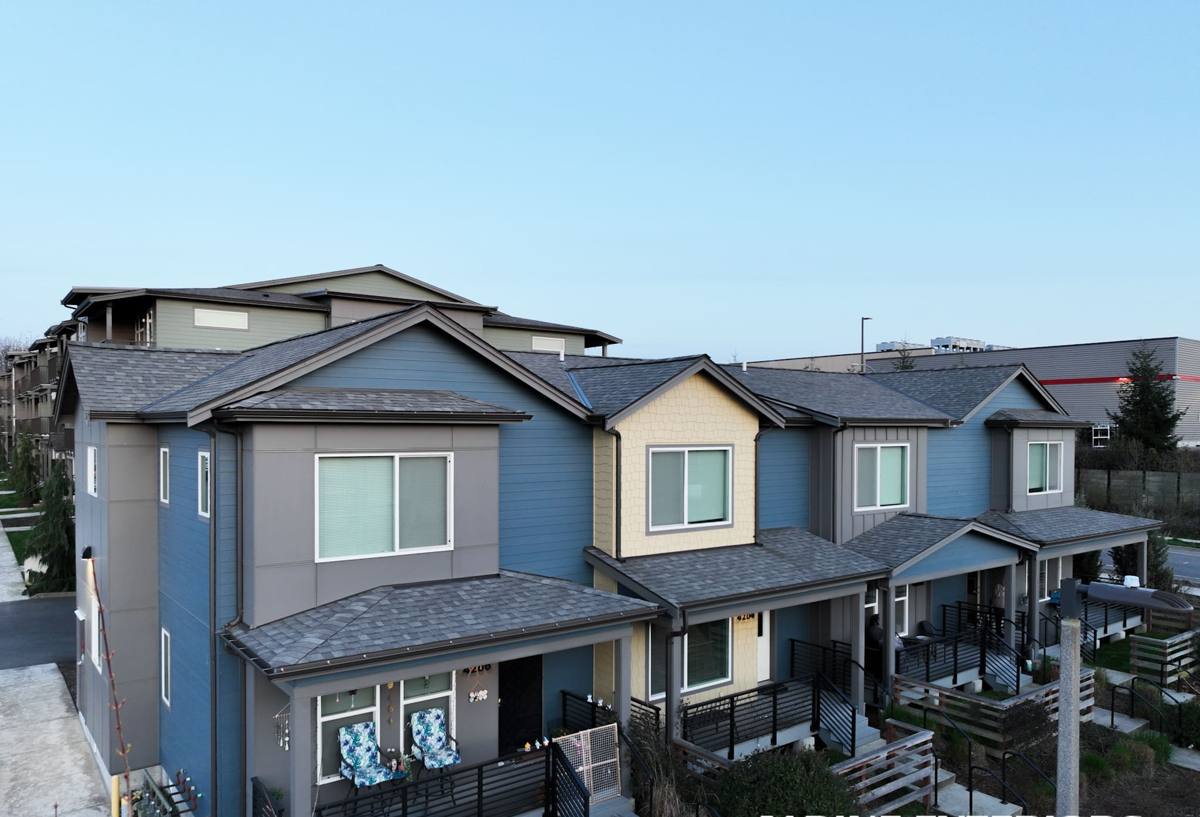
What Salt Air, Driving Rain, and Moss Actually Do to a House Over Time
Salt Air and Slow Corrosion
Homes near the Swinomish Channel and the broader Puget Sound shoreline sit in a light but constant salt-air environment. It is not the same intensity as an open ocean coastline, but it is enough, over years, to corrode unprotected fasteners, pit cheap trim hardware, and accelerate the breakdown of paint films that were never formulated for a marine-adjacent climate. Materials and fasteners that are not rated for this kind of exposure tend to show rust streaks, fastener pop, and premature fading well before a comparable product would fail somewhere further inland.
Driving, Wind-Blown Rain
Skagit County gets a lot of rain, but the more damaging factor for siding is the direction it arrives from. Storms moving through the channel and off the Sound routinely drive rain sideways into wall assemblies, which pushes water into any gap, seam, or fastener hole that was not properly flashed or sealed. A siding system with poor water management does not just look bad after a wind-driven rain event, it lets moisture get in behind the cladding, where it can sit against sheathing and framing far longer than it takes the visible surface to dry.
A Long, Genuine Moss Season
Between marine humidity, shade from mature trees on many lots, and Western Washington's long stretch of overcast, damp months, La Conner homes deal with a moss and algae season that can run more than half the year. North- and west-facing walls, and anything tucked under an overhang that never gets direct sun, are especially prone to green and black staining. Some siding materials absorb enough surface moisture to actually help moss take hold in their texture; others simply hold onto dirt and organic buildup longer because the finish is not dense or smooth enough to shed it.
Why We Install Only James Hardie Fiber Cement in La Conner
We do not install vinyl, LP SmartSide, primed wood, cedar, or off-brand fiber cement products like Cemplank or Allura. That is a deliberate standard, not a sales pitch, and it comes directly from what holds up, and what does not, on homes exposed to this part of Skagit County's weather. James Hardie fiber cement is non-combustible, dimensionally stable in a wet climate, and manufactured with a climate-zone system that is actually built around places like La Conner rather than a one-size-fits-all national spec.
HZ5 Engineering for the Pacific Northwest
James Hardie engineers its products in regional HardieZone formulations, and the HZ5 line is built for the wetter, more temperate climate found here in Western Washington. That means the fiber cement formulation, moisture resistance, and recommended installation details are matched to the rain volume and humidity La Conner sees all year, instead of a generic national spec that assumes a drier climate.
ColorPlus Factory Finish
Most of what fails on a repainted siding job is not the substrate underneath, it is the paint film on top of it. Hardie's ColorPlus finish is baked on in a controlled factory environment, in multiple coats with a clear coat over that, which gives it far better adhesion and moisture and UV resistance than a field-applied coat of primer and paint can match, especially in a climate that rarely offers a long, dry cure window. That finish also carries its own product warranty, separate from the substrate warranty, so fading and finish failure are covered, not just cracking or structural issues.
What a Correct Fiber Cement Installation Actually Involves
Fiber cement siding is only as good as the water management system installed behind it. In a climate that pushes rain sideways into walls for months at a stretch, the details most homeowners never see from the curb are exactly the ones that determine whether a job lasts twenty-plus years or needs rework in five.
Water-Resistive Barrier and Flashing
Every correct installation starts with a continuous water-resistive barrier, lapped shingle-style so water sheds outward at every seam, with flashing integrated at every window, door, deck ledger, and roof-to-wall intersection. Skipping or shortcutting flashing is the single most common cause of hidden moisture damage behind siding that otherwise looks fine from the street.
Clearance, Fastening, and Cut-Edge Sealing
Hardie board needs a minimum clearance from grade, roof lines, decks, and patios so it is never sitting in standing water or snowmelt. Fasteners need to be corrosion-resistant, stainless steel or hot-dip galvanized, matched to the salt-air exposure here, and driven to the manufacturer's specified depth rather than overdriven, which cracks the board's fiber structure. Every factory edge is sealed by design, but every field cut exposes raw fiber cement that has to be primed and sealed before it is closed up, or it becomes a moisture entry point the factory finish was never meant to cover.
Trim, Joints, and Caulking
Butt joints, trim transitions, and penetrations all need the correct sealant, applied to a clean, primed surface, sized correctly for the joint. An undersized or missing caulk joint is a slow leak years before it ever shows up as a visible stain.
A short list of what we check on every La Conner fiber cement job before we call it finished:
- Continuous, correctly lapped water-resistive barrier with integrated flashing at every opening
- Minimum clearance maintained from grade, roofs, decks, and patios
- Corrosion-resistant fasteners driven flush, never overdriven or underdriven
- Every field-cut edge primed and sealed before the joint is closed up
- Butt joints and trim transitions caulked with the correct sealant for the gap size
- Starter strip and bottom row set for proper drainage, not sitting flush against foundation moisture
- Ventilation and rainscreen gap maintained where the wall assembly calls for one
How Common Siding Materials Compare in La Conner's Climate
Homeowners comparing bids often see very different materials priced against each other. Here is how the main options actually behave under the salt air, wind-driven rain, and moss exposure typical of this part of Skagit County.
| Material | Salt Air & Moisture Behavior | Moss and Algae Resistance | Fire Performance | Typical Maintenance |
|---|---|---|---|---|
| James Hardie Fiber Cement (HZ5) | Engineered for wet, marine-influenced climates; dimensionally stable when installed to spec | Dense factory finish sheds organic buildup better than porous or textured surfaces | Non-combustible | Occasional rinse; repaint only after the factory finish reaches the end of its life, decades out |
| Vinyl | Can warp or oil-can with temperature swings; panel seams are moisture entry points | Prone to surface algae in shaded, damp locations | Combustible; can soften or deform under heat exposure | Low, but faded panels cannot be spot-repainted to match |
| LP SmartSide (engineered wood) | Wood-based substrate is more sensitive to sustained moisture exposure at cuts and joints | Can hold moss and algae in its textured surface once the coating wears | Combustible | Field-applied finish needs ongoing monitoring and recoating |
| Cedar or Primed Wood | Natural material; needs diligent sealing to resist rot in this rainfall | High; organic surface is prone to moss without regular treatment | Combustible | Highest; periodic refinishing, sealing, and moss treatment |
Our Process, From Estimate to Finished Siding
We run the same disciplined process on every La Conner home, whether it is a full re-side or a targeted section replacement.
- Walk-through and assessment: we look at every elevation, noting shade patterns, existing moisture damage, roof and deck intersections, and any prior repairs.
- Written estimate: a clear scope covering removal, water-resistive barrier and flashing work, the Hardie product line and color, and trim details, with no vague allowances.
- Tear-off and sheathing check: old siding comes off so we can actually look at the sheathing and framing underneath, rather than installing over unknown conditions.
- Water management install: the water-resistive barrier, flashing, and any rainscreen components go in first, and that stage gets checked before a single piece of siding goes up.
- Hardie installation: panels or lap siding installed to the manufacturer's clearance, fastening, and sealing specifications.
- Final walk-through: we review the finished job against the original scope with you before calling it done.
Living With Fiber Cement Siding in a Moss-Prone, Marine Climate
Correctly installed Hardie siding is low-maintenance, not no-maintenance. In La Conner specifically, that means an occasional gentle rinse on north- and west-facing walls and anywhere shaded by trees or a neighboring structure, since those are the surfaces that hold onto moss spores longest. Keep gutters clear and downspouts directed away from the wall; most of the moisture problems we find on older siding jobs trace back to water being dumped or splashed against a wall repeatedly, not the siding material itself failing. Trim back vegetation that keeps a wall shaded and damp, and have caulking and trim joints checked every few years, since sealant is the one component that wears out well before the siding itself does.
Why Hiring a Crew That Already Works in La Conner Matters
A crew that has only worked inland or in drier parts of the state will default to generic details, because that is what works where they usually build. A crew that already works this stretch of Skagit County knows which elevations of a La Conner home take the worst of the wind-driven rain off the channel, where moss shows up first, and how much clearance actually matters on a lot that drains differently than an inland site. That local pattern recognition shows up in small decisions, like where to add extra flashing or which side of the house needs a tighter caulking schedule, that a generic install crew is not likely to catch.
Local familiarity also matters on the practical side of the job: understanding Skagit County's permitting expectations, working around the town's narrow streets and seasonal tourist traffic when scheduling deliveries and dumpsters, and being reachable if something needs a look years after the job is finished rather than a crew that has moved on to another region entirely.
If you are weighing a siding replacement on a La Conner home, we are glad to walk the exterior with you, point out anything the current siding is already telling you about moisture or moss patterns, and put together a straightforward, no-pressure estimate for James Hardie fiber cement done right for this climate.