 Anacortes
 Asphalt Shingle Roofing Built for Fidalgo Island's Climate
Fidalgo Island sits right where the marine air off Rosario Strait and the Salish Sea meets the wet, gray stretch of Pacific Northwest winter. That combination is tougher on a roof than most homeowners realize. Salt-laden air accelerates the breakdown of metal flashing and fasteners, driving rain finds every weak seam, and the shade and moisture that many Fidalgo Island lots enjoy also happen to be exactly what moss and algae need to thrive. An asphalt shingle roof that would hold up fine in a drier inland climate can fail early here if it wasn't installed with these conditions in mind.
We install and repair asphalt shingle roofs across Anacortes and Skagit County, and Fidalgo Island properties get a specific set of considerations from us before a single shingle goes down: wind exposure, tree cover, roof pitch, and how close the home sits to open water. Getting those details right up front is what separates a roof that lasts its full service life from one that starts showing problems in year eight or nine.
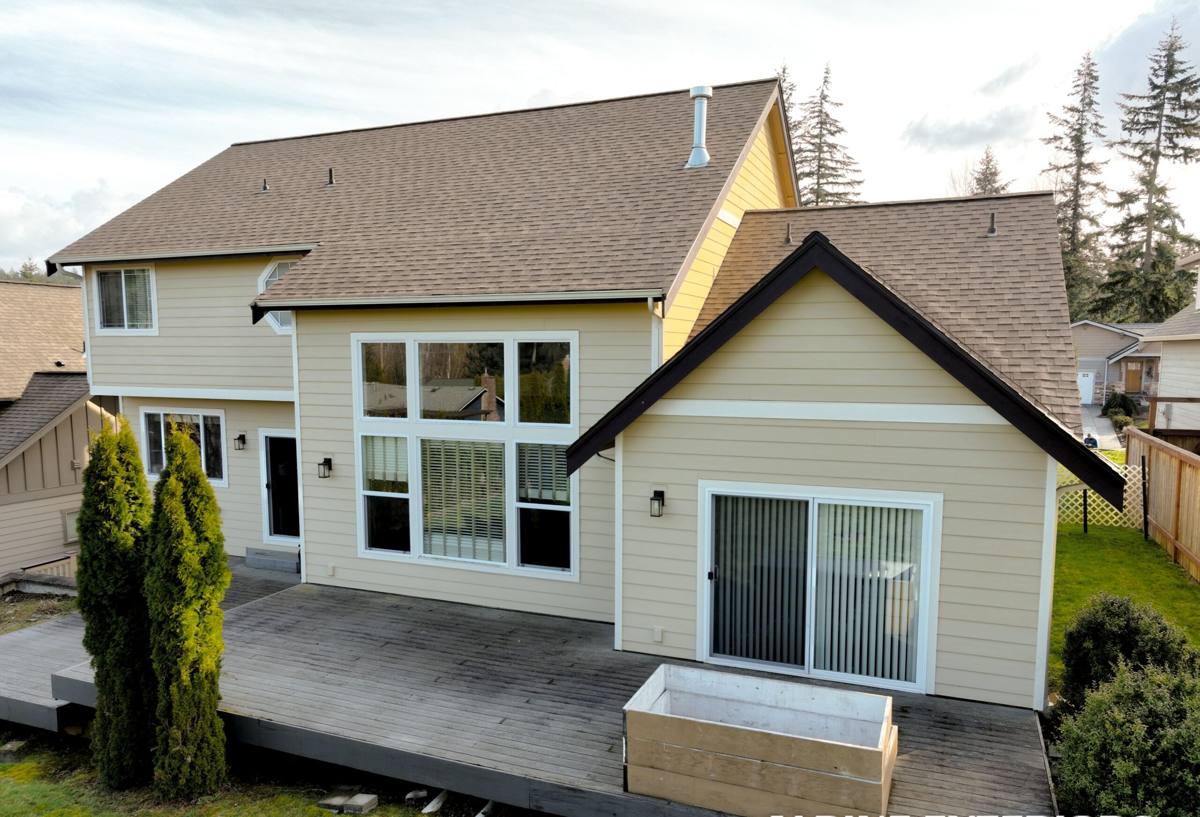
What Salt Air, Rain, and Moss Actually Do to a Shingle Roof
Salt Air and Metal Components
Asphalt shingles themselves tolerate salt air reasonably well, but the metal parts of a roofing system — flashing, drip edge, nail heads, vent stacks — are more vulnerable. Airborne salt speeds up corrosion, and once flashing starts to pit or rust, water finds its way underneath it long before the shingles themselves are due for replacement. This is one of the most common causes of leaks we find on older Fidalgo Island roofs: the shingles look fine, but the flashing around a chimney, skylight, or roof-to-wall transition has quietly failed.
Driving Rain and Wind-Driven Water
Storms coming off the water don't just drop rain straight down — wind pushes it sideways and up under shingle edges, especially at eaves, rakes, and valleys. A roof system built for calmer inland weather can get away with lighter underlayment and less attention to valley detailing. A roof on Fidalgo Island can't. We treat wind-driven rain as the default condition to design for, not the exception.
Moss, Algae, and Shade
Skagit County's long wet season, combined with the tree cover common on many Fidalgo Island lots, creates ideal growing conditions for moss and algae on north-facing and shaded roof slopes. Beyond the cosmetic issue, moss holds moisture directly against the shingle surface and can work its way under shingle tabs, lifting them and creating entry points for water. Left unchecked for years, moss growth shortens the life of an otherwise sound roof.
What a Correctly Installed Shingle Roof Needs Here
A shingle roof is a system, not just a layer of shingles. On Fidalgo Island, every layer of that system earns its place:
- Ice-and-water shield at vulnerable points — valleys, eaves, and around penetrations, where wind-driven rain is most likely to force its way under shingles.
- Synthetic underlayment across the full deck as a second line of defense, since felt alone degrades faster in persistently damp conditions.
- Corrosion-resistant flashing at chimneys, skylights, walls, and valleys — this is where we pay closest attention given the salt-air exposure.
- Balanced attic ventilation so moisture from inside the home doesn't condense against the underside of the roof deck, which is a common contributor to premature deck rot in our climate.
- Proper fastening — correct nail placement and count matter more in a region that regularly sees wind gusts off the water.
Skip any one of these and the shingles on top may look fine for a while, but the roof underneath them won't perform the way it should.
Choosing the Right Shingle for This Environment
Not every asphalt shingle product is a good fit for Fidalgo Island conditions, and this is an area where we're honest with homeowners rather than just selling whatever is cheapest.
Algae-Resistant Granules
Given the moss and algae exposure common here, we generally recommend shingles with algae-resistant (AR) granules, which contain copper or zinc compounds that slow algae growth on the shingle surface. It doesn't make a roof maintenance-free, but it meaningfully extends the time between cleanings on shaded slopes.
Architectural vs. 3-Tab Shingles
Architectural (dimensional) shingles are heavier, have a longer warranted wind rating, and simply hold up better to the wind and rain exposure typical of Fidalgo Island than standard 3-tab shingles. For most homes here, we consider architectural shingles the better long-term value even though the upfront cost is somewhat higher — the maintenance and repair savings over the roof's life tend to make up the difference.
Wind Rating
Manufacturers publish wind ratings for a reason. On open or elevated lots with more direct exposure to weather off the water, we pay close attention to matching the shingle's rated wind resistance — and the fastening pattern used during install — to the site's actual exposure, not just the manufacturer's minimum spec.
| Shingle Type | Typical Lifespan (this climate) | Best Fit For |
|---|---|---|
| Standard 3-tab | 15–20 years | Budget-driven projects, lower-exposure roof sections |
| Architectural / dimensional | 25–30+ years | Most Fidalgo Island homes, especially wind- or rain-exposed roofs |
| Premium/designer architectural | 30+ years | Steep-slope, highly visible roofs where appearance and longevity both matter |
Our Process for Fidalgo Island Roofing Projects
1. On-Site Assessment
We inspect the existing roof deck, flashing, ventilation, and any moss or moisture staining before quoting anything. On a re-roof, we also check for deck damage that won't be visible until the old shingles come off.
2. Straightforward Written Estimate
You get a clear scope of work — materials, tear-off, disposal, flashing replacement, ventilation work, and timeline — before we start. No surprise add-ons mid-project unless we find hidden deck damage, which we'll show you before repairing it.
3. Tear-Off and Deck Inspection
For full replacements, we remove old roofing down to the deck and inspect the sheathing for rot or soft spots, which are more common on older Fidalgo Island homes that have seen decades of moisture exposure.
4. System Installation
Underlayment, ice-and-water shield, flashing, and shingles go in as a coordinated system, with extra attention to valleys, eaves, and any transitions where wind-driven rain concentrates.
5. Final Walkthrough
We walk the completed roof and the site with you, cover ventilation and basic maintenance, and make sure cleanup is complete before we consider the job done.
Moss Prevention and Long-Term Roof Care
A well-installed roof still benefits from some routine attention in this climate. Homeowners on Fidalgo Island can extend a shingle roof's life with a few simple habits:
- Keep gutters clear of needles and debris so water isn't sitting against the roof edge.
- Trim back overhanging branches to reduce shade and debris buildup on north-facing slopes.
- Have moss growth removed using proper methods (not pressure washing, which can strip granules) before it spreads under shingle tabs.
- Schedule a roof check after major windstorms to catch lifted or damaged shingles early.
- Watch for granules collecting in gutters or downspouts, a sign of aging shingles worth having inspected.
- Confirm attic ventilation isn't blocked by insulation, especially after any attic work.
Repair or Replace: How We Help You Decide
Not every roof problem on Fidalgo Island means a full replacement. We look at the age, condition, and extent of damage before recommending either path.
| Situation | Usually Points To |
|---|---|
| Isolated flashing failure or a small area of storm damage on a roof under 15 years old | Targeted repair |
| Widespread granule loss, curling shingles, or a roof past 20–25 years old | Full replacement |
| Moss coverage with shingles still structurally sound underneath | Moss removal and treatment, monitor going forward |
| Soft or spongy deck sections found during inspection | Deck repair as part of replacement |
We'll always tell you honestly when a repair makes more sense than a sale, and when a roof genuinely has reached the point where repairs are just delaying the inevitable.
Why Hiring a Crew That Already Works Fidalgo Island Matters
Roofing crews who mostly work drier, inland climates don't always default to the underlayment coverage, flashing details, or ventilation choices that Fidalgo Island's marine exposure calls for. A crew that regularly works this specific area already knows which roof orientations tend to hold moss, which flashing details fail first in salt air, and how local wind exposure should factor into shingle and fastening choices — because we see the results of getting it wrong on other homes nearby. That local pattern recognition is hard to replicate from a one-time visit, and it's part of why we treat the details above as standard practice rather than upgrades.
What Affects the Cost of Your Roofing Project
| Factor | Why It Matters |
|---|---|
| Roof size and pitch | More surface area and steeper slopes increase labor and material needs |
| Number of layers to remove | Tear-off of multiple old layers adds labor and disposal cost |
| Deck condition | Rotted or soft sheathing found during tear-off requires repair before shingles go on |
| Shingle grade selected | 3-tab vs. architectural vs. premium changes material cost and expected lifespan |
| Flashing and ventilation scope | Older homes often need flashing and vent upgrades, not just shingle replacement |
| Roof complexity | Valleys, dormers, skylights, and chimneys add labor and detail work |
Every property is different, which is why we quote based on an actual on-site look rather than a rough phone estimate. If you're weighing a repair, a full replacement, or just want an honest read on where your roof currently stands, we're glad to take a look. Reach out for a free, no-pressure estimate using the form below.