 Anacortes
 Why Flounder Bay Decks Wear Out Faster Than You'd Expect
If you own a home near Flounder Bay, you already know your deck doesn't age the way a deck would in a drier, inland climate. Being close to the water on Fidalgo Island means your outdoor structures deal with salt-laden air on top of everything else Skagit County's marine climate throws at them. Salt air accelerates corrosion in metal fasteners, hinges, and structural hardware in a way that's easy to miss until a board suddenly feels spongy or a railing starts to wobble.
Add in the long stretch of driving rain we get for much of the year, plus the shaded, damp conditions that let moss and algae take hold on decking and stairs, and you have a combination that ages a deck faster than most homeowners realize. None of this means a deck near Flounder Bay is doomed to constant repair — it means it needs to be built and maintained with that reality in mind from the start.
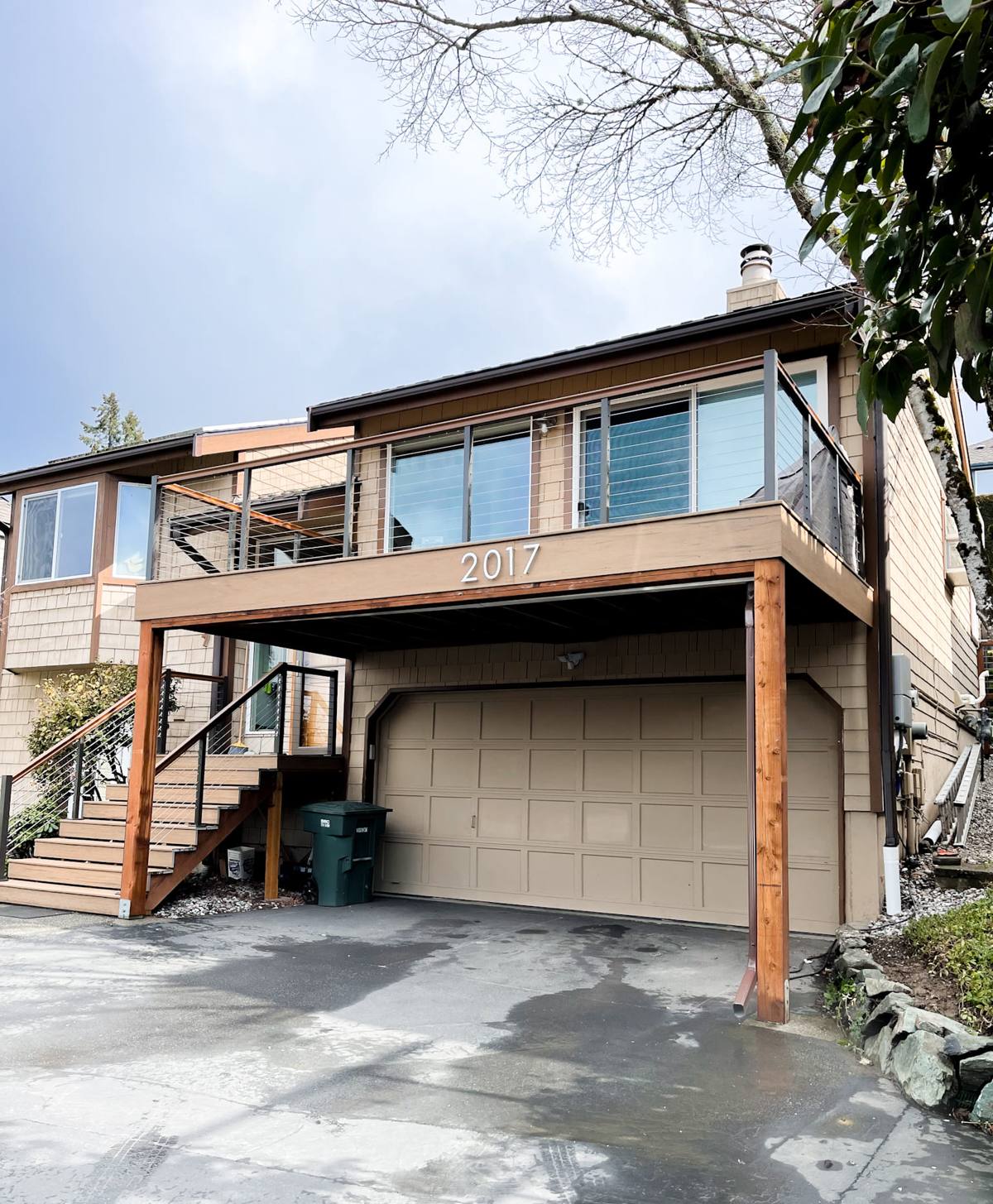
The Warning Signs Worth Taking Seriously
Most deck failures don't happen all at once. They start small, and by the time something is visibly broken, the underlying problem has usually been developing for a while. Here's what we tell Flounder Bay homeowners to keep an eye on:
- Soft, spongy, or bouncy spots when you walk across the deck
- Fasteners with rust streaks bleeding into the wood around them
- Gaps opening up between boards or boards that have cupped or warped
- Green or black staining that keeps coming back within weeks of cleaning
- A railing or stair stringer that feels looser than it used to
- Discoloration or soft wood where the deck attaches to the house (the ledger board)
- Standing water that takes more than a day to dry after rain
Any one of these on its own might be minor. Several at once, or any sign near the ledger board or main support posts, usually means it's time for a proper look before it becomes a safety issue.
Why the Ledger Board Deserves Special Attention
The ledger board — where the deck bolts to the house — is the single most important connection on most decks, and it's also the part most exposed to trapped moisture if it wasn't flashed correctly to begin with. In a climate with as much sustained rain as ours, a ledger board without proper flashing can trap water against the house framing for months at a time without any visible sign from the outside. This is one of the first things we check on every repair call, because it's the one failure point that affects both the deck and the house itself.
What an Honest Deck Repair Actually Involves
A real repair starts with a structural check, not a cosmetic patch. Replacing a rotted board without checking the joist underneath it just means you'll be back to fix the same spot again in a year or two. Our approach on every Flounder Bay repair covers:
- Framing and structure — joists, beams, and posts checked for rot, soft spots, and proper spacing
- Ledger board and flashing — confirming the connection to the house is sealed and draining correctly
- Fasteners and hardware — checking joist hangers, bolts, and screws for corrosion, especially given the salt air exposure this area gets
- Decking surface — boards checked individually for rot, cupping, and fastener pull-through
- Railings and stairs — code-relevant checks on post attachment and baluster spacing, since these are the components most often loosened by weather cycling
- Drainage — making sure water actually sheds off the deck instead of pooling against the house or on the surface
Skipping any of these steps is how you end up with a deck that looks fixed but has the same underlying problem a season later.
Repair, Partial Rebuild, or Full Replacement?
Not every deck problem calls for the same fix. Part of an honest estimate is telling you which category your deck actually falls into — and why.
| Condition | Typical Fix | Why |
|---|---|---|
| A few isolated soft boards, structure otherwise solid | Board-level repair | Framing is sound, so replacing the affected boards solves the problem |
| Rust-streaked or failing fasteners throughout | Hardware refresh | Corroded fasteners are a safety issue even when the wood around them still looks fine |
| Rot or softness at the ledger board | Ledger repair with correct flashing | This connection affects the whole deck and the house wall behind it |
| Widespread rot across multiple joists or beams | Partial structural rebuild | Patching individual boards won't hold if the frame underneath is compromised |
| Deck is decades old with failures in multiple systems at once | Full replacement | At a certain point, continued patch repairs cost more over time than starting fresh |
We'll walk you through exactly where your deck falls on that spectrum and explain the reasoning, rather than defaulting to the most expensive option.
Materials and Hardware: What We Use and Why
Given the salt air and near-constant moisture exposure around Flounder Bay, standard hardware store fasteners are often the weak link in an otherwise good repair. We use fasteners and structural hardware rated for coastal and wet-climate exposure, because the labor cost of a repair is the same whether the screws holding it together last five years or twenty — it's the materials that make the difference.
On decking material, we'll give you a straightforward rundown of trade-offs rather than pushing one option:
- Wood decking — lower upfront cost, but requires more regular sealing and cleaning to manage moss and moisture in this climate
- Composite decking — higher upfront cost, less ongoing maintenance, but installation sensitivity matters — poor spacing or fastening choices can cause problems that are harder to reverse than with wood
- Mixed approach — sometimes the most practical answer, keeping the existing structure and upgrading just the surface or the hardware
Our job is to explain what each option actually means for your specific deck and your maintenance tolerance, not to steer you toward whatever costs more.
Our Process, Start to Finish
- Free on-site assessment — we walk the whole deck, not just the area you called about, since problems near Flounder Bay's shoreline exposure often show up in more than one spot
- Plain-language findings — you get a clear explanation of what's actually wrong, what's cosmetic versus structural, and what your realistic options are
- Written estimate — a scope and price range before any work begins, with repair versus replacement laid out honestly
- The repair itself — structural work first, then hardware, then surface and railings, in that order, so nothing gets covered up before it's checked
- Final walkthrough — we check the work with you before calling the job done
We don't upsell a full rebuild when a targeted repair will genuinely hold up. If a repair is the right call, that's what we'll recommend.
Keeping Moss and Algae From Coming Back
Even a perfectly repaired deck will collect moss and algae again if it sits in a shaded, damp spot — that's just the reality of this stretch of the Washington coast. A few habits go a long way after a repair:
- Sweep debris off the deck regularly, especially in fall and winter when organic matter builds up fastest
- Rinse or scrub visible moss growth before it spreads across multiple boards
- Keep nearby vegetation trimmed back so more sunlight and airflow reach the deck surface
- Reseal wood decking on the schedule appropriate to the product used, rather than waiting until it looks worn
- Check drainage paths each fall to make sure fallen leaves and needles aren't blocking water flow off the deck
None of this eliminates maintenance entirely, but it substantially slows down the cycle of moss and moisture damage that drives most repair calls in this area.
Why Local Experience in Flounder Bay Actually Matters
A contractor who mostly works inland decks will treat your project like any other. A crew that regularly works the waterfront neighborhoods around Anacortes already knows to check the ledger flashing first, already carries corrosion-resistant hardware as the default rather than an upsell, and already understands how quickly moss reestablishes itself in this specific microclimate. That familiarity shows up in fewer callbacks and a repair that's built for the conditions your deck actually faces, not generic conditions.
If your deck near Flounder Bay is showing any of the signs above, or you just want an honest read on its condition, we're happy to take a look. There's no obligation and no pressure — just a straight assessment and a written estimate using the form below.