 Anacortes
 Why Decks in Flounder Bay Wear Out Faster Than You'd Expect
Flounder Bay sits close enough to the water that salt air is part of daily life, not an occasional thing. That changes how a deck ages compared to one a few miles inland. Salt-laden air corrodes metal fasteners and connectors faster than plain moisture does, and it settles into wood grain, concrete, and coatings in ways that accelerate breakdown over the years. Add Anacortes' driving rain — the kind that comes in sideways off the water rather than straight down — and you get moisture working its way into joints, ledger connections, and end grain that a typical inland deck rarely has to deal with.
Then there's moss season, which in this part of Skagit County runs long. Shaded decks, north-facing decks, and anything tucked under fir or cedar cover stay damp for weeks at a stretch. That dampness feeds algae and moss growth on the deck surface itself, which is both a slip hazard and a sign that moisture isn't drying out the way it should. Put those three factors together — salt air, driving rain, and extended moss season — and it's clear why a deck built with generic, one-size-fits-all methods often needs real work well before its expected lifespan is up.
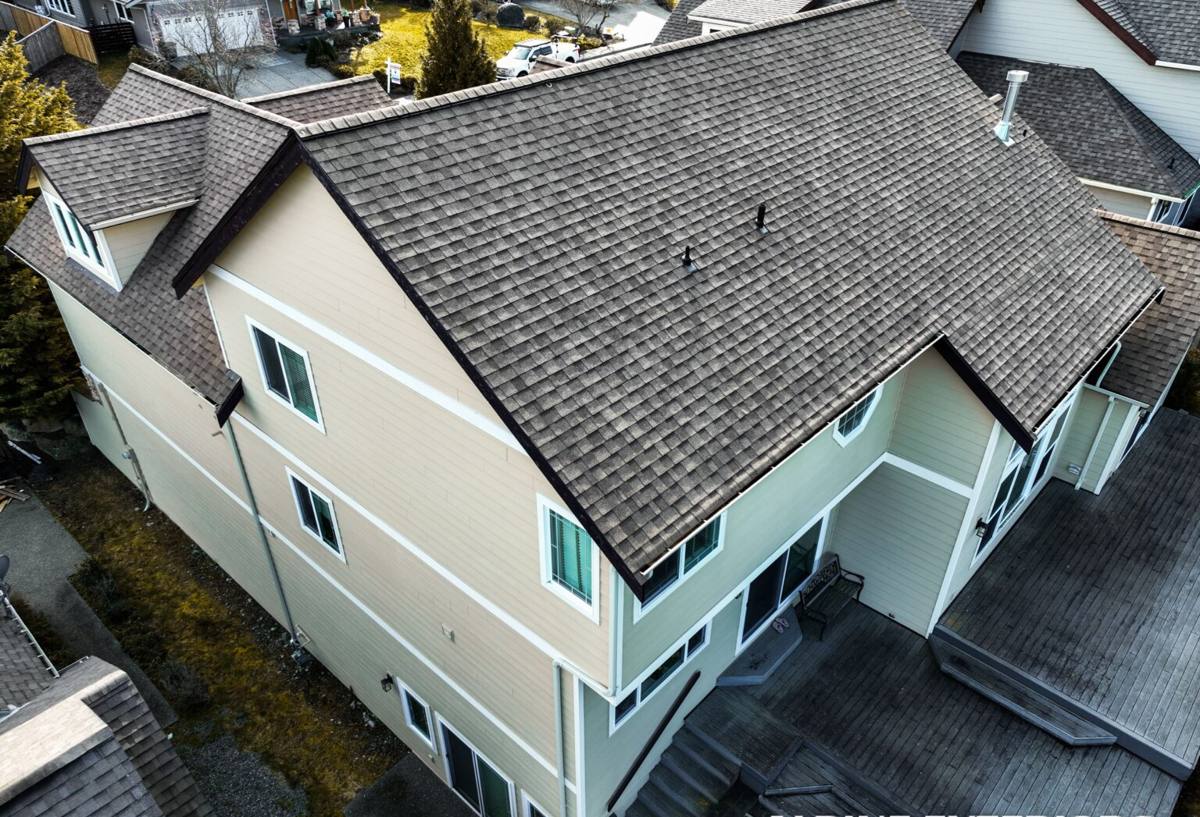
Signs Your Deck Needs Replacement, Not Just Repair
Not every tired-looking deck needs to be torn out. But there's a point where patching boards or re-staining stops being a real fix and starts being a way to delay the inevitable. Here's what tells us a deck has crossed that line:
- Soft or spongy spots in the decking boards, especially near the house or along the rim joist
- Rust staining bleeding out around fastener heads or metal connectors
- Visible gaps or movement where the ledger board attaches to the house
- Persistent moss or algae film that comes back within days of cleaning
- Cracked, checked, or delaminating boards on more than a small portion of the surface
- Railings or posts that flex or wobble under normal weight
- Footings that have shifted, settled unevenly, or show visible cracking
- A deck that's more than 20-25 years old and has never had the substructure inspected
If you're only seeing one or two of these on isolated boards, repair may genuinely be the right call. When they show up together, or when the framing itself is affected, replacement is usually the more honest recommendation — and the more cost-effective one over time, since patched framing tends to fail again in the same spots.
What a Correct Deck Replacement Actually Involves
A deck replacement is not just pulling up old boards and screwing down new ones. Done right, it's a structural project with several layers that all matter for how long the result lasts in this climate.
Framing and Ledger Connection
The ledger board — where the deck attaches to the house — is the single most common failure point on older decks, and it's the connection most likely to cause serious damage if it fails. A correct replacement means proper flashing between the ledger and the house wall, structural lag bolts or through-bolts rather than nails, and joist hangers sized and fastened correctly. This is also the point where water intrusion into the house itself becomes a risk if it's done wrong, so it's not a place to cut corners.
Footings and Posts
Footings need to be sized for the actual load and set below frost depth, resting on undisturbed or properly compacted soil. On sites with poor drainage — which describes a fair amount of ground near the water — we look closely at how footings are draining and whether post bases are keeping wood posts up off standing moisture.
Decking Surface
Whatever material goes on top, proper spacing between boards matters for drainage and airflow underneath. Tight, poorly spaced decking traps moisture against the framing below and shortens the life of everything underneath it, regardless of how good the decking material itself is.
Railings and Guardrails
Any deck more than a modest height off grade needs a code-compliant guardrail system — proper height, baluster spacing that won't allow a small child through, and posts anchored well enough to resist real lateral force, not just standing there for looks. This is an area inspectors check closely, and it's also where a lot of older decks fall short simply because codes have tightened since they were built.
Choosing the Right Decking Material for This Climate
There's no single "best" decking material — it depends on budget, maintenance appetite, and how exposed the deck is to salt air and shade. Here's how the common options compare for a Flounder Bay setting:
| Material | Salt Air / Moisture Behavior | Maintenance | Typical Lifespan |
|---|---|---|---|
| Pressure-treated lumber | Resists rot well when properly finished; end cuts need field treatment | Needs re-staining/sealing every 2-3 years, more often in shade | 15-25 years with upkeep |
| Cedar | Naturally rot-resistant, but salt air and moss accelerate graying and softening if unsealed | Regular cleaning and sealing recommended | 15-20 years with upkeep |
| Composite decking | Doesn't absorb moisture or rot; some early-generation products struggled with mold in constant shade | Periodic washing to prevent algae film; no staining/sealing | 25-30+ years, manufacturer-warrantied |
| PVC decking | Fully moisture-resistant, unaffected by salt exposure | Low; occasional washing | 25-30+ years, manufacturer-warrantied |
For homes right up against the water where salt exposure is heaviest, we lean toward composite or PVC decking on the walking surface, since neither one absorbs moisture the way wood does. That said, plenty of homeowners prefer the look and feel of real wood and are willing to keep up with the maintenance — that's a reasonable choice too, as long as the upkeep actually happens. We'll walk through the honest trade-offs for your specific site rather than push one product line.
Fasteners, Flashing, and the Details That Actually Prevent Rot
Most deck failures near the water don't start with the decking boards — they start with hardware that was never rated for salt air in the first place. Standard electro-galvanized fasteners corrode noticeably faster in a marine environment than hot-dip galvanized or stainless steel hardware. On a Flounder Bay deck, we treat corrosion-resistant fasteners and connectors as standard, not an upgrade, particularly at the ledger, post bases, and any joist hangers exposed to the weather.
Flashing is the other detail that separates a deck that lasts from one that doesn't. Proper ledger flashing — installed so water sheds outward and away from the house sheathing rather than behind it — is what keeps a rainy Anacortes winter from turning into a rot problem inside the wall. We also pay attention to joist tape or cap flashing on top of the joists themselves, which slows moisture absorption into the end grain and extends framing life significantly, especially under decking that doesn't shed water instantly.
Permits, Codes, and Inspections
Deck replacement in and around Anacortes typically requires a permit once you're dealing with structural work — new footings, a rebuilt ledger connection, or a deck attached at a meaningful height above grade. Whether your property falls under City of Anacortes jurisdiction or unincorporated Skagit County affects exactly where that permit is filed, but the underlying structural and guardrail requirements are similar either way. We handle the permit application and coordinate inspections as part of the job, so you're not the one tracking down paperwork or scheduling inspectors around a project timeline.
Skipping the permit on a structural deck rebuild is a real risk — beyond the legal exposure, it can create problems when you go to sell the house, since a deck without permit history is something buyers' inspectors flag.
Our Deck Replacement Process, Start to Finish
- On-site assessment — we look at the existing deck, framing, footings, and how the site drains, and talk through what you actually want from the new deck
- Written estimate — scope, materials, and timeline laid out clearly, with material options priced separately so you can see the trade-offs
- Permit filing — we submit drawings and handle the back-and-forth with the jurisdiction
- Demolition — full removal of the old deck surface and, where needed, framing and footings, hauled off site
- Framing and footings — new or reinforced structure, correct ledger flashing, corrosion-resistant hardware throughout
- Decking installation — proper board spacing, fastening method appropriate to the material chosen
- Railings and stairs — built to current guardrail code, checked for stability under real load
- Final inspection — coordinated with the jurisdiction's inspector before we consider the job done
- Walkthrough — we go over care and maintenance specific to the material you chose
Most straightforward deck replacements move from demolition to finished railing in a matter of days once permits are in hand; larger or more structurally involved projects take longer. We give you a realistic timeline up front rather than an optimistic one that slips.
Why a Crew That Already Works Flounder Bay Makes a Difference
A contractor who's worked other decks in this specific area already knows which fastener grades hold up here, how exposed a given lot is to salt spray off the water, and where moss tends to collect based on tree cover and sun exposure. That's not something you get from a general contractor working from a standard spec sheet written for a drier, inland climate. It also means we're familiar with the permitting process for this stretch of Skagit County, so there are fewer surprises and delays once work starts.
Just as importantly, a local crew has a reputation to protect in a community where word travels. That's a practical reason to ask for references from work done specifically in this area, not just anywhere in the county.
Keeping Your New Deck in Good Shape Afterward
A well-built deck still needs some seasonal attention in this climate, especially through the wetter months. A few habits go a long way:
- Sweep debris and needles off the surface regularly — trapped organic matter holds moisture and feeds moss
- Rinse off salt residue after storms if the deck faces open water directly
- Keep gutters and downspouts clear so runoff isn't dumping onto or under the deck
- For wood decking, plan on re-sealing on the schedule your material actually needs, not just when it looks dry
- Check railing posts and stair connections once a year for any looseness
- Trim back overhanging branches that keep sections of the deck shaded and damp longer than the rest
None of this is complicated, but skipping it is how a well-built deck ends up needing early repairs anyway.
Get a Straightforward Estimate
If your deck in Flounder Bay is showing its age — soft boards, rusting hardware, a railing that doesn't feel as solid as it used to, or moss that won't quit — we're happy to take a look and give you an honest read on whether it needs repair or full replacement. There's no pressure and no obligation, just a clear estimate based on what your deck and your site actually need. Use the form below to get started.