 Anacortes
 Building a Deck That Can Actually Hold Up on Guemes Island
Guemes Island sits right in the path of Rosario Strait weather — salt-laden wind, long stretches of driving rain, and short winter days that never quite dry the shade side of a house. A deck built here works harder than one built twenty minutes inland in Anacortes proper. The lumber, the fasteners, the flashing details, even the gap spacing between boards all need to account for a marine climate that doesn't let up for months at a time. We've built and repaired decks across Skagit County long enough to know which shortcuts show up as rot and rust in year three, and which details actually earn their keep over twenty years.
This page is specifically about deck building for Guemes Island properties — not a generic overview. If you're planning a new deck, replacing a failing one, or trying to figure out why your current deck is degrading faster than it should, this is written for your situation.
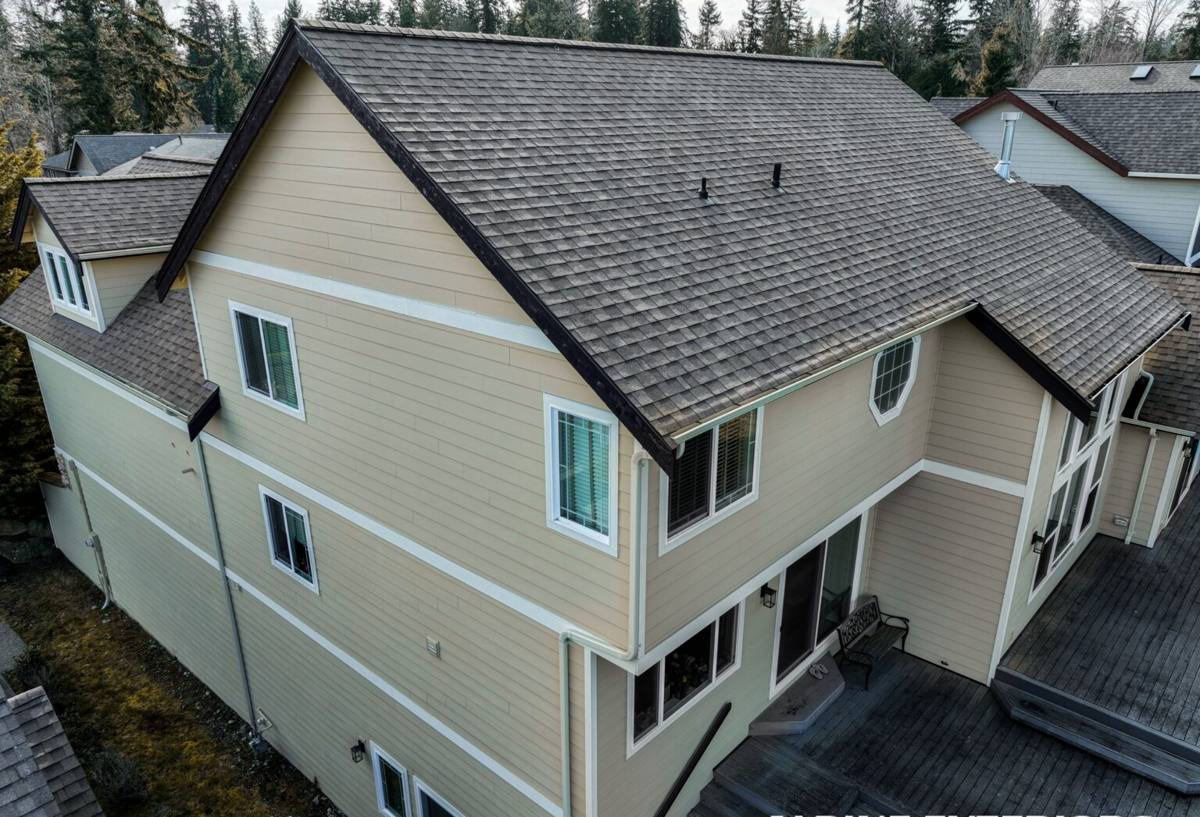
What Salt Air and Moss Season Do to a Deck Over Time
Two forces do most of the damage to island decks: airborne salt and moisture that never fully leaves. Neither is dramatic on its own, but together, year after year, they're what separates a deck that lasts two decades from one that needs major repair in eight or ten years.
Salt air and corrosion
Salt in the air accelerates corrosion on anything metal — nails, screws, joist hangers, bolts, post bases. Standard construction-grade fasteners that would be fine in a drier inland climate can start rusting and staining within a few seasons out here. Once a fastener corrodes, it loses holding strength long before it looks obviously bad, which is why so many deck failures come as a surprise.
Moss, algae, and standing moisture
Guemes Island gets long stretches of overcast, damp weather, especially on shaded or north-facing decks. That combination — low light, high humidity, minimal drying time — is exactly what moss and algae need to take hold. Beyond being slippery and unsightly, moss holds moisture directly against the decking surface, which speeds up wood decay and can trap water against composite boards too if debris isn't cleared.
Freeze-thaw and wood movement
It doesn't get brutally cold here, but the region does see repeated freeze-thaw cycles through the winter. Wood that's absorbed moisture and then freezes expands and contracts, which loosens fasteners and opens up small gaps where water intrudes further. Over a few winters, that cycle compounds.
Choosing the Right Decking Material for an Island Property
There's no single "best" decking material for every Guemes Island home — it depends on sun exposure, budget, and how much upkeep you actually want to do. What matters is picking a material and matching it with hardware and finishing details that suit this climate, not just what's cheapest at the yard.
Pressure-treated and cedar decking
Wood decking costs less up front and has a natural look many homeowners prefer. It requires real commitment, though — annual cleaning, periodic sealing or staining, and prompt attention to any spot where moss or standing water develops. Skip that maintenance in a climate like this one, and wood decking ages fast.
Composite and PVC decking
Composite decking costs more initially but resists moisture absorption, doesn't need staining, and holds up well against the freeze-thaw and moisture cycle common here. It's not maintenance-free — it still needs regular cleaning to keep moss and algae from taking hold on the surface — but it removes the sealing and staining cycle entirely. For decks that stay shaded most of the day, this is often the more practical long-term choice.
Fasteners and hardware
This is where a lot of decks quietly fail, regardless of decking material. We specify stainless steel or high-grade coated fasteners and structural hardware rated for coastal exposure, not standard galvanized hardware. It costs more per box, but replacing rusted-out joist hangers under a deck you thought was solid costs far more.
| Decking Option | Upfront Cost | Maintenance Needed | Best Fit |
|---|---|---|---|
| Pressure-treated wood | Lower | Annual cleaning + periodic sealing/staining | Budget-conscious owners willing to maintain it |
| Cedar | Mid | Regular sealing to hold color and resist moisture | Homeowners who want a natural wood look |
| Composite / PVC | Higher | Periodic cleaning, no staining or sealing | Shaded lots, low-maintenance priority, long-term value |
| Fasteners & hardware | Small % of total cost | Inspect at cleanings | Every deck, regardless of decking choice |
Framing and Structure: What's Different on an Island Site
The decking surface is what you see, but the framing underneath is what determines whether the deck is actually safe and long-lived. This is where climate-specific detailing matters most.
Ledger attachment and moisture barriers
Where a deck attaches to the house, water intrusion at the ledger board is one of the most common — and most serious — failure points in the Pacific Northwest. We use proper flashing and a moisture barrier between the ledger and the house framing, with correct fastener spacing and bolt-through connections rather than relying on lag screws alone. In a climate this wet, that detail isn't optional.
Footings and drainage
Post footings need to be sized and set below frost depth with drainage that keeps water from pooling against the concrete or the post base. On sites with heavier clay or poor natural drainage, which shows up in parts of the island, we adjust footing design and add drainage gravel so water doesn't sit against the structure through the wet months.
Joist spacing and airflow underneath
Tight joist spacing and good airflow under the deck both help lumber dry out between rain events instead of staying damp. We also keep an eye on grading and vegetation clearance under and around the deck — plants growing up against framing hold moisture against wood and speed up rot, which is an easy problem to prevent and a hard one to fix later.
Ferry Access and How That Affects Your Project
Building on Guemes Island means working around the ferry schedule, which is a normal part of island construction and something we plan for, not something that should surprise you mid-project. We batch material deliveries and crew trips to minimize wasted ferry crossings, which keeps the project moving efficiently and keeps costs predictable rather than inflated by inefficient scheduling. If you've had island projects stall out because a contractor didn't plan around ferry logistics, that's a scheduling problem, not an unavoidable island tax — it just requires a crew that's used to it.
Our Deck Building Process
Every deck we build on Guemes Island follows the same core process, adjusted for your site conditions and material choices.
1. Site visit and assessment
We look at sun and shade exposure, drainage patterns, soil conditions, and how the deck will attach to the house. This is also when we flag anything specific to your site — heavy shade that will need moss-resistant material, or drainage that needs correcting before framing starts.
2. Design and material selection
We walk through decking material, railing style, and layout, with honest trade-offs on cost, maintenance, and longevity for your specific exposure — not a one-size-fits-all recommendation.
3. Permitting
Most new decks and significant deck rebuilds in Skagit County require a permit, particularly above certain heights or when attached to the structure. We handle that process as part of the job.
4. Framing and structural work
Ledger flashing, footings, framing, and hardware — the parts you won't see once the deck is finished, and the parts that determine how long it lasts.
5. Decking, railing, and finish work
Board installation, railing, stairs, and any finishing (sealing, staining) if wood decking was chosen.
6. Final walkthrough
We walk the finished deck with you, cover basic maintenance specific to your material choice, and make sure everything meets code before we call the job done.
Signs Your Current Deck Needs Attention
- Soft or spongy spots underfoot, especially near the house or stair stringers
- Persistent moss or algae that returns quickly after cleaning
- Visible rust staining around fasteners or hardware
- Gaps or separation where the deck meets the house (ledger area)
- Railings or posts that feel loose or wobble under normal pressure
- Standing water that doesn't drain off the surface within an hour or two after rain
- Wood that's gone gray and feels punky or crumbles when pressed with a screwdriver
Any one of these on its own might be minor. Several together usually mean the structure needs a real inspection, not just a surface repair.
Maintenance in a Salt-Air, Moss-Prone Climate
Whatever material you choose, a little regular maintenance goes a long way here. Clear leaves and debris off the surface and between boards before they trap moisture. Rinse or scrub off moss and algae as soon as it appears rather than letting it establish. For wood decking, keep to a sealing schedule rather than waiting until it visibly needs it. For composite, an occasional wash keeps the surface from staining and stops moss from getting a foothold in shaded corners. And periodically check the underside — hardware, ledger area, and post bases — since problems there are invisible from the top until they're advanced.
Why Hire a Crew That Already Works on Guemes Island
A deck built with inland assumptions — standard hardware, decking material that isn't suited to heavy shade, framing details that skip the extra flashing — will show its age faster on Guemes Island than the same deck would twenty minutes inland. We build decks across Skagit County and know which details matter on island and waterfront sites versus which are unnecessary upcharges. That means a deck spec'd correctly the first time, a crew that plans around the ferry schedule instead of treating it as a surprise, and a build that's meant to hold up against salt air and a long wet season, not just look good on installation day.
If you're planning a new deck, replacing an aging one, or just want an honest opinion on what your current deck needs, we're happy to take a look. Reach out for a free, no-pressure estimate using the form below.