 Anacortes
 Edison's Climate Is Harder on Siding Than It Looks
Edison sits in the western part of Skagit County, close enough to the water that marine air is a daily fact of life. That air carries salt, and salt is corrosive to fasteners, hard on painted finishes, and relentless on any exterior material that isn't built to shed moisture well. Add in the driving, wind-pushed rain that comes through this stretch of the Anacortes area during fall and winter storms, and you have a climate that tests siding in ways drier inland regions never do.
Then there's the moss. Between the marine humidity, the mild year-round temperatures, and the amount of shade many Edison properties get from surrounding trees and farmland windbreaks, moss and algae have a long growing season here — often eight months or more depending on exposure. On wood siding, that means trapped moisture and slow rot working under the surface long before anyone notices a problem. On vinyl, it means algae staining that never fully rinses off and seams that let moisture behind the panel where it can sit for weeks.
None of this is unique to one house or one street. It's the baseline condition for anything nailed to the outside of a home in this part of Skagit County, and it's the reason siding choice and installation quality matter more here than they would somewhere with a milder, drier exterior climate.
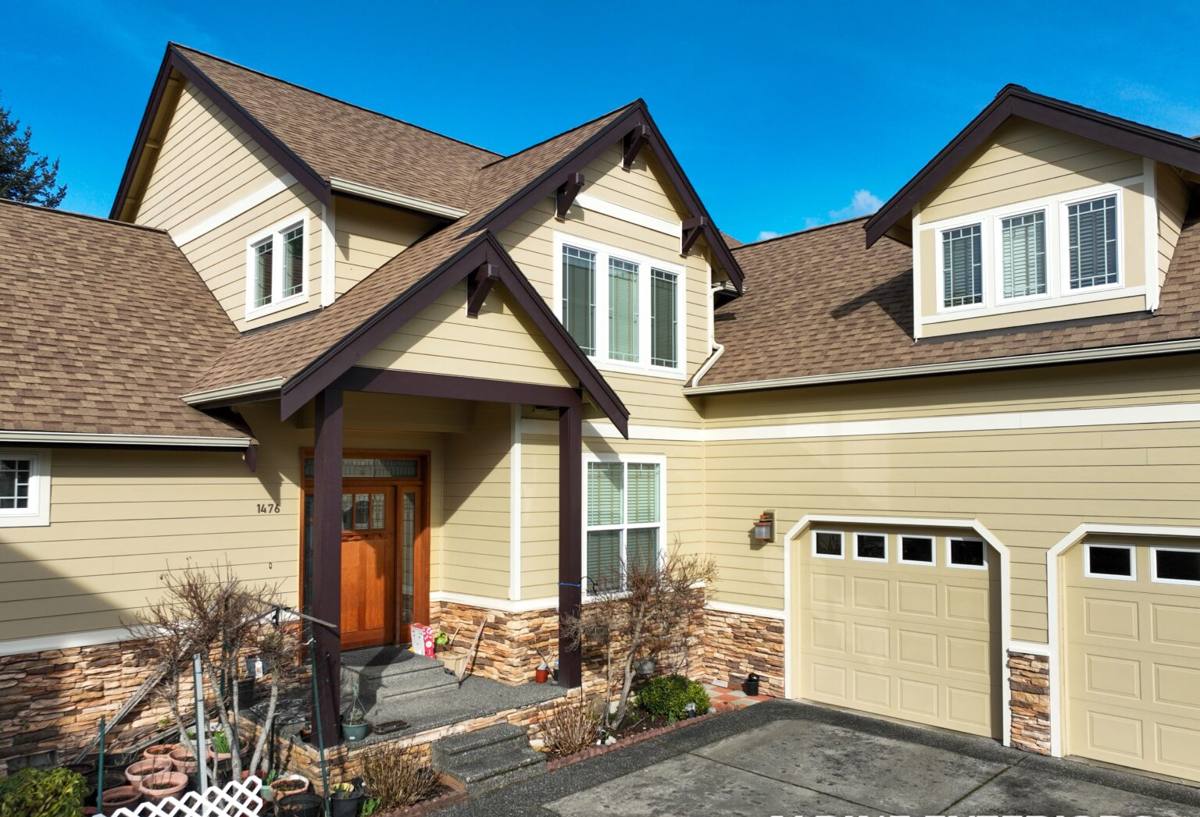
Why We Standardize on James Hardie Fiber Cement
We install James Hardie fiber cement siding exclusively. Not vinyl, not LP SmartSide, not primed spruce or cedar, and not other fiber cement brands like Allura or Cemplank. That's a deliberate standard, not a sales preference, and it comes down to how each of those materials actually performs under sustained coastal moisture:
- Vinyl doesn't stop water — it's designed to let moisture pass behind it and drain, which only works if everything underneath is detailed correctly, and it can warp or fade under UV and temperature swings.
- LP SmartSide is engineered wood. It performs well in many climates, but wood-based products remain more sensitive to sustained moisture exposure at cut ends, seams, and fastener penetrations — exactly the details that take the most abuse in a wet marine environment.
- Primed spruce or cedar are natural wood siding. They can look great, but they demand a repainting and caulking maintenance cycle that most homeowners underestimate, and moisture-driven rot is a matter of when, not if, in a climate like this one.
- Other fiber cement brands (Allura, Cemplank) are legitimate cement-based products, but standardizing on one manufacturer's system lets us install to one set of specifications, back it with one factory finish warranty, and know exactly how every component — trim, fasteners, joint treatment — is engineered to work together.
James Hardie's fiber cement is made from cement, sand, and cellulose fiber, pressed and cured into a dimensionally stable board. It doesn't expand and contract with humidity the way wood does, it's non-combustible, and it holds its factory finish far longer than field-applied paint on wood or engineered wood products. For a location that sees salt air, driving rain, and a long moss season every single year, that stability is the whole point.
ColorPlus Finish in a Salt-Air Environment
Most James Hardie siding we install carries the ColorPlus factory finish — a baked-on, multi-coat finish applied under controlled conditions before the boards ever reach the jobsite. That matters here specifically because UV exposure and salt air are two of the fastest ways to break down a field-applied paint job. A factory-cured finish resists fading and chipping far better than paint applied on-site in variable weather, and it comes with its own finish warranty separate from the substrate warranty.
What a Correct Installation Involves in This Climate
James Hardie siding performs the way it's supposed to only when it's installed to the manufacturer's specifications — and in a wet, salt-exposed climate, the margin for shortcuts is smaller. A correct install includes:
- A drainage plane behind the siding — a weather-resistive barrier, and in many cases a furred-out rainscreen gap — so any moisture that does get behind the panels has somewhere to go instead of sitting against the sheathing.
- Proper flashing at every window, door, roofline, and penetration, so water is directed out and away rather than funneled behind the siding.
- Corrosion-resistant fasteners, correctly spaced and driven flush (not overdriven), which matters more in salt air where the wrong fastener can start rusting and staining within a few seasons.
- Caulking only where James Hardie's install specs call for it — over-caulking traps moisture behind joints instead of letting them breathe and drain as designed.
- Correct clearance from grade, roof lines, decks, and patios (generally several inches minimum) to limit splashback moisture and reduce the damp, shaded conditions moss favors.
Skipping any one of these doesn't show up on day one. It shows up two or three winters later as staining, soft trim, or moisture behind the boards — problems that are far more expensive to fix than to prevent at install time.
Moss and Organic Growth Management
Fiber cement doesn't feed moss or algae the way wood does, and it won't rot from surface growth the way untreated wood can. But moss and algae will still take hold on any exterior surface in this climate, especially on north-facing walls or areas shaded by trees. Good installation practice — proper clearances, functioning gutters and downspouts that don't sheet water down the wall face, and adequate ventilation gaps — reduces how much organic growth takes hold in the first place. What growth does appear is a surface condition on Hardie siding, not a structural threat, and it can be rinsed off without the urgency it would carry on wood.
Our Process for Edison Installations
Every job starts with an assessment of what's actually on the house now and what's underneath it. A fair number of homes in this area still have older wood or vinyl siding that's been hiding moisture damage to the sheathing for years — you don't know until it comes off. From there, our process is:
- Remove existing siding and inspect the sheathing, repairing or replacing any sections compromised by rot or moisture before anything new goes on.
- Install or verify the weather-resistive barrier and drainage plane across the entire wall assembly, not just patch areas.
- Install James Hardie panels, lap siding, or trim per manufacturer specification — correct fastener pattern, joint treatment, and flashing at every transition.
- Detail all trim, corners, and penetrations so water is shed correctly at every edge.
- Clean up the site thoroughly, including protecting existing landscaping and outdoor areas during the work — something we take seriously on the more rural, garden- and farm-adjacent properties common around Edison.
Why a Local Crew Matters for This Job
Siding installation isn't just about the product — it's about timing and judgment calls that depend on knowing the area. A crew that regularly works Anacortes and the surrounding Skagit County communities knows how to sequence a job around the wet season so sheathing isn't left exposed longer than necessary, understands the permitting expectations for the county, and recognizes how the marine microclimate here differs from siding work done twenty miles inland. That local familiarity also means faster response if a warranty question or punch-list item comes up after the job is done — you're not waiting on a crew that has to drive in from another region.
Cost Factors for James Hardie Siding in Edison
Every home is different, but the factors that move the price on a James Hardie project here are consistent. This isn't a quote — it's what actually drives cost up or down on a real estimate.
| Factor | Why It Matters |
|---|---|
| Home size and story count | More wall area and higher work (scaffolding, lifts) increase labor time and equipment cost. |
| Existing siding removal | Tear-off and disposal of old wood, vinyl, or damaged material adds time before installation can begin. |
| Sheathing repair | Moisture damage found underneath old siding — common on older homes here — must be repaired before new siding goes on. |
| Siding profile and trim complexity | Lap siding, shingle-style accents, and custom trim details each carry different labor requirements. |
| ColorPlus color selection | Standard colors versus premium or custom ColorPlus finishes carry different material pricing. |
| Site access | Rural driveways, setbacks, and staging space affect how efficiently material and equipment move on site. |
Maintaining Your Hardie Siding in the Edison Area
James Hardie siding is low-maintenance compared to wood or vinyl, but "low-maintenance" doesn't mean "no-maintenance," especially in a marine climate with a long moss season. A simple annual routine keeps it performing and looking right for decades:
- Rinse the siding down once a year with a garden hose to clear salt residue, pollen, and light organic buildup — avoid close-range pressure washing, which can drive water behind panels and damage the finish.
- Keep gutters and downspouts clear so water doesn't sheet down the wall face, which accelerates both moss growth and staining.
- Trim back trees and shrubs so foliage isn't holding moisture against the siding or blocking airflow and sunlight.
- Inspect caulking at joints, trim, and penetrations every year or two, and have any cracked or missing sections resealed promptly.
- Address moss on the roof and in gutters before it spreads toward the siding line — a roof-cleaning schedule protects the walls below it, too.
If you're weighing a siding replacement for a home in Edison and want a straight answer about what your walls actually need, we'll come take a look and give you a free, no-pressure estimate — no invented urgency, just what the house tells us.