 Anacortes
 Storm Damage Roof Repair for March Point Homes
March Point sits out on Fidalgo Bay, exposed to wind and weather coming straight off the water. That location is part of what makes it a great place to live — and part of what makes the roofs out there work harder than roofs a few miles inland in downtown Anacortes. Salt-laden air, driving rain off Puget Sound, and the long gray moss season that Skagit County is known for all add up over time. When a storm rolls through and does visible or hidden damage, the repair needs to account for all of that, not just patch the immediate problem.
We work on roofs throughout Anacortes and March Point regularly, so we're familiar with the wind exposure patterns and moisture behavior specific to this stretch of Fidalgo Island. This page covers what storm damage actually looks like out here, what a correct repair involves, and how we handle the job from first call to finished roof.
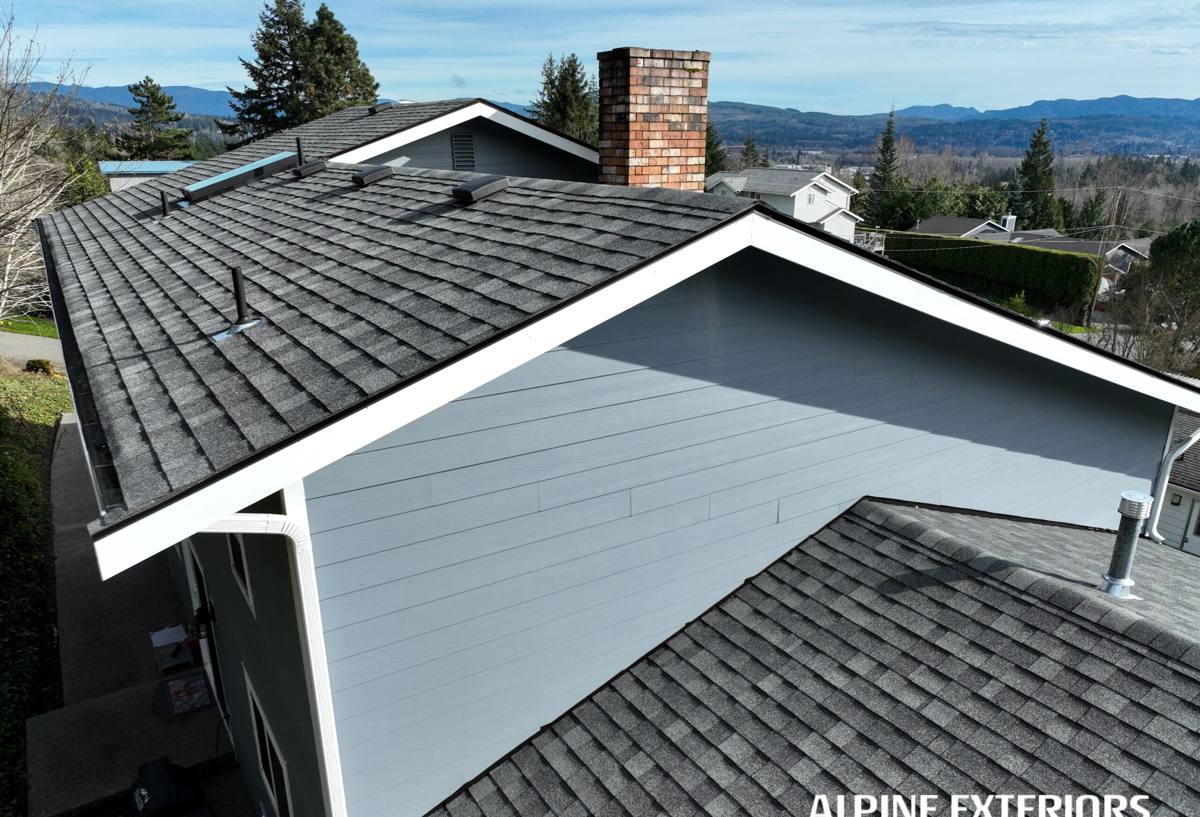
Why March Point Roofs Take a Different Kind of Beating
Wind and Salt Air
Homes closer to the water catch stronger, more sustained wind during storms than roofs set back in more sheltered parts of Anacortes. That wind doesn't just rip off shingles in dramatic fashion — it also works edges and fasteners loose gradually, storm after storm, until a roof that looked fine last year starts leaking this year. Salt air adds a second layer of stress: it accelerates corrosion on exposed metal flashing, nails, and fasteners, which is often the real point of failure even when the shingles themselves look intact.
Driving Rain
Rain that comes in sideways during a Pacific storm system finds every gap a straight-down rain would never reach — under lifted shingle tabs, behind loose flashing, into vent boots that have started to crack. This is why storm damage on a March Point roof often shows up as an interior leak in a spot that seems unrelated to any obvious exterior damage.
Moss and Trapped Moisture
Skagit County's long wet season gives moss plenty of time to establish itself on north-facing slopes and shaded areas. Moss holds moisture against the roofing material long after a storm has passed, which softens shingles, works into nail holes, and can quietly rot the sheathing underneath. A roof that's already carrying a moss load goes into a storm with less margin for error.
What Actually Counts as Storm Damage
Not all storm damage is obvious from the ground. Some of it is, and some of it takes a trained eye and a closer look.
- Shingles that are cracked, curled, lifted, or missing outright
- Granule loss that leaves bare, shiny patches on asphalt shingles
- Bent, torn, or separated flashing around chimneys, vents, and valleys
- Punctures or dents from wind-driven debris or branch strikes
- Loosened or blown-off ridge caps
- Water stains on interior ceilings or in the attic that appeared after a storm
- Gutter and downspout damage that redirects water back under the roof edge
- Soft spots in the decking, usually found only once shingles are pulled back
Some of these are urgent — anything that's actively letting water in needs attention right away. Others are damage that will cause a problem eventually if left alone. Part of our job on the first visit is telling you honestly which category you're dealing with.
Our Storm Damage Repair Process
1. Inspection First, Not a Sales Pitch
We walk the roof (or use a ladder and a close visual inspection where walking isn't safe) and look at the whole system — shingles, flashing, vents, ridge, gutters, and the attic side if accessible. We're looking for both the damage that brought you to call us and any secondary issues a storm can expose, like flashing that was already marginal before the wind finished it off.
2. Stop Further Water Intrusion
If there's active leaking or exposed decking, that gets addressed first — temporary tarping or sealing to stop water from getting further into the structure while the full repair is scheduled. We don't leave a roof exposed longer than it has to be, especially with more weather typically on the way.
3. Documented Findings
We take photos of the damage and note exactly what we find, in language that's useful if you need to file an insurance claim. We're not adjusters and we don't represent your insurance company, but clear documentation from the contractor who actually inspected the roof makes the claims process go a lot smoother.
4. The Repair Itself
Depending on what the inspection turns up, this might mean replacing a section of shingles and matching them as closely as possible to the existing roof, re-flashing a valley or chimney, resealing vent boots, or replacing damaged decking before any new roofing goes down. We don't cover over soft or rotted sheathing — that's the kind of shortcut that turns a repair into a bigger job in a year or two.
5. Walkthrough and Sign-Off
Once the repair is done, we go over what was fixed, what we found underneath if anything was hidden, and what (if anything) is worth keeping an eye on going forward.
Repair or Replace? What Actually Drives That Decision
Storm damage doesn't automatically mean a full roof replacement, and it doesn't automatically mean a quick patch will hold either. The right call depends on a few honest factors.
| Factor | Leans Toward Repair | Leans Toward Replacement |
|---|---|---|
| Age of existing roof | Under 10-15 years, in otherwise good condition | Near or past expected lifespan for the material |
| Extent of damage | Localized to one section or a few areas | Widespread across multiple slopes |
| Decking condition | Solid, no rot found | Soft or rotted decking in multiple spots |
| Moss/moisture history | Minor, surface-level moss | Long-term moss growth with underlying moisture damage |
| Shingle matching | Matching shingles are available | Discontinued product, poor match likely |
We'll tell you straight if a repair is the right, cost-effective answer, and we'll also tell you if we think a repair is just delaying a replacement that's coming anyway. Both are honest outcomes — we're not incentivized to push one over the other based on anything other than what's actually going on with your roof.
Working With Your Insurance Claim
Many storm damage repairs in Skagit County get filed through homeowner's insurance, especially after a named storm event or documented high-wind day. We're happy to work alongside that process:
- Provide a written inspection report with photos for your claim
- Point out damage that may not be visible from the ground, for the adjuster's benefit
- Give a clear, itemized repair scope so there's no ambiguity about what's being done
- Answer questions from your adjuster about the scope of work, materials, or damage cause
We won't tell you what to say to your insurance company or inflate a scope to chase a bigger payout — that's not a service we offer, and it's not how we want to be known in this community. What we will do is make sure the actual condition of your roof is documented accurately.
Materials and Approach: Built for This Climate, Not a Generic One
Repair materials matter more here than in a drier climate. We pay attention to a few things that are easy to overlook:
Flashing Quality
Given the salt air near Fidalgo Bay, we favor flashing and fasteners with better corrosion resistance where the budget and situation allow it, rather than the cheapest option that will start rusting again in a few seasons.
Moss-Conscious Repair
If moss contributed to the damage, we address the underlying moisture issue as part of the repair, not just the visible symptom. That can mean improving airflow, trimming back overhanging growth where it's within scope, or recommending a moss treatment plan alongside the physical repair.
Matching, Not Just Patching
A repair that stands out like a patch isn't just a cosmetic issue — mismatched or incompatible shingles can shed water differently than the surrounding roof and create new problems. We try to match existing shingle lines and colors as closely as the market allows, and we'll tell you upfront if an exact match isn't realistic.
Why a Crew That Already Works March Point Matters
March Point isn't a huge area, but it has its own character — waterfront exposure on one side, more sheltered residential lots elsewhere, and a mix of roof ages and styles. A crew that regularly works this part of Anacortes has a head start on knowing what wind exposure and moss patterns look like on a given lot, what local building department expectations are for repair work, and how to schedule around the weather windows that actually make sense here.
There's also a practical side: storm damage repair is often time-sensitive. A contractor based in or near Anacortes can get out to March Point quickly after a storm, rather than adding hours of drive time from further away while your roof sits exposed.
Signs Your Roof Needs a Storm Damage Inspection
- You noticed shingles in the yard, driveway, or gutters after a windstorm
- There's a new water stain on a ceiling or ceiling texture that's bubbling
- You can see daylight or a gap in the attic where there shouldn't be one
- A neighbor's roof was visibly damaged in the same storm and yours hasn't been checked
- Your roof already had moss buildup before the last storm hit
- It's been more than a year since your roof was last inspected
- You're dealing with a musty smell in an upstairs room or attic space
Any one of these on its own is worth a look. A few of them together usually means it's time to get someone up there before the next storm system finds the weak spot for you.
Get a Free, No-Pressure Estimate
If your March Point home has storm damage — or you just want a roof checked out after a rough weather week — we're glad to come take a look. There's no cost and no obligation, and you'll get a straight answer about what's actually going on up there. Use the form below to request your free estimate.