 Anacortes
 Building New in Similk Beach Means Building for Puget Sound Weather
Similk Beach sits close enough to open water that salt air, wind-driven rain, and a long stretch of damp, mossy months are simply part of owning a home there. When you're framing a new house or a major addition in this part of Skagit County, the windows you choose and how they're installed will decide whether you spend the next twenty years dealing with sash corrosion, sill rot, and stuck cranks — or not. New-construction windows are different from replacement windows in one key way: they install with a nailing flange directly into the framing, before siding and trim go on. That gives us one real shot to get the flashing and water management right, before the wall is closed up.
We work new-construction and major-addition jobs around Anacortes and the surrounding Skagit County waterfront regularly, and Similk Beach's exposure — open to wind off the water, shaded in places by fir and cedar that keep things damp — shapes how we spec and install every opening on the house.
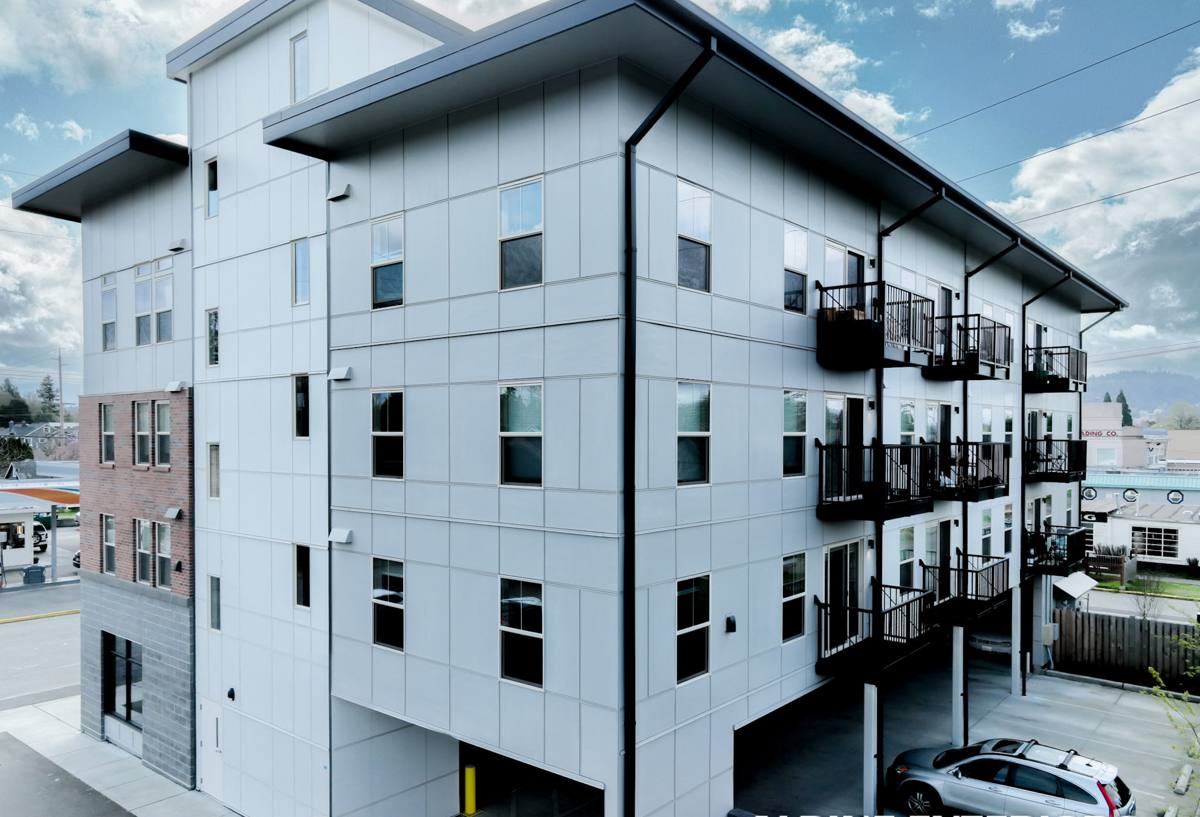
What Similk Beach's Climate Actually Does to a Window Opening
It's worth being specific about the failure modes we're designing against, because they're not hypothetical in this area:
- Wind-driven rain gets pushed sideways into wall assemblies, not just straight down — a window that only sheds water from above will leak from the sides in a real Skagit County storm.
- Salt-laden air off the Sound accelerates corrosion on lower-grade hardware, screws, and unprotected metal flashing over time.
- Moss and algae growth on north- and shade-facing walls holds moisture against siding and trim for months at a stretch, which is exactly where a marginal flashing detail turns into rot.
- Temperature swings between damp mornings and warmer afternoons keep framing lumber and window components cycling through moisture absorption and drying, which stresses caulk joints and seals over the years.
None of this means Similk Beach is a hard place to build — it means the details around the window opening matter more here than they would in a drier inland climate, and cutting corners shows up faster.
Getting the Rough Opening and Flashing Right, the First Time
Why Sequence Matters
On new construction, the window install happens inside a specific sequence: weather-resistive barrier (house wrap) goes on, the rough opening gets flashed, the window is set and fastened through the nailing flange, then the flashing is integrated back into the house wrap so water is shed outward and downward at every layer — never trapped behind it. Skip or rush any layer of that sequence and you've built a hidden leak path that won't show up until years later, usually as a soft spot in the sill or staining on interior drywall.
The Details We Don't Skip
- A sloped sill pan under every opening, so any water that does get past the window drains back out instead of sitting on the framing.
- Flashing tape lapped correctly — bottom pieces go on first, side and top pieces lap over them, always shedding water down and out like shingles.
- Corner patches or flexible flashing at the rough opening corners, the single most common leak point in any window install.
- Backer rod and quality exterior sealant at the flange-to-sheathing joint, sized for the gap rather than just smeared over it.
- Fasteners rated for exterior exposure, spaced and driven per the window manufacturer's instructions rather than "close enough."
None of this is exotic. It's standard best practice — but on a home exposed to Similk Beach's wind and rain, standard practice done consistently is what actually keeps water out, and skipped steps are what show up as a warranty claim five years down the road.
Choosing Window Products for a Salt-Air, High-Moisture Site
Frame material and glass package both matter more on an exposed, damp lot than they would somewhere sheltered and dry. Here's how the common options actually compare for a Similk Beach build:
| Frame Material | How It Handles This Climate | Maintenance |
|---|---|---|
| Vinyl | Won't rot or corrode; good performer near salt air when well-made | Low — occasional cleaning |
| Fiberglass | Very stable dimensionally, excellent moisture and salt resistance | Low |
| Wood (unclad) | Attractive but needs consistent upkeep in a damp, mossy environment | High — regular painting/sealing |
| Wood-clad (exterior clad, wood interior) | Clad exterior resists weather; interior keeps a traditional look | Moderate — cladding is low-maintenance, interior wood still needs care |
| Aluminum | Strong but conducts cold and can show condensation/corrosion issues over time near salt air unless thermally broken | Moderate |
For most Similk Beach builds we lean toward vinyl or fiberglass for the exterior-exposed sides of the house, simply because they hold up to salt air and driving rain with the least long-term upkeep. That's a maintenance and moisture-management call, not a knock on wood — plenty of homeowners still want wood-clad or wood windows for the look, and that's a reasonable trade-off as long as everyone's clear on the upkeep it requires in this climate.
Glass and Weatherstripping
Dual-pane, low-E glass is the baseline for new construction in this part of Washington — it manages both our wet winters and the condensation that comes with a tight, well-insulated new home. On the exposure side, look for windows with a good compression seal on the weatherstripping rather than just a thin foam strip; wind-driven rain finds the gaps a lesser seal leaves behind.
How We Approach a Similk Beach New-Construction Window Job
1. Plan Review and Opening Layout
Before anything is framed or flashed, we go through the plans with the builder or homeowner to confirm window sizes, swing/operation types, and egress requirements for bedrooms. This is also when we flag any opening that's going to take unusual wind or rain exposure — a west- or south-facing wall open to the water, for instance — so it gets extra attention in the flashing detail.
2. Coordinating With Framing and Sheathing
Rough openings need to be sized correctly and square before windows arrive. We coordinate directly with the framing crew or general contractor so openings are ready, and we check them ourselves rather than assuming the numbers on the plan match what got built.
3. Install
Sill pan, flashing, window set, fastening, and integration with the house wrap — done in sequence, per window, not rushed as a batch at the end of the day. We shim and check for square and level on every unit so sashes operate smoothly for the long haul, not just on day one.
4. Final Seal and Walkthrough
Once trim and siding close in around the windows, we do a final check of caulk lines and operation on every opening before we call the job done.
A Practical Checklist for Homeowners and Builders
If you're planning a new build or major addition near Similk Beach, these are worth confirming with whoever is handling your windows:
- Is there a sloped sill pan under every window opening, not just the ones facing the water?
- What flashing tape or membrane is being used, and is the lap sequence bottom-to-top?
- Are corner details flashed with dedicated corner patches, not just folded house wrap?
- What frame material and glass package is spec'd, and does it match the exposure of each wall?
- Who is responsible for coordinating rough opening sizes between the framer and the window installer?
- What's covered under the window manufacturer's warranty versus the installer's workmanship warranty?
Timing Windows Into Your Build Schedule
Windows typically need to be ordered several weeks out once sizes are finalized, and install happens right after the house is wrapped and before siding starts. On a Similk Beach job, we try to avoid setting windows during an active stretch of driving rain if the schedule allows it — not because a well-flashed opening can't handle weather, but because a dry install day makes for cleaner sealant work and a better long-term seal. If your build schedule is tight, we'll talk through realistic sequencing with your builder rather than promising a date we can't back up.
Why a Local Crew Matters for This Job
New-construction window flashing is one of those jobs where the difference between "looks fine" and "actually sheds water for the next twenty years" is invisible once the siding goes on. A crew that installs windows all over Anacortes and Skagit County, including exposed waterfront lots like Similk Beach, has already seen where this climate finds the weak points in a window install — and builds the extra margin into the flashing details as a matter of habit, not an afterthought. That's the kind of experience that doesn't show up on a spec sheet but shows up in whether your walls stay dry.
If you're framing a new home or addition near Similk Beach and want windows specified and installed correctly from the start, we're happy to walk the plans with you and give you a straightforward, no-pressure estimate. Reach out through the form below and we'll get back to you.