 Anacortes
 Windows Built for Life Near the Water
Homes around Oak Harbor sit close to the water on almost every side — Puget Sound to the west, the passes and bays that wrap the area, and a marine layer that rolls through for months at a stretch. That's a different set of demands than a window has to deal with fifty miles inland. Salt-laden air corrodes hardware and finishes faster than plain moisture does. Driving rain, pushed sideways by wind off the water, tests every seal and sill. And the long stretch of gray, wet months each year gives condensation and moss plenty of time to find any weak point in a window's seal or the trim around it.
We install energy-efficient windows for homeowners in this area because it's the single upgrade that touches comfort, energy bills, and long-term maintenance all at once. A window that's doing its job right keeps conditioned air where it belongs, keeps wind-driven rain out, and doesn't hand you a rot or mold problem five years down the road.
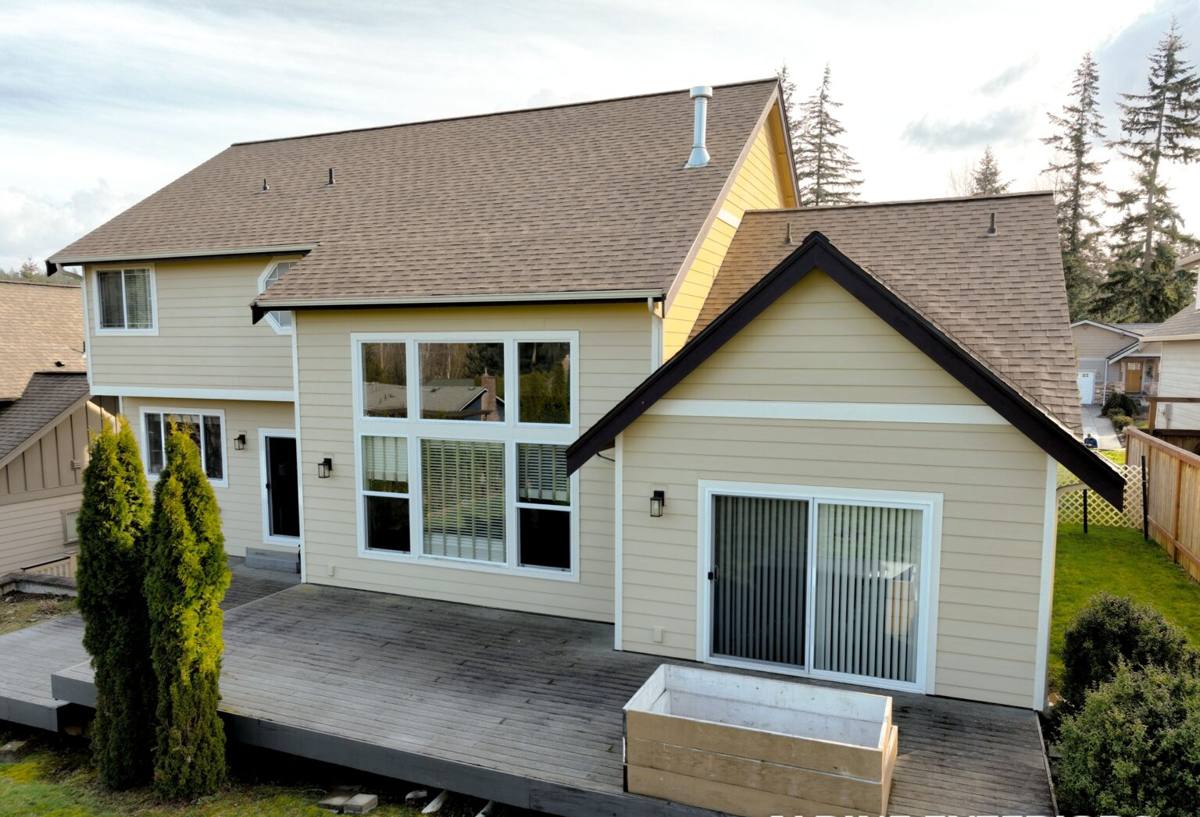
What "Energy-Efficient" Actually Means Here
The term gets used loosely in advertising. For a home in this region, it should mean a specific, checkable set of things:
- Low U-factor — how well the window resists heat loss. Lower is better for our cool, damp winters.
- Appropriate solar heat gain coefficient (SHGC) — how much solar warmth the glass lets through. In a marine climate with mild summers, this gets balanced differently than it would in a hot, sunny region.
- Multi-point locking and a tight compression seal — this is what actually keeps wind-driven rain from pushing past the sash.
- A drainage path built into the frame — so any water that does get past the outer seal has somewhere to go besides your wall cavity.
- Corrosion-resistant hardware — hinges, cranks, and locks that hold up to salt air without seizing or staining.
A window can carry a high efficiency rating on paper and still fail locally if the installation doesn't address wind-driven rain and drainage. The product matters, but the install matters just as much — sometimes more.
What Salt Air, Rain, and Moss Season Do to a Window
Salt Air and Metal Components
Salt in the air accelerates corrosion on anything metal — hinges, balance mechanisms, screen frames, and cheaper cladding. Over years, that shows up as stiff or seized hardware, pitting on aluminum components, and finishes that chalk or peel earlier than they would inland. It's not a reason to avoid metal-clad windows altogether, but it is a reason to be deliberate about hardware finish and cladding quality when a home sits close to the water.
Driving Rain
Rain that falls straight down is easy for almost any window to shed. Rain that's being pushed sideways by wind off the water is a different test — it finds gaps in flashing, weak spots in caulking, and any place where the window wasn't properly integrated with the wall's water-resistive barrier. Most window leaks we're called out to inspect trace back to installation and flashing details, not a defective window unit.
Moss and Extended Wet Season
The long wet season doesn't just mean more rain — it means surfaces stay damp longer between dry spells. Moss and algae take hold on north-facing trim, sills, and anywhere water sits instead of draining. Beyond the cosmetic issue, that sustained moisture is exactly the condition that lets wood trim and sill components start to soften and rot if they weren't properly primed, sealed, or flashed to begin with.
Signs Your Oak Harbor Home's Windows Are Underperforming
- Cold drafts near the window frame even when it's fully latched
- Condensation or fogging between the glass panes (a sign the seal has failed)
- Visible gaps, soft spots, or peeling paint in the surrounding trim
- Hardware that's stiff, corroded, or won't lock cleanly
- Noticeably higher heating bills compared to similar-sized homes
- Moss or dark staining building up on sills or lower trim
- Difficulty opening or closing sashes, especially after damp weather
Any one of these on its own might just mean a tune-up or resealing. Several together usually means the windows themselves are past the point where sealing and adjustment will fix the underlying problem.
Choosing the Right Window for This Climate
There's no single "best" window material — the right choice depends on the home, its exposure, and the homeowner's priorities. Here's how the common options compare for a coastal, wet-winter climate like this one:
| Material | Strength in This Climate | Trade-off to Plan For |
|---|---|---|
| Vinyl | Doesn't corrode, good thermal performance, lower cost | Lower-end frames can flex or discolor over decades of UV and moisture cycling |
| Fiberglass | Very stable dimensionally, holds paint well, resists moisture damage | Higher upfront cost than vinyl |
| Wood (clad exterior) | Classic look, warm interior finish | Exterior cladding and flashing details need to be done right, or moisture gets behind the cladding |
| Aluminum | Strong, slim sightlines | Conducts heat and cold unless thermally broken; more prone to salt-air corrosion without the right finish |
For homes with direct water exposure, we lean toward vinyl or fiberglass with corrosion-resistant hardware, or a well-detailed clad-wood unit where the look matters and the budget allows for it. We'll talk through what fits your specific home rather than pushing one material for everyone.
Glass Package Considerations
Double-pane, low-E glass with argon fill is the standard baseline for energy performance today. In this region, we also pay attention to:
- Low-E coatings tuned for our mild-summer, long-winter climate rather than a hot-climate coating
- Warm-edge spacer systems, which reduce condensation risk at the glass edge — a real issue given how much of the year runs damp and cool
- Impact or laminated glass options where storm exposure or noise from wind is a concern
Our Installation Process
1. On-Site Assessment
We look at each window's exposure — which walls take the brunt of the weather, where past moisture damage shows up, and what condition the surrounding framing and trim are in. Not every window on a home has the same needs.
2. Removal and Inspection
Once the old window comes out, we check the rough opening and sheathing underneath. This is often the only chance to catch hidden rot or water damage before it's sealed back up behind a new window — and it's a step that gets skipped by installers in a hurry.
3. Flashing and Weather Barrier Integration
This is the step that determines whether a window actually keeps driving rain out. We integrate flashing tape and the window's nailing flange with the home's existing water-resistive barrier so water sheds down and out, not into the wall.
4. Insulation and Air Sealing
The gap between the window frame and the rough opening gets properly insulated and air-sealed — not stuffed, not left open. Overpacking insulation can bow a frame and cause operational problems; underfilling leaves a draft path.
5. Exterior Trim and Sealant
Exterior trim gets reinstalled or replaced with attention to drainage, so water doesn't sit against wood surfaces. Sealant is applied at the specific points the window manufacturer calls for — not as a blanket caulk job meant to cover for a poor fit.
6. Final Check
We confirm the window operates smoothly, locks fully, and that the interior and exterior finish work is clean before we consider the job done.
Why Hire a Crew That Already Works This Area
A crew that installs windows regularly around Anacortes and Oak Harbor already knows what wind-driven rain off the water does to a poorly flashed window, and they've seen what salt air does to the wrong hardware finish over a few winters. That local pattern recognition matters — it's the difference between an installer following a generic manual and one who knows which details actually hold up here.
We also stand behind our own installation work, not just the manufacturer's product warranty. If flashing or sealant work is the reason for a callback, that's on us to make right.
What This Typically Costs
Window project costs vary by size, material, glass package, and how many openings are involved — a single replacement window is a different budget than a whole-house upgrade. Broadly, homeowners in this area should expect mid-range vinyl or fiberglass replacement windows to run from the high hundreds to low thousands of dollars per window installed, with fiberglass, larger openings, or upgraded glass packages pushing toward the higher end. New-construction or full-frame replacements (versus insert replacements into an existing frame) typically cost more due to the added trim and flashing work involved. We'll give you an exact number for your home after a walkthrough — we don't quote sight unseen.
If your windows are drafty, fogged, or just past their prime, we're happy to take a look and give you a straightforward, no-pressure estimate. Fill out the form below and we'll get back to you to schedule a time.