 Anacortes
 Why Oak Harbor Roofs Wear Out Differently
Homes around Oak Harbor and the greater Anacortes area sit close enough to saltwater that the air itself works against a roof, not just the weather events everyone thinks about. Salt-laden marine air corrodes exposed fasteners, flashing, and metal roof edges faster than it would fifty miles inland. Add in driving rain that comes sideways off the water during winter storms, and you've got a climate that punishes any roof with weak flashing details or aging underlayment. Then there's the shoulder seasons — long stretches of damp, shaded, low-sun days that never quite dry a roof out, which is exactly the recipe moss and algae need to take hold.
None of this means Oak Harbor roofs fail faster than average. It means they fail differently, usually starting at the details rather than the field of the roof itself: valleys, penetrations, eave edges, and anywhere two roof planes meet. A replacement done without that in mind is a roof that looks fine for a few years and then develops the same problems the old one had.
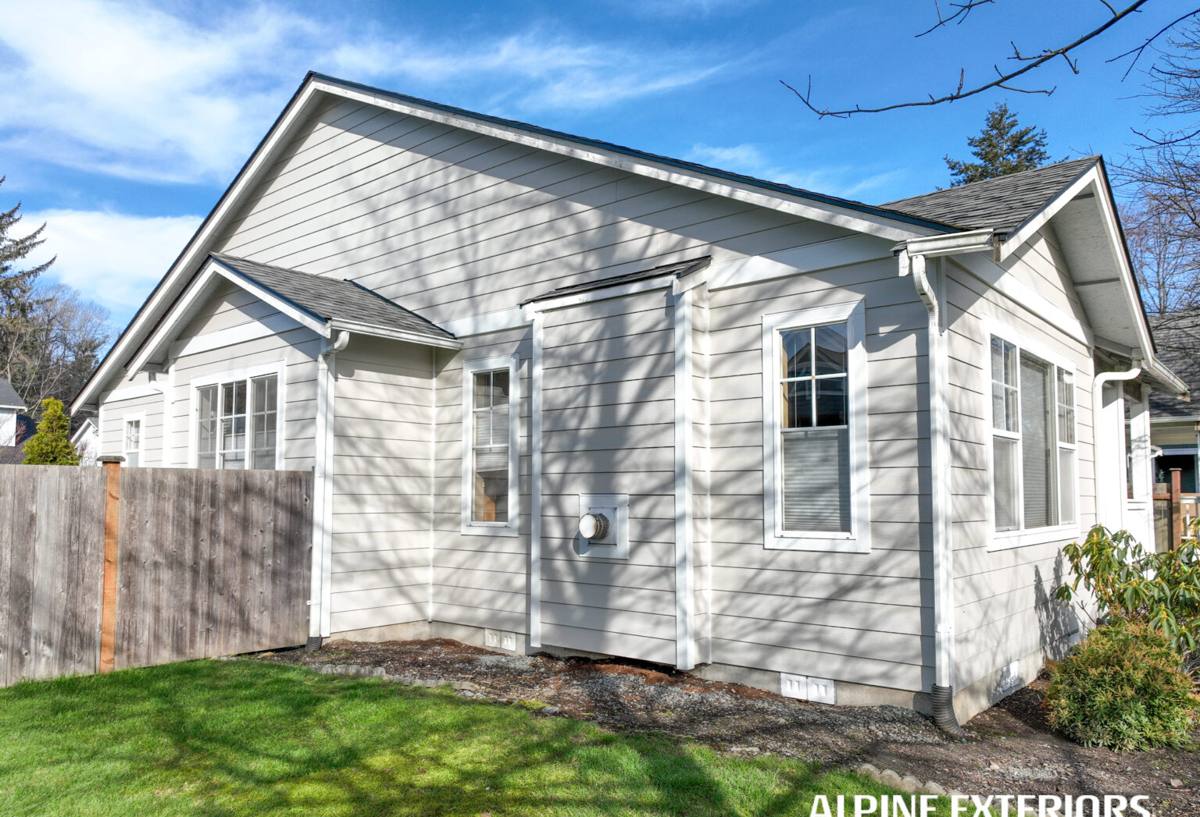
Signs a Roof Needs Replacing, Not Just Patching
A lot of roofs in this area get repaired past the point where repair is the smart money move. Some signals that you're looking at a full replacement rather than another patch:
- Granule loss heavy enough that you're finding grit in gutters every season, not just after a storm
- Moss growth that keeps returning within a year of cleaning, especially on north-facing slopes
- Soft spots or sponginess underfoot on the roof deck, which usually means water has already gotten past the shingles
- Daylight visible through the attic roof boards, or damp insulation near the eaves
- Multiple layers of old roofing already stacked underneath the current one
- Flashing around chimneys, skylights, or vent pipes that's rusted, lifted, or was never properly stepped in the first place
If a roof is showing two or more of these at once, patch repairs tend to become a yearly expense that adds up to more than a proper replacement would have cost.
Choosing a Roofing System for This Climate
There's no single "best" roofing material — there's a best fit for the exposure, the roof's pitch and shading, and the homeowner's tolerance for maintenance. Here's how the common options stack up for a coastal, moss-prone climate like this one.
| Material | Salt-air / rain performance | Moss resistance | Maintenance |
|---|---|---|---|
| Architectural asphalt shingle | Good with proper flashing and starter strips | Moderate — algae-resistant granules help but aren't permanent | Periodic moss treatment recommended |
| Standing seam metal | Very good; corrosion-resistant coatings hold up well to marine air | High — moss struggles to grip smooth metal | Low; occasional fastener and sealant checks |
| Composite / synthetic shake | Good; doesn't absorb moisture like real wood | Moderate to high depending on product | Low to moderate |
| Cedar shake | Struggles in constant damp; needs regular treatment | Low without ongoing upkeep | High — this is the tradeoff we're upfront about |
We'll still install cedar shake for homeowners who want that look and understand the upkeep it demands, but we walk through the moisture and moss tradeoffs honestly before anyone signs a contract. In a climate this damp, an under-maintained wood roof ages faster than the same product would somewhere drier, and that's a maintenance-burden issue, not a knock on the material itself.
What a Correct Roof Replacement Actually Involves
A roof replacement is more than swapping old shingles for new ones. The parts that determine whether a roof lasts twenty years or five happen underneath what you can see from the ground.
Tear-off and deck inspection
We remove existing roofing down to the deck rather than layering over it. That's the only way to actually see the condition of the sheathing — soft, delaminated, or water-stained boards get replaced before anything new goes down. Roofing over a compromised deck just hides the problem for another few years.
Underlayment built for wet climates
In an area that gets this much sustained rain, we use synthetic or self-adhered underlayment rated for high-moisture exposure, with ice-and-water shield at eaves, valleys, and any low-slope transitions where wind-driven rain tends to find its way underneath standard shingle coverage.
Flashing done properly, not just caulked
Chimneys, skylights, dormers, and sidewalls all need step flashing and counter-flashing that's actually woven into the roofing layers — not a bead of sealant slapped over a gap. Sealant fails; correctly lapped flashing doesn't rely on it to keep water out.
Ventilation matched to the attic
Intake at the eaves and exhaust at the ridge need to balance, or moisture gets trapped in the attic year-round in a climate that rarely gives a roof a chance to fully dry.
Our Process, Start to Finish
- On-site inspection of the roof, attic, and deck condition — we look at ventilation and moisture signs, not just the shingles
- A written estimate that breaks out material, labor, and any deck repair allowance, so there are no surprise change orders mid-job
- Material selection based on your roof's exposure, pitch, and what you want to maintain long-term
- Tear-off, deck repair as needed, and disposal — we protect landscaping and gutters during the process
- Underlayment, flashing, and the new roofing system installed to manufacturer specs, which keeps warranty coverage intact
- Final walkthrough covering the completed work and basic care going forward
Ventilation and Moisture: The Half of the Job Nobody Sees
A shingle warranty assumes proper attic ventilation. Skip that step and you can void the warranty even on premium materials, while also shortening the roof's real lifespan regardless of what the paperwork says. In a climate where the air itself carries a lot of moisture for a large part of the year, an under-ventilated attic traps that moisture against the underside of the deck, which is how you get soft sheathing and mold issues that have nothing to do with an actual roof leak. We size and balance intake and exhaust as part of every replacement, not as an upsell.
Moss and Algae Prevention Built Into the Job
Moss doesn't grow because a roof is old — it grows because a roof stays damp and shaded long enough for spores to establish, which describes a lot of north-facing and tree-covered slopes here for much of the year. A few things we build into a replacement to push that timeline out:
- Zinc or copper strips near the ridge on shingle roofs, which release trace metal ions that discourage moss growth as rain washes over them
- Algae-resistant shingle products where the roof's exposure calls for it
- Making sure gutters and valleys are sized and sloped to actually clear debris instead of holding standing organic matter against the roofing
- Trim recommendations where overhanging branches are keeping a section of roof shaded and damp longer than the rest
None of this makes a roof moss-proof forever — nothing does in this climate — but it meaningfully extends the time between cleanings and cuts down how aggressively moss needs to be removed when it does show up.
Cost Factors Worth Understanding Upfront
Every roof replacement estimate here is going to reflect a handful of variables, and it's worth knowing what actually drives the number before you compare quotes:
| Factor | Why it matters |
|---|---|
| Roof pitch and access | Steeper or harder-to-access roofs take longer and require more safety setup |
| Deck condition | Rotted or soft sheathing found during tear-off adds material and labor not visible from the ground |
| Number of penetrations | Chimneys, skylights, and vents each need individual flashing work |
| Material choice | Asphalt, metal, and composite systems carry different material and labor costs |
| Tear-off layers | Removing multiple existing layers costs more in labor and disposal than a single layer |
What to Ask Before You Hire a Roofing Crew
- Do you inspect and repair the deck before installing new roofing, or roof over existing layers?
- What underlayment and ice-and-water shield do you use, and where specifically do you install it?
- How do you handle flashing at chimneys, skylights, and sidewalls?
- Will you check and correct attic ventilation as part of the job?
- Are you licensed and insured in Washington, and can you provide proof of both?
- What does the manufacturer's warranty require to stay valid, and do you install to that standard?
A contractor who answers these clearly and specifically, without hedging, is usually one who does the work correctly whether or not you'd have known to ask.
Why Local Experience in This Area Matters
A crew that works Oak Harbor and the surrounding Anacortes area regularly already knows which roof details tend to fail first in this specific mix of salt air, wind-driven rain, and shaded moss season — and builds the fix into the replacement instead of learning it on your roof. That local pattern recognition is the difference between a roof that's engineered for this climate and one that's simply installed to a generic spec sheet from somewhere drier.
If you're weighing repair against replacement, or just want an honest look at what condition your roof is really in, we're glad to come out for a free, no-pressure estimate. Fill out the form below and we'll take it from there.