 Anacortes
 Composite Decking Built for Old Town Anacortes
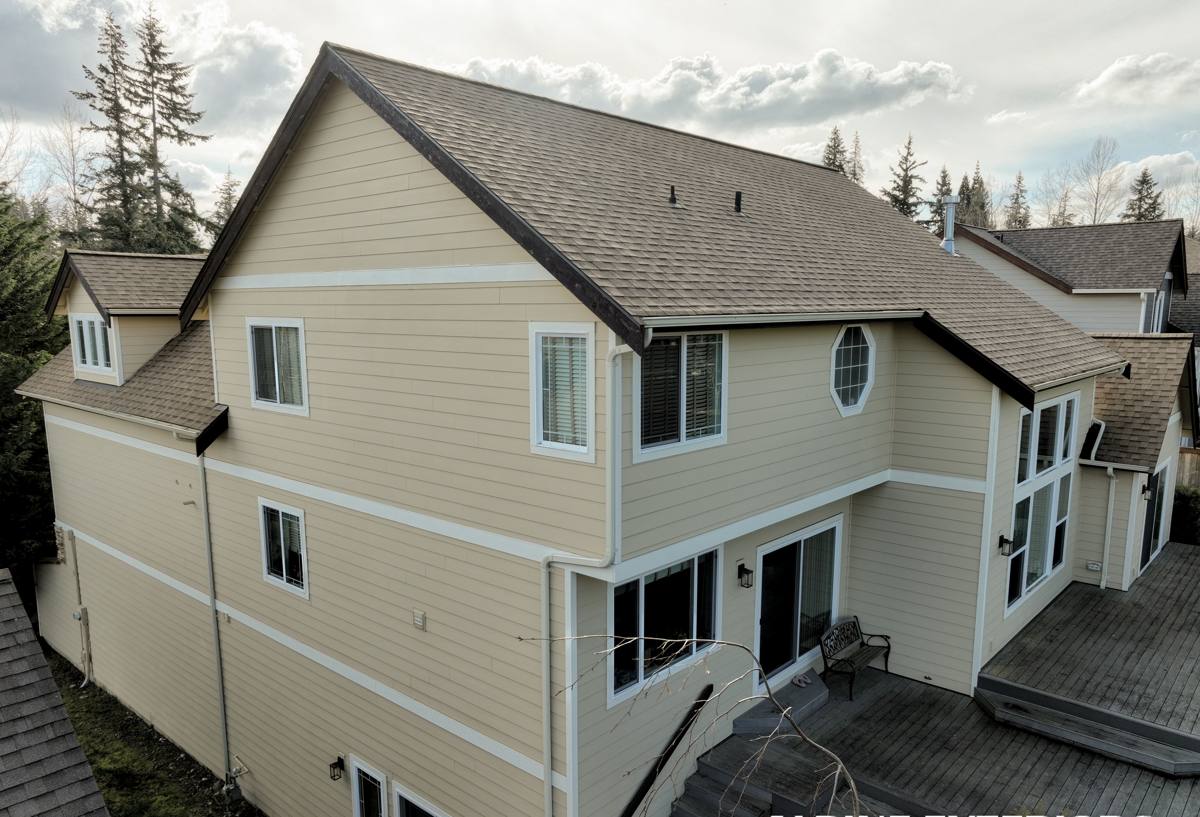
Old Town Anacortes is one of the older residential pockets on Fidalgo Island, with mature trees, established lots, and homes that have weathered a lot of Skagit County winters. If you're looking at a deck replacement or a new build in this neighborhood, the material question matters more than it does in drier parts of the state. Between the salt-laden air coming off the surrounding water, the driving rain that blows in off the Sound, and the long moss season that settles into anything shaded or slow to dry, a deck here works harder than a deck almost anywhere inland. Composite decking, installed correctly, is built to handle that load without the yearly maintenance cycle a wood deck demands.
This page covers what composite decking actually needs to hold up in this specific environment, what a correct installation looks like, and how our process works from first visit to finished deck.
What Salt Air, Rain, and Moss Do to a Deck Over Time
Three things wear down decks in this part of Anacortes faster than they would somewhere drier and farther from the water.
Salt Air
Airborne salt doesn't just affect boats and metal railings — it accelerates the breakdown of exposed wood fibers and speeds up corrosion on any fastener or bracket that isn't rated for coastal exposure. Over years, that means loosening screws, rust streaks on light-colored decking, and hardware that fails before the boards do.
Driving Rain
Anacortes doesn't just get rain — it gets wind-driven rain that hits decks at an angle, working its way into board gaps, fastener holes, and any spot where end grain is exposed. On a wood deck, that moisture cycle of wet-then-dry is what eventually causes cupping, splitting, and rot at the joints. Composite doesn't absorb water the way wood does, but a deck built without proper drainage and slope still traps standing water against the substructure, where the framing underneath can still rot even if the decking on top looks fine.
Moss Season
Shaded, tree-covered lots in Old Town Anacortes hold onto moisture longer into the season, and moss takes hold anywhere a surface stays damp and doesn't get much direct sun. On wood, moss roots into the grain and holds moisture against the board. On composite, moss and algae sit on the surface rather than in it, but they still need airflow and occasional cleaning to keep from becoming a slip hazard, especially on boards with a smooth or lightly textured finish.
Choosing the Right Composite Decking System
Not all composite decking is built the same, and the right choice for a shaded, rain-exposed Old Town lot isn't always the same board that makes sense on a sunny, open site elsewhere in Skagit County.
Capped vs. Uncapped Composite
Fully capped composite boards have a polymer shell wrapped around a wood-plastic core, which is what actually blocks moisture absorption and staining. Uncapped or partially capped boards cost less up front but let moisture and organic growth take hold at the exposed core, which is a real liability in a moss-prone yard. For this climate, we standardize on fully capped boards, capped on all four sides where the product line allows it.
Grooved vs. Solid-Edge Boards
Grooved-edge boards allow hidden fastener systems, which give a cleaner surface with no screw heads to collect grit or moss. Solid-edge, face-screwed boards are more forgiving to install and repair but leave exposed fastener heads that are the first thing to show corrosion in a salt-air environment. We'll talk through both with you, but for most Old Town homes we lean toward hidden-fastener systems with stainless or coated fasteners rated for coastal use.
Color and Surface Texture
Darker boards run hotter in direct sun but hide algae and mineral staining better; lighter boards stay cooler but show streaking sooner in a shaded, damp yard. Textured or wood-grain-embossed surfaces resist slipping better once damp, which matters on a deck that sees moss and mildew more months of the year than not.
What a Correct Installation Involves
Composite decking is only as good as what's underneath it and how it's fastened down. Most of the deck failures we get called out to inspect in this area trace back to substructure or drainage problems, not the decking material itself.
Framing and Ledger Attachment
Any deck attached to the house needs a properly flashed ledger board with a water-resistant barrier between the ledger and the house sheathing, plus flashing that sheds water away from the wall assembly rather than behind it. This is the single most common point of hidden rot on older decks in wet climates, and it's invisible until the decking comes up.
Joist Protection
Even under composite boards, the joists are typically still wood, and they need a joist tape or protective barrier over the top edge to keep fastener penetrations and standing moisture from working into the framing. Skipping this step is a common shortcut that doesn't show up as a problem for a few years — right up until it does.
Spacing and Drainage
Board gapping has to account for both composite's thermal expansion and this region's rainfall volume. Too tight, and water sits on the surface and blows debris into the seams; too loose, and the deck feels unfinished and collects grit. The substructure also needs a consistent slope away from the house so water actually moves off the deck instead of pooling.
Ventilation Underneath
Low, skirted, or ground-level decks need enough airflow underneath to let the framing dry out between rain events. In shaded Old Town yards where moss and damp ground are already working against you, a sealed-in substructure with no airflow is a rot problem waiting to happen, regardless of what's on top.
Our Process From Estimate to Finished Deck
- Site visit and assessment — we look at sun exposure, tree cover, existing framing condition, and how water currently moves across the lot.
- Structural check — on replacement projects, we inspect the ledger, posts, footings, and joists before quoting, since existing rot changes the scope of the job.
- Material walkthrough — we go over board options, fastening systems, and color/texture trade-offs based on how shaded and exposed your specific yard is.
- Written estimate — a clear scope of work and price, with substructure repairs called out separately from decking install so you know exactly what you're paying for.
- Installation — proper flashing, joist protection, correct fastening, and consistent drainage slope, not just boards laid down over what was already there.
- Final walkthrough — we cover basic care for your specific board choice and answer questions before we consider the job done.
Composite vs. Wood vs. PVC: Cost and Maintenance Factors
| Factor | Wood | Capped Composite | PVC/Cellular |
|---|---|---|---|
| Upfront material cost | Lowest | Mid-range | Highest |
| Annual maintenance | Staining/sealing yearly | Periodic cleaning | Periodic cleaning |
| Moisture resistance | Poor without upkeep | Strong | Strongest |
| Moss/algae resistance | Low — roots into grain | Good — surface growth only | Good — surface growth only |
| Fastener corrosion risk (salt air) | Moderate | Low with coastal-rated hardware | Low with coastal-rated hardware |
| Typical lifespan | 10–15 years with upkeep | 25–30+ years | 25–30+ years |
Wood remains the least expensive option to install, but in a shaded, salt-exposed, high-rainfall neighborhood like Old Town Anacortes, the ongoing maintenance and shorter lifespan usually erase that initial savings within a decade. PVC decking pushes moisture resistance even further than composite but comes at a higher material cost and, on some product lines, a slightly less wood-like feel underfoot.
Maintenance Checklist for Old Town Anacortes Homes
Composite decking cuts down on maintenance — it doesn't eliminate it. In this climate, a short seasonal routine keeps a deck looking and performing the way it should.
- Sweep debris and fallen leaves out of board gaps before they trap moisture and feed moss growth
- Rinse the deck surface a few times a year, more often under tree cover, to keep algae and pollen film from building up
- Check fastener heads and railing hardware annually for corrosion, especially on decks closer to the water
- Confirm gutters and downspouts near the deck are directing water away, not onto the deck surface
- Clear any vegetation or debris that's blocking airflow underneath the deck
- Address any soft spots, movement, or gaps at the ledger board right away rather than waiting for a full inspection
Why Hiring a Crew That Already Works Old Town Anacortes Matters
Old Town's mix of mature tree cover, older home framing, and proximity to the water means the same composite decking product can perform differently a few blocks apart, depending on shade, slope, and wind exposure. A crew that regularly works this specific area already knows to expect flashing issues on older ledger connections, to plan for extra airflow on shaded lots, and to spec hardware that won't corrode ahead of schedule. That local familiarity shows up in fewer surprises during the job and a deck that's actually built for the conditions it will sit in, not a generic install dropped into a marine climate it wasn't planned for.
If you're weighing a deck replacement or a new composite deck in Old Town Anacortes, we're glad to walk the site with you, look at what's there now, and put together a straightforward, no-pressure estimate. There's no obligation — just an honest look at what your deck needs given where it sits.