 Anacortes
 Why Old Town Anacortes Roofs Wear Differently
Old Town Anacortes sits close to the water on Fidalgo Island, which means its roofs deal with a combination of stressors that inland Skagit County homes simply don't see as often. Salt-laden air off Guemes Channel and Rosario Strait works into metal fasteners, flashing, and vent components year-round, accelerating corrosion in ways that generic roofing advice doesn't account for. Add driving, wind-pushed rain that hits roof edges and wall-to-roof transitions sideways rather than straight down, and you get water intrusion points that a roof in a calmer, drier climate would never develop.
Then there's moss. The Pacific Northwest's long wet season — often stretching from October well into May here — keeps roof surfaces damp for extended stretches, and shaded, north-facing slopes common on the older, tree-lined lots in this part of town almost never fully dry out between rains. That's a moss factory. Moss doesn't just look bad; it holds moisture against roofing material, lifts shingle edges, and works its way under laps where wind-driven rain has already found a foothold.
None of this means a roof in Old Town Anacortes is doomed to fail early. It means repairs here need to specifically address salt exposure, wind-driven rain paths, and moisture retention — not just patch the visible symptom.
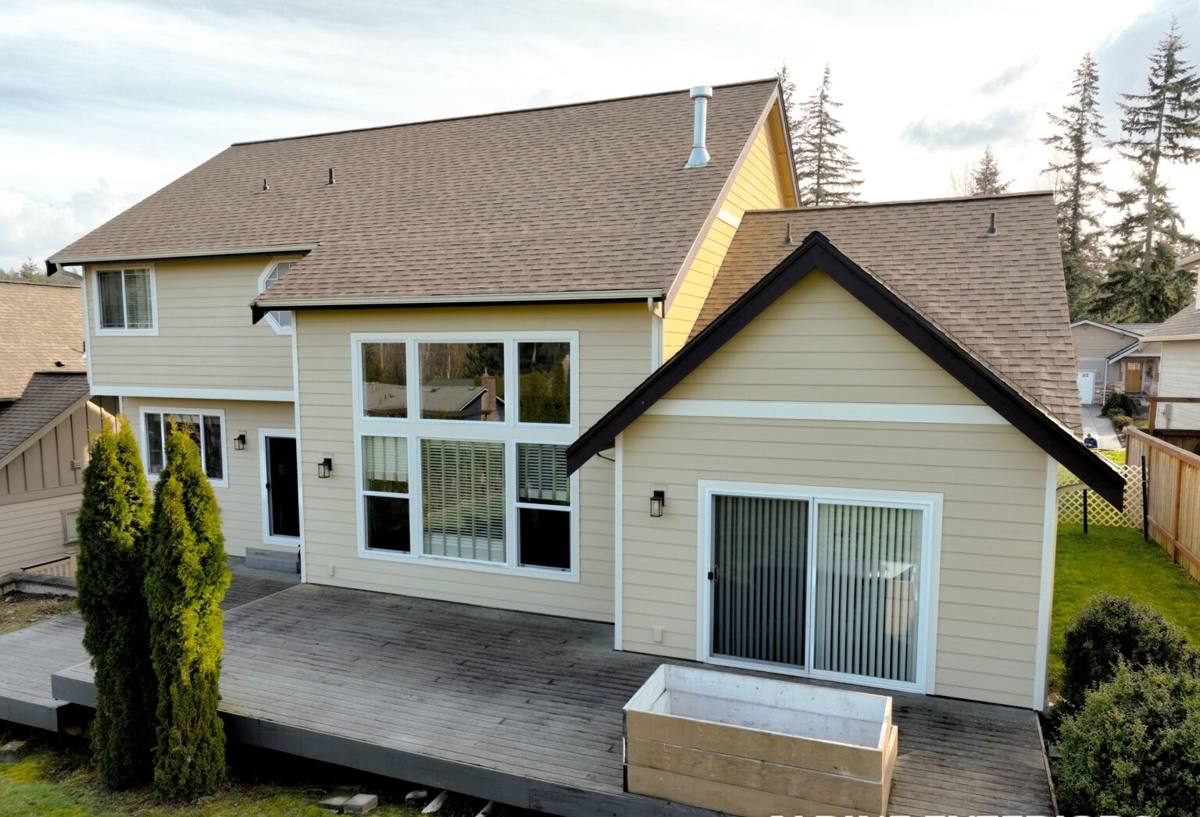
What Roof Repair Actually Covers
Roof repair is targeted work on a roof that's still fundamentally sound — fixing the parts that have failed or are about to, rather than replacing the whole system. For most Old Town Anacortes homes, that means addressing one or more of the following:
- Flashing failures at chimneys, roof-to-wall transitions, skylights, and valleys
- Damaged, cracked, or missing shingles or roofing units from wind or age
- Moss and organic growth removal, plus treatment to slow regrowth
- Sealant and boot failures around plumbing vents and other roof penetrations
- Localized deck repair where sustained moisture has softened the sheathing
- Gutter and edge-metal issues that are pushing water back under the roof covering
The line between "repair" and "replace" usually comes down to how much of the roof is still doing its job. If the underlying roofing material has years of service life left and the problem is isolated — a failed flashing detail, a section of storm damage, a moss-choked north slope — repair is the honest call. If the covering itself is broadly past its service life and repairs would just be chasing new leaks every season, we'll tell you that plainly instead of patching a roof that needs replacing.
Signs a Roof Needs Repair Now
- Water stains on interior ceilings or upper walls, especially after a wind-driven storm
- Visible moss buildup, particularly on shaded or north-facing slopes
- Curling, cracking, or missing shingles you can see from ground level
- Rust streaking or corrosion at metal flashing, vents, or fasteners
- Granules collecting in gutters or at downspout outlets
- Daylight visible through the attic roof deck
- Soft or spongy spots when walking the attic floor near the roofline
Old Town Anacortes Housing Stock
This part of Anacortes has a mix of older, established homes alongside newer infill, and roof age varies a lot from block to block. Older homes here often have roofs that have already been re-covered once or twice, sometimes with repairs layered on top of repairs by previous owners or short-term fixes from prior contractors. Before we recommend anything, we look at what's actually there — how the roof was built, what's been added or patched since, and where water has clearly found a way in before. Guessing at a fix without that context is how the same leak comes back eighteen months later in a different spot.
Because we work in this neighborhood regularly, we've seen the recurring problem spots for the housing stock here: valley flashing on older cut-and-fit roofs, transitions where additions meet the original roofline, and north-side moss buildup on lots with mature tree cover. That local pattern recognition speeds up diagnosis and keeps you from paying for guesswork.
Common Repair Causes and What They Involve
| Cause | Typical Symptom | Repair Approach |
|---|---|---|
| Wind-driven rain intrusion | Interior staining near roof edges, valleys, or wall transitions | Re-flash affected area, correct water path, replace saturated underlayment locally |
| Moss and organic growth | Green/black buildup, lifted shingle edges, granule loss | Careful removal (not pressure washing), treatment application, airflow/shade assessment |
| Salt-air corrosion | Rust at flashing, fasteners, or vent boots | Replace corroded metal components with corrosion-resistant materials |
| Storm damage | Missing or displaced shingles, exposed underlayment | Match and replace damaged units, re-seal exposed fasteners |
| Aging sealants and boots | Cracked pipe boots, dried-out sealant at penetrations | Replace boots and sealant before they become active leaks |
How We Handle a Repair Call
1. Inspection and honest diagnosis
We start on the roof, not just from the ground, and we check the attic where accessible. We're looking for the actual entry point of water, not just the stained ceiling below it — those two things are frequently in different spots because water travels along framing before it shows up inside.
2. Clear scope, no surprise add-ons
You get a written explanation of what's failed, why, and what fixing it involves. If we find the roof needs more than repair to be reliable going forward, we say so — but we don't pad a simple flashing fix into a bigger job than it needs to be.
3. The repair itself
Matching materials as closely as possible, correcting the underlying water path (not just covering the symptom), and using fasteners and flashing suited to this coastal environment rather than generic hardware that will corrode faster in salt air.
4. Cleanup and check
Debris, old material, and moss removal cleared from the roof and gutters before we leave — moss and granules left in gutters just cause the next problem.
Materials and Methods We Use — and Why
In a salt-air, high-moisture environment, material choice matters more than it does in drier inland areas. We favor corrosion-resistant flashing and fastener materials over standard-grade hardware, because the cost difference upfront is small compared to redoing a flashing repair in five years once salt exposure has eaten through it. For moss, we don't recommend pressure washing — it strips granules and shortens the life of the remaining roof material — we use gentler removal methods along with treatments intended to slow regrowth rather than promises of permanent moss elimination, which isn't realistic in this climate no matter what product is used.
We also won't oversell you on a full tear-off when a targeted repair will hold. Some contractors default to replacement because it's a bigger job; our standard is to fix what's actually broken and tell you honestly when that's no longer the cost-effective option.
What Affects Repair Cost
| Factor | Why It Matters |
|---|---|
| Roof pitch and access | Steeper roofs and limited ground access add labor time and safety setup |
| Extent of hidden damage | Saturated decking found once shingles are pulled back adds material and labor |
| Material matching | Older or discontinued roofing products can be harder to match closely |
| Number of penetrations | More vents, skylights, and chimneys mean more flashing details to address |
| Moss severity | Heavy, long-term buildup takes longer to remove safely without damaging the surface |
Most straightforward flashing or shingle repairs are a modest cost measured in a few hours of labor plus materials; jobs that turn up saturated decking or multiple failure points naturally run higher. We'll give you a number before work starts, not after.
Why a Local Crew Matters Here
A roofer who mostly works dry, inland jobs can still do competent work, but they're less likely to instinctively check the details that matter most on Fidalgo Island: whether flashing metal is rated for salt exposure, whether a north-facing valley is going to hold moss again within a year without airflow correction, and whether wind-driven rain from the water side needs a different flashing lap than the standard textbook detail. We work Anacortes and the surrounding Skagit County area regularly, so those checks are routine for us, not an afterthought.
Being local also means we're a phone call away if a repair needs a follow-up look after the next big wind event, rather than a crew that finished the job and left the county.
Maintenance That Extends a Repair's Life
- Clear gutters and downspouts at least twice a year, more often under mature trees
- Keep overhanging branches trimmed back to reduce shade and debris on north-facing slopes
- Have moss treated before it becomes a heavy mat, not after
- Check attic ventilation — poor airflow keeps roof decking damp longer after storms
- Schedule a look after any significant windstorm, even if nothing looks obviously wrong from the ground
A repair done correctly, on a roof that still has service life left, should hold for years — but this climate rewards a bit of ongoing attention rather than a "fix it and forget it" approach.
If you're dealing with a leak, moss buildup, or storm damage on an Old Town Anacortes roof, we're glad to take a look and give you a straight answer about what it actually needs. The estimate is free, there's no pressure, and you'll know before we start exactly what the repair involves and what it costs — just fill out the form below.