 Anacortes
 Storm Damage Roofing in Sedro-Woolley: What Local Homes Are Up Against
Sedro-Woolley sits inland from the coast, tucked against the foothills where the Skagit Valley starts climbing toward the Cascades. That position changes the storm picture a little compared to a waterfront town, but it doesn't spare the roof. Pacific storm systems that roll through Skagit County still bring driving rain and sustained wind, and the valley's terrain can funnel gusts in ways that catch homeowners off guard. Add in heavier tree cover than you'll find right on the water, and Sedro-Woolley roofs deal with their own combination of wind stress, falling limbs, and near-constant dampness during the wet months.
Salt air is less of a factor here than it is closer to Fidalgo Bay, but it's not entirely absent — enough moisture-laden coastal air moves up the valley that metal fasteners, flashing, and exposed edges still corrode faster than they would in a dry inland climate. Combine that with a long moss season fed by shade, humidity, and mild winters, and you get roofs that age unevenly: some sections holding up fine, others quietly failing under a layer of moss or algae nobody's looked at closely in years.
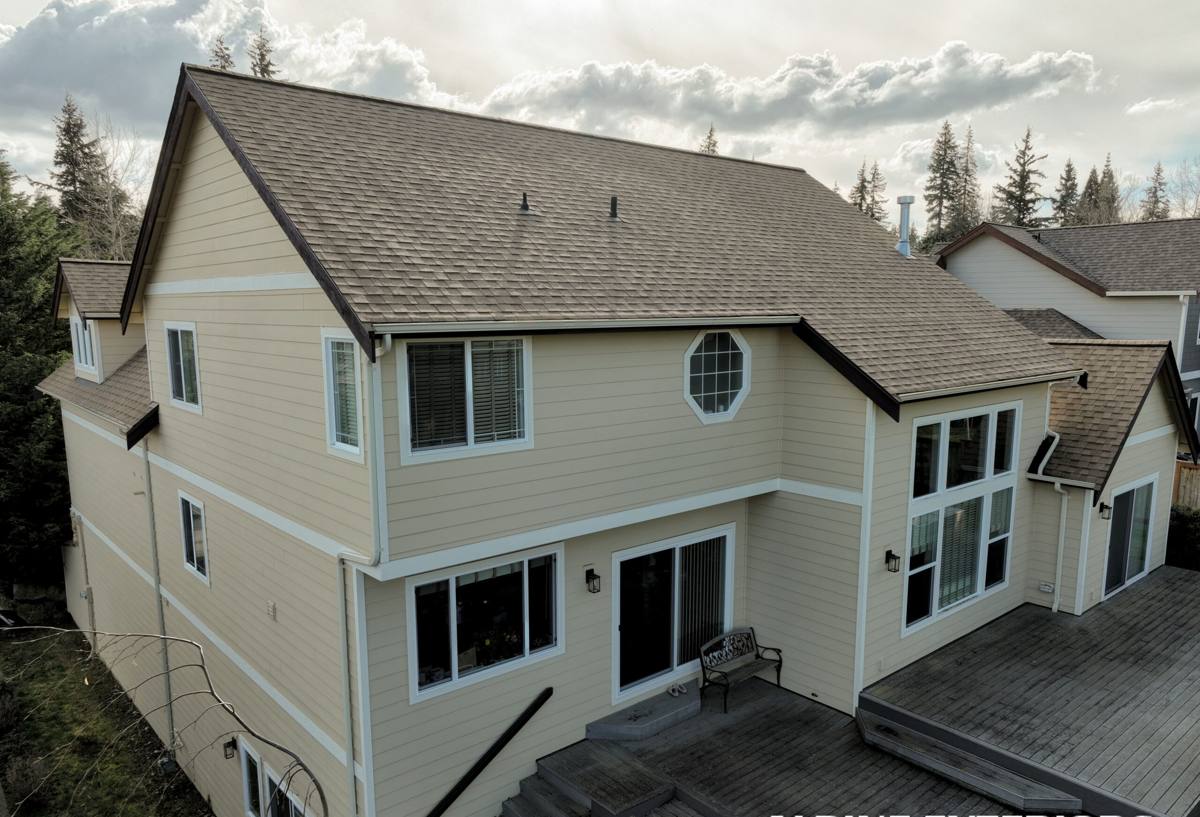
What Actually Counts as Storm Damage
Not every roof problem after a windy night is "storm damage," and not every roof that looks rough is storm-damaged either. Getting this distinction right matters, especially if you're considering an insurance claim.
Signs that point to a recent storm event
- Shingles that are creased, lifted, or completely missing in a wind-pattern (often concentrated on one roof face or near ridges and edges)
- Fresh impact marks or punctures from falling branches or wind-blown debris
- Bent, torn, or displaced flashing around chimneys, vents, and valleys
- Granules collecting heavily in gutters right after a storm, rather than gradually over seasons
- Visible daylight through the roof deck in an attic inspection, or a new water stain on a ceiling
Signs that are really just age and weather cycles
Curling shingle edges across the whole roof, widespread granule loss that's been building for years, and thick, established moss mats usually point to a roof nearing the end of its service life rather than a single storm event. That distinction matters because insurance typically covers sudden, storm-caused damage — not gradual wear. A contractor who tells you everything is storm damage, or nothing is, isn't doing you any favors.
The Damage You Can't See From the Ground
The visible stuff — a torn-off shingle, a dented vent cap — is the easy part. What causes real problems later is what's underneath. A shingle can look intact after a storm and still have a cracked seal or a lifted tab that lets wind-driven rain track underneath it. Once water gets past the shingle layer, it travels along the underlayment and can show up as a leak feet away from where it actually entered.
This is where Sedro-Woolley's climate works against homeowners. A slow leak that would dry out in a week during a dry summer stretch can stay wet for a month during the fall and winter rain pattern, giving mold and rot time to establish before anyone notices a stain. We check attic spaces, decking, and insulation on every storm-damage inspection — not just the shingles — because that's usually where the real cost is hiding.
Our Storm Damage Repair Process
We keep this process straightforward because storm repair isn't the time for surprises. Here's how it runs from the first call to the final walk-through:
- Inspection. We get on the roof and in the attic to check both the obvious damage and what's underneath it — decking condition, insulation, flashing, and ventilation.
- Documentation. We photograph everything before touching it. If you're filing an insurance claim, this record is often more useful than what an adjuster catches on a single visit.
- Temporary protection. If there's an active leak or exposed decking, we tarp or dry-in the area to stop further water intrusion while repairs are scheduled.
- Scope and estimate. You get a clear, written breakdown of what needs to be fixed, what materials are involved, and why — no vague line items.
- Repair. Matching materials as closely as possible, repairing flashing and underlayment as well as shingles, and checking surrounding areas that took the same wind or impact stress.
- Final check. We walk the roof and the attic again after the repair to confirm there's no remaining moisture path before we call the job done.
Repair or Replace? How We Make That Call
Storm damage repair isn't always the right answer, and a full replacement isn't either. The honest answer depends on a handful of factors we walk through with you before recommending anything.
| Factor | Leans Toward Repair | Leans Toward Replacement |
|---|---|---|
| Roof age | Under roughly 12-15 years, otherwise sound | Nearing or past its expected service life |
| Damage extent | Isolated to one area or roof face | Spread across multiple sections or the whole roof |
| Matching materials | Shingle line still available or close match exists | Discontinued product, visible patchwork unavoidable |
| Prior repair history | First significant repair on this roof | Multiple past repairs, recurring leak points |
| Underlying deck condition | Deck is dry and sound | Soft, rotted, or repeatedly wet decking found |
We'd rather repair a roof that has years of life left in it than push a replacement it doesn't need. We'd also rather tell you up front that a repair is a short-term patch on a roof that's due for replacement, so you're not paying twice.
Insurance Claims: A Few Honest Notes
We're not insurance adjusters and this isn't legal or policy advice, but after enough storm seasons in Skagit County, a few patterns hold true. Document damage as soon as it's safe to do so — photos from the ground and, if possible, from the roof. Report the claim promptly; most policies have windows for reporting storm-related damage. And be cautious of anyone who shows up unsolicited right after a storm pushing you to sign a contract on the spot before you've had time to get a second opinion. A legitimate local contractor will give you a written estimate and won't pressure you to sign before you're ready.
We work directly with homeowners and can provide the documentation and estimate you need to support a claim, but the claim itself is between you and your insurer.
Moss, Moisture, and What Happens After the Repair
Fixing the storm damage is only part of the job if the roof's underlying moisture problems aren't addressed. Sedro-Woolley's tree cover and long damp season mean moss and algae growth is an ongoing maintenance issue, not a one-time fix. Moss holds moisture against the shingle surface, and over time it can lift shingle edges and create the exact kind of entry point wind and rain exploit in the next storm.
What we check alongside the repair
- Gutters and downspouts clear and pitched correctly, so water isn't backing up under the roof edge
- Attic ventilation adequate to keep the underside of the deck dry, not just the top side
- Areas of heavy shade or overhanging branches that keep sections of roof damp longer than the rest
- Existing moss or algae growth that should be addressed now rather than left to spread
None of this replaces a full roof inspection on its own schedule, but a storm repair is a natural point to catch these issues before they cause the next round of damage.
Why a Local Anacortes Crew That Already Works Sedro-Woolley Matters
Storm damage repair isn't a specialty every roofing company treats the same way, and it's not a job where you want a crew learning the region's weather patterns on your roof. We're based in Anacortes and work throughout Skagit County, which means we've seen how storms behave differently as they move from the coast into the valley toward Sedro-Woolley — where the wind exposure changes, where tree damage tends to concentrate, and where moss and moisture problems show up earliest.
That local familiarity also means faster response after a storm, since we're not driving in from out of the area, and it means we're still around months or years later if a repair needs a follow-up check. A roof isn't a one-and-done transaction, and we'd rather build that kind of ongoing relationship with Sedro-Woolley homeowners than do a single job and disappear.
What to Do Right After a Storm, Before We Arrive
- Stay off the roof — storm damage isn't always visible or stable, and wet roofs are dangerous
- Check the attic for daylight, water stains, or damp insulation if it's safe to access
- Photograph any visible exterior damage from the ground
- Move furniture or belongings away from any active ceiling leak and contain water with a bucket or tarp
- Avoid signing any contract with a door-to-door contractor before getting a second opinion
- Call for an inspection sooner rather than later — small leaks get more expensive the longer they sit
If a recent storm has left you with missing shingles, a new leak, or just some peace-of-mind checking to do, we're happy to take a look. Estimates are free, there's no pressure to book anything on the spot, and you'll get a straight answer about what actually needs fixing — you can request one through the form below.