 Anacortes
 Building Decks for a Waterfront Neighborhood
Ship Harbor sits close enough to the water that homes here deal with a different set of conditions than decks built a few miles inland in Skagit County. Salt-laden air, wind-driven rain that finds its way into every seam and gap, and a long stretch of overcast, damp months that favor moss and algae growth all put extra demands on outdoor living spaces. A deck that would hold up fine in a drier, more sheltered part of the state can start showing problems within a couple of seasons out here if it wasn't built with this specific environment in mind.
Composite decking has become the go-to choice for homeowners in this area for good reason — but "composite decking" covers a wide range of products and installation approaches, and not all of them are suited to a marine environment. This page walks through what actually matters when you're putting a composite deck in near Ship Harbor: the board, the substructure, the drainage, and the ongoing care it needs to look good year after year.
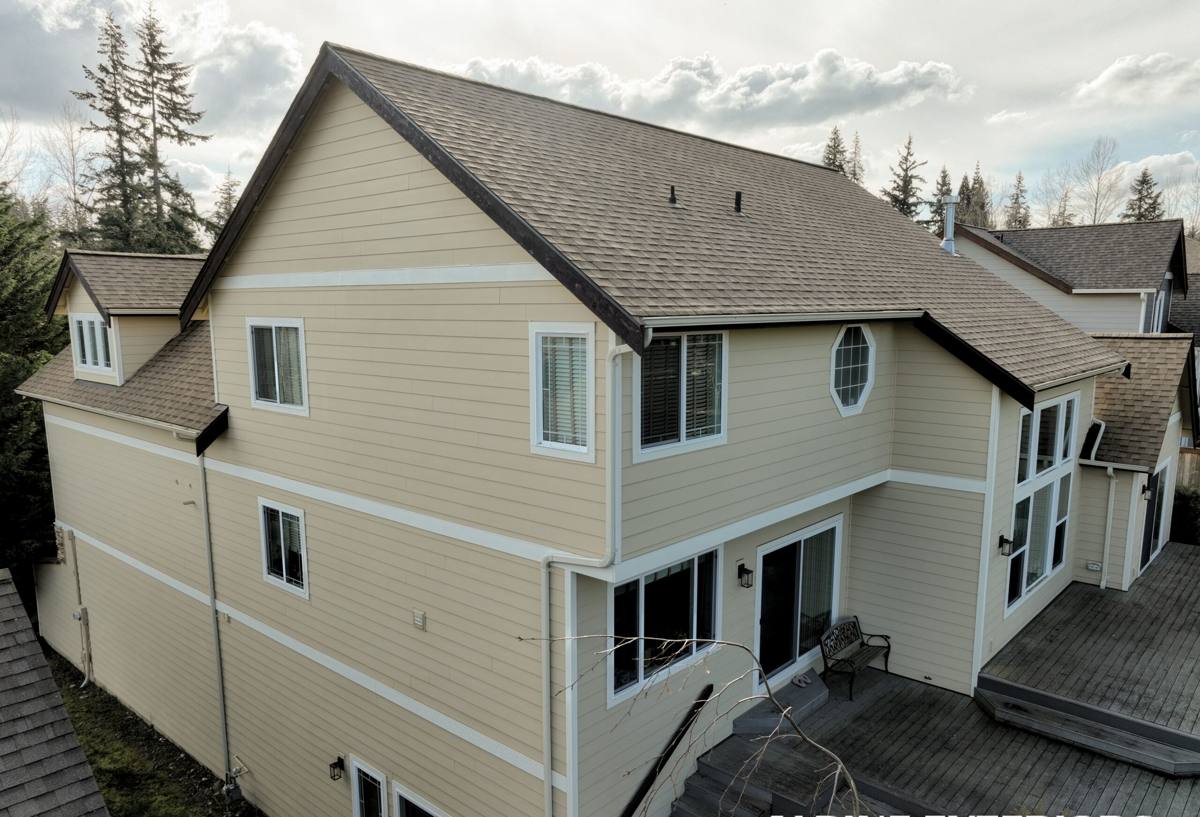
What Salt Air and Driving Rain Actually Do to a Deck
It helps to understand the specific failure points before talking about solutions.
Salt Air
Salt in the air settles on every exposed surface, including metal fasteners, brackets, and railing hardware. Over time it accelerates corrosion on anything that isn't rated for coastal exposure. It also collects in the pores of open-cell wood decking and in poorly sealed composite edges, which contributes to premature graying, cracking, and fiber breakdown.
Driving Rain
Rain that comes in sideways off the water doesn't just fall on the deck surface — it gets pushed under railings, into fastener holes, and along the ledger board where the deck attaches to the house. If flashing and drainage aren't handled correctly at the ledger, this is one of the most common paths for hidden water damage behind a deck.
Moss and Algae
Anacortes gets long stretches of low sun and high humidity, especially close to the water. Any deck surface that holds moisture — because of poor board spacing, inadequate slope, or debris buildup between boards — becomes a moss and algae host. Beyond looking bad, moss holds water against the board surface and makes the deck slippery and dangerous underfoot.
Composite vs. Wood vs. PVC: What Actually Holds Up Here
We install composite decking most often in this neighborhood because it strikes the best balance of durability and upkeep for a marine climate, but it's worth understanding the real trade-offs rather than taking that on faith.
| Material | Moisture Behavior | Maintenance | Typical Lifespan Here |
|---|---|---|---|
| Pressure-treated wood | Absorbs and releases moisture repeatedly; prone to splintering, cupping, and rot at fastener points over time | Annual sealing/staining recommended in this climate | 10-15 years with diligent upkeep |
| Capped composite | Polymer shell resists moisture absorption into the core; won't rot or splinter | Periodic washing; no sealing or staining needed | 25+ years, backed by manufacturer warranty |
| Uncapped composite (older style) | Core can still absorb moisture at cut edges and fastener holes without a protective cap | More prone to mold/mildew staining in damp climates | Shorter effective lifespan near the water |
| Solid PVC | Fully moisture-resistant; won't absorb water at all | Very low; wipe-down cleaning | Long lifespan, higher upfront cost |
We steer most Ship Harbor homeowners toward fully capped composite boards specifically because the exposed core on uncapped or budget composite products is more vulnerable in a wet, salty environment. That's not a knock on wood decking as a category — a well-maintained cedar or treated deck can look great — it's an honest maintenance-burden conversation. If you're not going to be out there sealing and inspecting the deck every year, capped composite removes that obligation.
What a Correct Composite Deck Build Involves
The board itself only accounts for part of how long a deck lasts. The substructure and installation details matter just as much, especially in this climate.
Framing and Substructure
We use corrosion-resistant fasteners and hardware rated for coastal or ground-contact exposure, not standard interior-grade hardware that will start rusting within a couple of years of salt air exposure. Joist spacing is set to the composite manufacturer's spec — composite boards typically need tighter joist spacing than wood to prevent long-term sagging, and that spec gets tighter still on diagonal board patterns.
Ledger Attachment and Flashing
Where the deck ties into the house is the single most important place to get water management right. Proper flashing directs water away from the wall assembly instead of trapping it behind the ledger board, which is where a lot of hidden rot problems start in older decks in wet climates.
Drainage and Slope
The deck surface needs a slight slope away from the house so water sheds instead of pooling. Board gapping needs to be consistent to let water drain through rather than sit on the surface, which matters more here than in drier parts of the state because standing water combined with shade is exactly what moss needs to establish.
Railing and Hardware
Railing posts and hardware near the water should be stainless steel or otherwise coastal-rated. Standard galvanized hardware can start showing rust streaks on light-colored composite boards within a season or two in a salt-air environment.
Our Process for a Ship Harbor Composite Deck
- On-site assessment — We look at sun exposure, prevailing wind and rain direction, existing structure (if replacing a deck), and how close the build is to salt air exposure to determine hardware and board recommendations.
- Board and layout selection — We walk through capped composite options, color/finish choices, and board pattern (straight-lay vs. diagonal) based on your home's layout and budget.
- Substructure build or inspection — New or replacement framing is installed to spec with coastal-rated fasteners; if we're building on existing framing, we inspect it first for any hidden moisture damage before decking goes down.
- Flashing and drainage detailing — Ledger flashing, slope, and board spacing are set before a single deck board is fastened.
- Installation — Boards, fascia, and railing are installed per manufacturer spec to keep the warranty intact.
- Walkthrough — We go over basic care and what to watch for so the deck stays in good shape between our visits.
Living With a Composite Deck in a Moss-Prone Climate
Composite decking is genuinely low-maintenance compared to wood, but "low-maintenance" doesn't mean "no maintenance," especially this close to the water. A little seasonal attention keeps moss and salt residue from ever becoming a real problem.
- Rinse the deck surface periodically to clear salt residue and organic debris before it builds up in the board grain
- Sweep leaves and needles out of gaps between boards so they don't trap moisture and feed moss growth
- Use a soft-bristle brush and a composite-safe cleaner for any moss or algae spots rather than a pressure washer on high setting, which can damage the board surface
- Check railing hardware and fasteners once a year for early signs of corrosion, especially anything not rated for coastal exposure
- Keep gutters and downspouts near the deck clear so roof runoff isn't dumping extra water onto or near the deck structure
- Trim back overhanging vegetation that keeps sections of the deck shaded and damp longer than the rest
What Affects the Cost of a Composite Deck Here
Every deck is different, but these are the main factors that move the price up or down for a project in this area.
| Factor | Why It Matters |
|---|---|
| Deck size and shape | Square footage and the number of angles/cuts directly affect material and labor time |
| Board tier | Entry-level capped composite vs. premium composite or PVC boards carries a real price difference |
| Substructure condition | Replacing failed framing or dealing with an existing ledger issue adds cost beyond a straightforward rebuild |
| Height and railing requirements | Elevated decks need more substantial railing systems and may require additional structural support |
| Site access | Waterfront and hillside lots common near Ship Harbor can add complexity to material staging and construction |
| Hardware spec | Coastal-rated fasteners and railing hardware cost more than standard-grade hardware but are worth it here |
We provide a written estimate that breaks these factors out clearly so you know exactly what you're paying for and why, rather than a single lump number.
Why It Matters to Hire a Crew That Already Works This Area
A contractor who mostly works inland doesn't always think about coastal-rated hardware, ledger flashing tuned for driving rain, or board spacing that accounts for a long moss season — because they don't need to on most of their jobs. Working regularly in and around Anacortes and Skagit County's waterfront neighborhoods means we build those details into every composite deck by default, not as an upsell. It also means we're familiar with local permitting requirements and the kind of site conditions — slope, wind exposure, soil near the water — that come up repeatedly on decks in this part of the county.
Get a Straight Answer About Your Deck
If you're planning a new composite deck or replacing one that hasn't held up to the weather out here, we're happy to take a look and walk you through honest options for your home. Reach out for a free, no-pressure estimate using the form below — we'll give you a straightforward assessment of what your Ship Harbor property needs, with no upsell pressure attached.