 Anacortes
 Why Ship Harbor Homes Wear Siding Differently
Ship Harbor sits on the west side of Fidalgo Island, close enough to the water that homes here deal with a different weather load than houses a few miles inland in Anacortes. Wind off Guemes Channel and Rosario Strait carries salt-laden moisture onto exterior walls, and that salt air accelerates corrosion of fasteners, trim, and any siding material that isn't built to handle it. Add in wind-driven rain that hits west- and south-facing walls at an angle rather than straight down, and you get moisture intrusion patterns that a lot of siding products simply weren't engineered for.
Many Ship Harbor lots are also wooded or partially shaded, which is great for privacy but means walls stay damp longer after a storm passes. Skagit County's marine climate already runs a long wet season; shade just stretches the drying window even further. That combination — salt exposure, wind-driven rain, and slow-drying shaded walls — is exactly the profile where cheaper or poorly-installed siding starts to show problems years before it should.
The Moss Factor
Moss doesn't just grow on roofs. In shaded, moisture-heavy pockets around Ship Harbor, it colonizes siding seams, butt joints, and anywhere caulking has started to fail. Moss holds water against the wall surface, and sustained moisture contact is one of the fastest ways to break down siding that isn't dimensionally stable or properly sealed at the joints.
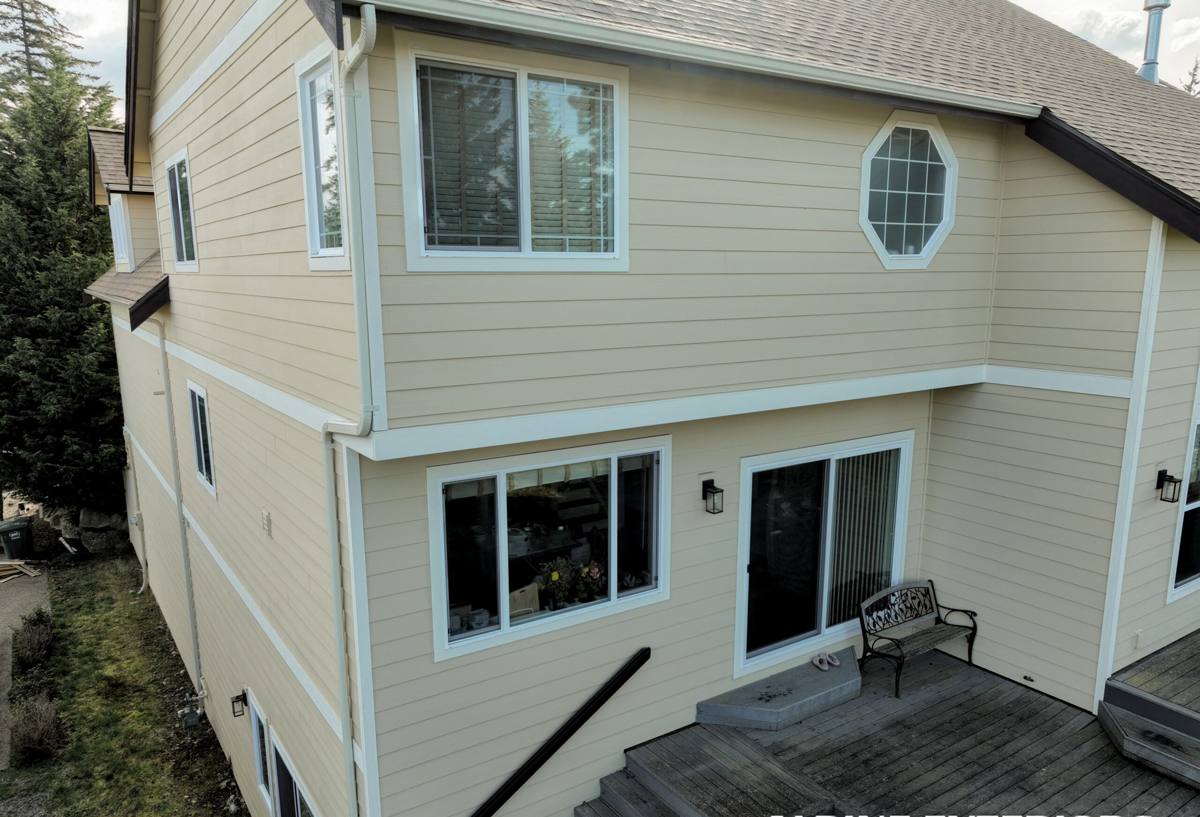
Signs Your Siding Has Reached the End of Its Service Life
Siding failure is rarely a single dramatic event — it's a slow accumulation of small signals. On Ship Harbor homes, we typically see these show up first on the water-facing and shaded elevations:
- Soft or spongy spots when you press on the siding, especially near the bottom courses
- Paint that's peeling or bubbling repeatedly in the same spots no matter how often it's repainted
- Visible warping, buckling, or panels that no longer sit flush against the wall
- Persistent moss or black streaking that returns within a season of cleaning
- Gaps opening up at seams, corners, or around window and door trim
- A musty smell or visible staining on interior walls that share an exterior wall with problem siding
Any one of these can sometimes be handled with spot repair. Several at once, especially combined with soft sheathing underneath, usually means the siding system as a whole has failed and a full replacement is the more honest recommendation than another round of patching.
Why We Install Only James Hardie Fiber Cement
We standardized on James Hardie fiber cement siding for every replacement job we do, including in Ship Harbor, and we don't install vinyl, LP SmartSide, or wood-based products instead. That's not a marketing position — it's a decision built around what actually holds up in this specific climate.
Fiber cement is non-combustible, which matters given how much of the Pacific Northwest deals with wildfire smoke and ember exposure in dry summer stretches. More relevant to Ship Harbor specifically: Hardie's HZ5 product line is engineered for climates with significant moisture exposure, and the factory-applied ColorPlus finish is baked on under controlled conditions rather than field-painted, which gives it better adhesion and fade resistance against sun and salt air than site-applied paint. Fiber cement also doesn't swell, rot, or provide the same food source for moss and mildew that wood-based siding does, and it holds its shape over decades in a way vinyl — which can warp or become brittle with temperature swings and UV exposure — generally does not.
None of this means other products are worthless. Vinyl is inexpensive and low-maintenance in mild conditions; engineered wood has a warm, traditional look. But for a waterfront-adjacent, salt-exposed, shade-prone area like Ship Harbor, we've concluded fiber cement is the material that best matches the actual conditions the siding will face, and we'd rather install one product correctly than offer several and let cost drive the decision.
What a Correct Siding Replacement Actually Involves
Replacing siding is not just swapping old panels for new ones. The work that happens underneath the new siding determines whether it lasts 10 years or 40.
Tear-Off and Inspection
Once the old siding is removed, we inspect the sheathing and framing underneath for rot, soft spots, or prior water damage — this is often the first time anyone has been able to see the actual condition of the wall assembly. Any compromised sheathing gets replaced before anything new goes back up; installing new siding over damaged sheathing just hides the problem for another few years.
Weather-Resistive Barrier and Flashing
A correctly detailed water-resistive barrier (WRB) and properly integrated flashing around windows, doors, and penetrations is what actually keeps water out — the siding itself is the first line of defense, not the only one. Given how much wind-driven rain Ship Harbor's exposed walls take, flashing details at horizontal joints and around openings get extra attention here.
Installation to Manufacturer Spec
James Hardie siding is only as good as its installation. Correct fastener spacing, proper gapping at butt joints, and factory-specified clearances from grade, roofing, and decks all affect how the product performs over time. Installing it too tight to grade or without the right clearances is one of the most common ways fiber cement siding underperforms its warranty — and it's an installer error, not a product flaw.
Our Process for Ship Harbor Homes
| Step | What Happens |
|---|---|
| On-site assessment | We walk the exterior, check moisture levels where accessible, and look at exposure on each elevation — water-facing walls get evaluated differently than sheltered ones |
| Scope and estimate | You get a written scope covering tear-off, any sheathing repair allowance, product line and profile, color, and timeline |
| Tear-off and sheathing check | Old siding comes off, sheathing is inspected and repaired as needed before we move forward |
| WRB, flashing, and install | Weather barrier and flashing go in first, then Hardie panels or lap siding installed to manufacturer spec |
| Final walkthrough | We review the finished job with you, including caulking, trim, and touch-up details, before calling it complete |
Cost Factors for Ship Harbor Siding Replacement
Every home is different, but the variables that most often move the price on a Ship Harbor job are consistent:
| Factor | Why It Matters |
|---|---|
| Sheathing condition | Hidden rot found during tear-off adds repair scope that can't be accurately quoted until the old siding is off |
| Wall exposure | Water-facing and wind-exposed elevations may warrant additional flashing detail or product upgrades |
| Home access | Wooded lots, steep grades, or tight setbacks common around Ship Harbor can affect staging and labor time |
| Siding profile and color | Lap siding, panel systems, and trim details vary in material cost and install time |
| Trim and detail work | Homes with more windows, corners, and architectural detail take longer to flash and finish correctly |
Why Hiring a Crew That Already Works in Ship Harbor Matters
Siding installation isn't identical everywhere in Skagit County. A crew that mostly works drier, inland neighborhoods may not instinctively over-detail flashing on a water-facing wall the way a crew familiar with Ship Harbor's exposure will. Local experience means knowing which elevations of a home need the most attention before a single panel goes up, understanding how shade and tree cover affect drying time and moss growth, and being realistic with homeowners about which walls are taking the real weather hit.
It also matters for permitting and access. Anacortes has its own permitting process, and a contractor who regularly pulls permits in the city and works Fidalgo Island properties knows what inspectors look for and how to navigate lots with limited access or mature trees close to the structure.
Questions Worth Asking Before You Hire
- Do you inspect and repair sheathing as part of the job, or just cover what's there?
- What's your fastener and clearance spec, and does it match the manufacturer's installation guide?
- How do you handle flashing at windows, doors, and horizontal joints?
- Is the warranty from the manufacturer, the installer, or both — and is it transferable if you sell?
- Can you walk me through how you'd handle the specific exposure on my home's water-facing side?
Living With New Siding: Maintenance in a Marine Climate
Fiber cement siding is low-maintenance compared to wood or repainted surfaces, but "low-maintenance" isn't "no-maintenance," especially this close to the water. A yearly rinse to knock off salt residue and moss spores, keeping gutters clear so runoff doesn't sheet down the wall face, and recaulking around trim and penetrations every several years will keep a correctly installed system performing for decades. Trimming back vegetation that keeps a wall shaded and damp longer than it needs to be also goes a long way in a neighborhood like this.
If your Ship Harbor home's siding is showing soft spots, recurring moss, failing paint, or you're just planning ahead for a replacement, we're happy to take a look and give you a straightforward assessment. The estimate is free, there's no pressure, and you'll get a clear answer on what your home actually needs — use the form below to get started.