 Anacortes
 Guemes Island Puts Different Demands on Siding Than the Mainland Does
Guemes Island sits just across the water from Anacortes, close enough to feel like part of town but exposed in ways that mainland Skagit County neighborhoods aren't. Homes here face wind and salt spray off the surrounding channels with little to break it up, plus the shaded, damp conditions that come with a heavily wooded island. That combination — open water exposure on one side of a house and dense, moisture-holding tree cover on the other — is hard on any exterior wall covering, and it shows up in siding failures we don't see nearly as often on more sheltered mainland lots.
We treat Guemes Island siding repair as its own category of work, not a smaller version of a mainland job. The failure patterns are different, the access is different, and the margin for a sloppy repair is smaller because a house out here doesn't get looked at as often between service calls.
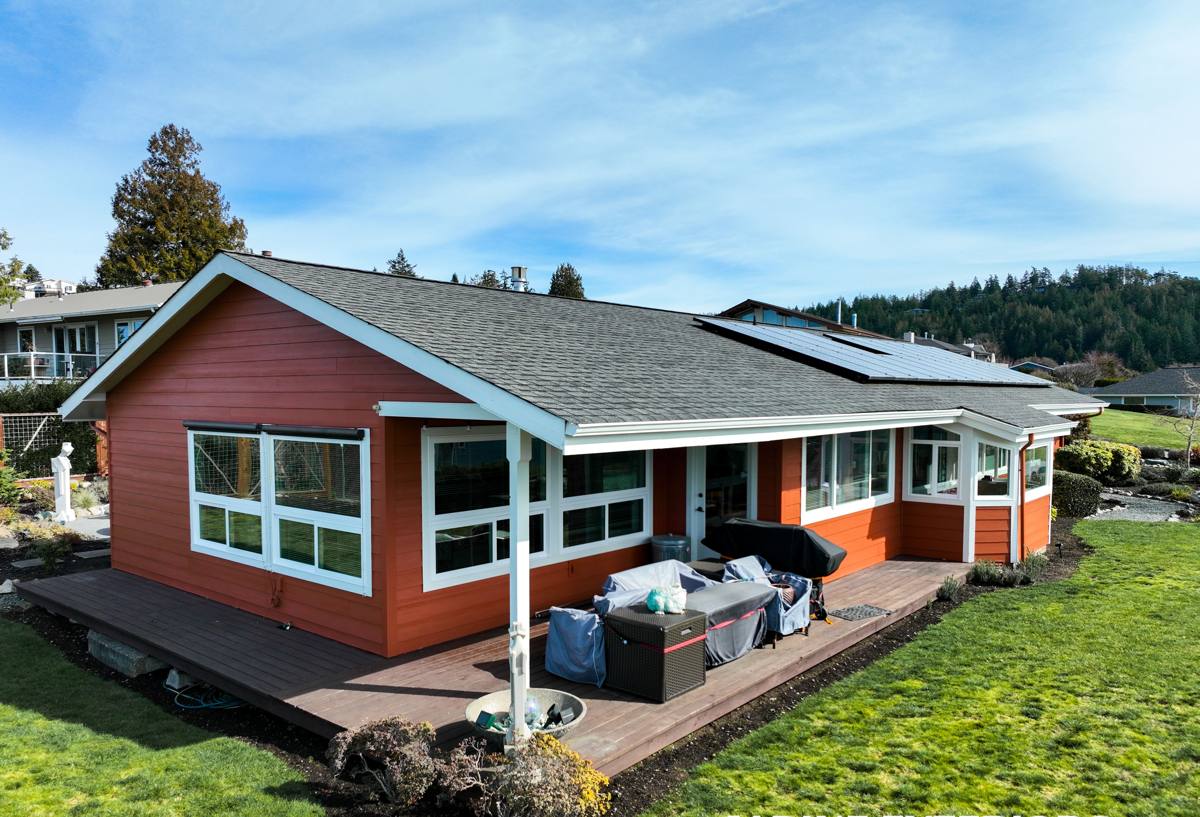
How Salt Air, Rain, and Moss Actually Damage Siding
Salt Air and Coastal Exposure
Airborne salt settles on exterior surfaces and accelerates the breakdown of fasteners, caulk, and unprotected wood fiber. On siding materials that aren't engineered for a marine environment, that means corroding nails, degraded sealant joints, and finishes that chalk or fade faster than the manufacturer's own literature predicts. It's a slow process, which is exactly why it goes unnoticed until a panel is already compromised.
Driving Rain and Wind-Driven Water
Storms coming off the water don't fall straight down — they drive rain sideways into whatever wall is facing the weather. Any gap in flashing, any butt joint that's opened up, any place where caulk has pulled away from the substrate becomes an entry point. Water that gets behind siding on a wind-exposed wall doesn't just sit there; it gets pushed further in than a light rain ever would on a calmer site.
Moss, Algae, and Trapped Moisture
Shaded, tree-covered lots on the island stay damp longer after every rain, which is most of the year in this part of Washington. Moss and algae take hold on north-facing and shaded walls, and where they grow, moisture gets held directly against the siding surface instead of shedding off. On wood-based products especially, that sustained dampness is what turns a cosmetic staining problem into a rot problem.
Common Siding Repair Issues We See on Guemes Island Homes
| Symptom | Likely Cause | Typical Repair Approach |
|---|---|---|
| Soft or crumbling siding near the bottom edge | Trapped moisture from splashback, poor grade slope, or failed caulk at the base | Remove and replace affected panels, correct drainage path, reseal with a marine-rated sealant |
| Dark green or black staining, especially on shaded walls | Moss and algae growth from persistent dampness | Clean surface, assess for moisture trapped underneath, treat or replace as needed |
| Panels that have visibly cupped, warped, or pulled away from the wall | Repeated wetting and drying cycles on wood-based or lower-grade materials | Section replacement, often with a review of the house wrap and flashing behind it |
| Rust streaks near fasteners or trim | Corroding nails or fasteners not rated for coastal exposure | Re-fasten with corrosion-resistant hardware, spot-repair the surrounding finish |
| Cracked or missing caulk at joints, corners, and trim | UV and salt-air breakdown of sealant over time | Strip old caulk, inspect substrate condition, reseal properly |
| Visible gaps or separation at butt joints | Material movement without adequate expansion allowance | Reset or replace the joint detail, confirm proper fastening pattern |
Repair or Replace? How We Make the Call
Not every problem on a Guemes Island wall needs a full re-side, and we're not going to tell a homeowner they need one when a targeted repair will hold up. But we also won't patch over damage that's going to reappear in a year. A few things drive the decision:
- Age and material of the existing siding. Original cedar, older vinyl, or LP-type products nearing or past their expected service life are poor candidates for repeated patching.
- How isolated the damage is. One damaged panel from an impact is a repair. Rot showing up in multiple locations on the same wall usually points to a systemic moisture problem behind the siding, not a material problem in one spot.
- What's happening underneath. If sheathing or framing is already wet or soft, patching the visible siding without addressing what's behind it is a short-term fix at best.
- Exposure of the affected wall. A wall that takes direct wind-driven rain or full salt exposure is a different risk profile than a protected, sheltered elevation, even on the same house.
What a Correct Siding Repair Actually Involves
A repair that's done right on an island property, where a second trip is a real cost, follows a consistent sequence:
- Inspect the full wall section, not just the visibly damaged panel — damage rarely stops exactly where it's visible.
- Check moisture levels in the surrounding material and, where relevant, probe for softness in adjacent panels and trim.
- Remove damaged siding carefully enough to inspect the house wrap, flashing, and sheathing underneath.
- Repair or replace any compromised water-resistive barrier or flashing before new siding goes back on — this step gets skipped more than any other, and it's the one that determines whether the repair lasts.
- Install matching or appropriate replacement material with correct fastening, spacing, and joint treatment for a coastal environment.
- Seal all joints, corners, and penetrations with a sealant suited to sustained salt and UV exposure.
- Finish and blend so the repair reads as part of the wall, not a patch.
Getting Crews and Materials to an Island Job Site
Working on Guemes Island means planning around ferry access, which changes how a repair job gets scheduled and staged compared to a mainland call. We plan material lists and tool needs before the crew ever crosses, because a forgotten item isn't a quick trip back to the truck — it's another ferry crossing. We also try to batch tasks so a visit accomplishes everything it can in one trip: inspection, repair, and cleanup, rather than multiple partial visits that cost the homeowner time and us efficiency.
That planning discipline matters for the homeowner too. A crew that's used to island logistics quotes realistic timelines and shows up prepared, instead of discovering mid-job that a part or tool got left on the mainland.
Why Local Guemes Island Experience Matters When You're Hiring
A siding repair on the island isn't just a smaller version of the same job in Anacortes proper. A contractor who already works out here understands the access logistics, has already worked out how to move materials and crew efficiently, and has seen firsthand how salt air, shade, and driving rain behave on real island homes — not just in general terms. Before hiring anyone for island work, it's worth asking directly:
- Have you completed repair work on Guemes Island before, and do you have a plan for getting crew and materials over?
- Are you licensed, bonded, and insured in Washington, and can you show proof?
- Will you inspect behind the damaged siding, or only patch what's visible?
- What fasteners and sealants do you use, and are they rated for coastal, salt-air exposure?
- Is your repair estimate itemized, so you know what's being replaced versus just resealed?
A contractor who can't answer those plainly, or who treats the island as an inconvenience rather than a routine part of their service area, is more likely to under-scope the job or skip the underlying moisture check that actually protects the wall long term.
Between Repairs: A Seasonal Checklist for Guemes Island Homeowners
Because island properties don't always get looked at as frequently as mainland homes, a simple seasonal check can catch problems while they're still small repairs instead of bigger ones:
- Walk the full perimeter after the first heavy fall storms and again in early spring, looking for new staining, gaps, or soft spots.
- Check caulk at corners, trim, and window and door edges for cracking or separation.
- Look for moss or algae buildup on shaded walls before it spreads across a full panel run.
- Check the base of the siding near grade for splashback staining or softness.
- Note any fastener heads showing rust streaks — that's an early, cheap-to-fix warning sign.
- Keep gutters and downspouts clear so roof runoff isn't dumping extra water directly onto a wall section.
When Repair Isn't Enough: Why We Rebuild With James Hardie
Some Guemes Island homes come to us for a repair and, once we're behind the wall, it's clear the siding itself — often original cedar, older vinyl, or an engineered wood product — has reached the point where patching is just delaying the same failure elsewhere on the same wall. At that point we tell homeowners honestly rather than keep billing for repairs that won't hold.
When a Guemes Island home is ready for full replacement, we install James Hardie fiber cement exclusively. We don't install vinyl, LP SmartSide, cedar, or primed wood siding, because in a salt-air, high-moisture environment like this one, those materials carry maintenance and moisture-related trade-offs we're not willing to build a repeat repair business around. James Hardie's fiber cement is non-combustible, holds its factory-applied ColorPlus finish without the fading and chalking that plagues painted wood siding on this coastline, and their HZ5 product line is specifically engineered for high-moisture, marine climates like ours. It's backed by a strong, transferable warranty, and when it's installed correctly — with the same attention to flashing and moisture management we bring to every repair — it's built to handle exactly the conditions that wear out other materials on this island.
If you've got a siding problem on Guemes Island, whether it's one damaged section or a wall that's been patched one too many times, we're happy to take a look and give you a straight answer about what it actually needs. Reach out for a free, no-pressure estimate — there's a form below to get started.