 Anacortes
 Similk Beach Roofs Work Harder Than Most
Similk Beach sits along Similk Bay on Fidalgo Island, close enough to saltwater that airborne salt is a constant on every roof surface, and shaded enough by the fir and cedar canopy common to this stretch of Skagit County that moss and moisture never really take a season off. That combination — salt air, driving rain off the bay, and shade that keeps roof decks damp longer than an open lot would — is a different set of demands than a roof in a dry, open subdivision faces. A new roof installed here needs to be chosen and built with that specific exposure in mind, not just installed to a generic spec sheet.
We install roofs throughout Anacortes and the surrounding Skagit County waterfront communities, and Similk Beach is one of the areas where the difference between a roof that's "installed correctly" and a roof that's "installed correctly for this lot" really shows up within a few years.
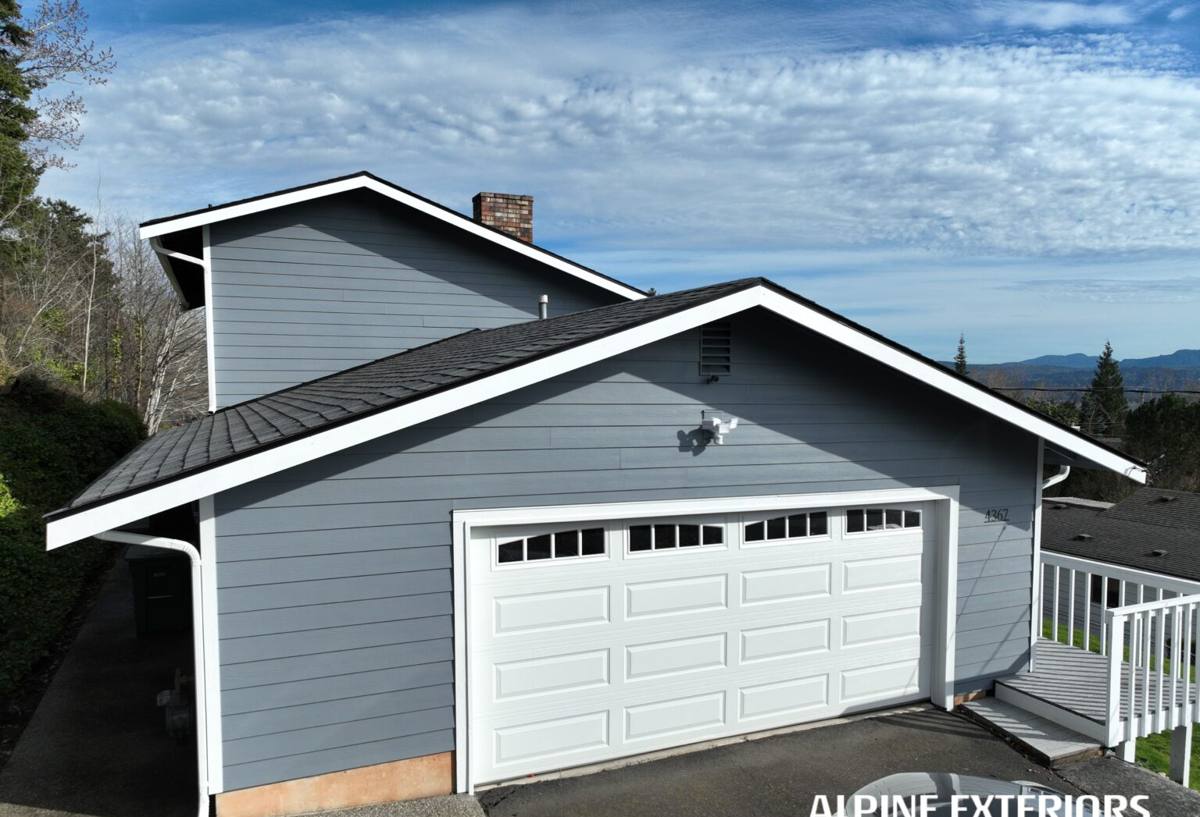
What This Climate Actually Does to a Roof
Salt Air and Metal Corrosion
Every exposed metal component on a roof — flashing, fasteners, vent caps, ridge caps — is exposed to salt-laden air that accelerates corrosion compared to inland installations. Cheap or mismatched fasteners and bare steel flashing are where this shows up first, usually as rust streaks or failed sealant joints well before the shingles themselves are due for replacement.
Driving Rain
Storms coming off the water tend to drive rain sideways, not just down. That puts real pressure on details that a calmer climate can get away with cutting corners on: step flashing at walls, valley construction, and the seal around every penetration. Wind-driven rain finds gaps that vertical rain never would.
Moss and Shade
Tree-covered lots near Similk Beach hold moisture on the roof deck longer after a rain than an open, sun-exposed roof would. That extended damp period is exactly what moss needs to establish, and moss does more than look bad — it lifts shingle edges, holds water against the roof surface, and shortens the life of whatever material is underneath it.
Repair or Full Replacement: How to Tell
Not every roof problem in this area means a full tear-off. But there are signs that reliably point toward replacement rather than another round of patching:
- Granule loss heavy enough that you can see bare, shiny patches on multiple shingles, not just one or two
- Soft or spongy spots when walking the roof, which usually means the deck underneath has taken on moisture
- Moss coverage across large sections rather than isolated patches, especially on north-facing or heavily shaded slopes
- Daylight visible through the roof deck from inside the attic, or staining on attic sheathing
- A roof that's already had two or more repair visits for leaks in different locations within a few years
- Shingles that are curling, cracking, or missing tabs across more than one section of the roof
If your roof is showing one or two of these in isolation, targeted repair may still make sense. If several are showing up together, that's usually a sign the roof system as a whole is at the end of its useful life, not just one component.
Choosing a Roofing System for This Location
There isn't one "best" roofing material for every home — it depends on the roof's pitch, how much shade it sits under, your budget, and how long you want to go before thinking about it again. Here's how the common options actually compare for a lot like the ones around Similk Beach:
| Material | Moss/Moisture Behavior | Salt Air Durability | Typical Lifespan | Rough Cost Position |
|---|---|---|---|---|
| Architectural asphalt shingle | Good with proper ventilation and algae-resistant granules; needs periodic cleaning on shaded slopes | Good when metal components are corrosion-resistant | 25–30 years | Baseline / most affordable |
| Standing seam metal | Excellent — sheds moss buildup and dries fast, minimal moisture retention | Very good with coated/coastal-rated panels and stainless fasteners | 40–50+ years | Higher upfront, lower long-term maintenance |
| Cedar shake | Poor in shaded, damp conditions without diligent upkeep — moss and rot risk is real | Fair; needs regular treatment | 20–30 years with maintenance | Mid-to-high, plus ongoing maintenance cost |
| Synthetic/composite shingle | Good, similar to asphalt but often more resistant to moisture absorption | Good | 30–50 years depending on product | Mid-to-high |
On a shaded, damp lot, we're generally cautious about cedar shake — it can look great, but it demands consistent maintenance to fight moisture and moss, and that upkeep burden is worth being honest about upfront rather than discovering it three years in. Architectural asphalt with good ventilation and algae-resistant granules is a solid, budget-conscious choice for most homes here; metal earns its higher price tag on roofs where long-term low maintenance matters more than upfront cost.
What a Correct Installation Actually Involves
The material on top is only part of the job. For a roof to actually perform in Similk Beach conditions, the system underneath it has to be built right:
Deck Inspection and Repair
Tear-off isn't complete until the deck underneath is inspected board by board. Any soft, delaminated, or moisture-damaged sheathing gets replaced before anything new goes down — installing new roofing over a compromised deck just hides the problem for a while.
Underlayment and Ice-and-Water Protection
A synthetic underlayment across the full deck, with self-adhering ice-and-water shield at eaves, valleys, and around every penetration, is standard for this area's rain exposure — not an upgrade. Valleys and low-slope transitions in particular need this extra layer of protection given how much water moves through them during a heavy coastal storm.
Flashing
Step flashing at every wall intersection, properly lapped valley flashing, and corrosion-resistant flashing at chimneys and skylights are where wind-driven rain either gets stopped or gets in. This is the detail work that separates a roof that holds up from one that leaks within a couple of winters.
Ventilation
Balanced intake at the soffits and exhaust at the ridge keeps the attic and roof deck drier and more temperature-stable, which slows moss growth and helps shingles last their full rated life. On shaded lots, ventilation is doing extra work compared to a sun-exposed roof, so it needs to be sized correctly, not just added as an afterthought.
Fastening
Proper nail placement and count, matched to the manufacturer's wind-rating requirements, matters more here than in a sheltered inland location — gusts off the water put real uplift pressure on a roof edge.
Our Installation Process
- On-site inspection of the existing roof, deck condition, ventilation setup, and any moss or moisture history specific to the lot
- Written estimate covering material options, scope, and a clear cost breakdown — no vague allowances
- Tear-off of the old roofing down to the deck, with disposal handled as part of the job
- Deck inspection and repair or replacement of any damaged sheathing
- Installation of ice-and-water shield at vulnerable areas, followed by full synthetic underlayment
- Flashing installed at all walls, valleys, chimneys, and penetrations
- New roofing material installed to manufacturer fastening specs
- Ridge and soffit ventilation confirmed balanced and functioning
- Final walkthrough and cleanup, including a magnetic sweep for stray fasteners
Reducing Moss Before It Starts
You can't eliminate shade on a tree-covered Similk Beach lot, and we're not going to tell you to cut down healthy trees just to dry out a roof faster. What actually helps is building moss resistance into the new roof itself and keeping up with a few simple habits:
- Zinc or copper strips installed near the ridge, which release trace metal ions with every rain that inhibit moss growth over time
- Algae-resistant shingle granules on asphalt roofing, which resist the dark streaking and growth that shaded roofs are prone to
- Keeping overhanging branches trimmed back from the roofline to improve airflow and sun exposure where possible
- Clearing gutters and valleys of needle and leaf debris at least twice a year so water isn't sitting against the roof surface
Permits and Local Requirements
A full roof replacement in unincorporated Skagit County, including the Similk Beach area, generally requires a building permit, and the work needs to meet current wind and weather-exposure requirements for the region. We handle the permitting process as part of the job rather than leaving it for the homeowner to sort out, and we build to the wind and moisture standards this part of Skagit County actually calls for, not a generic statewide minimum.
Why Local Experience Matters Here
A crew that already works Similk Beach knows the practical realities of the area before they ever step on the roof: narrower access roads and driveways that affect how equipment and dumpsters get staged, the way tree cover on a given street tends to hold moisture longer than the open water-facing lots a few blocks over, and which flashing and fastener choices have actually held up out here versus which ones look fine on paper. That's not something a crew driving in from outside the area picks up on the first job — it's the kind of judgment that comes from doing this work on this coastline repeatedly.
After Installation: What to Expect
A correctly installed roof in this climate should need only routine attention, not ongoing worry. A reasonable maintenance rhythm looks like:
- Visual inspection once or twice a year, ideally before and after the wet season
- Gutter and valley debris clearing at least twice a year on tree-covered lots
- Prompt attention to any moss regrowth before it spreads, rather than waiting until it's heavy
- A follow-up call to your installer if you notice a new leak, stain, or missing shingle rather than letting it sit
If your Similk Beach roof is showing its age, or you're planning ahead rather than waiting for a leak to force the decision, we're happy to come take a look. We offer free, no-pressure estimates — walk the roof with us, get a straight answer about what condition it's in and what it would take to replace it right, and decide from there. Use the form below to get started.