 Anacortes
 Siding Replacement Built for Similk Beach's Waterfront Exposure
Similk Beach sits close enough to the water that homes here take a different kind of beating than siding just a few miles inland. Salt-laden air off the bay, driving rain that comes in sideways during winter storms, and a moss season that seems to stretch longer every year all combine to shorten the life of siding that wasn't built or installed for this specific exposure. If you're planning a siding replacement for a home in this neighborhood, the product choice and the installation details matter more here than almost anywhere else in Skagit County.
This page focuses specifically on what a correct siding replacement looks like for Similk Beach homes — not siding repair, not siding in general, but the full replacement process for a property dealing with coastal moisture and salt exposure day in and day out.
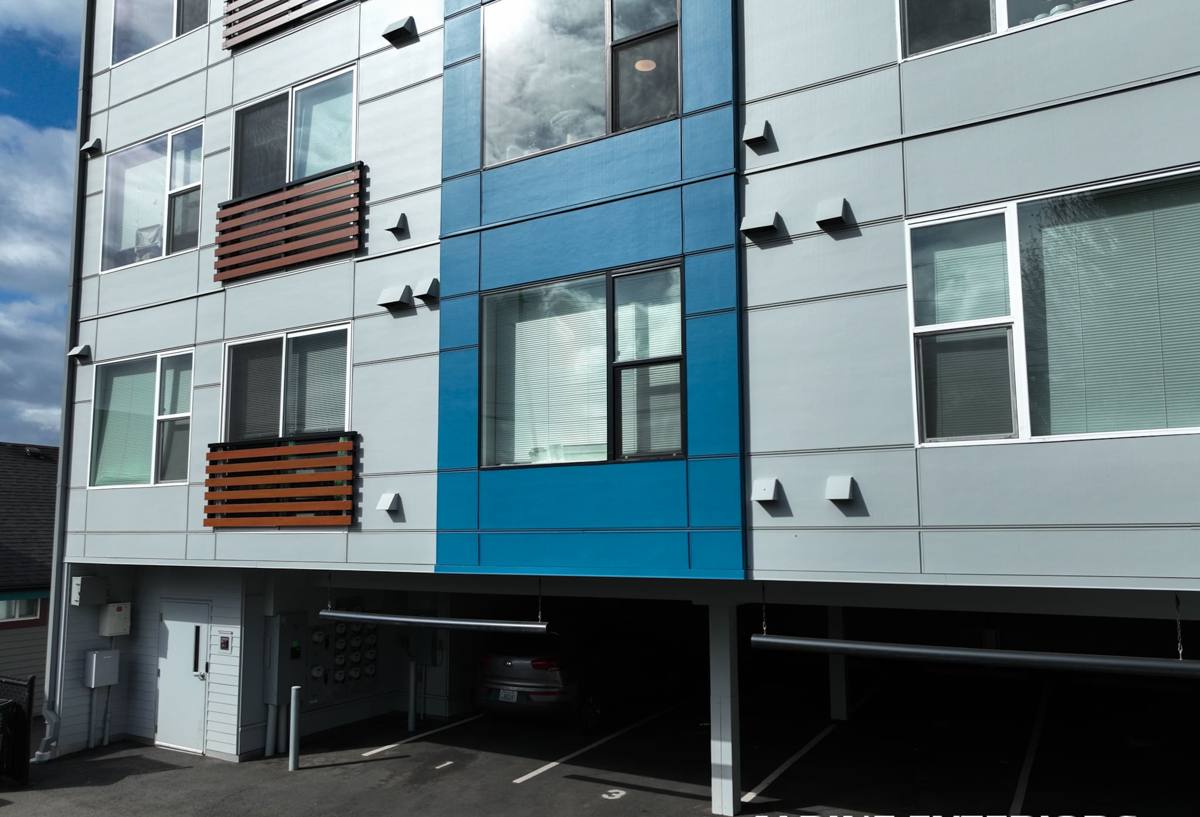
Why Similk Beach Siding Wears Differently
Three environmental factors show up again and again on homes we've evaluated near the water in this part of Anacortes:
Salt Air
Airborne salt from the bay settles on exterior surfaces and accelerates corrosion of fasteners, staples, and any metal trim components. It also degrades certain paints and coatings faster than they'd wear in a drier, inland location. Siding material and finish quality both matter more here than in a typical suburban lot.
Driving Rain
Wind-driven rain off the water doesn't just wet the face of the siding — it pushes moisture up under laps, around trim, and into any gap in the water-resistive barrier. A siding system that relies on paint film alone to keep water out will eventually let moisture behind the cladding in this kind of exposure. The house needs a properly lapped, properly flashed drainage plane behind the siding, not just a good-looking face material.
Extended Moss Season
Shaded, damp conditions near the water mean moss and algae get a longer growing window than they would a few miles inland. Moss holds moisture against the siding surface, and on materials that absorb water or swell when wet, that constant dampness accelerates deterioration at the exact spots where moss tends to collect — north-facing walls, areas under tree cover, and lower courses close to grade.
What This Means for Material Choice
Given those three factors, we install James Hardie fiber cement siding on Similk Beach homes and don't offer vinyl, LP SmartSide, cedar, or primed wood siding as alternatives. Here's the reasoning, product by product, so you can weigh it yourself rather than take our word for it:
| Material | How it handles salt air & driving rain | Our take |
|---|---|---|
| Vinyl siding | Doesn't corrode, but panels can warp or crack in temperature swings and rarely seal tightly at laps, letting wind-driven rain track behind them | Low maintenance but limited durability and a look that doesn't hold up as well over decades near the water |
| Cedar | Absorbs moisture readily; needs consistent refinishing to resist rot and the extended moss season here | Beautiful when new, but a high-maintenance commitment for this exposure |
| LP SmartSide (engineered wood) | Treated to resist moisture but is still a wood-based substrate — edge sealing and caulking have to be maintained precisely or moisture intrusion becomes a real risk | Good product when maintained perfectly; more installation-sensitive than we're willing to gamble on here |
| James Hardie fiber cement | Non-combustible, doesn't swell or rot from moisture the way wood-based products can, and the factory-applied ColorPlus finish resists fading and holds up to coastal weathering better than field-applied paint | What we install — engineered specifically for demanding climates like this one |
Hardie's HZ5 product line in particular is engineered for harsher climate zones, and while the Pacific Northwest's freeze-thaw cycle is milder than some regions, the combination of constant moisture, salt air, and prolonged dampness from moss growth is exactly the kind of exposure that product line is built to handle.
What a Correct Siding Replacement Involves
Replacing siding on a home this close to the water isn't just swapping old boards for new ones. The parts of the job that don't show up in a driveway estimate are usually the parts that determine whether the new siding lasts 10 years or 40.
1. Full Tear-Off and Sheathing Inspection
We remove the old siding completely rather than installing over it, because that's the only way to actually see what's happening underneath. On coastal properties we routinely find soft sheathing, corroded fasteners, or moisture staining behind the old cladding — all things that need to be addressed before new siding goes on, not covered up by it.
2. Water-Resistive Barrier and Flashing
A new weather-resistive barrier gets installed with proper shingle-lap overlap, and flashing gets integrated at every window, door, and roof-to-wall intersection. This is the layer that actually keeps driving rain out of the wall assembly — the siding itself is the second line of defense, not the first.
3. Fastener and Trim Selection
Given the corrosive effect of salt air, fastener choice matters. We use corrosion-resistant fasteners rated for the exposure, and trim details are installed with attention to how water sheds off the wall rather than pooling or wicking into end grain.
4. Hardie Panel Installation to Manufacturer Spec
James Hardie siding is engineered to perform, but only when installed to the manufacturer's specifications — correct nailing patterns, proper clearance from grade and roof lines, and correct gaps at butt joints for expansion. Installed loosely or with shortcuts, any siding product underperforms; installed correctly, Hardie's warranty and durability claims hold up.
5. Final Caulking and Paint Touch-Up
Factory-finished ColorPlus siding needs minimal field painting, but cut edges and any touch-up areas get sealed and color-matched so the whole envelope is protected from day one.
Our Process for Similk Beach Homeowners
- On-site assessment: we walk the exterior, check for moisture damage, moss buildup, and areas of prior water intrusion specific to the home's orientation toward the water.
- Written estimate: a clear scope of work covering tear-off, sheathing repair allowances, water-resistive barrier, flashing, and the specific Hardie product and color selected.
- Scheduling around weather: we plan tear-off and dry-in around forecasted rain windows so the home isn't left exposed during a storm system off the water.
- Installation: full crew on-site through tear-off, sheathing repair, barrier and flashing work, and Hardie installation.
- Final walkthrough: we review the completed job with you, including care and maintenance notes specific to a salt-air, high-moss environment.
Checklist: Is It Time to Replace Your Similk Beach Home's Siding?
- Visible moss or algae growth that returns quickly after cleaning
- Soft spots, bubbling, or discoloration on the siding surface
- Paint that's peeling or chalking faster than a normal repaint cycle
- Gaps opening up at trim, corners, or butt joints
- Visible rust staining around fasteners or metal trim
- Interior signs of moisture — musty smell, staining on interior walls near exterior corners
- Siding that's original to a home more than 20-25 years old
Not every item on this list means full replacement is necessary — some are repair-level issues. But two or more showing up together, especially on a home directly exposed to the water, is a strong signal it's worth a professional look before small problems become structural ones.
Why Local Experience Near the Water Matters
A siding crew that mostly works inland neighborhoods in Anacortes or elsewhere in Skagit County isn't necessarily thinking about salt-air fastener corrosion or the specific wind-driven rain patterns that hit homes along the water. Working Similk Beach and similar waterfront-adjacent areas regularly means we already know which walls tend to take the worst of the weather, where moss builds up fastest, and which flashing details actually hold up here versus on paper. That local pattern recognition is worth more than a generic install — it changes decisions on the job, from fastener spec to how tight the flashing laps need to be at a given wall.
Cost Factors Specific to This Job
| Factor | Why it affects your Similk Beach project |
|---|---|
| Sheathing condition | Coastal moisture exposure increases the odds of finding rot or soft sheathing during tear-off, which affects repair scope |
| Home size and wall complexity | More corners, dormers, and trim details mean more flashing and labor time |
| Siding profile and color | Lap width, texture (smooth vs. cedar-shake style), and ColorPlus color selection affect material cost |
| Accessibility | Waterfront lots with steep grades or limited access can add setup and staging time |
| Existing moss/algae remediation | Heavily affected walls may need additional prep before new siding installation begins |
Maintaining Your New Siding in This Environment
James Hardie siding is low-maintenance compared to wood or vinyl alternatives, but "low-maintenance" doesn't mean "no maintenance," especially this close to the water. A periodic gentle rinse to knock off salt residue and moss spores, keeping gutters clear so water doesn't sheet down the siding face, and trimming back vegetation that shades and dampens exterior walls all go a long way toward getting the full lifespan out of the installation. We'll walk through these specifics with you at the end of every job.
Get a Free Estimate for Your Similk Beach Home
If your Similk Beach home is showing signs of wear from salt air, rain exposure, or persistent moss, we're happy to take a look and give you an honest assessment — no pressure, no obligation. Use the form below to request a free estimate and we'll schedule a time to walk the property with you.