 Anacortes
 Why West Anacortes Roofs Age Differently
Homes on the west side of Anacortes sit close enough to the water that the roof over your head is doing more work than a roof twenty miles inland. Salt-laden air corrodes exposed metal fasteners and flashing faster than it does elsewhere in Skagit County. Driving rain off the Sound doesn't just fall straight down — wind-driven moisture gets pushed sideways under shingle tabs and around vents, which is exactly where a poorly installed roof starts leaking first. Add in the long, damp moss season that runs from fall through spring, and you've got three separate forces working against your roof at the same time, year after year.
None of this means West Anacortes homes need exotic materials or gimmicks. It means the details — underlayment choice, fastener material, flashing sequence, ventilation — matter more here than they would in a drier, calmer climate. A roof replacement done right in this neighborhood should be built assuming salt air, sideways rain, and moss pressure are permanent conditions, not occasional weather events.
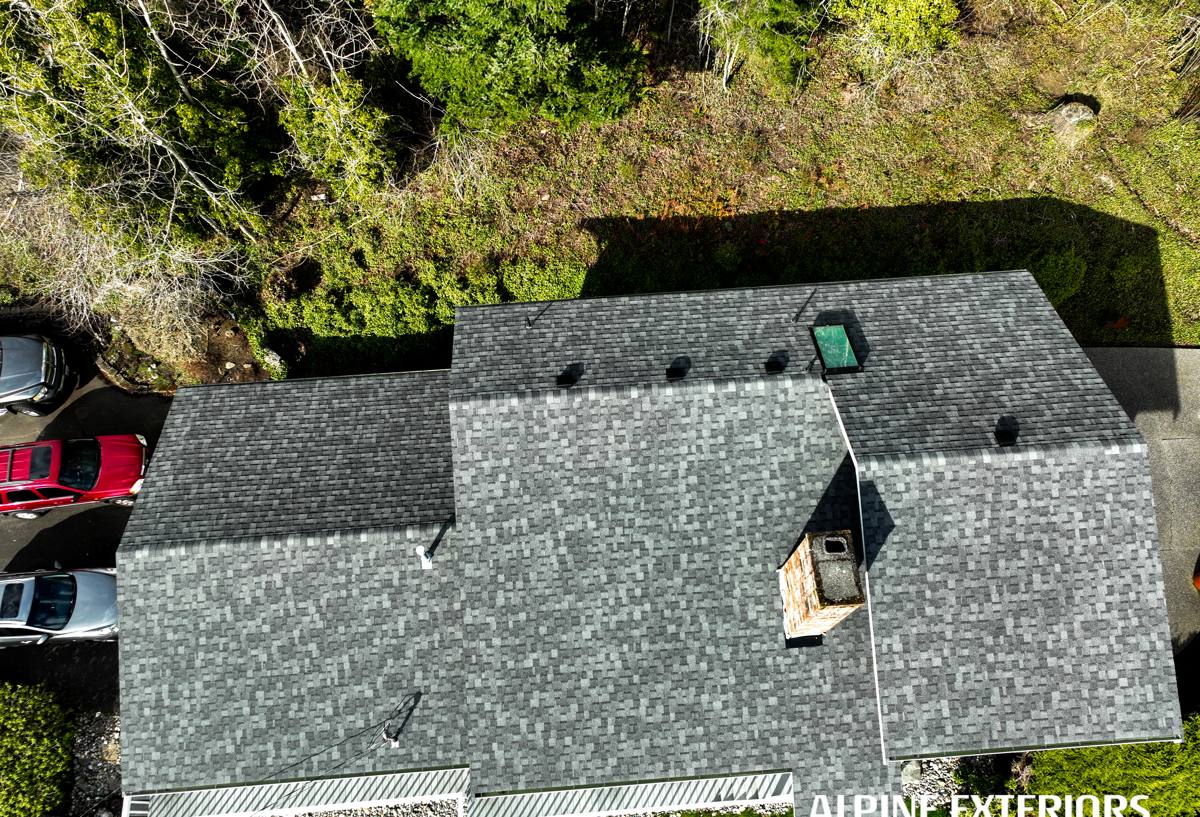
Signs Your Roof Replacement Can't Wait
Roofs rarely fail all at once. They give warning signs for months or years before a leak actually shows up inside the house. Here's what we look for, and what you can check yourself from the ground or the attic:
- Granule loss showing up in gutters or at downspout splash points — a sign shingles are past their protective life
- Shingles that are cupping, curling at the edges, or visibly thinner-looking than when installed
- Moss or dark streaking concentrated on the north or shaded slopes, especially near valleys
- Soft or spongy decking felt underfoot during any roof access
- Rust staining around metal flashing, vent boots, or exposed fasteners
- Daylight visible through the roof deck from inside the attic
- Attic insulation that's damp, matted, or has a musty smell
- A roof that's 20+ years old and has never had a full tear-off
If you're seeing two or more of these, it's worth having someone look before it turns into a repair on top of a repair. A single missed flashing detail or a patch job over rotten decking will cost more in the long run than doing the replacement correctly the first time.
What a Correct Roof Replacement Actually Involves
Full Tear-Off, Not a Layover
Installing new shingles over an old layer hides problems instead of fixing them — trapped moisture, soft decking, and failed flashing all stay buried under the new roof. We tear the old roofing down to bare decking on every job so we can actually see what's underneath and fix it before anything new goes on.
Decking Inspection and Repair
Once the old roof is off, we check every sheet of decking for soft spots, delamination, and rot — common wherever a roof has been leaking slowly for years without anyone noticing. Damaged sections get replaced, not skipped over, before underlayment goes down.
Underlayment Built for Wet Climates
In a region with as much driving rain as Skagit County gets, underlayment is doing real work, not just serving as a formality. We use synthetic or ice-and-water shield underlayment at eaves, valleys, and around penetrations — the spots where wind-driven rain is most likely to force its way past the shingle layer.
Flashing Done Right
Most roof leaks trace back to flashing, not shingles — around chimneys, skylights, sidewalls, and roof-to-wall transitions. We install new flashing rather than reusing old, corroded pieces, and we use materials suited to salt-air exposure rather than the cheapest option available.
Ventilation That Matches the Roof
A roof needs balanced intake and exhaust ventilation to keep the attic dry and the shingles at a stable temperature. Ventilation gets sized and placed as part of the replacement, not bolted on as an afterthought.
Material Options for West Anacortes Homes
There's no single "right" material for every house — it depends on your roof's exposure, your budget, and how long you want to go before thinking about the roof again. Here's an honest comparison of the main options we install:
| Material | Typical Lifespan | How It Handles Salt Air & Rain | Moss Resistance |
|---|---|---|---|
| Architectural asphalt shingle | 25–35 years | Good, when installed with proper underlayment and flashing | Moderate — benefits from algae-resistant granules |
| Standing seam metal | 40–60 years | Very good with coated, marine-grade fasteners; sheds wind-driven rain well | Good — smooth surface holds less moss and debris |
| Synthetic/composite shingle | 30–50 years | Good, resists moisture absorption better than wood | Good, depending on product |
| Cedar shake | 20–30 years with upkeep | Higher maintenance in this climate — absorbs moisture and needs regular treatment | Poor without ongoing maintenance |
We don't push cedar shake on homes close to the water — not because it's a bad-looking product, but because it holds moisture and needs consistent maintenance to resist rot and moss in a climate that's damp for most of the year. That's a maintenance-burden and moisture-behavior tradeoff, and we'd rather tell you that upfront than sell you a roof that becomes a recurring project.
Cost Factors Worth Understanding
| Factor | Why It Moves the Price |
|---|---|
| Roof pitch and access | Steeper roofs and limited access take longer and require more safety equipment |
| Decking condition | Rotted or soft decking found during tear-off adds material and labor |
| Number of penetrations | Chimneys, skylights, and vents each need individual flashing work |
| Material choice | Metal and composite products cost more upfront than asphalt shingle |
| Ventilation upgrades | Adding or correcting attic ventilation is often bundled into a replacement |
Exact pricing depends on your roof's size, pitch, and condition — we'll walk your roof and give you real numbers rather than a rough guess pulled from a national average.
Moss and Ventilation: The Long Game
Moss doesn't just look bad — it holds moisture against the shingle surface and works its way under tabs over time, shortening the roof's life. In West Anacortes, shaded north-facing slopes and roofs near overhanging trees see the heaviest moss pressure. Part of a correct replacement is thinking about this before the roof ever grows moss: proper shingle selection, adequate slope drainage, and attic ventilation that keeps the roof deck temperature even so moisture doesn't linger. Zinc or copper strips near the ridge can help slow regrowth on shaded sections, and we'll talk through whether that makes sense for your specific roof.
Our Process
- On-site inspection — we walk the roof and attic, note flashing, ventilation, and decking condition
- Written estimate — clear scope, material options, and pricing, no pressure to decide on the spot
- Scheduling — timed around weather windows, since a wet-climate roof replacement needs a dry work period
- Tear-off and decking repair — full removal, deck inspected and repaired as needed
- Underlayment, flashing, and ventilation installation — the parts that determine whether the roof actually performs in this climate
- Final roofing material installation — installed to manufacturer specification for full warranty coverage
- Cleanup and walkthrough — magnetic sweep for debris, final inspection with the homeowner
Why a Crew That Already Works West Anacortes Matters
A roofing crew that regularly works this part of Skagit County has already seen what happens when a roof is built for a different climate — corroded fasteners after a few winters, moss taking hold in shaded valleys, flashing that wasn't rated for salt exposure. That local pattern recognition shows up in the small decisions: which underlayment to prioritize at eaves, where to expect moisture pressure, which fastener coatings actually hold up near the water. It's not a substitute for good workmanship, but it does mean fewer surprises and fewer callbacks.
Questions Worth Asking Any Roofing Contractor Before You Hire
- Do you perform a full tear-off, or do you offer roof-overs?
- What underlayment do you use at eaves, valleys, and penetrations?
- How do you handle flashing — reused or replaced?
- What's your plan for attic ventilation as part of the replacement?
- Are you licensed and insured for roofing work in Washington State?
- Can I see your manufacturer certifications for the material I'm considering?
- What does your workmanship warranty cover, separate from the material warranty?
After the Replacement: Keeping It Performing
A correctly installed roof still benefits from basic upkeep in this climate. Keep gutters and downspouts clear so water isn't backing up under the eave edge. Have moss growth addressed early, before it spreads across a slope. Trim back branches that keep a section of roof shaded and damp longer than the rest. A quick visual check after major windstorms — looking for lifted shingles or displaced flashing — catches small issues before they become interior leaks.
If your roof is showing its age or you're just planning ahead, we're happy to walk it with you and give you a straight answer about what it needs. Reach out for a free, no-pressure estimate using the form below.