 Anacortes
 Windows in West Anacortes Face a Different Kind of Weather
West Anacortes sits close enough to the water that homes here take a different beating than houses just a few miles inland. Wind off the Rosario Strait and Guemes Channel drives rain sideways into window walls, salt hangs in the air year-round, and the long stretch of gray, damp months between fall and spring gives moss and algae plenty of time to take hold on sills, trim, and glazing. None of that is unique to any one street or subdivision — it's simply what Fidalgo Island weather does to the west-facing side of a house, year after year.
Windows are usually the first place that damage shows up, long before it's visible anywhere else on the exterior. A window that was installed correctly for a drier climate, or installed quickly without the right flashing details, tends to fail early out here. This page covers what that actually means for a West Anacortes home, what a correct replacement job looks like, and why it matters to work with a crew that already understands this specific stretch of Skagit County.
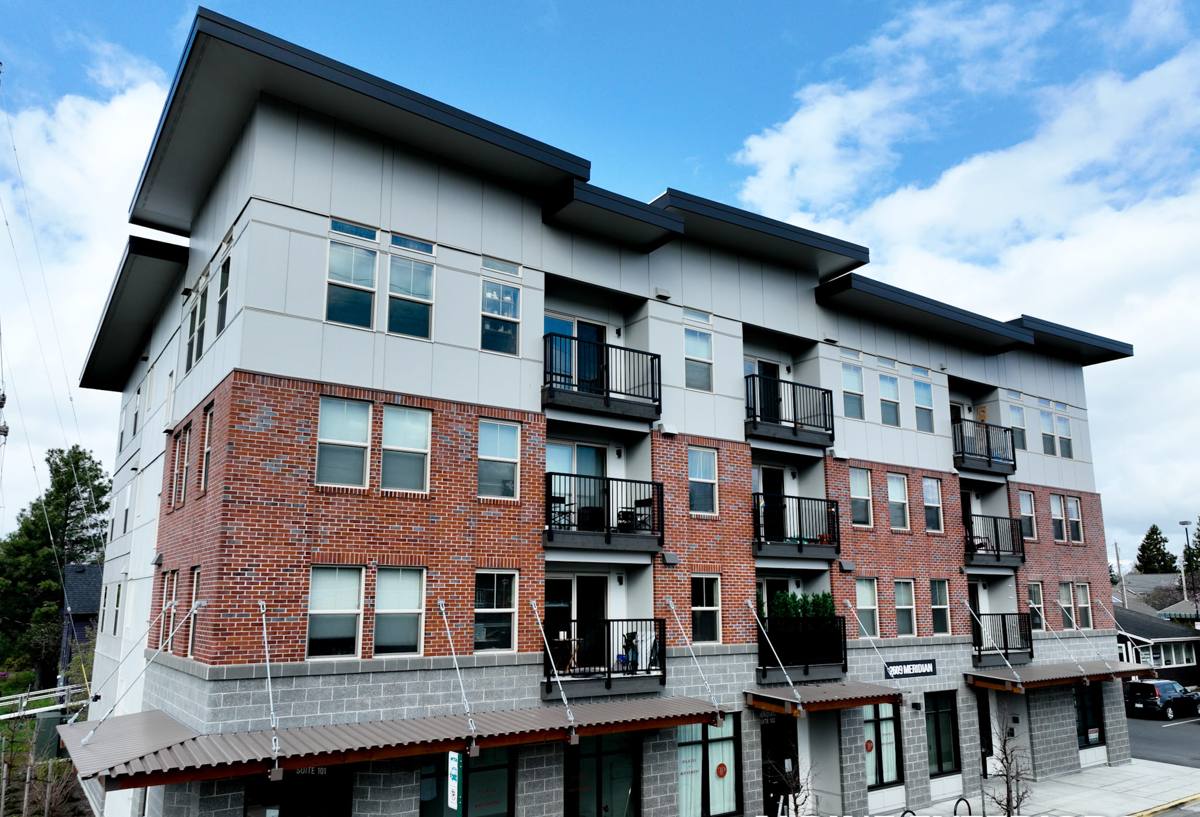
What Salt Air and Driving Rain Do to a Window Over Time
Hardware and Frame Corrosion
Salt air accelerates corrosion on anything metal — window locks, hinges, screen frames, and especially older aluminum sashes. Once hardware starts to seize or pit, windows get harder to open and close, seals compress unevenly, and small gaps open up that let in more moisture. This happens faster on west- and southwest-facing windows that catch the brunt of the marine air.
Frame and Sill Moisture
Driving rain doesn't just hit glass — it drives into the joint between the window frame and the wall. If the flashing behind the trim wasn't detailed correctly at installation, water works its way behind the frame a little at a time. You won't see it for years. What you'll eventually see is soft trim, staining on interior sills, or a musty smell near the window that comes and goes with the weather.
Moss, Algae, and Glazing Wear
The extended damp season around Anacortes is exactly the kind of environment moss and algae thrive in. On windows, that growth shows up in the corners of frames, in track channels, and along exterior sills — and it holds moisture against the frame far longer than it would otherwise sit there. Over time that constant dampness breaks down caulk, wood trim, and even some vinyl finishes faster than a drier climate would.
Signs Your West Anacortes Home Needs Window Replacement
Not every issue means a full replacement — some are fixable with re-caulking or hardware service. But a few signs reliably point to a window that's past the point of repair:
- Fogging or a permanent haze between double-pane glass (the seal has failed and can't be restored)
- Soft, spongy, or discolored wood trim around the frame, inside or out
- Windows that are difficult to open, close, or lock, especially on the side of the house facing the water
- Visible gaps between the frame and siding, or daylight visible around a closed window
- A noticeable draft or cold spot near the window even when it's fully closed
- Persistent moss or algae staining on the exterior sill that keeps coming back after cleaning
- Rising heating bills with no other obvious cause
- Condensation forming on the interior glass regularly, even in normal indoor humidity
If a window is showing two or more of these, replacement is usually the more honest recommendation than another round of caulk and patch.
What a Correct Window Replacement Job Actually Involves
Removal and Inspection
Once the old window comes out, the surrounding framing gets inspected before anything new goes in. This is the point where hidden water damage — soft sheathing, rot in the rough opening, or a compromised weather-resistive barrier — gets found and dealt with. Installing a new window over a damaged opening just resets the clock on the same failure.
Flashing and Moisture Barrier
This is the step that matters most in a climate like this one. Proper flashing means the water-resistive barrier laps correctly over the window's nailing flange — sill pan first, then sides, then top — so that any water that gets past the exterior trim is directed back out, not trapped behind the frame. This detail is invisible once the job is finished, but it's the single biggest factor in whether a window lasts fifteen years or fifty in a marine climate.
Sealing and Insulation
Gaps between the window frame and the rough opening get filled with a proper low-expansion insulating foam or backer rod and sealant — never just caulk alone — to control both air leakage and condensation risk. Exterior caulking joints get chosen for UV and moisture durability, not just whatever's fastest to apply.
Trim and Finish
Exterior trim gets back-primed or capped in a way that resists the damp conditions here, and interior trim is refitted so there's no gap for conditioned air (and moisture) to move through. A clean finish job also makes future maintenance — recaulking, repainting — easier down the line.
Choosing the Right Window Material for a Marine Climate
Every window material has trade-offs. In a salt-air, high-moisture environment, the right choice depends on how much upkeep a homeowner wants to take on and how the window is oriented on the house.
| Material | Salt Air / Moisture Behavior | Maintenance | Typical Fit |
|---|---|---|---|
| Vinyl | Won't corrode or rot; performs consistently in coastal air | Low — occasional cleaning | Most homes, especially west-facing exposures |
| Fiberglass | Very stable in temperature swings and moisture; strong seal retention over time | Low | Higher-exposure walls, larger openings |
| Aluminum-clad wood | Attractive, but cladding seams and any exposed wood need monitoring in salt air | Moderate to higher | Homes prioritizing a specific traditional look |
| Bare aluminum frame | Prone to pitting and corrosion near salt air over time | Higher | Generally not our recommendation for direct water-facing walls |
We don't push one material on every home. We do steer clients away from bare aluminum frames and unclad wood on the most exposed, west-facing walls — not because those products are bad everywhere, but because the maintenance burden they create in this specific climate usually isn't worth it. That's a judgment call based on what holds up out here, not a knock on any manufacturer.
Our Process, Start to Finish
- On-site assessment — we look at each window's exposure, current condition, and framing, not just the glass
- Material and product recommendation — matched to that wall's exposure and the home's style, with honest trade-offs explained
- Written estimate — clear line items, no vague allowances
- Removal and opening inspection — any hidden moisture or framing damage gets flagged before install, not after
- Flashing, insulation, and installation — done to hold up against wind-driven rain, not just pass a quick visual check
- Trim and finish work — exterior and interior detailing matched to the rest of the home
- Final walkthrough — every window operated and checked before we consider the job done
Cost Factors for Window Replacement in West Anacortes
Costs vary by window size, material, number of openings, and whether the framing needs repair. In general terms, homeowners should expect these factors to move the price:
| Factor | Why It Affects Cost |
|---|---|
| Framing or sheathing damage found during removal | Requires repair before the new window can be properly flashed and installed |
| Window material chosen | Vinyl, fiberglass, and clad-wood carry different material costs and labor demands |
| Number and size of openings | Larger or custom-sized windows cost more in both material and labor |
| Wall exposure | West- or water-facing walls may warrant upgraded flashing details or sealants |
| Trim and finish complexity | Matching existing exterior detailing takes more time than a standard trim-out |
We'd rather walk a homeowner through these factors on-site than quote a number sight unseen. A phone estimate for a job like this almost always misses something that changes the price once we're actually looking at the wall.
Why Hiring a Crew That Already Works West Anacortes Matters
A crew that regularly works this part of Skagit County has already seen how wind-driven rain behaves on west-facing walls near the water, which materials hold up and which ones create ongoing headaches, and how moss and algae patterns show up differently here than on a house a few miles inland. That local pattern recognition shows up in small decisions — where extra flashing attention matters most, which sealants actually last through a full wet season, how to sequence work around this area's weather windows — that a crew unfamiliar with the area might not think to apply.
It also matters for follow-up. A local crew is easy to reach if a question comes up after the job is done, and warranty support doesn't depend on someone driving in from out of the area.
If your windows are showing wear, drafts, or moisture issues, we're happy to take a look and give you a straightforward, no-pressure estimate — use the form below to get started.