 Anacortes
 Deck Replacement Built for Bow's Climate
Bow sits close to the water and surrounded by open farmland, which means homes here take a different kind of weather beating than a deck tucked into a sheltered subdivision closer to town. Wind off Samish Bay carries salt into the air, rain comes in sideways more often than straight down, and the tree cover around a lot of Bow properties keeps decks shaded and damp for long stretches of the year. None of that is a problem you can design around with a generic deck build. It's a problem you solve with the right substructure, the right fasteners, and the right decking material for this specific stretch of Skagit County.
We've replaced enough decks in and around Bow to know which failure patterns show up here again and again — and which ones are preventable with better materials and better flashing details the first time around.
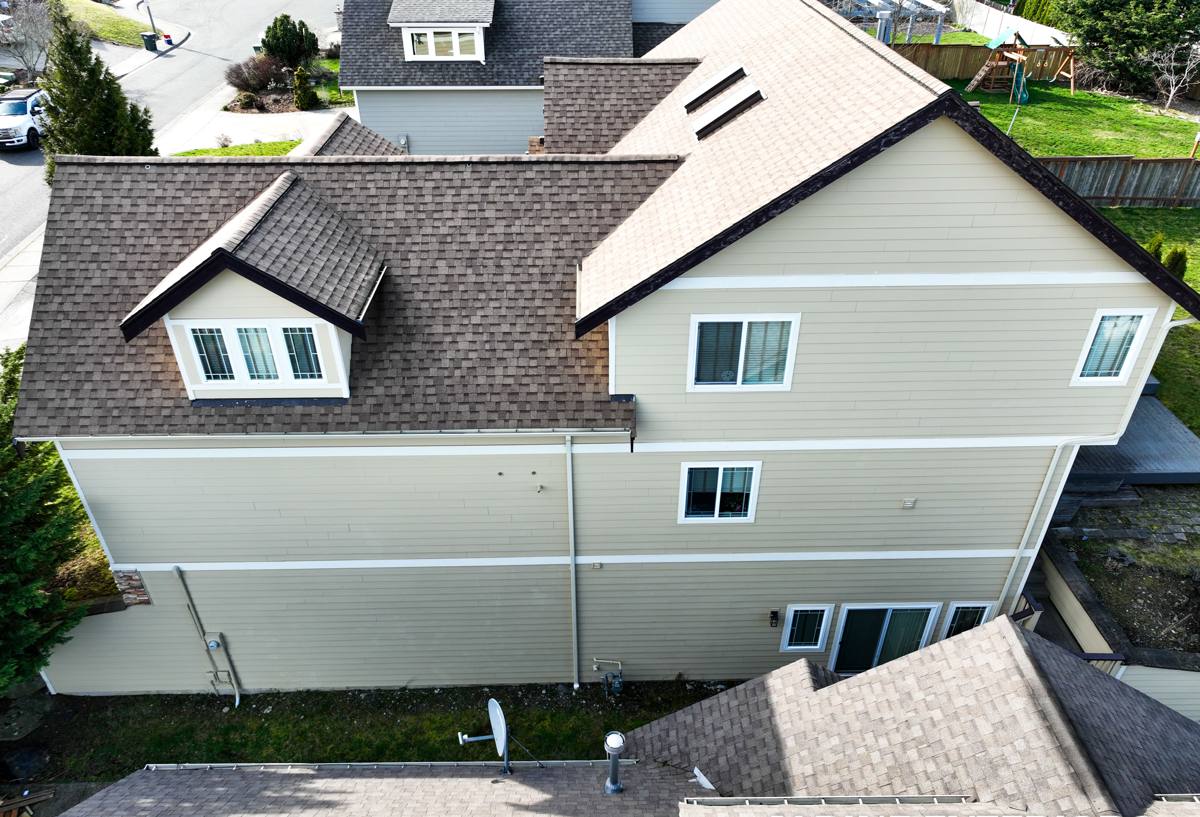
Why Bow Decks Fail Faster Than You'd Expect
A deck built the same way you'd build one in a dry inland climate simply doesn't hold up as long out here. Three things drive most of the early failures we see on Bow properties:
Salt Air and Corrosion
Proximity to Samish Bay and the surrounding tidal areas means airborne salt settles on everything, including metal hardware. Standard fasteners and connectors corrode faster near the water, and once a joist hanger or ledger bolt starts rusting, it's weakening the connection that holds your deck to your house.
Driving Rain
Storms in this part of Washington rarely come straight down. Wind-driven rain gets pushed sideways into ledger connections, under poorly lapped flashing, and into end grain that wasn't sealed properly. Water intrusion at the ledger — where the deck attaches to the house — is one of the most common and most serious problems we find on aging decks.
Extended Moss Season
Shaded, tree-lined lots hold moisture longer, and moss doesn't just look bad — it holds water against decking boards and stair treads, accelerates rot in wood, and makes surfaces dangerously slick underfoot for a good chunk of the year.
Signs a Bow Deck Needs Replacement, Not Just Repair
Not every tired-looking deck needs to come out. But there's a point where patching boards and re-staining stops making financial sense, and rebuilding from the framing up is the honest recommendation. Watch for:
- Soft, spongy, or springy spots in the decking or stair treads
- Rust staining or visible corrosion around joist hangers, bolts, or screws
- Gaps, dark staining, or soft wood at the ledger board where the deck meets the house
- Posts that have shifted, settled, or show rot near ground contact
- Persistent moss or algae growth that returns within weeks of cleaning
- Railings that flex or feel loose when you lean on them
- A deck original to a home built more than 20-25 years ago that has never been re-framed
If you're seeing two or more of these, it's worth having someone look at the framing underneath before you spend more money on surface fixes.
What a Correct Deck Replacement Actually Involves
Framing and Substructure
This is where most deck failures start, and it's the part homeowners can't see once the decking is down. We size and space joists to current code requirements, use posts and footings rated for the actual load and soil conditions on your lot, and treat cut ends of pressure-treated lumber that get exposed during framing — a step that's easy to skip and costly to skip.
Ledger Attachment and Flashing
The ledger board connection is the single most important structural and water-management detail on an attached deck. We use proper ledger flashing that directs water away from the house rather than behind the siding, and we fasten the ledger with structural screws or bolts rated for the load — not just deck screws left over from the decking install.
Fasteners and Hardware
Given the salt air in Bow, we spec corrosion-resistant hardware — hot-dip galvanized or stainless connectors, hangers, and fasteners rated for the wood or composite you're using. Cheaper coated hardware may look fine going in, but it's often the first thing to fail in a coastal-influenced environment.
Decking, Stairs, and Railings
Whatever surface material you choose, it gets installed with proper gapping for drainage and expansion, blocked and fastened stair stringers, and railings that meet current code for height and baluster spacing — not just whatever configuration was allowed when the original deck went in.
Choosing Decking Material for Bow's Climate
There's no single "best" decking material — there's a best fit for your budget, your maintenance tolerance, and how much shade and moisture your specific lot holds onto. Here's how the common options actually compare for a property like yours:
| Material | Upfront Cost | Maintenance | How It Handles Bow's Climate |
|---|---|---|---|
| Pressure-treated wood | Lowest | Annual cleaning, periodic sealing/staining | Needs consistent upkeep to resist moss and rot; skipped maintenance shows quickly in a damp, shaded lot |
| Cedar | Moderate | Regular sealing to hold color and resist moisture | Naturally rot-resistant but still needs maintenance discipline near moisture and shade |
| Composite decking | Higher | Occasional washing, no staining or sealing | Resists moisture absorption and rot well; still needs cleaning to keep moss from gripping the surface texture |
| PVC/capped decking | Highest | Lowest — mostly rinsing | Best resistance to moisture and salt exposure; a strong fit for shaded or water-adjacent lots |
We'll talk through this honestly based on your budget and how the deck sits on your property — a fully shaded, low-airflow deck justifies spending more on a low-maintenance surface, while a sunnier, open deck gives you more flexibility with wood.
Our Deck Replacement Process
1. On-Site Assessment
We inspect the existing deck's framing, ledger connection, posts, and footings — not just the surface — so you know whether you're actually looking at a repair or a full rebuild before any work starts.
2. Design and Material Selection
We walk through decking, railing, and hardware options with real cost and maintenance trade-offs, sized to your household's use of the space and your budget.
3. Permitting
Most attached deck replacements in unincorporated Skagit County require a building permit, and requirements can shift based on deck height, size, and proximity to property lines or, for water-adjacent lots, shoreline regulations. We handle this so you're not the one tracking down paperwork.
4. Demolition and Framing
We remove the old structure, correct any hidden rot or undersized framing we find underneath, and rebuild the substructure to current code before a single decking board goes down.
5. Decking, Railings, and Final Details
Surface material, stairs, and railings go in last, with attention to drainage gaps, fastener placement, and a clean, level finish.
6. Final Walkthrough
We walk the finished deck with you, cover basic care for whatever material you chose, and make sure every question is answered before we consider the job done.
Maintenance That Actually Matters After Installation
A well-built deck still needs some seasonal attention in this climate. The good news is it's manageable once you know what to watch for:
- Sweep debris and standing leaves off the surface regularly, especially under tree cover
- Rinse or lightly scrub moss growth as soon as it appears rather than letting it establish
- Check railings and stair connections once a year for looseness
- Keep gutters and downspouts near the deck clear so runoff isn't dumping directly onto framing or footings
- For wood decking, plan on resealing or staining on the schedule the product calls for — skipping a cycle in this climate shows up fast
Why Hire a Crew That Already Works in Bow
A deck built by someone unfamiliar with this area often looks fine for a season or two before the local conditions catch up with it — hardware that wasn't rated for salt exposure, flashing details that weren't sized for wind-driven rain, or a decking choice that turns into a moss magnet under tree cover. We work throughout Skagit County, including Bow, Anacortes, and the surrounding rural and shoreline properties, and we build every deck assuming it has to survive this specific climate, not a textbook one. That shows up in the hardware we spec, the flashing details we don't skip, and the material recommendations we give you honestly, even when the cheaper option isn't the right long-term fit for your lot.
If your deck is showing its age or you're planning a full replacement, we're glad to take a look and give you a straightforward, no-pressure estimate — just fill out the form below and we'll get in touch.