 Anacortes
 Why Windows in Bow Wear Differently Than Windows Inland
Bow sits close enough to Samish Bay and the open water of Skagit County that homes here take on weather most inland houses never see. Salt-laden air works into weep holes and hardware. Driving rain off the water gets pushed sideways into gaps that would stay dry a few miles east. And the long, wet moss season coats north-facing trim and sills in the kind of constant dampness that finds every weak seal in a window unit. None of this is dramatic — it's slow. A window that's ten or fifteen years old and was fine when it was installed can quietly stop doing its job, and most homeowners don't notice until the heating bill creeps up or condensation starts showing up between the panes.
Energy-efficient windows aren't a luxury upgrade for a house like this — they're a practical response to the specific conditions Bow gets. The right glass package, frame material, and installation detail work together to keep salt air and wind-driven moisture out while keeping conditioned air in.
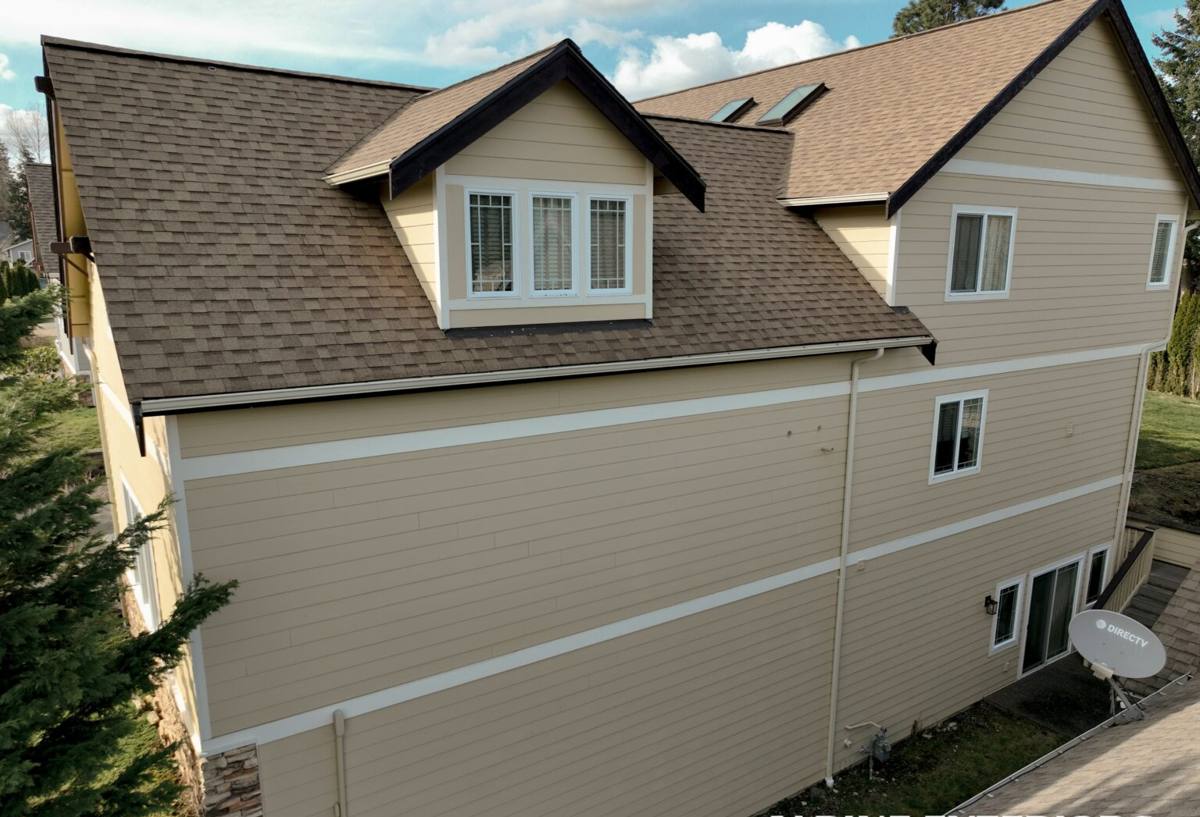
What "Energy-Efficient" Actually Means Here
The phrase gets used loosely, so it's worth being specific about what actually matters for a Bow property.
U-Factor and Solar Heat Gain
U-factor measures how well a window resists heat transfer — lower is better for our climate, since we're heating more months than we're cooling. Solar Heat Gain Coefficient (SHGC) matters less here than in sunnier climates, but it still affects how much a south- or west-facing window heats a room on the clear days we do get. A window rated for the Pacific Northwest should prioritize a low U-factor over aggressive solar control.
Glazing and Gas Fill
Double-pane with a low-E coating and argon gas fill is the practical baseline for this area. Triple-pane adds incremental performance and better sound dampening, which is worth discussing if a home is on a busier road or the budget supports it, but it isn't a requirement to get a genuinely efficient window on a typical Bow home.
Frame Material and Weatherstripping
The glass gets most of the attention, but the frame and the seal around it do as much work in a marine climate. A frame that resists moisture absorption and a weatherstrip system that stays flexible through repeated wet-dry cycles matter more here than they would in a dry inland climate.
Signs Your Current Windows Are Losing the Battle
Because the damage from salt air and driving rain is gradual, it usually shows up as a pattern of small symptoms before it becomes an obvious problem. Worth checking for:
- Condensation or fogging between the panes (a sign the seal has failed and the gas fill is gone)
- Visible corrosion or pitting on aluminum hardware, hinges, or locks
- A noticeable draft near the frame edges on windy, wet days
- Soft or discolored wood at the sill or bottom corners, especially on walls that face prevailing wind and rain
- Difficulty opening, closing, or latching a window that used to move freely
- Moss or persistent green staining building up on the exterior trim around the frame
- A cold spot near the window that's noticeable even when the heat is running
Any one of these on its own might just need a repair. Several together, especially on the wind- and rain-facing side of a house, usually mean the window assembly itself has reached the end of its useful life.
Choosing the Right Window Type for a Bow Property
There's no single "best" window — the right choice depends on the home, its orientation, and how much upkeep the owner wants to take on. Here's how the common frame materials compare for a salt-air, high-rainfall setting like Bow:
| Frame Material | Salt Air / Moisture Resistance | Maintenance | Relative Cost |
|---|---|---|---|
| Vinyl | Good — won't rust or rot, but seals and hardware still need quality construction | Low — occasional cleaning | Lower |
| Fiberglass | Very good — dimensionally stable, holds paint and seals well in wet cycles | Low to moderate | Mid to higher |
| Wood, clad exterior | Good on the exterior face, but any exposed or damaged cladding invites moisture into the wood core | Higher — cladding and seams need periodic inspection | Higher |
| Aluminum | Poor without thermal breaks and marine-grade coatings — prone to condensation and corrosion in salt air | Moderate | Lower to mid |
We don't push one material as universally "the best" — we walk through the trade-offs for the specific house, its exposure to wind and rain, and the homeowner's tolerance for upkeep, and land on what makes sense there.
What a Correct Installation Actually Involves
The window unit itself is maybe half the equation. The other half is installation detail, and in a climate that drives rain sideways into wall assemblies, cutting corners here is where premature failures come from.
Removing the Old Unit Without Damaging the Opening
Old caulk, fasteners, and sometimes rotted framing get exposed once a window comes out. This is the point where hidden moisture damage from a failed seal often turns up, and it needs to be addressed before a new window goes in — not sealed over.
Flashing and Water Management
Proper flashing directs any water that gets past the exterior trim back out of the wall assembly instead of trapping it against the framing. This detail matters more in Skagit County's wind-driven rain than it does in drier climates, where a lazier installation might go years without showing a problem.
Sealing and Insulation
The gap between the window frame and the rough opening needs to be insulated and air-sealed correctly — not just stuffed with foam. Over-filling with expanding foam can actually bow a frame out of square, which affects both the seal and how smoothly the window operates for years to come.
Exterior Finish Work
Trim, caulk lines, and any flashing tape need to be finished so water sheds away from the window rather than pooling at the sill or running behind the trim. This is also where moss and algae tend to establish first if the finish work is sloppy.
Our Process, Start to Finish
- On-site assessment — we look at each window opening individually, not just the glass, since condition varies window to window on the same house.
- Honest recommendation — we'll tell you which windows genuinely need replacement, which can be repaired, and why.
- Product selection — we walk through frame material, glazing package, and options based on that specific window's exposure and your budget.
- Installation — removal, flashing, insulation, and finish work done to hold up against Bow's weather, not just to pass a quick visual check.
- Walkthrough and cleanup — we confirm operation and sealing with you before we consider the job done, and we clean up the work area.
Why It Matters That We Already Work in Bow
A crew that mostly works drier, inland projects can install a perfectly good window and still get the water management wrong for a site exposed to open water and prevailing wind. Working regularly in and around Anacortes and greater Skagit County means we've seen how these specific conditions actually play out over a few years — not just how a spec sheet reads.
That also means we're familiar with the kind of permitting and inspection expectations that come up for exterior work in unincorporated Skagit County, and with the practical realities of rural and waterfront properties in the Bow area — longer driveways, well-and-septic layouts, outbuildings, and older additions that don't always match the original structure. None of that should be a surprise mid-project, and it isn't for a crew that's already done the work nearby.
Living With Energy-Efficient Windows in a Marine Climate
Even a well-installed window benefits from a little seasonal attention here. A few habits go a long way:
- Rinse salt residue off exterior glass and frames periodically, especially after storms with onshore wind
- Keep weep holes clear of debris, pollen, and moss so water can drain as designed
- Check exterior caulk lines once a year for cracking or separation, particularly after the wettest months
- Address any moss buildup on trim promptly rather than letting it hold moisture against the wood or siding
- Operate hardware a few times through the winter so mechanisms don't seize from disuse and damp
None of this is heavy maintenance — it's the kind of small upkeep that lets a properly installed, quality window actually reach its expected lifespan instead of falling short of it because of the environment it sits in.
If your windows in Bow are drafty, fogged, or just old enough that you're wondering whether they're still doing their job, we're happy to take a look. We offer free, no-pressure estimates — use the form below to get started.