 Anacortes
 Siding Replacement Built for Burlington's Weather
Burlington sits in the heart of the Skagit Valley, close enough to the Salish Sea that marine air, wind-driven rain, and long stretches of overcast, damp weather are simply part of living here. That combination is hard on exterior siding, especially siding that was never designed for it. If you're researching siding replacement for a Burlington home, the goal isn't just picking a color or matching a budget — it's choosing a system and an installation process that actually holds up to what this valley throws at a house year after year.
This page walks through what Burlington homes specifically need from a siding replacement, what a correct job looks like from tear-off to finish, and why the crew you hire matters as much as the material they install.
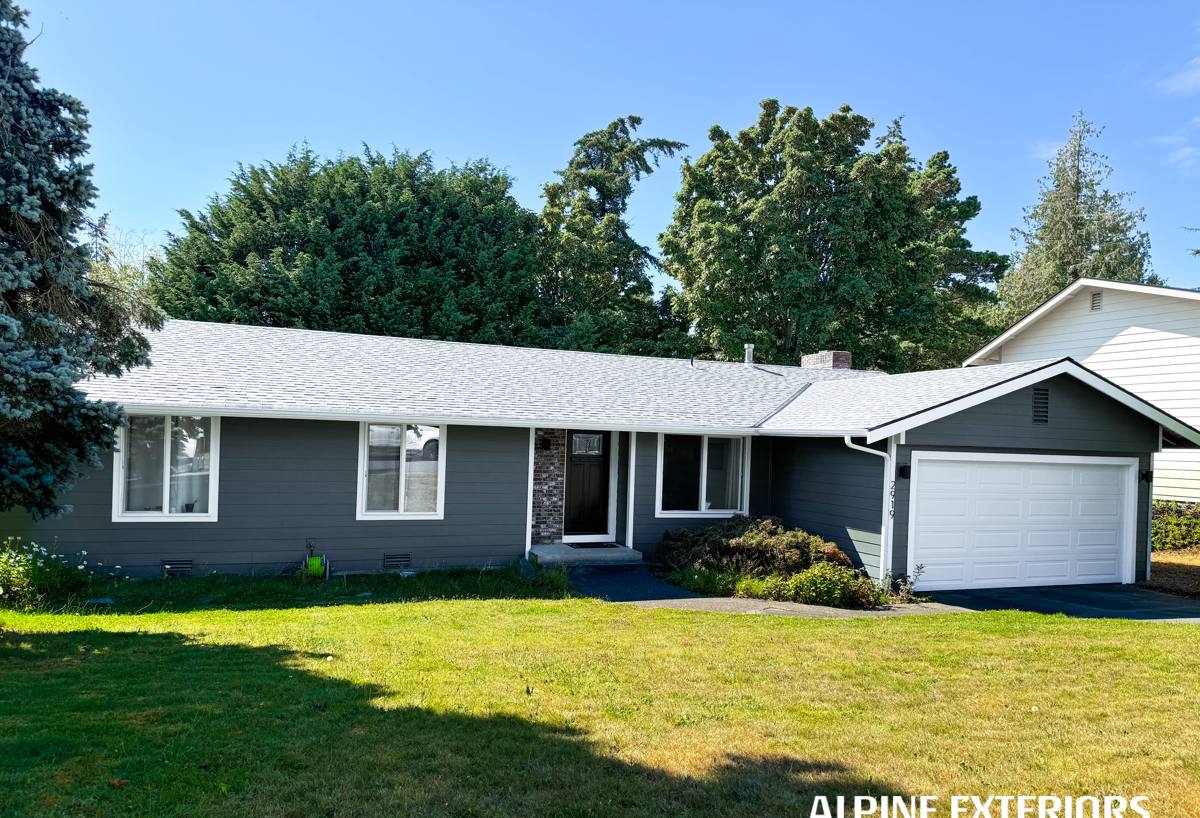
What Skagit Valley Weather Does to Siding
Homes in and around Burlington deal with a specific mix of conditions that accelerates siding failure faster than homeowners expect:
- Driving rain — wind off the water pushes rain sideways into wall assemblies, testing every seam, lap, and penetration in the siding.
- Persistent moisture and shade — north-facing walls, tree-shaded lots, and long gray stretches from fall through spring keep siding wet for days at a time.
- Moss and algae growth — the same damp conditions that make the Skagit Valley green also feed moss and algae on any siding surface that holds moisture or organic material.
- Marine air — proximity to Puget Sound means the region's air carries more moisture and salt content than inland Washington, which is harder on fasteners, trim, and any siding prone to swelling or delaminating.
- Temperature swings — cool, wet winters followed by warmer, drier summers put repeated expansion and contraction stress on siding and its fasteners.
None of this is unique to any one street or neighborhood in Burlington — it's the baseline climate reality for the whole area. Siding that isn't engineered for sustained moisture exposure will show it: swelling, delamination, soft spots, and moss colonies that spread faster than a homeowner can pressure-wash them away.
Why "It Still Looks Fine" Can Be Misleading
Siding damage in this climate often starts from the inside out. Moisture works behind panels, around poorly flashed windows, or through hairline cracks long before it becomes visible on the surface. By the time paint is peeling or panels are visibly warped, there may already be moisture damage to the sheathing or framing underneath. That's one reason we recommend having siding evaluated by someone who installs it for a living, not just looked at from the curb.
Signs a Burlington Home Needs Siding Replacement
Some warning signs are obvious; others take a trained eye. Common indicators we see on homes in this area include:
- Soft, spongy, or crumbling spots when you press on the siding, especially near the bottom courses
- Persistent moss or algae staining that returns within weeks of cleaning
- Visible warping, buckling, or gaps opening up between panels or boards
- Paint that's peeling, bubbling, or failing well ahead of its expected repaint cycle
- Cracked or chipped panels, particularly around corners and window trim
- Rising energy bills that suggest the wall assembly isn't sealing the way it should
- Visible rot or staining at the bottom edge of siding, near grade, decks, or downspouts
Any one of these on its own might be a minor repair. Several together, especially on a home that's had multiple recoat or patch jobs over the years, usually means the siding system as a whole has reached the end of what patching can fix.
What a Correct Siding Replacement Job Actually Involves
Siding replacement is not a cosmetic swap — it's a rebuild of your home's weather barrier, and the sequence matters as much as the material.
1. Full Tear-Off and Inspection
We remove the existing siding down to the sheathing, not just over the top of it. This is the only way to find hidden rot, soft sheathing, or moisture damage that's been building behind the old material — issues that are common on older Burlington homes that have gone years between siding services.
2. Sheathing Repair
Any damaged or deteriorated sheathing gets replaced before new siding goes on. Installing new siding over compromised sheathing just locks the problem in and guarantees future failure, no matter how good the new material is.
3. Weather-Resistive Barrier
A properly lapped, sealed weather-resistive barrier goes over the sheathing. In a climate with this much wind-driven rain, the housewrap and flashing details around windows, doors, and penetrations matter as much as the siding itself — water has to be directed out, not trapped in.
4. Flashing and Trim Details
Every window, door, and roof-to-wall intersection is a place water can get behind siding if it's not flashed correctly. This is where a lot of siding failures actually originate, regardless of what brand of siding was installed.
5. Siding Installation to Manufacturer Spec
Proper fastener spacing, clearance from grade and hardscape, correct nailing patterns, and factory-specified gaps all affect how the siding performs over time. Installed loosely or "close enough," even a premium product will underperform.
6. Caulking, Trim, and Final Finish
Final sealant work at joints and transitions, along with trim and accessory installation, completes the weatherproofing envelope.
Why We Install Only James Hardie Fiber Cement
We made a deliberate decision as a company to install James Hardie fiber cement siding exclusively — not vinyl, not LP SmartSide, not cedar or primed wood products. That's a standard we hold ourselves to because of what this climate does to alternatives over time.
Vinyl can warp and become brittle with age and temperature swings, and its seams and J-channels give wind-driven rain more places to work behind the surface. Wood-based and engineered wood products depend heavily on maintaining an intact factory coating; once that's compromised, sustained moisture exposure is exactly the condition that causes swelling and deterioration at edges and butt joints. Cedar and primed wood siding require an ongoing maintenance commitment — repainting, sealing, and moisture monitoring — that many homeowners underestimate until moss and rot show up.
James Hardie fiber cement is non-combustible, dimensionally stable, and doesn't feed moss or fungal growth the way organic materials can. Its ColorPlus factory finish is baked on with a process built to resist fading and holds up to UV and moisture exposure better than field-applied paint. Hardie's HZ product lines are engineered specifically for climate zones like ours, and the transferable warranty backs the product for the long haul. We're not saying other products can't be installed correctly by someone — we're saying that for the climate our customers live in, Hardie is what we're willing to put our name behind.
Comparing Siding Options for This Climate
| Factor | Vinyl | Wood / Engineered Wood | James Hardie Fiber Cement |
|---|---|---|---|
| Moisture resistance | Moderate; seams vulnerable to driving rain | Depends on coating integrity; edges/joints at risk | Engineered for sustained moisture exposure |
| Moss/algae resistance | Low; organic buildup common in shaded, damp areas | Low; organic material feeds growth | Higher; non-organic composition |
| Fire resistance | Combustible | Combustible | Non-combustible |
| Maintenance | Low, but cracks/fades with age | High; regular repainting/sealing needed | Low; factory finish designed for long intervals between repaints |
| Typical lifespan when installed to spec | 20-30 years | Varies widely with maintenance | 30+ years with proper installation and care |
Cost Factors for Burlington Homeowners
Every siding replacement quote is different, but the biggest cost drivers we see on Burlington homes include:
| Factor | Why It Affects Cost |
|---|---|
| Extent of hidden sheathing damage | Rot found during tear-off requires repair before new siding can go on |
| Home size and wall complexity | More corners, gables, and trim details mean more labor and cut waste |
| Siding profile chosen | Lap, shingle, and panel Hardie profiles vary in material and labor cost |
| Trim and accessory scope | Full trim replacement versus reusing sound existing trim |
| Access and site conditions | Multi-story sections, tight lot lines, or landscaping can affect setup and labor time |
We don't publish flat per-square-foot pricing because these variables genuinely change the number — but we'll walk your home with you and explain exactly what's driving your estimate before any work begins.
Our Process, Start to Finish
- On-site evaluation — we walk the exterior with you, note problem areas, and discuss what's driving the need for replacement.
- Written estimate — a clear scope of work and cost breakdown, no pressure to decide on the spot.
- Material selection — choosing the Hardie profile and ColorPlus finish that fits your home.
- Scheduling — a realistic timeline that accounts for Skagit Valley weather windows.
- Tear-off and sheathing repair — full removal and inspection before anything new goes on.
- Weather barrier, flashing, and installation — installed to manufacturer specification.
- Final walkthrough — reviewing the completed work with you before we consider the job done.
Why Hiring a Crew That Already Works in Burlington Matters
Siding installation isn't just about product knowledge — it's about understanding how a specific region's weather interacts with a wall assembly. A crew that regularly works in Burlington and the surrounding Skagit Valley has already seen how driving rain behaves against different home orientations, where moss tends to establish first, and which flashing details actually hold up through a full wet season. That local pattern recognition shows up in the quality of the tear-off inspection, the flashing decisions at windows and trim, and the overall attention to moisture management — the details that determine whether a siding job lasts 10 years or 30.
It also means straightforward communication: realistic scheduling around regional weather, honest answers about what your home actually needs, and a crew that's accountable to a community they keep working in.
A Quick Homeowner Checklist
- Press on siding at the base and around windows to check for soft spots
- Note any areas where moss or algae return quickly after cleaning
- Check for gaps, warping, or buckling between panels or boards
- Look at paint condition — peeling or bubbling ahead of schedule is a warning sign
- Ask any contractor what happens if they find sheathing damage during tear-off
- Confirm in writing what siding product, profile, and finish is being quoted
If your Burlington home is showing any of these signs, we're happy to take a look. Reach out for a free, no-pressure estimate using the form below — we'll walk the exterior with you, explain what we find, and give you a clear picture of what siding replacement would actually involve for your home.