 Anacortes
 Storm Damage Roof Repair for Burlington Homes
Burlington sits low in the Skagit Valley, and that location shapes what "storm damage" actually means here. You're not dealing with hail the way homeowners in the Midwest are. You're dealing with wind funneling off the water and across open farmland, driving rain that finds every weak seam, and long stretches of wet, shaded weather that let moss and organic growth work into a roof year-round. When a storm rolls through, the damage it leaves behind on a Burlington roof is often less dramatic than a hailstorm and more insidious — lifted shingle tabs, torn ridge caps, a section of flashing pulled loose, water finding its way under a compromised area weeks before anyone notices a stain on the ceiling.
We repair storm-damaged roofs for homeowners throughout Burlington and the surrounding Skagit County area. This page covers what actually happens to roofs here during storms, what a correct repair involves, and how to tell a real fix from a patch job that fails again next winter.
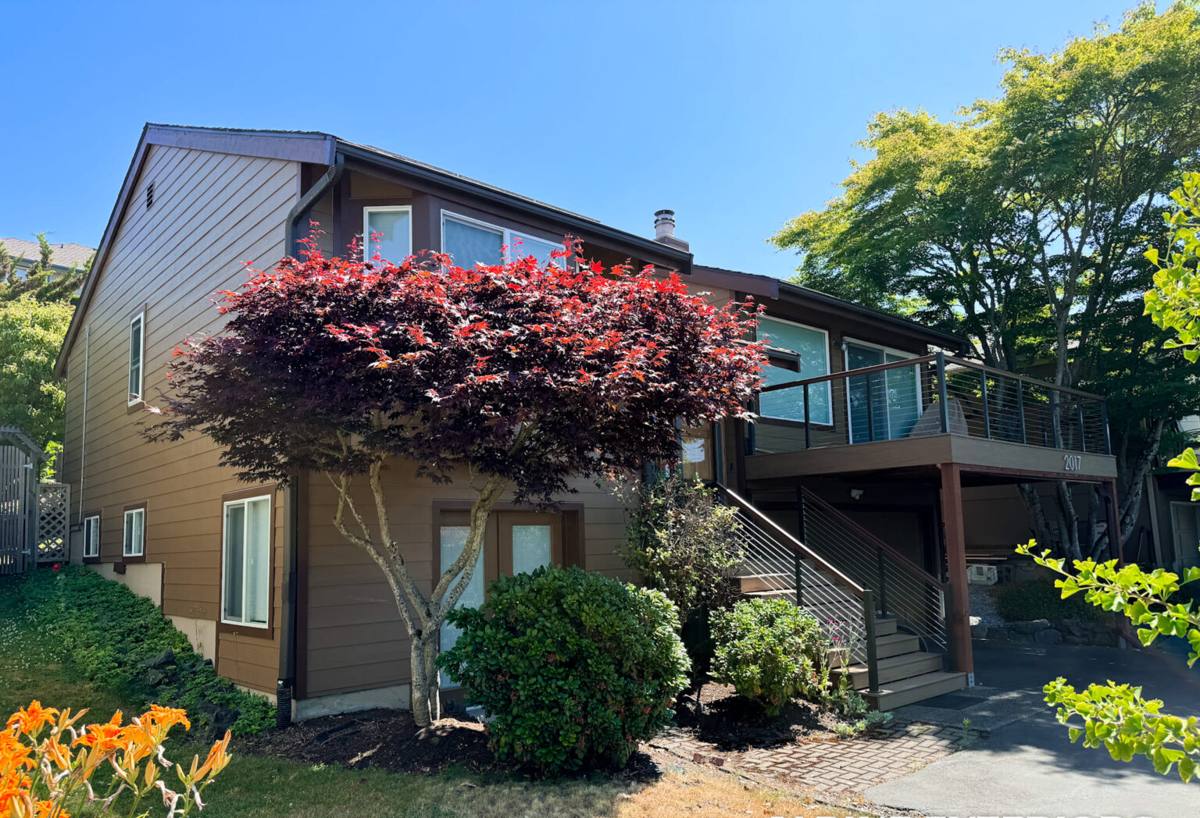
What Storm Damage Actually Looks Like Here
Skagit County storms tend to combine three things at once: sustained wind, heavy rain, and saturated ground that keeps everything wet for days afterward. That combination produces a specific set of failure patterns on local roofs.
Wind Damage
Wind gusts moving across the valley and off Padilla Bay don't need to be hurricane-force to do damage. Sustained wind in the 40-50 mph range, which this area sees several times most winters, is enough to lift shingle tabs that have already lost some adhesive bond from age or sun exposure. Once a tab lifts, it rarely seals itself back down. It stays vulnerable to the next gust, and to water intrusion in the meantime.
Wind-Driven Rain
A roof that sheds vertical rain fine can still leak under wind-driven rain, because the water is hitting the roof at an angle and pushing up under laps, around vent boots, and along flashing edges instead of running straight down and off. This is the single biggest cause of storm-related leaks we see in Burlington — not a dramatic hole, but water finding a horizontal path it was never designed to travel.
Debris and Impact
Burlington has plenty of mature trees nearby, and even a moderate wind event can bring down branches. A falling branch doesn't have to be large to crack a shingle, dent a vent cap, or knock flashing out of alignment. Impact damage from debris is usually localized but needs to be caught before repeated rain events work on the weak spot.
Moss and Standing Moisture
This isn't storm damage in the classic sense, but it compounds it. A long moss season means organic growth is already holding moisture against roofing material for much of the year. A roof with active moss or moisture retention going into a storm is starting from a weaker position — granule loss, softened felt, and shingles that have already lost some flexibility are all more likely to fail under wind and rain than a clean, well-maintained roof.
Why "It's Just a Few Shingles" Is the Wrong Frame
The most common mistake we see after a storm is treating visible damage as the whole problem. A missing shingle or two is what you can see from the ground. What you can't see is whether water already got under the surrounding courses, whether the underlayment took on moisture, or whether nail heads backed out under wind stress and are now sitting as tiny entry points for water. A proper storm damage assessment isn't just "replace what's missing" — it's checking the area around the visible damage, because that's usually where the next leak starts.
This matters more in a marine climate like Skagit County's than it would somewhere dry. Wet underlayment or sheathing here doesn't get a chance to dry out between storms the way it might in an arid climate. Moisture that gets trapped in November can still be sitting there in March, quietly causing rot, unless it's caught and addressed at the time of the repair.
What a Correct Storm Repair Involves
A repair that actually holds up through the next storm season covers more ground than swapping out damaged shingles. Here's what we check and address on every storm damage call in Burlington:
- Inspection of the full slope where damage occurred, not just the immediately visible spot — wind damage often extends beyond what's obvious from the ground
- Assessment of the underlayment and decking beneath any lifted or missing shingles for moisture intrusion or soft spots
- Flashing check around any penetrations near the damaged area — chimneys, vents, skylights — since flashing is often what actually failed even when shingles get the blame
- Matching replacement materials as closely as possible to existing roofing in both product line and color, so the repair doesn't stand out or create a mismatched wear pattern
- Proper re-sealing and nailing pattern on all replaced or re-secured shingles, following manufacturer specs rather than just "getting it to lay flat"
- A check of gutters and downspouts near the repair area, since debris and granule buildup after a storm can back up water right at the repair line
- Documentation of the damage and repair, useful if you're filing an insurance claim
Skipping any of these steps is how a "repaired" roof ends up leaking again during the next storm, sometimes in the exact same spot.
When Repair Makes Sense vs. When It Doesn't
| Situation | Repair Usually Makes Sense | Worth a Closer Look at Full Replacement |
|---|---|---|
| Damage extent | Isolated to one slope or a small area | Multiple slopes affected, or damage scattered across the roof |
| Roof age | Roof has several years of expected life left | Roof is already near the end of its service life |
| Underlying condition | Decking and underlayment are sound outside the damaged area | Moisture or rot found in decking during inspection |
| Material availability | Matching shingles are still available | Original product is discontinued and mismatch would be significant |
| Repair history | First storm-related repair on this roof | Roof has needed repeated storm repairs in recent years |
We'll always tell you honestly which category your roof falls into. There's no reason to sell a full replacement when a targeted repair will genuinely hold — and no reason to keep patching a roof that's telling you it's done.
Our Process for Burlington Storm Repairs
When you call after a storm, here's what to expect:
- Assessment. We come look at the actual damage, on the roof when it's safe to do so, and give you a straight read on what happened and what it'll take to fix it.
- Written scope and estimate. You get a clear description of the work and a price before anything starts — no surprise add-ons once the tarp is off.
- Insurance documentation, if needed. If you're filing a claim, we provide photos and a written description of the damage that your adjuster can use.
- Repair. We do the actual work, matching materials and following manufacturer installation specs, not shortcuts.
- Follow-up check. We confirm the repair is holding and answer any questions about maintenance going forward, particularly around moss prevention given how much of a factor it is in this climate.
Why Local Experience Matters for This Kind of Work
Storm damage repair is one of those jobs where local knowledge genuinely changes the outcome. A crew that works Burlington and greater Skagit County regularly knows what these storms actually do to roofs here — the specific wind patterns off the bay and across the valley, how moss establishes itself on north-facing slopes in this climate, and which roofing products hold up honestly to years of driving rain versus which ones look fine on a sunny installation day and struggle after a few wet winters.
That local pattern recognition matters when you're standing on a roof trying to figure out whether a lifted shingle is an isolated fix or a sign that the whole slope's fasteners are compromised. It also matters for response time — after a regional storm, being local means we're not driving in from two counties away while your damage sits open to the next rain event.
Protecting a Repair from the Next Storm
A storm repair holds up better if it's paired with basic maintenance, especially given how much of the year this area spends wet:
- Keep gutters clear so water isn't backing up under roof edges during heavy rain
- Have moss addressed before it establishes heavily — a light growth is far easier and cheaper to manage than moss that's been sitting for a couple of seasons
- Trim back tree limbs that overhang the roofline, since they're a recurring source of impact damage in wind events
- Have the roof looked at after any significant wind event, even if you don't see obvious damage from the ground — early detection is what keeps a small repair from becoming a bigger one
Get an Honest Look at Your Roof
If a recent storm left you with lifted shingles, a leak, or just a nagging feeling that something's not right up there, it's worth getting it looked at before the next system rolls through. We offer free, no-pressure estimates for storm damage repair in Burlington and the surrounding area — just an honest assessment of what's actually going on and what it would take to fix it right. Fill out the form below to get started.