 Anacortes
 Burlington Roofs Face a Tough Combination of Rain, Moisture, and Moss
Burlington sits in the heart of Skagit County, close enough to the Salish Sea and Skagit Bay that the marine air reaches homes here just as it does throughout the rest of the county. That air carries fine salt and moisture that settles on roofing materials year-round, and it works alongside two other stresses: heavy, sustained driving rain through the fall and winter, and a moss and lichen season that can run most of the year in shaded, north-facing areas. Individually, none of these is unusual for Western Washington. Together, over years, they're what separates a roof that looks fine from the outside from one that's actually still doing its job underneath.
A roof that's correctly installed for this climate isn't dramatically different in appearance from one installed anywhere else. The differences are in the details you don't see once the job is done — how the deck was prepared, how water is directed away from vulnerable seams, how much the attic can actually breathe, and whether the materials chosen resist moss colonization instead of feeding it. Skipping those details doesn't usually cause a failure in year one. It shows up as a leak, soft decking, or premature shingle failure five to ten years down the road, right around the time most homeowners assume a roof should still have a decade or more of life left.
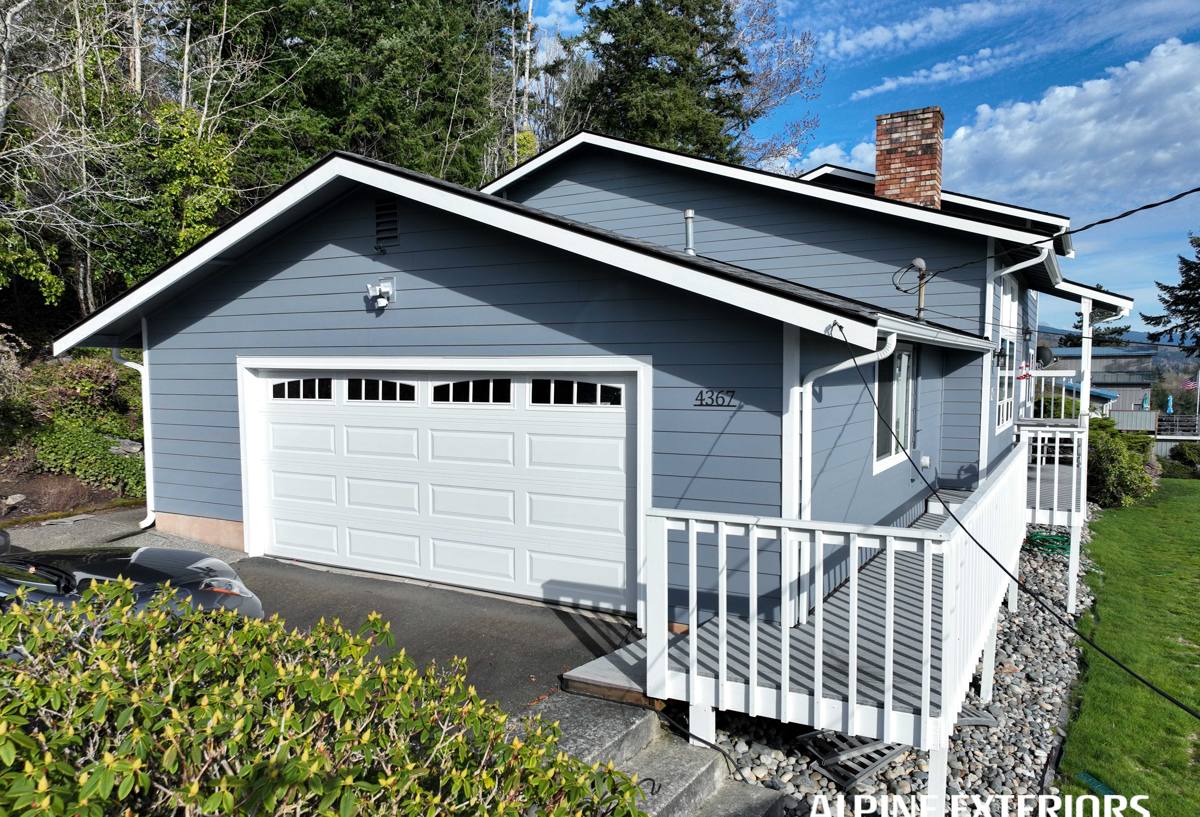
Signs a Burlington Home Needs a New Roof, Not Another Repair
Patch repairs make sense for isolated damage — a single cracked pipe boot, a section lifted in a windstorm, a small area around a chimney. They stop making sense once the roof as a whole is past the point where individual fixes can keep up. Some signs that a Burlington homeowner is looking at replacement territory rather than another repair call:
- Granules collecting in gutters and downspouts in noticeable amounts, especially after rain
- Shingles that are curling, cupping, or losing their flat profile across large sections of the roof, not just one spot
- Moss that keeps returning within a season or two of cleaning, especially on north- and west-facing slopes
- Daylight visible through the roof deck from inside the attic, or damp insulation and staining on rafters
- A roof that's already had two or more significant repairs in the past several years
- Age alone — most composition roofs in this climate are realistically due for replacement between 20 and 25 years, sometimes sooner depending on original installation quality and ventilation
If more than one or two of these apply, a full tear-off and replacement is usually the more cost-effective choice over time. Continuing to patch an aging roof often means paying repair costs on top of what you'll eventually pay for replacement anyway, without ever actually solving the underlying moisture problem.
What a Correct New Roof Installation Actually Involves
Full Tear-Off, Not a Layover
Installing a new layer of shingles directly over an old, moss-affected roof is sometimes allowed by code in limited circumstances, but it's not something we do as standard practice. A tear-off is the only way to actually inspect the deck underneath, and in a wet climate like Skagit County, deck condition is where most long-term roof problems start. Trapped moisture between layers also accelerates moss growth and shortens the life of the new shingles on top.
Deck Inspection and Repair
Once the old roofing is off, every section of the deck gets inspected for soft spots, delamination, or rot — usually concentrated around valleys, chimneys, skylights, and eaves where water has had the most opportunity to sit. Any damaged sheathing gets replaced before anything new goes down. Installing new shingles over a compromised deck is one of the most common shortcuts in this trade, and it's also one of the most expensive mistakes to inherit later.
Underlayment and Ice/Water Protection
A synthetic underlayment goes down across the full deck as the roof's secondary water barrier, with self-adhering ice-and-water membrane at the eaves, valleys, and any roof penetrations — the spots most exposed to wind-driven rain. This membrane matters more here than in drier climates, because Skagit County's rain doesn't just fall straight down; sustained wind off the water pushes it sideways under shingle tabs if the underlying protection isn't in place.
Flashing at Every Transition
Chimneys, skylights, wall-to-roof transitions, and vent penetrations all get new step flashing, counter-flashing, or pipe boots rather than relying on sealant alone to carry the load. Sealant fails; properly lapped metal flashing doesn't, or at least fails far more slowly and predictably.
Field Installation
Shingles or panels go down according to the manufacturer's nailing pattern and exposure spacing, not a faster shortcut pattern. Proper fastening is what keeps a roof intact in the wind gusts that come through Skagit County during winter storms, and it's also usually a condition of the manufacturer's warranty — an underlaid or improperly fastened roof can void coverage even if the shingles themselves are premium.
Choosing the Right Roofing Material for This Climate
There's no single "best" roofing material for every Burlington home — the right choice depends on the roof's exposure, the home's architecture, and the homeowner's budget and time horizon. The table below breaks down how the common options compare specifically against this area's moss, moisture, and salt-air conditions.
| Material | Typical Lifespan | Moss & Moisture Resistance | Best Suited For |
|---|---|---|---|
| Standard 3-tab asphalt shingle | 15–20 years | Fair; no algae resistance unless specified | Budget-conscious replacements, secondary structures |
| Architectural (dimensional) asphalt shingle | 25–30 years | Good, especially with algae-resistant granules | Most Burlington homes; the standard recommendation |
| Algae-resistant / heavy-shadow shingle lines | 25–30+ years | Very good; granules formulated to resist moss and algae staining | North-facing or heavily shaded roof sections |
| Standing seam metal | 40–50+ years | Excellent; smooth surface sheds moisture and resists moss anchoring | Homeowners planning to stay long-term; steep-pitch roofs |
For most Burlington homes, an algae-resistant architectural shingle offers the best balance of upfront cost and long-term performance against this specific climate. Metal roofing costs more initially but largely eliminates the moss problem altogether, which is worth factoring in for homes with heavily shaded, north-facing roof planes where moss has been a recurring issue.
Ventilation and Moisture Control: The Detail Most Installers Skip
A roof isn't just the shingles on top — it's part of a ventilation system that lets the attic breathe. Without balanced intake at the eaves and exhaust at the ridge, moist air from the home gets trapped in the attic, condenses on the underside of the deck, and creates the exact damp conditions that rot sheathing and feed moss growth from the inside out, not just the outside in. This is one of the most common gaps we find when replacing older roofs in this area: intake vents blocked by insulation, or a ridge vent that was never actually cut open along its full length.
Every new roof installation should include a check of existing attic ventilation and a plan to correct it if it's inadequate — not as an upsell, but because a new roof installed over a poorly ventilated attic will show the same moisture problems again within a few years, regardless of how good the shingles are.
Our Installation Process, Start to Finish
- On-site inspection and estimate — we look at the current roof, attic ventilation, deck condition where visible, and any problem areas the homeowner has already noticed
- Material selection — we walk through the tradeoffs above based on the home's exposure and the homeowner's budget and timeline
- Permitting — we pull the required roofing permit through the applicable local jurisdiction before work begins
- Tear-off and disposal — old roofing material is removed and hauled off, not left staged on the property longer than necessary
- Deck inspection and repair — any compromised sheathing is replaced and documented before covering it up
- Underlayment, flashing, and ventilation correction — the systems that do the real long-term work, installed before a single shingle goes down
- Field installation — shingles or panels installed to manufacturer spec, including proper nailing pattern and exposure
- Final walkthrough — we review the completed roof with the homeowner and go over warranty paperwork
Permits, Codes, and Warranty Coverage in Skagit County
Roof replacements in Skagit County typically require a permit, and inspections may be involved depending on the scope of work and the jurisdiction. We handle this as a standard part of the job rather than leaving it for the homeowner to sort out — skipping the permit process is a shortcut some crews take to shave time off a job, and it's one that can come back on the homeowner later at resale or during an insurance claim.
Warranty coverage on a new roof generally comes from two separate sources: the manufacturer's warranty on the materials themselves, and the installer's workmanship warranty covering labor and installation. It's worth understanding both before signing a contract, since a strong material warranty is only as good as the installation behind it — most manufacturer warranties include installation requirements that, if not followed, can limit or void coverage.
What to Look for When Hiring a Roofing Contractor
- Current Washington State contractor license and liability insurance, verifiable on request
- A written estimate that specifies materials, underlayment type, and ventilation work — not just a total price
- Willingness to explain why they're recommending a specific material for your roof's exposure, not just selling their default option
- Clear communication about tear-off vs. layover, and why a full tear-off is the standard recommendation in this climate
- A workmanship warranty in writing, separate from the manufacturer's material warranty
- References or past project history in your specific area, not just general company reviews
Why a Crew That Already Works in Burlington Makes a Difference
Roofing crews that work across a wide range of climates tend to install roofs the same way everywhere, because that's what's efficient for them. A crew that regularly works Skagit County roofs — including the moss patterns specific to shaded valleys, the wind exposure certain streets and elevations get during winter storms, and the way salt-tinged marine air ages different materials over time — makes different judgment calls on things like underlayment coverage, ventilation correction, and material choice, because they've already seen what happens when those details get skipped in this specific climate. That local pattern recognition doesn't show up on a spec sheet, but it's a meaningful part of what separates a roof that performs well for 25 years from one that starts showing problems in year eight.
If your Burlington home's roof is showing its age, or you just want a straight answer about whether repair or replacement makes more sense right now, we're happy to take a look and walk you through it. Use the form below to request a free, no-pressure estimate.